The forces are mounting that will eventually overwhelm most Americans and send their standard of living to unknown depths. Americans that have only known the post WWII prosperity are ill equipped and educated to deal with depression level living. Easy credit and instant gratification have created a nation of whining, self absorbed, entitlement minded people with no moral or mental toughness.
Doug Casey believes we are headed for what he calls a super depression created by the ending of a debt super cycle. The bigger the debt cycle the bigger the depression that follows. That’s how reality works and most people are not prepared for reality.
When this depression, which has already started, gets momentum, it will overwhelm the plans of a society that is expecting to get things like social security, pensions and payouts from retirement plans they have paid into for many years. All of those things will disappear almost overnight and leave society gasping and stupefied over what to do. Their reactions will be to yell and scream and try to identify who to blame but the only person they should blame is the one in the mirror.
Many very smart people have raised the alarm and done their best to warn the sleeping public, but those slumbering masses have ignored the warnings and hit the snooze button one more time. The masses do not understand economics, do not want to understand economics and they will pay dearly for that ignorance in the coming days.
When the real unemployment rate becomes common knowledge as it increases substantially, people will be left to survive on what resources they have saved up outside the banking system that cannot be stolen by the politicians and bankers. That is a key point here. The assets you have outside the system that cannot be stolen from you with a few key strokes on some computer.
Those hoping for some miraculous event that will send the U.S. back to the days of manufacturing might and jobs for all will never see it happen. Those days are gone. The west line theory tells us our economy will slow down and become more modest as the shipping center of the world moves west to the next powerhouse region which is Asia. This is what history teaches us.
When people suddenly wake up one morning and they have no job, their retirement is gone and they need to care for their family, what will they do? When government services have collapsed and they suddenly realize they are now living in a third world country with few government services, what will they do? When the banks are closed and only a select few connected people have any type of money or access to goods, what will they do?
This is the reality that many people will face in the future and they have no idea how bad it can get. They refuse to contemplate the harsh reality they will be living in and take steps to mitigate the effects. To do so would be to acknowledge it could happen and they are taking personal responsibility. Personal responsibility is a dirty phrase in today’s entitlement society. To see some of the effects one only has to look at the collapse of society in Venezuela today to see what awaits.
When it happens it will all fall back to you to take responsibility for your family and take care of them for the duration. To do that you need to plan now for that eventuality and build up the resources you will need to provide food, shelter, clothing and security when the system fails to do it for you. You need to be Noah on his ark not the people watching as he floated away.
Having resources stored up is a must but it may not get you all the way through if the situation lasts for many years. That is why you need some type of plan to replace those resources as time goes by and have some way to generate some type of income or at least items to trade. Usable goods are for the short term and things like gold ,silver and production equipment are for the long term to help you get through the crisis with the least amount of pain.
Even with proper planning the days ahead will not be easy as the standard of living of society will fall substantially to levels only seen in failed third world countries or old pictures. The assets actually owned by people today is very small compared to how they live. They will default on their home loan, their car loan, and their credit card debt leaving them with very few real possessions and few ways to move what they have left even if they have some place to go. Ultimately these people will become the new serfs to the wealthy class that will take possession of anything of value. Feudalism will once again rule.
The lack of planning by society will make this a reality if it is allowed. What will you do when everything you have worked a lifetime for is suddenly taken away? Do you have a plan to keep what you have? Do you have a plan to make money when you cannot find a job? Do you have a way to take care of your family until things stabilize? Do you have a home you will not lose if the whole system breaks down? What will you do if electricity or fuel is too expensive to buy or not available to the general population? These are the questions you should be asking yourself now and you better have a good answer because your family will be asking them when the greater depression sets in.
Stories about killer robots, machine-augmented heroes, laser weapons and battles in space – outer or cyber – have always been good for filling cinema seats, but now they have started to liven up sober academic journals and government white papers.
However, war is about much more than combat or how we fight. Is the sensationalism of high-tech weaponry blinding us to technology’s impact on the broader social, political and cultural context that determines why, where and when war happens, what makes it more or less likely, and who wins?
Consider artificial intelligence (AI). The potential for developing lethal autonomous weapons systems grabs headlines (“killer robots!”), but the greatest impact of AI on conflict may be socially mediated. Algorithmically-driven social media connections funnel individuals into trans-national but culturally enclosed echo-chambers, radicalising their world-view.
As robots relieve humans of their jobs, some societies will prove better prepared than others in their use of education and infrastructures for transitioning workers into new, socially sustainable and economically productive ways to make a living. Less prepared nations could see increasingly stark inequality, with economically-excluded young people undermining social stability, losing faith with technocratic governance, and spurring the rise of leaders who aim popular anger at an external enemy.
Looking beyond individual technologies allows us to focus on the broader and deeper dimensions of the transformation coming our way. Professor Klaus Schwab, chairman and founder of the World Economic Forum, argues that the collapse of barriers between digital and physical, and between synthetic and organic, constitutes a Fourth Industrial Revolution, promising a level of change comparable to that brought about by steam power, electricity and computing.
Something that makes this revolution fundamentally different is how it challenges ideas about what it means to be human. For instance, neuroscience is teaching us more about our own fallibility, and also just how ‘hackable’ humans are. As science continues to uncover difficult truths about how we really operate, we will have to confront basic assumptions about the nature of human beings. Whether this deep transformation will reinforce or undermine a shared sense of human dignity, and what effects it will have on our relationship with organized violence, remain open to question.
The experience of past industrial revolutions can help us begin to search for answers about how this will transform the wider context of international security. In the first industrial revolution, deposits of coal and iron ore were one factor determining the “winners” in terms of economic and geopolitical power.
Today, new modes and artefacts of industrial production will also change demand patterns, empowering countries controlling supply and transit, and disempowering others. Progress in energy production and storage efficiency, for instance, is likely to have profound consequences for the petro economies and the security challenges of their regions. Although the set of natural resources critical to strategic industries will change, their use as a geo-economic tool will probably be repeated.
For instance, this is widely thought to have happened when, in the midst of a maritime dispute with Japan in 2010, China restricted export of “rare earths” that are critical for computing, sensors, permanent magnets and energy storage. With ever more commercial and military value embedded in the technology sector, such key materials will be deemed “critical” or “strategic” in terms of national security, and be subject to political as well as market forces.
The 19th Century Industrial Revolution showed how technological asymmetry can translate into geopolitical inequality – in the words of Hilaire Belloc’s poem ‘The modern traveller’, spoken by a European about Africa: “Whatever happens, we have got the Maxim Gun, and they have not”. (The Maxim Gun was the first recoil-operated machine gun).
What will be the Maxim Gun of our time? Who will have it, and who will not? In the 20th Century, the “haves and have-nots” of the nuclear weapons club membership became the major determinant of the post-war global order, and – as seen in the cases of Iran and North Korea today – this continues to be relevant. Stealth technology and precision guided missiles used to impose a “new world order” in the early 1990s showed how the gap in military capability separated the United States from others, sustaining its leadership of a “unipolar” order.
According to the current US deputy secretary of defence Robert Work, “There’s no question that US military technological superiority is beginning to erode”.
History can only tell us only so much. There is a need for fresh thinking about the implications of the Fourth Industrial Revolution for international security.
Strategic de-stabilisation
1. Waging war may seem “easier”. If increased reliance on machines for remote killing makes combat more abstract from our everyday experience, could that make it more tolerable for our societies, and therefore make war more likely? Those who operate lethal systems are ever more distant from the battlefield and insulated from physical danger, but this sense of advantage may prove illusory. Those on the receiving end of technological asymmetries have a stronger incentive to find other ways to strike back: when you cannot compete on a traditional battlefield, you look to where your adversary is vulnerable, such as through opportunistic attacks on civilians.
2. Speed kills. “The speed at which machines can make decisions in the far future is likely to challenge our ability to cope, demanding a new relationship between man and machine.” This was the assessment of US Major General William Hix at a conference on the future of the Army in October 2016. The speed of technological innovation also makes it hard to keep abreast of new military capabilities, easier to be misled on the actual balance of power, and to fall victim to a strategic miscalculation. The fact that some capabilities are deliberately hidden just makes it harder. Because offensive cyber capability relies so much on exploiting one-off vulnerabilities, it is difficult to simultaneously demonstrate and maintain a capability. Once a particular vulnerability has been exploited, the victim is alerted and will take steps to fix it. General Hix again: “A conventional conflict in the near future will be extremely lethal and fast, And we will not own the stopwatch.”
3. Fear and uncertainty increase risk. The expectation that asymmetries could change quickly – as may be the case with new strategic capabilities in areas like artificial intelligence, space, deep sea and cyber – could incentivise risk-taking and aggressive behaviour. If you are confident that you have a lead in a strategically-significant but highly dynamic field of technology, but you are not confident that the lead will last, you might be more tempted to use it before a rival catches up. Enhanced capacity to operate at speed puts security actors into a constant state of high alert, incentivises investment in resilience, and forces us to live with uncertainty. Under these conditions, war by mistake – either through over-confidence in your ability to win, or because of exaggerated threat perception – becomes more likely.
4. Deterrence and pre-emption. When new capabilities cause a shift in the balance between offensive and defensive advantage – or even the perception of such a shift -, it could increase the incentives for aggression. For example, one of the pillars of nuclear deterrence is the “second strike” capability, which puts the following thought into the mind of an actor contemplating a nuclear attack: “even if I destroy my opponent’s country totally, their submarines will still be around to take revenge”. But suppose swarms of undersea drones were able to track and neutralize the submarines that launch nuclear missiles? Long-range aerial drones can already navigate freely across the oceans, and will be able to fly under the radar deep into enemy territory. Such capabilities make it possible in theory for an actor to escape the fear of second-strike retaliation, and feel safer in launching a pre-emptive strike against aircraft in their hangars, ships in port, and critical infrastructure, with practically no chance of early warning. Indeed, cyberattacks on banks, power stations and government institutions have demonstrated that it is no longer necessary to fly bombers around the world to reach a distant enemy’s critical infrastructure without early warning. The idea of striking a `knockout blow` may come to seem feasible once more.
5. The new arms race is harder to control. One of the mechanisms for strategic stability is arms control agreements, which have served to limit the use of nuclear, biological and chemical weapons. When it comes to the multiple combinations of technology we see as a hallmark of the Fourth Industrial Revolution, one of the obstacles to international agreement is caused by uncertainty about how strategic benefits will be distributed. For instance, the international community is currently debating both the ethics and practicality of a ban on the development of lethal autonomous weapons systems. One of the factors holding this debate back from a conclusion is a lack of consensus among experts about whether such systems would give an advantage to the defender or the attacker, and hence be more likely to deter or incentivize the escalation of conflict. Where you stand on the issue may depend on whether you see yourself as a master of the technology, or a victim. Another obstacle to imposing control is the wider cast of players –
6. A wider cast of players. As cutting-edge technology becomes cheaper, it spreads to a wider range of actors. Consider the development of nuclear bombs – the last breakthrough in weapons technology that re-wrote the rules of international security. Although the potential for a fission bomb was understood in terms of theoretical physics, putting it into practice involved thousands of scientists and billions of dollars – resources on a scale only a few nations could muster. Over 70 years later, the club of nuclear weapons states remains exclusively small, and no non-state actor has succeeded in acquiring nuclear capability.
In contrast, there are more than 70 nations operating earth-orbiting satellites today. Nano-satellites are launched by Universities and Corporations. A growing list of companies can launch and recover payloads on demand, meaning even small states can buy top-notch equipment “off the shelf”. As Christopher Zember put it, “Once the pinnacle of national achievement, space has become a trophy to be traded between two business owners”. These days, even a committed enthusiast can now feasibly do genetic engineering in their basement. Other examples of dual-purpose technologies include encryption, surveillance, drones, AI and genomics. With commercial availability, proliferation of these technologies becomes wider and faster, creating more peer competitors on the state level and among non-state actors, and making it harder to broker agreements to stop them falling into the wrong hands.
7. The grey zone. The democratisation of weaponisable technology empowers non-state actors and individuals to create havoc on a massive scale. It also threatens stability by offering states more options in the form of “hybrid” warfare and the use of proxies to create plausible deniability and strategic ambiguity. When it is technically difficult to attribute an attack – already true with cyber, and becoming an issue with autonomous drones – conflicts can become more prone to escalation and unintended consequences.
8. Pushing the moral boundaries. Institutions governing legal and moral restraints on the conduct of war or controlling proliferation date from an era when massively destructive technology was reserved to a small, distinct set of actors – mostly states or people acting under state sponsorship. The function of state-centric institutions is impaired by the fact that states’ militaries are no longer necessarily at the cutting edge of technology: most of the talent driving research and development in today’s transformative dual-use technologies is privately employed, in part because the private sector simply has access to more money. For example, the private sector has invested more in AI research and development in five years than governments have since AI research first started. Diminishing state control of talent is epitomised by Uber`s recruitment of a team of robotics researchers from Carnegie Mellon University in 2015, which decimated the research effort they had had been working on for the United States department of Defence.
The fact that the trajectory of research – and much of the infrastructure critical to security – are in private hands need not be a problem if state actors were able to exercise oversight through traditional means such as norms development, regulation and law-making. However, the pace and intensity of innovation, and difficulty of predicting what new capabilities will be unleashed as new technologies intersect, makes it difficult for states to keep up. State-centric institutions for maintaining international security have failed to develop a systematic approach to address the possible long-term security implications of advances in areas as diverse as nanotechnology, synthetic biology, big data and machine learning. Nor have industry-led measures yet filled the gap.
9. Expanding domains of conflict. Domains of potential conflict such as outer space, the deep oceans, and the Arctic – all perceived as gateways to economic and strategic advantage – are expanding via new technologies and materials that can overcome inhospitable conditions. Like cyberspace, these are less well-governed than the familiar domains of land, sea and air: their lack of natural borders can make them difficult to reconcile with existing international legal frameworks, and technological development is both rapid and private sector-driven, which makes it hard for governance institutions to keep up.
Those who secure “first mover” advantage may also seek to defend it against the establishment of regulation and governance in the common interest. Access to the technology needed to reach and exploit space, for example, allows belligerents to compromise the effectiveness of defensive measures that rely on satellites for communications, navigation, command and control technology. Even a very limited strike on a satellite would likely cause space debris, damaging systems used by the wider community. Despite a 1967 United Nations treaty calling for the peaceful use of Space, the United States Deputy Secretary of the Air Force recently warned that “there is not an agreed upon code of conduct” for space operations.
10. What is physically possible becomes likely. History suggests that any technology – even one that gives moral pause – will eventually be developed in order to be used as a weapon. As the political theorist Carl Schmitt explained, political conflict is the “realm of exception” in all sorts of ways that make the morally unthinkable not only possible, but more likely. Professor Ole Wæver and the Copenhagen School of international relations developed the concept of “securitisation” to describe how a security actor invokes the principle of necessity as a way of getting around legal or moral restraints. Policy-makers can argue that because non-state actors, terrorist and criminal groups can access new technology, they are obliged to pursue weaponization, in order to prepare an adequate defence. Public disquiet can also be bypassed by conducting research in secret; we now know from de-classified accounts of Cold War studies that soldiers were used as guinea pigs to research the effects of new weapons, and military experiments may well be underway today in areas such as human enhancement. The tendency for the logic of conflict to drive the development of technology beyond what is considered acceptable by society under normal conditions is one more reason to pay closer attention to trends in this field.
Institutional shifts
International Security is destabilised at the institutional level by the way the 4th Industrial Revolution is empowering the individual through technology, and the way that blurs the lines between war and peace, military and civilian, domestic and foreign, public and private, and physical and digital. The democratisation of destruction has been mentioned above, but non-state groups’ leveraging of global social media – whether to gain support, undermine the morale of opponents, sow confusion, or provoke a response that will create an advantage – has increased the strategic importance of shaping perceptions and narratives about international security. ISIS’s use of online videos provide an extreme example of a non-state actor using social media to drive recruitment, while state security services in select countries employ online “trolls” on a large scale. Consider the implications for democratic control over armed force when technologies like big data analytics, machine learning, behavioural science and chatbots are fully enlisted in the battle over perceptions and control of the narrative.
The hacking attack suffered by Sony Pictures Entertainment in 2014, allegedly motivated by North Korea’s political grievance, highlights these blurring lines – and the resulting difficulty of deciding who should be responsible for security in this new reality. If someone were so offended by a movie that they burned down the studio’s warehouse, one would expect the police to step in. But is it ultimately the responsibility of the state or of corporations to prevent or deter the kind of attack experienced by Sony Pictures? What is the appropriate response? When does an attack on a private company constitute an act of war? As an increasing proportion of what we value gets uploaded onto a global infrastructure of information and communications technology, do we expect it to be protected by service providers like Apple, or by our state’s security agencies?
Little by little, the responsibility for defending citizens is effectively shifting away from the state and towards the private sector. It is, for example, your bank’s security chief who bears responsibility for protecting your money from international cyber theft, whether it comes from straightforward criminal groups or those acting under the sponsorship of sovereign states. A report by Internet security company McAfee and the think-tank CSIS estimated the likely annual cost to the global economy from cybercrime at more than $400 billion – roughly equivalent to the combined defence spending of the European Union, or the Asia region.
According to 17th century political theorist Thomas Hobbes, the citizen agrees to give up some freedom and render loyalty in exchange for protection and to escape the “natural condition” of life, which was otherwise “solitary, poor, nasty, brutish, and short”. In return, the state expects respect for its laws. But if citizens lose confidence in the state’s capacity to guarantee their security, be it through military protection or domestic justice and policing or social safety nets, they may also feel less of an obligation to be loyal to the state in return. In effect, the unravelling of the Hobbesian ”social contract”. This can undermine mechanisms for global governance, which consist of inter-state institutions that rely on state power for their effectiveness.
Could the relative loss of state power fatally undermine the system of international security? Several well-known tech entrepreneurs have talked in ways that suggest they see national governments not as a leader in norms development, but as an unnecessary inconvenience. Genetics innovator Balaji Srinivasan has envisioned “Silicon Valley`s ultimate exit” from the USA. Paypal co-founder Peter Thiel has floated the idea of establishing a sea colony to literally offshore himself from government regulation. Elon Musk has talked about colonising Mars. There is serious interest in businesses formulating their own foreign policy. These are interesting ideas, but until there is a credible rival the state for the role of main international security actor to meet the challenges of the Fourth Industrial Revolution, the character of state action on security will need to adapt to the new environment, re-position itself to accommodate other actors, and renegotiate relations across a widespread network of partnerships.
What is to be done?
As attitudes adapt to the new distribution of security responsibility between individuals, companies and institutions of governance, there is a need for a new approach to international security. There is plenty of room for debate about how that approach should look, but the baseline can be drawn through three points: it will need to be able to think long-term, adapt rapidly to the implications of technological advances, and work in a spirit of partnership with a wide range of stakeholders.
Institutional barriers between civilian and military spheres are being torn down. Outreach to Silicon Valley is a feature of current US Defence policy, for example, as are invitations to hackers to help the Department of Defence to maintain its advantage in the digital domain. The “third offset strategy” promoted by US Defence Secretary Ashton Carter is based on a recognition that private sector innovation has outstripped that of military institutions in the post-Cold War era, and a more open relationship with business as well as with academic and science institutions could prove vital to maintaining the dominance of US military capabilities.
Such is the speed, complexity and ubiquity of innovation today, we need a regulation process that looks ahead to how emerging technologies could conceivably be weaponized, without holding back the development of those technologies for beneficial ends. “Hard governance” of laws and regulations remain necessary, but we will also need to make more use of faster-moving “soft governance” mechanisms such as laboratory standards, testing and certification regimes, insurance policies and mechanisms like those set up by academics to make potentially dangerous research subject to approval and oversight. This will need to proactively anticipate and adapt to not only technological changes, but also macro-cultural ones, which are a lot harder to predict.
States and other security actors need to start exploring with each other some of the concepts and modes of operation that would make such a networked approach sustainable, legitimate and fit for the ultimate purpose of maintaining stability and promoting peaceful coexistence in the emerging international security landscape.
Instead of meeting each other in court, as the FBI met the Apple Corporation to settle their dispute about encryption, security providers could meet across a table, under new forms of public oversight and agile governance, as partners in a common endeavour. Instead of struggling along in denial, or wasting energy trying to fight the inevitable, stakeholders who have been working in parallel siloes can learn to collaborate for a safer world. What cast of actors populate this wider security ecosystem? What are shared priorities in terms of risks? What are some of the potential models for peer to peer security? How can the 4th Industrial Revolution be used to give citizens a stronger sense of control over choices of governance, or to deny space to criminal organizations and corrupt practices? Can smart contracts using block chain technology be applied to build confidence in financial transactions and peace agreements? Can defensive alliances be expanded to include or even consist entirely of non-state actors? Should international law extend the right to use proportionate force in self-defence in cyber conflict to commercial actors? What aspects of these challenges are a matter for legal instruments and regulation, and what aspects will require a new approach?
The future of national security may lie in models of self-defence that are decentralised and networked. As Jean-Marie Guéhenno, CEO of the International Crisis Group, wrote: “distribution of security measures among a multiplicity of actors – neighbourhoods, cities, private stakeholders – will make society more resilient. And over time, smaller but well-connected communities may be more effective at preventing and identifying terrorist threats among their members.” Several of the critical ingredients of such a de-centralized model are becoming available: more security responsibility is being taken up by city mayors and even civil society groups like the global hacktivist collective “Anonymous”, who declared war on the self-styled Islamic State. So far, however, this has been a haphazard phenomenon and its impact is diminished by a lack of coordination.
The answers that may emerge to these questions are unpredictable – but what is clear is the need to have a conversation that reaches across generations and across disciplines. This conversation has to be global. International security is threatened by a loss of trust, in particular between those who drew power from the last industrial revolution and those whose power is rising within a fluid and complex environment. The conversation needs to foster mutual understanding, dispel unjustified fears, and revive public confidence in new forms of responsive leadership that manifestly serve the common good.
Other than the obvious consequences, what might we expect from a partial economic collapse? A total collapse of the economy would throw the nation into utter chaos. But what if we endure an economic depression, or a severe and long-lasting downturn? I think that some of the effects are not so obvious.
1. The college and university system will collapse
As I explained in this previous post, the system of higher education is a house of cards. The cost of getting a college degree has risen sharply and steadily, while real income has remained relatively flat. The price rise is due to the easy availability of grants and loans for education. But with so many persons getting a college degree, its value in the marketplace has plummeted. Many college grads are out of work, or they are working in a job that does not require a degree. Eventually, this practice of paying more and more, for something that is worth less and less, will collapse the system. Colleges and universities will not have enough paying students, and professors will not agree to a drastic pay cut. Overhead expenses are far too high.
All that is needed is an economic collapse, or partial collapse, to topple this house of cards. Many universities and colleges will be forced by economics to shut down.
2. Agricultural yields will plummet
The current U.S. agricultural system is based on the expectation of high yields. But high yields are obtained by high inputs — all the things that go into growing the crop, including lots of fertilizer, perhaps irrigation, herbicides, pesticides, labor, machinery. Then those high yields are sold and the money is then used to fund the inputs for the next crop cycle.
An economic collapse will mean that farmers will not be able to afford all the inputs needed for high yields. And when yields fall, the amount of money from that crop will be less. Then the next crop cycle will have even less money for inputs, resulting in even lower yields. And the process will continue — lower yields, less money, lower inputs — until many farmers are out of business and a food crisis results.
3. Violent crime will increase
When people lack money and food, they become desperate. And desperate people do desperate things. Theft and robbery will skyrocket, and people will be afraid in their homes, and afraid to go out in the community. Even a quick trip to the market will become risky. Sales of most goods will plummet, causing the economic crisis to worsen. Protests will turn violent. Home invasion robberies will become much more common. Many people will be killed or injured as a result of this increase in violent crimes.
4. Law enforcement will be overwhelmed
The law enforcement system in the U.S. is commercial. Officers are paid. We don’t keep a large excess of officers on the payroll, just in case crime sharply increases. So it is relatively easy for the system to be overwhelmed. And that means a call to 911 might not bring the police to your door in time, if at all. Those who have firearms for home defense will be much better off than those who rely solely on the police. But many households have no firearms. And that means that robberies will increase, and so will the economic damage and the number of injuries and deaths.
5. The healthcare system will be overwhelmed
The healthcare system is also commercial, and lacks a safety margin in the form of excess doctors and nurses. Hospitals operate at close to capacity. A sudden increase in persons who are sick or injured will overwhelm the system.
The aforementioned increase in violent crime will undoubtedly increase injuries. But it is less obvious that a disruption to the food production and distribution system will increase illnesses. Plenty of good healthy food is the first line of defense against illness. Malnourished persons are much more likely to get sick. So an extended disruption to the food supply will cause an increase in illnesses.
6. Travel anywhere will become dangerous
As a result of all the above described problems, travel will be dangerous. Want to make a quick trip to the supermarket? You risk having your house robbed, if it is left unoccupied. And you risk being attacked on your way back from the market. Robbers might wait outside the market and follow anyone who looks like they purchased a lot of food.
There will be protests in many places, and violence will often break out. People who are hungry and afraid do not make the best decisions. Then there is the cultural aspect of the situation. We live in a culture that tells us to expect the government to take care of us, and to protest whenever anything doesn’t go our way. Ironically, self-sufficiency is abhorrent to our narcissistic culture.
I expect that the roadways will be dangerous, as violent criminals will see travelers as easier targets than homes.
7. The death rate will jump higher
People will be malnourished because of the disruption in the food supply, so they will get sick more easily. Violent crimes and violent protests will result in many more injuries than usual. And yet healthcare will be much more difficult to access. There will be a shortage of hospital beds. It will be difficult to get a doctor’s appointment. There may be a shortage of prescription and OTC medications.
All of these factors will make life a riskier endeavor.
Now if you are a seasoned prepper, who has long considered the dangers inherent in an economic collapse, you may have anticipated some of the above consequences. But I hope I’ve added to your understanding of the possible problems that we may soon face.
Many Prepper and survivalist web sites contain an abundance of material about the likelihood of gun confiscation in the aftermath of a major disaster. The general premise is that government agencies and/or military units will be going door to door after a declaration of martial law to forcibly deprive you of weapons and ammunition. You resist – you die, or end up in a prison cell on the back side of some undocumented FEMA camp in the middle of nowhere; or so the theory goes.
Unfortunately, the distinction between local or regional disasters, such as a hurricane or earthquake, and a wider SHTF or “end of the world as we know it” event, are rarely made. In any historic disaster that you can name, government has always continued to function at both the state and federal levels. A varied collection of mostly nameless bureaucratic agencies have always been able to respond to a recognized need. The degree to which they were timely in their response, or even effective, is not an issue. The point is that a constituted and functional government (the people who you think you elected), were responding to a recognized need because they had a political motivation or statutory obligation to do so.
Most frequently cited in Prepper articles is the warning that gun confiscation is an inevitable consequence of a declaration of martial law. In the case of Hurricane Katrina, law enforcement personnel were, in fact, going door to door to confiscate firearms. There were numerous highly qualified Search and Rescue teams that refused to go to New Orleans because they were not allowed to carry firearms for their own protection.
If the entire system were to suddenly go sideways, what is the probability of an enforceable martial law declaration, followed by gun confiscation? For example, if a solar coronal mass ejection (CME) event took out the entire national power grid could you realistically expect an army platoon to break through your front door in search of firearms, ammo and surplus food? I think not.
In order for martial law to be effective, you must first have a means of declaring it to the general populace. Second, you must have a means of enforcing it. The absence of either factor renders the declaration a moot point. Even without a means of communication, citizens will realize that a major catastrophe has happened. If there are no lights on at city hall, it won’t take a genius to figure out that civilization has gone south. Without a means of communication (TV, radio, Internet, posters on telephone poles, etc.) there is no way the general populace would know that martial law has been declared.
Second, if the command and control communications infrastructure has been disabled, government will have no ability to issue notifications or orders to law enforcement agencies (federal, state, county or local). By using the term “infrastructure,” I refer to computer based network communications, the ability to transmit communiqués via radio, the ability to contact and muster enforcement personnel, and essential coordination of resources. Stated a bit more directly, Fort Bliss will not dispatch a battalion of troops from the 1st Armored Division to Albuquerque, New Mexico (a distance of 225 air miles) to confiscate your firearms. They won’t be doing it in Humvees, M1-A1 tanks or Blackhawk helicopters. And they most assuredly won’t be on foot.
Finally, the enforcement of martial law (including gun confiscation) presupposes that county and local law enforcement personnel will be willing to carry it out on a national scale. It is one thing to suppress looters and arsonists, but requiring the military or state/county law enforcement to confiscate 350 million legally owned firearms is an entirely different proposition; especially if they are faced with determined resistance. Importantly, there are an increasing number of county sheriffs across the U.S. that have gone on record to refuse cooperation with federal initiatives that would lead to gun confiscation.
Doing house to house searches – whether vacant or occupied – is a very time-consuming and labor intensive process; not to mention the risks involved. Based on national averages, patrol officers number about 2 per 1,000 residents across the country. In rural communities, that number may be as low as one per thousand. In crime ravaged cities like Chicago, Washington DC and Baltimore, it can exceed four per thousand. When you consider housing and population density in urban areas, gun confiscation would be a daunting task to assign to any police force.
Excluding overseas deployments, the number of active duty Army and Marines in the contiguous U.S. is significantly less than 500,000. That is less than 1.5% of the entire population. The number of Army/Marine personnel that would be trained and equipped to deprive you of your personal defense weapons would actually be less than one per 10,000 population. Within a matter of days, every state-side military installation will be in the same situation that you will face: No gasoline, no diesel or jet fuel for vehicles or aircraft, no resupply for commissaries or mess halls, and no direction from the federal or state branches of government. They will be eating MREs for breakfast, lunch and dinner. If the grid is down for you, it will be down for them, too. If you don’t have fuel, or if the semiconductor circuits in your vehicle have been fried, do you think the military will escape a similar fate? You can think of it as an ‘equal opportunity’ form of calamity.
A More Probable Scenario
In my view, the disintegration of government and the abandonment of Constitutional rule of law would rapidly lead to a collapse of civil order. Without a functioning government, looting, arson and home invasions would erupt within hours – if not minutes – in major population centers. Any form of effective law enforcement (civil or military) would quickly evaporate. Instead, as the realization that civilization as we know it has come to an end, local communities and individuals would institute their own versions of martial law, but in a distinctly reverse manner.
The important distinction is that communities would be relying on citizen’s firearms to prevent being overwhelmed by refugees and looters. In other words, if you are inside the compound or town limits, and have possession of a firearm, you will be a defensive asset to the community. Moreover, local law enforcement will likely be aiding your collective defense. The enemy will be on the outside of the barricade.
In a total SHTF scenario, I believe that you are far more likely to be engaged in defending your family, property or survival community from raiders than you would be from government-backed confiscators of your weapons. The more tangible danger is from a still-functioning government that has abandoned Constitutional rule of law.
Not only did the Communists steal the election, they want to liquidate the 80-plus million patriots who voted for Trump. Cancel culture is about cancellingyou and the nation state. Covid vaccines are about killing you.
We must awaken from our slumber and realize that we have been declared redundant. We cannot continue to play stupid. We’ve been handed our pink slip.
These depraved psychopaths are gaslighting you to believe that resistance to tyranny is “terrorism.”
Covid Communists are waging war on them yet they act like nothing has happened.
Am I wrong? Where is the resistance? The Red States. Anywhere else?
Americans are fully armed but there have been no reports of pushback.
The Communists have committed the political equivalent of raping your daughters. They are gaslighting you. “We are giving your daughter ‘a valuable life lesson,’ they say.” And you believe them.
Watch this video below to find out the great secrets hidden by the government.
about:blankREPORT THIS AD
Men, do you have any dignity left?
Can you see how feminism and gender dysphoria emasculated men. Are there any men left?
GASLIGHTING
These depraved psychopaths are gaslighting you to believe:
1) That resistance to tyranny is “terrorism.”
2) That preserving the racial, cultural and political character of your country is “racist” when everyone else can preserve theirs.
3) That a legitimate, mostly peaceful protest Jan 6 against a stolen election was a riot and the “worst attack on our democracy since the civil war?” We must ignore their gaslighting. They are satanists, perverts, criminals, traitors and terrorists.
“WHITE SUPREMACY IS TERRORISM” Biden said recently: “We won’t ignore what our intelligence agencies have determined to be the most lethal terrorist threat to our homeland today: White supremacy is terrorism.”
Meanwhile “black supremacists” demand the murder of all white people with impunity. When will the silent majority wake up? Or has it been so anesthetized on drugs and porn that it will just roll over and die?
Is it so hard to believe that the people who have usurped unlimited power and wealth should decide that the rest of humanity is redundant, except as servants?
We’ve been declared redundant. We’d better prepare to defend ourselves. Otherwise, submit to tyranny and death.
about:blankREPORT THIS AD
There’s never going to be peaceful democratic change again. They keep that illusion alive to prevent us from resorting to the tactics their Bolsheviks and Zionists have perfected.
NON-VIOLENT OPTIONS
Non-violent resistance should include a propaganda blitz focused on all the useful idiots carrying out the covid hoax. The go-fers, our leaders, will take the blame for this catastrophe, not the people who gave them the orders. They’re already throwing Bill Gates and Anthony Fauci to the wolves.
Meanwhile I say to the Satanists, you have everything except love, the thing you really want and need. Too bad you won’t discover that until it’s too late. You’re not a servant of Satan, you’re his prisoner. Turn back and discover the path of bliss. The kingdom of Heaven is within.
We must awake from our slumber and confront this mortal threat.
We need a spirit of defiance.
We must embrace and love each other.
We must reach out to the Left and help them see that globalism (Communism) is our common enemy. The Masonic Jewish central bank (the Fed) and their network of gentile Freemason traitors (“our leaders”) are playing a game of divide and conquer.
We must stop being fearful.
In this the final battle, we must enlist in the Army of God.
We are truly moving into unprecedented times. For decades, the U.S. has been the leading agricultural power in the world. Most of us have lived our entire lives in an environment of “more than enough”, and that is because food production has never been a major concern in this nation. But now things are changing. Food production is being hit from all sides by a “perfect storm” of problems, and this “perfect storm” is only going to intensify in the months ahead. The following are 5 reasons why the food supply in the United States is going to continue to shrink…
#1 Are you ready to eat less beef? The worst drought in the western half of the country “in 1,200 years” is forcing countless ranchers to reduce the size of their herds. As a result, “beef production is expected to decline by 7%” by 2023…
Persistent drought conditions throughout the Western U.S. have decimated grazing pastures which causes cattle farmers to spend more money on supplemental feed which presents another major problem for the beef industry.
By 2023, beef production is expected to decline by 7% and cattle prices are expected to increase to record highs. These increased costs and shrinking supply pose serious problems for meatpackers like Tyson Foods Inc., JBS USA holdings Inc., Cargill Inc., and National Beef Packing Co. It is likely that the increased cost of beef production is already being passed onto consumers. The more expensive it is to raise and maintain cows, and as fewer cows are raised for slaughter, the more expensive beef products will eventually cost. Ground beef and chicken prices have already reached all-time highs.
#2 The extraordinary drought in the western half of the country has also had an enormous impact on the winter wheat harvest. It was 8 percent smaller than last year, and so that is going to mean less bread and pizza to go around as the year rolls along…
In the first survey-based projection of the 2022 crop, the US Department of Agriculture in its May 12 Crop Production report forecast winter wheat production in 2022 at 1.173 billion bushels, down 103.818 million, or 8%, from 1.277 billion bushels in 2021.
The USDA winter wheat forecast was based on harvested area projected at 24.499 million acres, down 965,000 acres, or 4%, from 25.464 million acres in 2021, and an average yield forecast of 47.9 bushels an acre, down from 50.2 bushels an acre in 2021.
#3 Thanks to extremely bizarre weather conditions, spring planting was way behind schedule in many parts of the Midwest…
Farmers in parts of the Midwest are behind their usual schedules for spring planting because of wet weather conditions. According to the latest Agriculture Department crop progress report, 49% of corn acreage has been planted in the 18 states surveyed, compared with 78% this time last year; 30% of soybean acreage, compared with 58%.
When crops don’t get planted in time, that means lower yields when harvest season finally arrives.
#4 More than 37 million chickens and turkeys have been wiped out in the U.S. during the new bird flu pandemic that has erupted this year, and that is going to mean less chicken meat, less turkey meat and less eggs for all of us. Already, the price of eggs has reached absolutely insane levels…
This week, a dozen Happy Egg free-range grade-A large brown eggs sold for $4.99. The price of Kroger grade A and AA large eggs was $4.39.
The situation wasn’t much different at Cottonwood’s Safeway on May 23, where a stock clerk attributed empty shelves to the increasing demand for eggs and lagging deliveries.
#5 In Florida, a disease known as “citrus greening” is causing immense damage. In fact, we just witnessed the worst crop of oranges in Florida in 70 years…
Florida oranges had their worst crop in 70 years. They’re facing a deadly disease called citrus greening, spread in the body of the invasive Asian citrus psyllid. Today, nearly every citrus grove in Florida is infected with the disease. If an orange tree were to remain untreated, the disease would block its ability to get nutrients and kill it within a few years.
Each one of the factors that I just listed is a crisis.
Collectively, they represent an extremely serious threat.
We are going to produce a lot less food than anticipated this year, and this comes at a time when the entire globe is facing a “food catastrophe” of unprecedented size and scope.
Sara Menker, the CEO of Gro Intelligence, recently warned the UN Security Council that global food supplies are dwindling fast…
“We currently only have 10 weeks of global consumption sitting in inventory around the world,” Menker says. “Conditions today are worse than those experienced in 2007 and 2008.”
Estimates from official government agencies all around the world suggest that current wheat inventories are hovering around 33 percent of annual consumption. Models created by Gro Intelligence, however, suggest that the true figure is more like 20 percent, a level not seen since 2007 and 2008.
“It is important to note that the lowest grain inventory levels the world has ever seen are now occurring while access to fertilizers is highly constrained,” Menker adds.
Read the part about “the lowest grain inventory levels the world has ever seen” again.
That should chill you to the core, because there isn’t going to be enough food to feed everyone in the months to come.
In fact, we are being told that “one-fifth of the global population” could soon fall into poverty and hunger…
For months, the specter of a global hunger crisis has been looming. The war in Ukraine is a compounding factor, blocking key value chains for food and fertilizer just as the world reckons with the impacts of the COVID-19 pandemic on global hunger.
Add the pervasive effects of climate change to the mix, and the result is what the United Nations is calling a “perfect storm” that risks one-fifth of the global population – as many as 1.7 billion people – falling into poverty and hunger.
Those that regularly follow my work know that I have been relentlessly warning about a coming global famine.
Now it is here.
Just a few days ago, it was already being reported that demand at food banks all over the planet has been dramatically increasing…
The Global Food Banking Network works with member food banks in 44 countries, and many of them in Africa, Asia, and Latin America are already reporting that higher food prices are contributing to an increase in demand for emergency food assistance.
For example, a partner food bank in Ecuador, Banco de Alimentos Quito, has reported a 50 percent increase in demand for services, while another partner, India Food Banking Network, has warned the number of people requesting food has doubled recently.
Most of us don’t have a frame of reference for what is about to happen, because most of us have never been through anything like this before.
Right now, we are still in the very early stages of this crisis, and experts are telling us that it will be significantly worse by the end of the year.
Those on the lowest rungs of the economic food chain will be hit the hardest, but things will soon get quite uncomfortable even in the wealthiest of nations.
It is extremely easy to come home after work, open the door, sit on the couch, and flip on the TV. In this life, your only worries are fixing the sink and who’s going to win tonight’s football game. Of course, you know that there are bad things happening in the world, but you’ve lived your entire life in relative comfort. None of these things can possibly happen to you.
That is actually the same mindset many Polish Jews had around World War II when the Nazis invaded. They were known for being a prosperous people, living comfortable lives. So, when the Nazis started carting them off to the ghettos, they thought, “There’s no way this is actually happening. It should get better soon.” This frame of mind that would cause the Jewish population to ignore the harsh, blatant reality is called the Normalcy Bias. Despite the obvious signs of impending and imminent danger, the Normalcy Bias kept many smart and wealthy Jews in their homes, right where the Nazis wanted them.
Some Jews saw the signs years before Hitler even began his bloody campaign. These Jews fled all over the world to neutral and allied zones, and they survived. They came to the reality that their lives and routines are fragile structures, requiring only slight political or economic winds to knock them to the ground.
As a thinking individual looks back on historical contexts, it is more commonplace to see violent regime changes, oppression, poverty, religious extremism, and genocide. The United States is actually an inconsistency in the history of the world. Never before has a country avoided such hardship and oppression, as freedom and prosperity have been its solid principles from the founding.
Based on Judeo-Christian values, the Constitution was crafted, solidifying the limits of government by consent of the people and empowered by God. With the breakup of power, no single man or party would be able to gain a foothold and oppress the population. As the wheels of the Republic would turn, those politicians would be kicked out of office and sent home. Because of our freedom, the individual was able to become wealthy without being dictatorial, creating a society of prosperity and governed harmony. Life was peaceful, as generation after generation lived and passed on behind our white-picket fences.
Now, our world has changed. Where once the U.S. was the economic powerhouse, we can now barely pay the interest on our own debt. Inflation and crashes threaten the retirements that we have been building for decades. Economists warn of a global depression, the likes of which the world has never experienced. This new millennium has carried the world into uncharted territory.
Regime changes seem to be occurring every day. In the Middle East, one country after another is falling into chaos. Some of the most powerful governments in the world are struggling to keep law and order on the streets, and protests occur every day.
With global economic uncertainty and the brewing political storms, one can only wonder when it is the U.S.’s turn. We have escaped such tribulations in the past, but can we avoid these problems much longer? Perhaps, the better question for the intelligent person would be, even though we might be able to weather this storm, why take the chance? Now is the time to prepare.
Possible Scenarios
Natural Disasters
Most of the U.S. is shielded from problems with weather and geology. But it is also important to note that roughly 250 years is a short timeline in terms of the climate and geological landscape. Many who study geology say that a few hundred years ago, there were many active volcanoes, regularly occurring earthquakes, and even weather anomalies that were a result.
A massive earthquake even threatens the San Andreas Fault. This particular fault line sits precariously near a large chunk of the U.S. population, threatening three major Californian cities: San Francisco, Los Angeles, and San Diego. Some geologists have even theorized that the next great San Andreas earthquake will be one of the worst that the world has ever seen.
Recently a small earthquake occurred in central Virginia, rippling through the Eastern Coast. While this earthquake did not cause any extensive damage, it still shook places that have not quaked for centuries.
In addition to that, extreme weather has been more active in the past five years than in the last century. More and more powerful hurricanes seem to be decimating the coastlines. Even northern states like Vermont and Maine experienced the wrath of Irene.
This year, tornadoes ripped through the central U.S. and the Midwest. In less than a week, over 300 tornadoes broke out, causing the deaths of over 322 people and destroying billions of dollars in businesses and homes. It was the worst outbreak since 1974, and it was dubbed the Super Outbreak of 2011.
Some scientists have even attributed the change in weather to a possible flip in the earth’s poles. In the year 2010, several airports had to renumber their runways because the North Pole is shifting and weakening faster and faster. As the poles continue to drift, heralding the beginning of a “pole flip,” the weather will continue to become more extreme until the flip occurs. When the poles reach the zenith of the flip, Mother Nature will unleash, and the globe’s climate will be altered.
The government itself has been changing the weather since the Vietnam conflict. Pilots would actually use “cloud seeding” technology in order to develop storms. These storms were responsible for washing out bridges along the Ho Chi Min Trail, stopping the guerillas in their tracks.
Also, the government has the capability of using a weapon called HAARP (High-frequency Auroral Alaskan Research Project). This device uses ELF radio waves that have the capability doing several things. It can bounce these radio waves off the ionosphere and onto a known fault line, causing earthquakes. Also, this same device can actually create a storm system or cause a drought by heating up certain parts of the atmosphere. Last, it has the capability of ripping a hole in the ionosphere, causing unfiltered solar radiation to blast the earth.
Whether or not these capabilities are in use by governments, one cannot deny how deadly dangerous regimes can be.
Governments and Economics
Governments are the leading cause of unnatural death in the last century alone. Under Stalin, some have estimated numbers as high as 66 million people were killed. Under Hitler, (who won Time Magazine’s “Man of the Year” in 1938) over 20 million people were killed. Under Mao of Communist China, 44 million people were killed. The Second World War caused over 60 million people to lose their lives. These numbers only include iconic demons of the past, and did not include the atrocities in other parts of East Asia and Central Africa, as well as European civil wars and World War One. With just those numbers alone, various governments in the last century killed off over 190 million people, which is almost two-thirds of the current U.S. population.
Knowing this, economics has a major role in why wars are started. Historically speaking, every time the U.S. has a “recession,” a major war will follow. Every time the U.S. has a “depression” a world war will follow. The world has never seen what a global depression will do, and the ramifications could be horrific.
It is for this reason that it is essential to the survival for smart people to come to grips with reality, and not take U.S. peace, prosperity, and freedom for granted. I did not write about these horrific scenarios and historical perspectives for the sole purpose of depressing or scaring the reader. The reason why I wrote them is to alert the reader to the reality that our lives and routines are easily disturbed and require only a slight political or economic wind to completely destroy them.
This is why it is important for good, moral, and responsible citizens to be prepared. In being prepared, you will need to know how to live in the wilderness (as this is often a place to which oppressed peoples take refuge). This includes having essential survival skills, having the right gear, thinking critically about your preparations, and having several timelines, plans, and scenarios considered well before that fateful day may arrive. It is always best to consider the worst-case scenario first and plan for it in advance. You will need to know how to use guns, knives, and basic martial arts. You will need to prepare access to clean water, food, shelter, clothing, and medical supplies. If you leave your home, where will you go, and how will you get there?
There are only a few people in society that are smart enough to sense the change in the winds and react in time. Will you be one of them?
To begin today’s article with a word of wisdom from our sponsor, everything in life is location, location, location.
Joke aside, an interesting issue to be addressed when it comes to prepping is which places are to be avoided after SHTF. The short story goes something like this, I mean this is the preamble: it is very possible for a catastrophic event to take place at some point in one’s life, whether you like it or not; it may be a large scale disaster of sorts, like a nuke strike, or an EMP strike, solar-made or man-made, courtesy of your local-crazy-nuke-armed dictator, or whatever natural extinction-level event, or terrorist attack.
The possibilities are endless.
Now, provided you’ve survived the initial “shock-wave”, you should concentrate your efforts on staying alive for a little bit longer, because, after all, there’s no fun in prepping and stockpiling gear and food and what not, if you’re not going to benefit from your efforts, right? It’s not about “he who dies with the biggest stockpile wins”, the trick is to stay alive, or at least to die last.
Hence, today’s article, which is aimed at trying to help you with the noble endeavor of saving one’s skin in the aftermath of WW3 or whatever catastrophic scenario you could think of.
The Number One Lesson
First world countries, like (parts of) the US, are awesome places to live when everything works fine and dandy. I am not talking about South-Central LA, or diverse neighborhoods in Chicago or Memphis, where crime rates are through the roof, if you know what I mean. The point is that our modern day uber-high tech society comes with obvious benefits. The caveat to living in a first-world country is that when everything is starting to fall apart, people are generally clueless with regard to surviving in third world conditions, i.e. without running water, electricity and things of that nature.
And yes, in a large-scale disaster, it’s very probable that electricity will go first, which means nothing would work anymore, since everything today runs on electricity, including your computer used for reading this article.
Also, since most of the US population is concentrated in a relatively small number of densely populated urban areas, it goes without saying that big cities are to be avoided like the plague in the eventuality of a SHTF event. Incidentally, almost every big city only has enough supplies to last for three days tops, and I am especially talking about food. The concept is that the food-delivery chain is never going to stop, the trucks will keep on hauling, hence nobody bothers to stockpile food anymore.
Obviously, in a serious crisis, life in a big city will become hellish rather quickly, as essential supplies are going to disappear fast (think about what happened this Black Friday, then amplify that by a factor of, I don’t know, 10,000 and you’ll start to get what I am talking about), people will get desperate for food and water (yes, your water utility company uses electrically powered pumps to deliver water to your faucet), and rioting and looting will become the new normal.
Naturally, it makes little sense to prepare (as in stockpile) large amounts of gear, including food, in a densely populated urban area. Since you’ll be the only one in “the hood” having emergency supplies of water and food and what not, you’d basically have a big-red TARGET sign painted all over your property. And soon enough, you’ll have to share your goodies with your local and not so friendly mob of looters. And that will get you nowhere, in terms of survival. Most probably, you’ll end up shot anyway.
So, if you’re all about “doom and gloom”, considering relocating from the big-bad city would make for a great idea. . And do it now, while you still can, until it’s too late.
The general rule of thumb is that big cities are to be avoided like the plague in SHTF scenarios. The good news is that the US has over 3000 counties, but half of the population lives in 146 counties, which means there’s a lot of “people-free” real-estate available for your bug-out retreat, where you can safely store food, water, guns, gold, bitcoin or whatever.
Joke aside, if you’re a city dweller, it would be a good idea to have a little shack in the woods, somewhere remote, in an area (scarcely) populated by friendly conservative folks, who know how to hunt, and love God and guns.
The Infrastructure Issue
As cities are collapsing under their own weight, due to violence spiraling out of control courtesy of desperate and hungry mobs trying to loot to live another day, not to mention the potential for third-world diseases breaking out due to failure of basic infrastructure (a lack of sanitation because garbage trucks will be missing in action, law enforcement/emergency services rendered useless and impotent, dead bodies piling up everywhere and all that nice stuff that happens when people go berserk), it would be problematic trying to escape to your bug-out location, even if you have a getaway plan.
The transport infrastructure will get gridlocked instantly, as hundreds of thousands of people will try to escape the city in the same time, hence major highways will be something like Tetris meets Frogger, if you know what I mean. Also, a large-scale EMP strike would render most of the cars useless, hence hundreds of thousands of people will find themselves stuck across the countryside, in/near airports etc. And yes, they’ll try to get home by any means necessary, even if “home” would make for yet another nightmarish sight. So, any major airport, city or harbor is potentially “verboten area”, as in you should steer clear (at least 15 miles, if not more) from such spots.
Generally speaking, avoid all transportation nodes and all urban areas, that if you’re prepping for that big SHTF moment. Military bases are included in the list, since they make for obvious targets for terrorist/nuclear attacks.
If you’re trying to get out of the big bad city following a SHTF event, I’d reckon you already have an escape plan. Just in case, stay away from chocking points, which are the logical consequence of thousands of people trying to bug-out in the same time. Obviously, I am talking about causeways, tunnels, bridges, you know the drill. Also, when you’re putting together your getaway plan, steer away from obvious choking points, alright?
Hospitals and prisons are also to be avoided like the plague.
In a crisis, like an EMP strike, it’s very probable that prisoners will receive an instant pardon, due to a lack of electricity , which would render locks and alarms useless. Also, officers will most probably flee to take care of their own families. It’s the human thing to do, and this would result in desperate and dangerous escapees roaming around. You don’t want that near your property now, do you?
On the other hand, hospitals would attract huge crowds of people looking for help, and yes, in a SHTF situation, you don’t want huge crowds of desperate people near you, especially sick (as in contagious) people. Basically, any kind of place that is prone to attract crowds of people in a catastrophic scenario is to be avoided, including FEMA camps (people may try to get in to grab food, water etc), gun and hardware stores (for obvious reasons, think along the lines of Black Friday in Zombie Apocalypse), you see where this is going, right?
Bottom Line
Stay away from major cities, transport-infrastructure, military bases, FEMA camps, prisons, hospitals, choke-points and major stores. Keep in mind that the biggest threat to you in a SHTF scenario is, unfortunately, other people. I think it was Sartre who said: Hell is the others. It’s a sad but true assessment.
I hope the article helped. If you have other ideas, questions or comments, you know what to do.
The prophet Isaiah warns us that in the last days God is going to “turn the world upside down.” He declares, “Behold, the Lord maketh the earth empty, and maketh it waste, and turneth it upside down” (Isaiah 24:1).
According to this prophecy, sudden judgment is coming upon the earth, and it will change everything in a single hour. Within that short span, the whole world will witness fast-falling destruction upon a city and a nation, and the world will never be the same.
If you are attached to material things — if you love this world and the things of it — you won’t want to hear what Isaiah has prophesied. In fact, even to the most righteous of God’s people, what Isaiah says might seem unthinkable. Many would surely ask, “How can an entire world be stricken in one hour?”
If we didn’t believe the Bible is God’s pure Word, few of us would take Isaiah’s prophecy seriously. But Scripture makes it clear: in a single hour, the world is going to change. The church is going to change. And every individual on earth is going to change.
Watch this video below to find out the great secrets hidden by the government.
The apostle John gives a similar warning in Revelation. He speaks of destructive judgment coming upon a city and nation: “In one day, death, and mourning, and famine; and she shall be utterly burned with fire: for strong is the Lord God who judgeth her…. For in one hour so great riches is come to nought” (Revelation 18:8, 17).
In Isaiah’s prophecy, the city under judgment is cast into confusion. Every house is shut up, with no one coming or going. “The city of confusion is broken down: every house is shut up, that no man may come in” (Isaiah 24:10). The entire city is left desolate: “In the city is left desolation, and the gate is smitten with destruction” (24:12). All entrances and exits to the city are gone. The passage indicates that a fire has come, a blast that has shaken the very foundations of the earth (see 24:6).
We who live in New York City know something about this kind of scene. When the Twin Towers were attacked, the ominous fires and smoke could be seen ascending to heaven for miles. Recently, New Yorkers panicked as a mass of steam erupted from below a city street. People ran in all directions screaming, “Is this it? Is this the end-all attack?”
Today, multitudes of secular prophets are saying a nuclear attack is inevitable. The target they mention most often is New York, but it could happen in any major city: London, Paris, Tel Aviv, Washington. Neither Isaiah nor John names the city upon which destructive judgment falls.I don’t intend this message to frighten anyone.
Let me make clear at this point: I don’t intend this message to frighten anyone. Paul tells us that as disciples of Jesus Christ, we have already passed from death into life. We who call on Jesus as Lord should be confident that no matter what happens in this world, his shed blood saves and redeems us.
Therefore, we are not to fear any newscast, but rather to be attentive to what the Lord is doing in the world. Like many people, I hear grievous reports that make me want to tune everything out. But the truth is, God moves in the midst of such times, and through them he speaks warnings to all who would hear his voice.Isaiah’s prophecy points clearly to our generation.
I believe, along with many eminent Bible scholars, that Isaiah’s prophecy points to the last days. By that, I mean our present time. In short, sudden judgment is coming, and Scripture strongly indicates it is now at the door.
At this point you may be wondering: “How can we be sure we’re the generation this prophecy points to?” We can know by two reasons that such judgments are imminent:
1.A growing number of prophets warn of an apocalyptic disaster at the door. When I use the word “prophets,” I speak not just of those in the church. I’m talking also about “secular prophets.”
There are several precedents for secular prophets in Scripture. God used Assyria as his rod of correction with Israel. And he appointed King Cyrus as his servant to assist Israel: “(The Lord) saith of Cyrus, He is my shepherd, and shall perform all my pleasure” (Isaiah 44:28).
Likewise today, God uses secular prophets to send warnings. These become “his prophets” for a season. And their prophecies can be harder than those delivered by believers. The message I’m writing here is mild compared to the prophecies being delivered by all manner of secular voices. Just check your newspaper or radio reports.
“Surely the Lord God will do nothing, but he revealeth his secret unto his servants the prophets” (Amos 3:7).
2.Sudden destruction comes when the cup of violence overflows. Sensuality, perversion and greed are running rampant throughout our society. Yet, when God sent the Flood upon the earth, it was because of a worldwide eruption of violence: “The earth also was corrupt before God, and the earth was filled with violence” (Genesis 6:11).
Right now, there are numerous wars and bloody uprisings taking place around the globe. Yet foremost in my mind is the violence being waged against children worldwide:
I think of the sexual violence of pedophiles. Children all over the world are being raped, kidnapped and forced into enslavement in the global sex trade. Recently, a pedophile in the U.S. was discovered running a web site that advises other pedophiles on the easiest places to pick up children. There is no law in place to stop this man. The world’s largest church denomination has spent hundreds of millions of dollars to settle the claims of those who were molested in childhood by clergy. Tell me, how long will God endure the pitiful cries of children who are molested by those who would represent Christ?
Thousands of children in Africa are being slaughtered in tribal wars, hacked to death by machetes. Young boys — even those under ten years of age — are enlisted into tribal militias and forced to murder men in initiation rites.
Here in the U.S., the blood of millions of aborted babies cries out from the ground.
Reports of school murders no longer shock many of us but continue to terrorize our children. We may grow hardened to such reports, but God’s heart is grieved by them.
I tell you, there is no worse violence than the brutalizing of children. Heaven is crying out, “Woe, woe! Your judgments have no cure.”1. In one hour, God is going to change the whole world.
A sudden cataclysmic event will strike, the first of the final judgments of God. This great event will cause the earth to reel. And Isaiah says that when it hits, there will be no place to escape: “The lofty [proud] city, he layeth it low…even to the ground; he bringeth it even to the dust” (Isaiah 26:5). “The inhabitants of the earth are burned” (24:6).
Once this happens, utter chaos will erupt. All civic activities will stop, and society will descend into massive disorder. Government agencies will be helpless to restore any kind of sanity. No state troopers, no national guard, no army will be able to bring order to the upheaval.
You well remember that when the Twin Towers were destroyed, help poured into New York from all over the world. An army of people came to assist in whatever way they could. But the scene in Isaiah’s prophecy is different: this calamity is clearly beyond humankind’s capacity to respond.
Once this judgment strikes, it will devastate the economy. Rich merchants will stand by watching in torment, weeping and mourning, as they face bankruptcy. In an instant, all the wealth they amassed will be reduced to nothing. John describes the scene: “The merchants of these things, which were made rich by her, shall stand afar off for the fear of her torment, weeping and wailing, saying, Alas, alas that great city… For in one hour so great riches is come to nought” (Revelation 18:15–17).
Overnight, all buying and selling will cease. Every restaurant and bar will be shut down, and all drinking and music making will end. Indeed, every trace of mirth and delight, joy and gladness, will vanish: “All the merryhearted do sigh. The mirth of tabrets ceaseth, the noise of them that rejoice endeth, the joy of the harp ceaseth. They shall not drink wine with a song…. The mirth of the land is gone” (Isaiah 24:7–9, 11).
Yes, this is a picture of gloom and doom. But it is not my prophecy. This word was given by the Holy Spirit of Almighty God, to be delivered by his righteous prophet Isaiah. Even the secular world is preparing for it to happen. Billions are being spent on homeland security in the U.S., England, Europe and Israel. Why? Military experts warn that a world-impacting terrorist attack is sure to come.
You may ask: “Why would the whole world change, if a nuclear attack occurs in just one city?” It will happen because of the fear of retaliation. If a rogue nation sends such an attack, you can be sure that within hours that nation will be wiped out. Consider the plan Israel has in place, known as the Samson Option. The moment a nuclear warhead is launched against them, within moments Israel will unleash nuclear missiles to devastate the capital cities of all enemy states.
The world has become a ticking bomb, and time is quickly running out.2. In one hour, God is going to change the church.
This hour of devastation will suddenly change churches, whether they are alive or dead. Isaiah writes, “There shall be the shaking as of an olive tree” (Isaiah 24:13). The image is of God shaking an olive tree after it has been picked of fruit. In short, he’s going to shake everything that can be shaken, sparing nothing. It will be a time of cataclysmic destruction and overwhelming darkness.
So, you ask, “What about God’s people in the midst of all this? What will happen to the church?” Isaiah gives us an incredible word about what will happen with believers.
In the midst of the terrible shaking, a song will be heard, and its sound will grow steadily stronger. Suddenly, in that darkest of hours, a worldwide chorus of voices will sing praises to the majesty of God: “They shall lift up their voice, they shall sing for the majesty of the Lord, they shall cry aloud from the sea” (24:14).
Do you get the picture? There will be panic everywhere. Men’s hearts will fail them for fear, as fires belch smoke seen for hundreds of miles. Disorder and chaos will reign on all sides. Yet amid the devastating fires and calamity, the world will hear a glorious song being sung: “Glorify ye the Lord in the fires, even the name of the Lord God of Israel… From the uttermost part of the earth have we heard songs, even glory to the righteous [One]” (Isaiah 24:15–16).
A holy remnant is going to awaken, and a song will be born in the fire. Instead of panicking, the people of God will be praising his awesome majesty. Imagine it: in the darkest hour of all time, a collective voice will rise by the millions out of every nation, not in fear or agony, but in joyful praise to the Lord.
How will this happen, you ask? In one hour, God is going to regenerate and restore his church. Dry bones will shake and rattle, and the righteous will be awakened, as the Holy Spirit calls multitudes of lukewarm believers back to their first love. In his mercy, he’s going to rouse those who have neglected him, ignoring his Word, avoiding prayer, perhaps even contemplating divorce. Suddenly, their souls will be flooded with pangs of remorse and godly sorrow. And many will fall on their knees, crying out in repentance.
There will be a revival of glorifying God’s majesty. And the song of this revival will be heard from the uttermost parts of the earth. East, west, north and south — from Arab lands to China, Indonesia, Africa and all parts of the earth — a glorious song will rise up from the midst of the fires. In one day’s time, those who survived the fires are going to be singing a new song throughout the world.Isaiah 25 tells us wonderful miracles will come in this time, as “God makes all things new.”
All around the world, the Lord’s people are going to “feast” on his Word: “In this mountain shall the Lord of hosts make unto all people a feast of fat things, a feast of wines on the lees, of fat things full of marrow, of wines on the lees well refined” (Isaiah 25:6).
“And he will destroy in this mountain the face of the covering cast over all people, and the veil that is spread over all nations” (25:7). Right now, in this time of prosperity, the world’s masses seem to be covered with a veil, unable to see the truth of Jesus Christ. But when God rises up to shake the world through judgment, the shrouds covering the minds of billions will be cast aside. The veil of darkness will be removed, and many will see the Lord in his glory. The Holy Spirit won’t force Christ upon these opened eyes and hearts; rather, a remnant is going to rise up from among them.
I believe the darkest shroud-coverings today are over the eyes and hearts of youth worldwide. This is especially true of college-age students, whose faith has been bombarded for up to four years. Over that time their minds have been indoctrinated by godless professors in classrooms where belief is attacked, mocked and scorned. Now these young men’s and women’s faith has been shipwrecked. They leave college convinced God is dead.
But in one hour of devastation — nuclear, economic and social — all such hypocritical veils are going to fall away. Those same professors who mocked them will realize, as they face the possibility of death, a choice must be made: “What about eternity? Is there life after death?” They’re going to look for someone to explain to them all that’s happening.
When the song is sung, it’s going to be heard by young people from every walk of life, from every nation under the sun. Many will harden their hearts and curse God at the sound of this song, but multitudes of others will join in singing of his majesty.3. In one hour, God is going to change us as individuals.
In a single hour, the focus of our lives will be changed. We’ll no longer obsess about our own adversities and troubles. Suddenly, so many things that we held dear will no longer be of any value to us. Why? In that hour, everyone will be in the same boat:
“It shall be, as with the people, so with the priest; as with the servant, so with his master; as with the maid, so with her mistress; as with the buyer, so with the seller; as with the lender, so with the borrower; as with the taker of usury, so with the giver of usury to him” (Isaiah 24:2).
The sudden judgment that comes will not be a respecter of anyone. Rather, it is going to touch all who are within the realm of its fury. Presidents, kings, the world’s richest and most famous — all will tremble just like the poorest of the earth. And this cataclysmic event will bring to naught every idol, purging iniquity and tearing down all false altars:
“By this [the calamity] therefore shall the iniquity of Jacob be purged; and this is all the fruit to take away his sin; when he maketh all the stones of the altar as chalkstones that are beaten in sunder, the groves and images shall not stand up [be left standing]” (Isaiah 27:9).
The world’s most prominent idol is money, and right now America is facing a monstrous financial disaster. Investors are scrambling to move their money out of high-risk funds, and mortgage companies are going bankrupt. One recent financial headline read, “Abandon Ship!” Everyone is selling and nobody is buying. Many households are in a panic, as overnight their lives are changing. I think of the president of a multi-billion-dollar hedge fund, who recently put up for sale his 142-foot yacht and his sixteen-bedroom mansion in Aspen, Colorado. His fund had dried up virtually overnight.
The day is coming when sports will be the last thing on people’s minds. I have nothing against sports, but soon there will be no more 250-million-dollar deals for athletes, when so much of the world is starving. All idols will come crashing down, crushed to dust, and the playing field will be leveled. The richest and the poorest alike will face the same conditions.
It will all happen within a day. “When they shall say, Peace and safety; then sudden destruction cometh upon them, as travail upon a woman with child; and they shall not escape” (1 Thessalonians 5:3).Why such apocalyptic warnings?
You may wonder: what good can come of these prophetic messages? Why should anyone have to live under such anxiety?
I remind you, Jesus warned Jerusalem of sudden devastation to come upon that city. It was going to be burned to the ground, with over a million people murdered. Christ explained his warning: “I have told you before it come to pass, that, when it is come to pass, ye might believe” (John 14:29). He was saying, in essence, “When it happens, you’ll know there is a God who loves you and forewarned you.”
Paul calls such warnings “light,” insights that expel darkness. He says, in short: “You are children of light, because you know what’s coming in the future. So, when destruction comes, and there’s panic all around, you will have the calm of the Holy Spirit. Something will quicken inside you, and you’ll remember, ‘God warned me.’ This prophecy isn’t a message of wrath to God’s people, but a wakeup call to begin preparing.”
“God hath not appointed us to wrath, but to obtain salvation by our Lord Jesus Christ, who died for us, that, whether we wake or sleep, we should live together with him” (1 Thessalonians 5:9–10). Paul is speaking here of a time of possible destruction. Therefore, he says, “Comfort yourselves together, and edify one another, even as also ye do” (5:11).
In this day of prosperity, nobody wants to hear a message like Isaiah’s. I certainly don’t want to hear it. But we cannot ignore it, because it is here at our door. In such times, Paul says, when we have knowledge that sudden destruction is coming, we are not to tremble or sorrow as the world does. Instead, we are to comfort one another in faith, knowing that God rules over every aspect of our lives.
“Be sober, putting on the breastplate of faith and love; and for an helmet, the hope of salvation” (5:8). Paul instructs, “Arm yourself with faith. Build up your belief now, before the day comes. Learn your song, and you’ll be able to sing it in your fire.” “Glorify ye the Lord in the fires, even the name of the Lord God of Israel” (Isaiah 24:15).
This is the hope of our most holy faith: our Lord causes a song to come out of the darkest of times. Start now to build up your holy faith in him, and learn to praise his majesty quietly in your heart. When you sing your song, it will strengthen and encourage your brothers and sisters. And it will testify to the world: “Our Lord reigns over the Flood!” ■
Ten Biden whoppers: Afghanistan, COVID-19, national debt and the border
President Biden and his senior officials have left a lengthy trail of broken promises, false assurances and fibs
In just over eight months, President Joe Biden and his administration have been caught in a tangled web of broken promises, false assurances and fibs on a range of issues, including COVID-19, the southern border, the withdrawal from Afghanistan and the national debt. A short list of 10 of the most egregious examples follows:
1. No vaccine mandate:
Responding to a reporter’s question at a July White House press briefing regarding the federal government potentially issuing a vaccine mandate, Press Secretary Jen Psaki said that it was “not the role of the federal government; that is the role that institutions, private-sector entities, and others may take.” Answering a previous question, Psaki said, “I don’t think our role is to place blame” on unvaccinated people for putting others at risk of getting COVID-19.
However, Biden issued a vaccine mandate in September, blaming unvaccinated people for the continuing pandemic. “This is a pandemic of the unvaccinated,” he said.
2. If vaccinated, then no masks required:
In May, Biden announced that the Centers for Disease Control and Prevention (CDC) was “no longer recommending that fully vaccinated people need [to] wear masks.” However, when Psaki was asked in late July about vaccinated people having to mask up again, she said that the CDC was revising its guidance because of the Delta variant.
3. The southern border is closed:
In March, Department of Homeland Security Secretary Alejandro Mayorkas said to migrants: “The message is quite clear: Do not come. The border is closed, the border is secure. We are expelling families, we are expelling single adults under the CDC’s authority under Title 42 of the United States Code because we are in the midst of a pandemic, and that is a public health imperative.
Despite this message, over a million illegal immigrants entered the U.S. from January to July, and more fentanyl has come into the country from October to June than all of the 2020 fiscal year.
In June, Vice President Kamala Harris blamed Trump’s immigration policies, including the “Remain in Mexico” policy, for the border crisis. However, Sen. Lindsey Graham (R-S.C.) said that according to Border Patrol, the policy was effective and they warned the Biden administration of the problems rescinding the policy would cause.
4. Border Patrol whipped a Haitian migrant:
Following the release of photos and video of Border Patrol agents in Del Rio, Texas on horseback keeping Haitian migrants from crossing the border and using reins to keep them at a safe distance from the horses, a reporter said in a White House press briefing that the agents were “seemingly using whips.” Psaki said the footage was “horrible to watch” and she couldn’t “imagine what the scenario is where that would be appropriate.” She added, “Of course, they should never be able to do it again.”
The day after the briefing, president of the National Border Patrol Council, Brandon Judd, criticized Psaki’s statements on the John Solomon Reports podcast, saying that the White House prejudged the situation. He explained that twirling the reins “is a legitimate law enforcement action” that keeps illegal immigrants away from the horses so they don’t get hurt.
“Nobody was hit by those reins; they are not whips,” Judd said. He added that the Biden administration had approved of “using the reins, to keep people away from the horses for their own protection.”
White House and media accounts of the situation were “factually wrong, yes,” he said. “And the White House knows that they’re factually wrong.”
The photographer who took the pictures of the agents that went viral said that he had “never seen” the agents “whip anyone.” He added that a picture of an agent who was swinging a rope or rein could “be misconstrued when you’re looking at the picture.”
Three days after Psaki’s comments, the Biden administration banned Border Patrol agents from using horses in Del Rio.
5. Trump didn’t leave a plan for Afghanistan withdrawal:
Secretary of State Antony Blinken told the House Foreign Affairs Committee that the Trump administration didn’t leave behind a plan for withdrawing from Afghanistan. “We inherited a deadline, we did not inherit a plan,” he said.
Kash Patel, who served on the Trump transition coordination team and as chief of staff to acting Secretary of Defense Christopher Miller, told the John Solomon Reports podcast that what Blinken said was untrue.
“We actually did not leave them a deadline,” he said. “It was a negotiation between the U.S. government, the Taliban, and the Afghans. And if that date was not to work for this incoming administration, they could have moved it. But what they chose to do was break the entire agreement.”
Patel detailed a few main components of the complex plan that Trump left for his successor, including getting Americans out of Afghanistan before abandoning Bagram Air Base.
6. Taliban won’t take power in Afghanistan quickly:
For months, the Biden administration assured Congress that Afghan government forces would be able to hold off the Taliban after the U.S. withdrawal. In July, Biden told reporters that it was not inevitable that Afghanistan would fall to the Taliban because there were more Afghan forces and they were “better trained, better equipped, and more competent in terms of conducting war.”
Contrary to administration assurances, however, the terrorist organization rapidly swept to power in Afghanistan before American troops had even completed their withdrawal.
7. Military advisers didn’t recommend leaving a force behind in Afghanistan:
In an Aug.18 interview on ABC, George Stephanopoulos asked Biden whether his military advisers had told him the U.S. “should just keep 2,500 troops” in-country beyond the withdrawal deadline to preserve what had been “a stable situation for the last several years.”
“No,” Biden replied. “No one said that to me that I can recall.”
However, Chairman of the Joint Chiefs of Staff Gen. Mark Milley, Defense Secretary Lloyd Austin, and commander of U.S. Central Command Gen. Kenneth McKenzie all told the Senate Committee on Armed Services this week that they had advised Biden to keep 2,500 troops in Afghanistan, based on the advice of Army Gen. Scott Miller, the last commander to lead U.S. and NATO forces in Afghanistan.
8. Al Qaeda is gone from Afghanistan:
On Aug. 20, Biden told a reporter: “We went to Afghanistan for the express purpose of getting rid of al Qaeda in Afghanistan, as well as getting Osama bin Laden. And we did.”
However, that same day, Pentagon Press Secretary Jack Kirby said: “We know that Al-Qaeda is a presence, as well as ISIS, in Afghanistan and we’ve talked about that for quite some time. We do not believe it is exorbitantly high but we don’t have an exact figure for you.”
9. $3.5 trillion spending package costs $0, won’t add to national debt:
“My Build Back Better Agenda costs zero dollars,” a post on Biden’s Twitter account reads. “Instead of wasting money on tax breaks, loopholes, and tax evasion for big corporations and the wealthy, we can make a once-in-a-generation investment in working America. And it adds zero dollars to the national debt.”
The Biden administration claims that tax increases will offset the cost of the bill.
However, the Committee for a Responsible Federal Budget estimated the $3.5 trillion bill could actually cost up to $5.5 trillion over 10 years.
David Ditch, a federal spending and fiscal policy analyst at the Heritage Foundation, said: “The $3.5 trillion in spending and tax credits combined with at least $2 trillion in tax hikes will add to the debt and have a tremendous cost to the economy and to the health of American families. The taxes will hit families taking home as little as $30,000 per year, violating President Biden’s promise.”
10. “Righteous” drone strike:
Milley initially called a drone strike that was intended to target ISIS-K terrorists “righteous.”
“At this point, we think that the procedures were correctly followed and it was a righteous strike,” he told reporters.
After investigating the strike, the military found that 10 civilians were actually killed in the drone strike, most of whom were children.












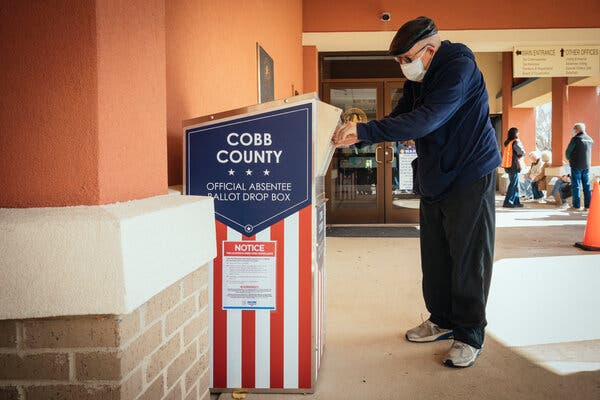

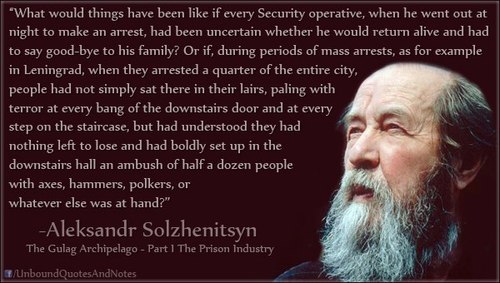


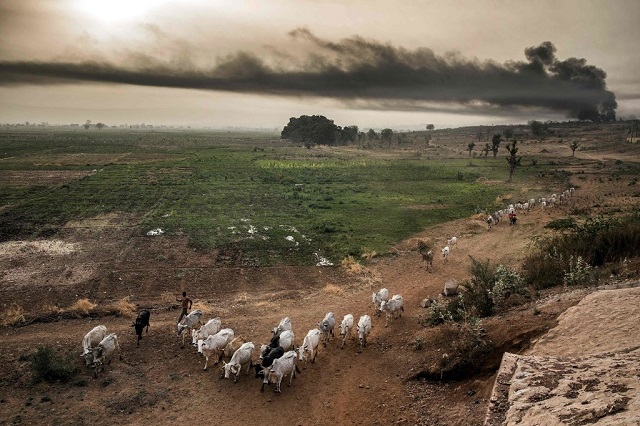
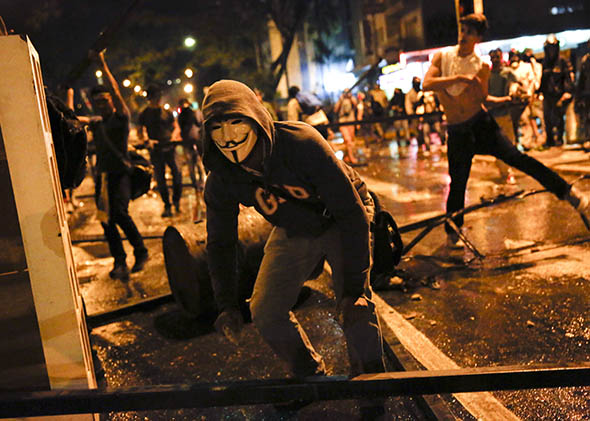



 The End 2026