Worst 5 States for Preppers to Retire- If the grid went down nationwide and society as we know it collapsed, would be people be escaping from your state, or escaping to your state?

We don’t all get to choose where we live; at least, not the state we live in. For most of us, that’s determined by our work; we live where our jobs are. But what about when our jobs no longer determine where we live? Can that happen? It usually does when we reach retirement.

Granted, most people don’t move once they retire, but you’d be surprised how many people actually do. The area where I live has tens of thousands of retired winter residents who come down here to escape the cold weather “up north.” Some of those people come for the winter and just end up staying on, becoming permanent residents in the area. So if they can, you and I can too.

That raises the question of where we would go to retire, if we could go anywhere we want. As preppers, there’s more to that question for us, than there is for our friends and neighbors (unless they are preppers too). We obviously would want to go somewhere where we can live comfortably, even should a TEOTWAWKI scale disaster strike.

My Criteria

This is actually a fairly complex question, with a lot of factors involved. So let me see if I can thin it out a bit for you. I’m not going to tell you where you should go; but let me offer you a glimpse of states that you should avoid going to. I’m basing my decisions on the following criteria:

  • Population Density – The higher the population density of an area, the more of a fight for resources. This fight will probably hurt the poor, the aging and single mothers more than anyone, as they will not have the ability to fight. Survival of the fittest will take over, as people literally fight for the available resources. That’s enough to make many areas unattractive.
  • Average Annual Rainfall – We all know that water is going to be a problem in a post-disaster world. Areas with little rainfall and few rivers will be hard to live in. For most of us, the best way of harvesting water is probably going to be rainfall capture, so we’re going to need a lot of rainfall.
  • Political Leaning – While we all assume that government services and interference in our lives is going to be severely curtailed during a post-disaster situation, we have to think about the here and now as well. Many of the bluest states in the country are also the ones which are working the hardest to take away our Second Amendment rights. That alone is enough to say that those states aren’t a good place to move to.
  • Federally Owned Land – A lot of people talk about bugging out to the wild. That’s great; I have my own plans for that as well. But in most cases, the only practical place to bug out into the wild is federally owned land; national parks, national forests and other land under the control of the federal government. So states with little federal land ownership aren’t all that attractive for preppers to retire to.
  • Forestation – The most practical means of heating a home in a post-disaster world, especially one in which there is no electricity, is with wood. That means having a lot of forests available, where you can cut that wood. This leaves out huge swaths of the nation, such as the entire breadbasket, which is farmland, nor forests.

There may be other criteria which are important to consider; but I limited myself to those five. To me, those seem like the major ones which will affect a prepper’s ability to survive, both in a pre-disaster and a post-disaster world.

The Worst States

Based on that, here are my picks for the worst states to retire in, if you’re a prepper:

  • New York – I lived in upstate New York for a number of years and it is absolutely beautiful. There are miles and miles of hardwood forests, lakes and rivers. But even so, the state is one of the most heavily populated in the country. It is also one of the most left-leaning states, politically speaking, with some of the harshest anti-gun laws around. It would be a very difficult state to survive in.
  • California – In many ways, California and New York are copies of each other. Both have a high population and both are strongly blue. While California has a lot going for it, in the area of natural resources, it has the highest population of any state in the Union. We can expect many people to expand outwards from the major population centers, gobbling up everything in their path. I sure wouldn’t want to be in their path.
  • Florida – At first glance, Florida looks like a great place to go and a lot of people retire there. But much of the state is covered up by the Everglades. Unless you are going to learn how to survive in that harsh environment, it might not be a great place to be. The lack of forestation really isn’t much of an issue, as you aren’t really going to have to heat your home. But you are going to have to worry about hurricanes, which seem to have an affinity for the state.
  • Arizona – Another popular retirement state that’s going to be a mess in a post-disaster world. Arizona is extremely hot, even hotter than South Texas and the Florida peninsula. But there is very little water to be found. That alone is enough to put this state on our worst list. I seriously doubt there will be many people surviving in the heat of Arizona, without access to water.
  • Minnesota – Minnesota is known as “the land of 1,000 lakes” so there’s no shortage of water there. They’re pretty good in the forestation department too. So there’s actually a lot going for this state. But it and its neighbor Wisconsin have very high populations. Unless you could get way out in the boonies, it might be hard to avoid the crowds. Of course, way out in the boonies means the coldest parts of the state, so you have the problem of cold to contend with. That not only affects how much wood you need for your fire, but the very short growing season will make it hard to grow enough food to eat.

Granted, there are a lot of other states which we can rule out, based upon the same criteria. Pretty much all of both the eastern and western seaboards would be bad places to go, for the same reasons I’ve already mentioned. The trick is finding someplace that is good to move to.

My Picks for Best States

Everyone has their own opinion, but here are my top picks for the best states or regions for retiring in as a prepper. These choices were made based on the same criteria that I used for picking the worst states.

  • Eastern Texas – While Texas isn’t a perfect survival location, there are a lot of good areas in the Hill Country and eastern Texas where there is good forestation and water.
  • Idaho, Western Montana and Western Wyoming – This whole area is excellent; providing a lot of forestation, water, federally owned land, rainfall and good hunting. Although far enough north that cold would be a bit of a problem, I would call this the best area of the country to have a retirement home and/or survival retreat.
  • The Appalachian Mountains – This mountain range, passing through several states and changing names a number of times, is a great place to live. While there are some high population areas to avoid, there’s still a lot of back country, which would be ideal for our purposes. I’d avoid the Virginias though, for their political leaning.
  • The Gulf Coast – There’s a lot of good land in the gulf states, along with people who like to hunt and fish. While there really isn’t much government land to bug out to, there are lots of forests, lots of water and lots of game to hunt.
Pure Idiocy: UN Is Sure an Uninhabitable Hell Can Be Averted by Taxation

Apparently, according to UN researchers our world is going to become “an uninhabitable hell for millions of people” due to big names in business and politics not taking action to stop Climate Change. The fact that the UN expects massive numbers of individuals to voluntarily act against their best interests means they are either completely disingenuous about their climate change hysteria or so vastly naive about the way human beings function that the organization needs to be disbanded forthwith. So, since the global government just told us yet again that we are going to die one would think they should have some good answers for the “crisis”… and yet they don’t. So let’s try to find some actually viable solutions while breaking down the weakness of the UN’s current offers.

In advance, it is important to note that the climate “debate” has been fought by journalists, pundits and “concerned” celebrities, who all claim to have science and scientists on their side. If there is a clear truth of what faces us it has been lost in the tweets years ago. So for this strategy session, for the sake of argument, we will assume that climate change is 100% true just as it appears in Greta Thunberg’s nightmares. This is not because it is actually real (or fake) but because the UN considers it to be Gospel and their actions should reflect that belief.

How could taxation possibly solve this problem?

Besides begging and guilt tripping people of importance into voluntary action, one big push by the UN to solve the climate problem is through carbon taxes. To a simpleton living a sheltered existence this makes perfect sense – penalty fees are a deterrent that makes them not park their car illegally, so it will surely make the Chinese go green closing down their factories with no blowback for minimum wage America. It is so deeply naive to believe that taxation will save the environment that it is hard to put into words just how mental the idea is.

So assuming that we can actually measure cubic meters of carbon emissions accurately and get industrial nations to pay their carbon taxes, just how exactly does this reduce demand? Alcohol is taxed in many European countries. Perhaps due to the price some people drink less than they normally would, but taxing alcohol hasn’t killed demand for it, meaning it is still produced in big volumes taxed or untaxed. Applying a carbon tax to a nation will not make demand go down, just prices rise to compensate i.e. they will still be polluting at the same level. The only difference is that the citizens of that country and those who buy their exports will be forced to pay a percentage to a massive international bureaucracy that will somehow save the environment with the cash. The world economy has a roughly 80 trillion dollar estimated value, even if used efficiently what can UN programs paid for by a few billion in carbon taxes actually do to stop the pollutive juggernaut?

Image: Globalization and big box stores are not the problems but a lack of taxation on them according to the UN.

Furthermore, setting the precedent for international taxation is not a particularly great option (especially in the questionable hands of the World Bank) considering how much of tax money is squandered, stolen or misused on a national level, with politicians seeming to always need more. Soulless technocrats dream up soulless technocratic solutions, let’s keep “tax and spend” schemes out of “global government”.

Why is personal (national) responsibility never an option?

As an organization that functions as a worldwide overseer of sorts, logically, the UN cannot simply say “deal with your problems on your own”. This would undermine the justification for their existence, but it certainly would work better than a constant vague stream of doomsaying that rebrands itself every 10 years or so.

The UN believes there will be massive food and water shortages that will lead to a migrant crisis by 2050. This is interesting verbiage as it puts the destiny of the potentially starving people in the hands of the West as a “migrant crisis”. One would think that the UN could come up with some custom plans of action for certain poorer countries to adapt before it is too late, but that would be giving the Global South agency which is a big Liberal “no-no”. The West will always see Brown and Black people as irresponsible children that need Western Parent #1 to look over them.

Why is the nuclear option never on the table?

Yes, Three Mile Island and Chernobyl were scary events but nuclear power can meet all of our energy needs. If you really want our air to be from coal and fossil fuels and yet live a comfortable high-tech life you will have to grow up, understand that wind and solar will always play a supplemental role and order an atomic reactor from the Russians.

Image: Ancient Cold Warrior tribes had the answer to our energy needs.

There is an irrational hippy fear of nuclear power along with an emotional approach to the realities of energy that have put this type of energy in the rear view mirror when it should still be on the horizon. Accepting the risk of a possible once-in-a-generation Fukushima for thousands of years of glutinous electricity usage that does not pollute the air is worth it.

Perhaps the real problem the UN has with nuclear power is that uppity nations like North Korea and Iran can use it for non-energy related purposes.

Why is the “new normal” not taken into consideration as a plan for the future?

It is uncertain what the future will look like but the Covid-19 Pandemic has opened our eyes to the fact that going to work at an office like it is 1950 is pointless and wasteful and that delivery services are killing the need for big box stores.

The UN cannot kill the human desire to have nice things, but we can have nice things ordered online and delivered to us vastly reducing how much global energy is put into transport. In the pre-internet world, trucks brought things to a big store, people drove to the store and drove back home. Now a truck can drive directly to many consumers on one tank of gas thanks to the power of modern computing and organization of deliveries.

It remains to be seen if animals/nature are really benefiting as much from the pandemic as advertised, but fossil fuel consumption is down and working from home has gone mainstream. The “new normal” is part of the UN lexicon but it doesn’t seem to be seen as an alternative to carbon taxes.

Why are property rights never part of environmentalism?

One major downside to Globalism is highlighted by the “peached meme” that shows how peaches were grown in Argentina, packed in Thailand and sold for consumption in America. For those who may not know, peaches can and do grow very well in the U.S. further underscoring this madness.

Image: the “peaches meme”

But then again if an average does try to do some gardening or raise chickens on their own land they face the real chance of being arrested. The UN should really push for people to have the right to at least garden if not raise livestock. Subsistence/supplemental level farming creates far less pollution per square foot and reduces demand to have modified potatoes shipped in from distant lands.

The more people make locally the less needs to be shipped in. The UN should stand firm on the idea that we have the right to farm or produce things on our own territory, which we cannot completely trash because we have to live there. The European villages of old may have been a bit messy but they were certainly better for us and the planet than the Walmart lifestyle.

So if we are really going to die, then…

Well the UN is sure we are going to live in a nightmare by 2050 and yet the general consensus on how to “save the planet” starts with carbon taxes and ends with depopulation. Both of which are horribly naive pessimistic non-answers, when there is so much that could be done. It almost seems like environmental issues are being used as an excuse to push for certain policies that would otherwise never see the light of day.

How To Disappear And Live Under The Radar

We live in a world where we are constantly watched and monitored. Find out what it would take to wipe the slate clean and live a life free of big brother.

Police State got you down? Does the thought of Martial Law keep you up at night?  Well, it should!

We live in a world where we are constantly watched and monitored. Ever wondered what it would take to wipe the slate clean and live a life free of big brother?

Security expert Aton Edwards answered just that as he goes on an amazing journey off the grid and under the radar in ‘‘Track Me If You Can”.

The show focused on ways to avoid being tracked by “big brother” or anyone else who may be looking for you.

Track Me If You Can is a must-watch for anyone interested in protecting their privacy. Aton covers many excellent tips and gives necessary information for anyone who wants to go off-grid and disappear off the radar.

Facts

  • There are 30 million plus surveillance cameras on the US, one camera for every ten Americans.
  • The average American is in 200 databases.
  • Putting a plan in motion to keep you from being tracked is a good idea if you want to devise a new life for yourself

Before You Go

  • Plan 3 months ahead of time
  • Right before you leave, change your appearance significantly (if you have hair, shave your head, if you have blond hair, change it to black, get glasses, etc.).
  • Before you leave, terminate all of your accounts (email, bank accounts, credit cards, etc).
  • Don’t terminate your social network sites as you can use these sites to provide disinformation.
  • Before you leave, delete all of your computer files and get rid of your computer’s hard drive (first boil the hard drive then smash it with a hammer and finally run a Degausser/electromagnetic wand over the drive to obliterate all information it may contain).
  • Get rid of all of your personal items like photos, trophies, mementos, etc. that could tie you to your old life.
  • Shred all of your personal info and credit cards/bank statements/etc. with a micro-cut shredder, next take the shredded material and spread it around in a bunch of trash bags and leave the bags at various dumpsters around the city, or burn it.
  • Get rid of your cell phone or tablet as these can be easily used to track your location either through a computer software program or through triangulation. Off is never truly off with a smart phone, take out the battery until you are ready to abandon it (see below).
  • Pro Tip: Wipe all of your info from your cell phone then leave it at a train or bus station so that someone else will pick it up and start using it, thus providing a source of disinformation for those searching for you.

Day Zero

  • Break your normal patterns (what you eat, where you frequent, how you shop, the kind of work you do, etc).
  • Ditch your car and find a substitute that is not your personality.
  • Completely change your lifestyle (ie: if you are currently a corporate lawyer, become a night janitor then dress and behave appropriately).
  • If you do take your car get rid of the toll pass which can track your movements through the RFID chip in the pass.
  • Stay away from interstate highways.
  • Get rid of the GPS device which came with your car. Ditto for the OnStar system which can be activated remotely and allow others to listen in on your conversations.
  • Make sure your tires don’t have RFID chips in them. Some tires have these chips and they can link to your VIN number and the purchase location of the tires.

Living Day To Day

  • Go to non-chain restaurants.
  • Pay for everything with cash.
  • Use alcohol wipes to remove fingerprints.
  • When you are out in public disguise yourself (at least wear a hat and sunglasses).
  • Avoid frequenting your usual places (for example, if you are a vegetarian your meal preference can be found through your prior airline meal request and then you may be easier to locate if you frequent vegetarian restaurants).
  • Get your food to go from restaurants so you don’t leave DNA on the plates/utensils/glasses which can be read with an easily purchased BPac machine which analyzes your biometrics.
  • Stay in small motels and pay with cash.
  • Use a Multi Sweep Hidden Camera & Bug Detector to check for hidden bugs/cameras/etc.
  • Cover the peephole so people can’t see into your room.
  • Sleep in your sleeping bag so you won’t leave DNA behind on the hotel bedding.

How To Stay Off The Radar

how to hide police state
  • Buy a basic pre-paid cell phone (not a smart phone) which you only use for outgoing calls (be sure to turn off the caller ID). Replace the pre-paid phone frequently, about every 2 weeks.
  • When you are not using the cell phone, remove the battery so it can’t be turned on remotely or used to track you.
  • Be careful when speaking in cars or near windows. The NSA/CIA/FBI has a bounce laser monitoring system which can pick up sound waves on glass and record what you are saying.
  • At night you can avoid being seen on cameras that use infrared light (90% do) by fashioning a cap with LED lights on the front of it which makes a “halo” and shields your face from the cameras.

Restarting Life

  • To determine the best place to resettle, choose a mid-sized city in a not overly cold place. Big cities and small towns are not good places for anonymity because of all the cameras.
  • To change your identity don’t just assume the identity of someone else (this is way more difficult–and illegal–than it used to be), instead petition the court to change your name legally to a new–and common–name (you’ll have to dig deeper elsewhere on the web for exactly how to do this without giving yourself away).
  • Apply for a driver’s license under your new name.
  • Get an RFID-blocking wallet. Most driver’s licenses and passports have RFID chips in them. Block people from reading these RFID chips by carrying them in your RFID-blocking wallet.
  • To get back online use a new laptop. Stay away from libraries!
  • Always use a hard wire to your laptop and turn off the wi-fi which is universally less secure.
  • Put a cover over your web cam because these are extremely easy to turn on remotely.
  • Install anti-key logger software on your computer.
  • Also, install software that will reroute your ip address so your location can’t be determined via your computer.
  • Be aware of the NSA spying and the ECHELON program in the US which monitors phone and computer transmissions for keywords and messages.
  • At the grocery store, change your shopping habits and never use store club cards.
  • Be aware that nearly all food packaging now contain RFID tags. To be sure these aren’t used for tracking (unlikely now but possibly more likely in the future as the Internet grows) repackage food once you purchase it and get rid of the store packaging.
  • To find work, get a night job that is different that your previous job, such as a janitor. This will limit your contact with people.
  • Change jobs often.
  • Create a “back story” for your new identity and practice it. If you base your lies on the truth but change the details a bit, your story will be easier to remember and more believable.
  • Open a bank account, preferably at a small, local credit union.
  • Be aware of video surveillance cameras which are everywhere.
  • Never contact people from your past.
  • The narrator noted that every year, changing your identity gets harder.
  • The police now consider common activities suspicious such as bird watching, sketching or painting, or taking photographs in public.
  • There are 70+ FUSION centers in the US which coordinate surveillance and other information.
  • Airlines sometimes put locater chips on your bags so be aware of this. You can also use these tagged bags for disinformation purposes (ie: leaving them in places to throw people off your trail).
  • Technology is now available to identify you by the way you walk (change the way you walk), your facial measurements and biometrics (use a disguise, and especially sunglasses), and even your response to images.
  • It will be 7 to 10 years before your old identity drops off of databases, if ever.
  • Guard against complacency.
  • The less you interface with technology, the better off you will be.

How to think about, protect against, and survive an EMP attack- This apocalyptic scenario is exactly what government and scientific leaders have been warning the public about for decades.

Some content on this page was disabled on April 22, 2021 as a result of a DMCA takedown notice from The Prepared LLC. You can learn more about the DMCA here:

https://wordpress.com/support/copyright-and-the-dmca/

8 Silent Weapons To Have Against Intruders (Protecting your home and family is generally speaking a very important task, but nowadays it seems to be more important than it ever before was.)

Protecting your home and family is generally speaking a very important task, but nowadays it seems to be more important than it ever before was. While the riots we’ve seen have been mostly limited to commercial areas and restaurants, there have been some demonstrations in residential areas too. As it looks right now, it’s only a matter of time until rioters start breaking into homes and looting.

Of course, it doesn’t take a riot for those with a criminal mindset to invade your home. An estimated 3.7 million burglaries are committed each and every year, with members of the household being attacked in at least seven percent of the cases.

Based upon past experience with looting after disasters, it is widely believed that there will be a lot of people who turn to looting and crime in order to find food and other critical supplies in the wake of a major disaster.

Should there ever be a breakdown of law and order, we can expect that criminals will be quick to recognize it and take full advantage of the situation, as there will be nothing to restrain them, but any fear they might have of armed homeowners.

In reality, defending ourselves has always been a personal responsibility. Due to the restrictions that police are under, they are unable to defend us. Rather, they operate in a reactionary mode, coming in after the fact to investigate who committed the crime and punish the wrongdoers. But as we’ve seen in the recent riots, police have an even harder time doing that during times of crisis.

This is at least part of the reason for the Second Amendment, providing us with the means of defending ourselves and our homes. Our right to own and carry firearms is our biggest protection, but what if we don’t want to make the noise a gunshot makes?

Why wouldn’t we want to make that noise? For the same reason that criminals don’t want to make noise when they break into a home: to avoid attracting attention. That attacker who just broke into your home might have friends, so if you have to deal with him (or her), you might not want to attract their attention. If that’s the case, what can you use?

Stun Cane

8 Silent Weapons to Have Against Intruders

Tasers are often touted as a great self-defense weapon. But they have one major drawback; they’re a contact weapon.

You actually have to get that taser in contact with the person you want to hit, which means that they will have a chance to get their hands on you, maybe even take that taser out of your hand.

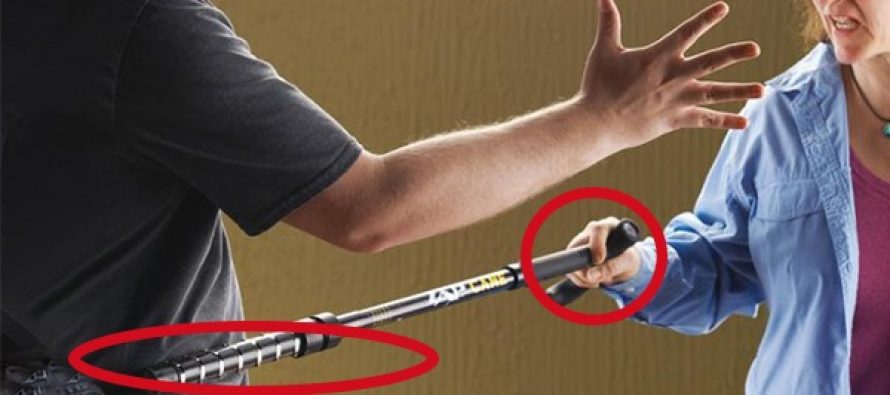
If you’re going to use a taser, it just makes more sense to use one that qualifies as a “melee weapon.” In other words, a taser that you can use at arm’s length, giving you the advantage of reach. Better yet, make that taser in such a way that if they try and grab it, to pull it out of your hands, they’ll get zapped.

That’s essentially what a stun cane is. There are several styles of these, some looking like a walking stick that an older person might use, and some looking like a walking stick that a hiker might. Either way, they do the same thing, zapping the attacker, and giving you a chance to get away.

Excellent In Close Quarters

8 Silent Weapons to Have Against Intruders

Whether we’re talking a knife or a sword, there’s something about a blade which can make eyes go wide, right before people start peeing in their pants.

People who can stare down the barrel of a gun may not be able to do that with naked steel. There’s just something about looking at that blade and realizing that the person holding it wants to sink it in your guts, that’s frightening.

Even so, you don’t want to try and defend yourself with any sort of blade, if you don’t know what you’re doing. Both knives and swords are excellent weapons in close quarters, when in the hand of someone who knows what they are doing. But they can be easily taken away from the person who just expects to be able to strike fear in the heart of their opponent.

The Most Fearsome Melee Weapon

8 Silent Weapons to Have Against Intruders

Swords fall into a category known as “melee weapons”, which are medieval weapons intended for use in a melee or at arm’s length.

There are many other weapons we could look at in this category, such as clubs and spears, but probably the most fearsome melee weapon there is, is the axe.

The advantage of using any melee weapon is that you can keep an attacker at arm’s length. If they’re holding a knife and you’ve got a club, you have an advantage of reach, even though they have a more dangerous weapon. So if they have a knife and you have an axe, you have a definite advantage.

The axe is a berserker weapon, meaning that you can just go crazy with it. I’ve seen people go up against trained swordsmen with an axe and totally dominate them. While it wouldn’t be much use against a gun, I’d grab an axe to defend my home against a thug carrying a knife or club any day. It might make a few holes in the wall in the process, but that’s okay; you can always fix them.

Used For So Many Millennia

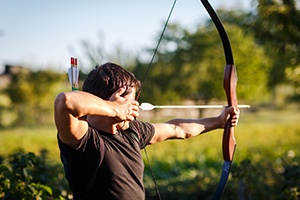
8 Silent Weapons to Have Against Intruders bow

The bow is an amazing weapon, which explains why it has survived through so many millennia.

It is a silent weapon with great accuracy and a decent range. In the hands of someone who really knows what they’re doing, it’s as deadly as a firearm. The problem with a bow is that it is hard to use indoor, unless you are in a large room.

Firing a bow requires even more room than a rifle, even though it is silent. On the other hand, if you are trying to protect your property from an intruder, rather than just your home, and you want a silent weapon, the bow is definitely the way to go.

Martial Arts Weapons

8 Silent Weapons to Have Against Intruders

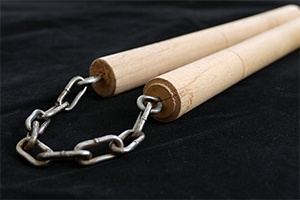
Most martial arts weapons qualify as melee weapons as well. They all seem to have originated from tools used by common workers, who were not allowed to own swords and spears. So they learned how to use the tools at hand as weapons. This has developed into a number of very effective weapons, when in the hands of someone who knows how to use them.

That’s the problem with martial arts weapons though; you have to know how to use them. It takes quite a bit of time and a lot of training to become even marginally proficient in them, unlike the axe, which anyone can grab and start swinging. Even so, if you know how to use martial arts weapons or have the time to learn, it’s definitely worth your while.

A Less Lethal Option

8 Silent Weapons to Have Against Intruders

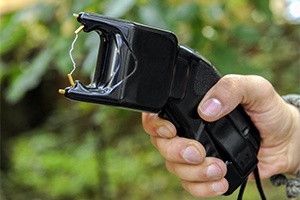
If you want more range than just the length of a cane, then you should consider a taser gun. Originally developed as a less lethal option for the police, the taser gun is now available to civilians in most states. They shoot two darts with wires trailing behind, supplying the electrical charge.

Powered by compressed nitrogen, the taser gun makes a small pop, rather than the bang of a normal gun. However, they are a one-shot weapon, needing reloading before they can be used again. Oh, and the police will know it was you that shot it, because the markers are serialized.

Wasp Spray

8 Silent Weapons to Have Against Intruders

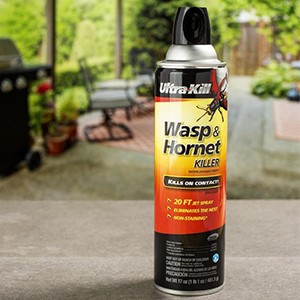
Another common self-defense weapon that’s dangerous to use is pepper spray. While more effective than chemical mace, pepper spray has to be used at contact distance, just like a taser. If you have to get that close with a weapon, there’s always a chance of it being taken away and used against you.

Unfortunately, there is no reliable pepper spray that works at 20 feet, regardless of what the packaging says. On the other hand, wasp spray is designed to work at that distance, so that we can kill off wasps’ nests, without having to get close enough to the creatures. Used in self-defense, wasp spray is just about as effective as pepper spray, especially if you hit them in the face.

There is one danger though in using wasp spray. That is, it can cause permanent damage to the eyes or lungs. For this reason, it is considered illegal in some places. That can probably be argued in court, but it may have to go to court. So if you choose this option, be sure you’ve thought about that risk.

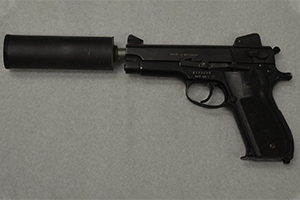
Suppressed Pistol

8 Silent Weapons to Have Against Intruders

A suppressed pistol really isn’t silent, so it’s not the best weapon to use if you’re trying to avoid attracting attention.

The suppressor doesn’t make the gunshot sound anything like what we’ve all heard in the movies; rather, it reduces the sound that the pistol makes by about 30dB. That’s usually enough to hide what the sound is, but it isn’t silent, and it certainly wouldn’t be silent indoors.

Nevertheless, if you don’t have the necessary skills to use any other sort of weapon, then a suppressed pistol is a better option than an unsuppressed one. The lower volume may be hidden by a noisy television or music; at least enough to confuse any partner lurking outdoors, or in another part of the house.

What other silent weapons do you have in mind? Please leave a comment and share them below.

Economic collapse = societal collapse. It’s deliberate so that we can have “order out of chaos”, as in New World Order, also known as the tyranny of the ruling sociopaths.

Other than the obvious consequences, what might we expect from a partial economic collapse? A total collapse of the economy would throw the nation into utter chaos. But what if we endure an economic depression, or a severe and long-lasting downturn? I think that some of the effects are not so obvious.

1. The college and university system will collapse

As I explained in this previous post, the system of higher education is a house of cards. The cost of getting a college degree has risen sharply and steadily, while real income has remained relatively flat. The price rise is due to the easy availability of grants and loans for education. But with so many persons getting a college degree, its value in the marketplace has plummeted. Many college grads are out of work, or they are working in a job that does not require a degree. Eventually, this practice of paying more and more, for something that is worth less and less, will collapse the system. Colleges and universities will not have enough paying students, and professors will not agree to a drastic pay cut. Overhead expenses are far too high.

All that is needed is an economic collapse, or partial collapse, to topple this house of cards. Many universities and colleges will be forced by economics to shut down.

Guns have been referred to as “the great equalizer,” and there’s no weapon which can come close to them in that regard.

A lot of the popularity of firearms is due to the fact that anyone can use them effectively, not only the strong and agile. The young, the old, men, women and child can take up firearms in defense of home and family and do so effectively.

But what do you do if you can’t use a gun – or if you don’t have a gun — to protect yourself?

This image has an empty alt attribute; its file name is untitled-copy-4-1.png

2. Agricultural yields will plummet

The current U.S. agricultural system is based on the expectation of high yields. But high yields are obtained by high inputs — all the things that go into growing the crop, including lots of fertilizer, perhaps irrigation, herbicides, pesticides, labor, machinery. Then those high yields are sold and the money is then used to fund the inputs for the next crop cycle.

An economic collapse will mean that farmers will not be able to afford all the inputs needed for high yields. And when yields fall, the amount of money from that crop will be less. Then the next crop cycle will have even less money for inputs, resulting in even lower yields. And the process will continue — lower yields, less money, lower inputs — until many farmers are out of business and a food crisis results.

3. Violent crime will increase

When people lack money and food, they become desperate. And desperate people do desperate things. Theft and robbery will skyrocket, and people will be afraid in their homes, and afraid to go out in the community. Even a quick trip to the market will become risky. Sales of most goods will plummet, causing the economic crisis to worsen. Protests will turn violent. Home invasion robberies will become much more common. Many people will be killed or injured as a result of this increase in violent crimes.

4. Law enforcement will be overwhelmed

The law enforcement system in the U.S. is commercial. Officers are paid. We don’t keep a large excess of officers on the payroll, just in case crime sharply increases. So it is relatively easy for the system to be overwhelmed. And that means a call to 911 might not bring the police to your door in time, if at all. Those who have firearms for home defense will be much better off than those who rely solely on the police. But many households have no firearms. And that means that robberies will increase, and so will the economic damage and the number of injuries and deaths.

5. The healthcare system will be overwhelmed

The healthcare system is also commercial, and lacks a safety margin in the form of excess doctors and nurses. Hospitals operate at close to capacity. A sudden increase in persons who are sick or injured will overwhelm the system.

The aforementioned increase in violent crime will undoubtedly increase injuries. But it is less obvious that a disruption to the food production and distribution system will increase illnesses. Plenty of good healthy food is the first line of defense against illness. Malnourished persons are much more likely to get sick. So an extended disruption to the food supply will cause an increase in illnesses.

6. Travel anywhere will become dangerous

As a result of all the above described problems, travel will be dangerous. Want to make a quick trip to the supermarket? You risk having your house robbed, if it is left unoccupied. And you risk being attacked on your way back from the market. Robbers might wait outside the market and follow anyone who looks like they purchased a lot of food.

There will be protests in many places, and violence will often break out. People who are hungry and afraid do not make the best decisions. Then there is the cultural aspect of the situation. We live in a culture that tells us to expect the government to take care of us, and to protest whenever anything doesn’t go our way. Ironically, self-sufficiency is abhorrent to our narcissistic culture.

I expect that the roadways will be dangerous, as violent criminals will see travelers as easier targets than homes.

7. The death rate will jump higher

People will be malnourished because of the disruption in the food supply, so they will get sick more easily. Violent crimes and violent protests will result in many more injuries than usual. And yet healthcare will be much more difficult to access. There will be a shortage of hospital beds. It will be difficult to get a doctor’s appointment. There may be a shortage of prescription and OTC medications.

All of these factors will make life a riskier endeavor.

Now if you are a seasoned prepper, who has long considered the dangers inherent in an economic collapse, you may have anticipated some of the above consequences. But I hope I’ve added to your understanding of the possible problems that we may soon face.

You might be living in one of America’s deathzones and not have a clue about it
What if that were you? What would YOU do?

In the next few minutes, I’m going to show you the U.S. Nuclear Target map, where you’ll find out if you’re living in one of America’s Deathzones.

This image has an empty alt attribute; its file name is untitled-1.png

7 Unexpected Consequences of an Economic Collapse

Other than the obvious consequences, what might we expect from a partial economic collapse? A total collapse of the economy would throw the nation into utter chaos. But what if we endure an economic depression, or a severe and long-lasting downturn? I think that some of the effects are not so obvious.

In this video, i will unearth a long-forgotten secret that helped our ancestors survive famines, wars, economic crisis, diseases, droughts and anything else life trew at them.
So pay chose attention because this video will change your life forever for the good!

1. The college and university system will collapse

As I explained in this previous post, the system of higher education is a house of cards. The cost of getting a college degree has risen sharply and steadily, while real income has remained relatively flat. The price rise is due to the easy availability of grants and loans for education. But with so many persons getting a college degree, its value in the marketplace has plummeted. Many college grads are out of work, or they are working in a job that does not require a degree. Eventually, this practice of paying more and more, for something that is worth less and less, will collapse the system. Colleges and universities will not have enough paying students, and professors will not agree to a drastic pay cut. Overhead expenses are far too high.

All that is needed is an economic collapse, or partial collapse, to topple this house of cards. Many universities and colleges will be forced by economics to shut down.

2. Agricultural yields will plummet

The current U.S. agricultural system is based on the expectation of high yields. But high yields are obtained by high inputs — all the things that go into growing the crop, including lots of fertilizer, perhaps irrigation, herbicides, pesticides, labor, machinery. Then those high yields are sold and the money is then used to fund the inputs for the next crop cycle.

An economic collapse will mean that farmers will not be able to afford all the inputs needed for high yields. And when yields fall, the amount of money from that crop will be less. Then the next crop cycle will have even less money for inputs, resulting in even lower yields. And the process will continue — lower yields, less money, lower inputs — until many farmers are out of business and a food crisis results.

3. Violent crime will increase

When people lack money and food, they become desperate. And desperate people do desperate things. Theft and robbery will skyrocket, and people will be afraid in their homes, and afraid to go out in the community. Even a quick trip to the market will become risky. Sales of most goods will plummet, causing the economic crisis to worsen. Protests will turn violent. Home invasion robberies will become much more common. Many people will be killed or injured as a result of this increase in violent crimes.

4. Law enforcement will be overwhelmed

The law enforcement system in the U.S. is commercial. Officers are paid. We don’t keep a large excess of officers on the payroll, just in case crime sharply increases. So it is relatively easy for the system to be overwhelmed. And that means a call to 911 might not bring the police to your door in time, if at all. Those who have firearms for home defense will be much better off than those who rely solely on the police. But many households have no firearms. And that means that robberies will increase, and so will the economic damage and the number of injuries and deaths.

5. The healthcare system will be overwhelmed

The healthcare system is also commercial, and lacks a safety margin in the form of excess doctors and nurses. Hospitals operate at close to capacity. A sudden increase in persons who are sick or injured will overwhelm the system.

The aforementioned increase in violent crime will undoubtedly increase injuries. But it is less obvious that a disruption to the food production and distribution system will increase illnesses. Plenty of good healthy food is the first line of defense against illness. Malnourished persons are much more likely to get sick. So an extended disruption to the food supply will cause an increase in illnesses.

6. Travel anywhere will become dangerous

As a result of all the above described problems, travel will be dangerous. Want to make a quick trip to the supermarket? You risk having your house robbed, if it is left unoccupied. And you risk being attacked on your way back from the market. Robbers might wait outside the market and follow anyone who looks like they purchased a lot of food.

There will be protests in many places, and violence will often break out. People who are hungry and afraid do not make the best decisions. Then there is the cultural aspect of the situation. We live in a culture that tells us to expect the government to take care of us, and to protest whenever anything doesn’t go our way. Ironically, self-sufficiency is abhorrent to our narcissistic culture.

I expect that the roadways will be dangerous, as violent criminals will see travelers as easier targets than homes.

7. The death rate will jump higher

People will be malnourished because of the disruption in the food supply, so they will get sick more easily. Violent crimes and violent protests will result in many more injuries than usual. And yet healthcare will be much more difficult to access. There will be a shortage of hospital beds. It will be difficult to get a doctor’s appointment. There may be a shortage of prescription and OTC medications.

All of these factors will make life a riskier endeavor.

Now if you are a seasoned prepper, who has long considered the dangers inherent in an economic collapse, you may have anticipated some of the above consequences. But I hope I’ve added to your understanding of the possible problems that we may soon face.

Today I’d like to share with you a 3-second survival hack you can use to skyrocket your chances of protecting your loved ones during ANY crisis.
This technique is so powerful it can give you almost superhuman powers during the ugliest nightmares imaginable….
From natural disasters like earthquakes or tornadoes…
To explosive situations like mass shootings or even nationwide martial law.
And It doesn’t matter if you’re out of shape…
Or have no equipment…
Or even if you’re disabled living in a wheelchair.
This technique has been tested and proven by elite soldiers and real world “miracle” survivors from around the world.

How to Decontaminate Yourself in 5 Easy Steps when Back at Home from Infected Areas

The number of people infected with the Coronavirus keeps climbing all the time, with more and more cases showing up here at home, now that testing is becoming more widespread.

While the US is still number three, worldwide, in total cases, we can expect that to increase, surpassing even the number of cases that China is willing to admit to.

We are rapidly reaching a point where it will become dangerous to go out in public, due to the high number of people walking the streets who are infected and spreading the disease, even though they may not be symptomatic.

New York City, which is now considered an epicenter of the disease, with over 5% of the total cases worldwide, is probably already at that point. When 1/8 of the population is diseased, you can’t safely make contact with anyone outside your home.

But this doesn’t eliminate the need to leave the house now and then. If nothing else, we are all going to have to replenish our stocks of food and other critical supplies as the lockdown continues. That means going out in public, and if the stores continue with the current restricted hours, there will be no time we can go shopping and not expect to encounter other people.

Okay, so how can we go out in public, without bringing the disease back into our homes when we return?

We’re going to have to start decontaminating ourselves, the moment we arrive home before we make contact with anything.

Ideally, this decontamination should be done outside the family home, say on the back patio. If you have a gate in your fence, allowing access to the backyard, it would be good to set up a decontamination area there, allowing you to decontaminate in some level of privacy, yet still, be outside.

When we get to that point, we should also decontaminate anything we bring home with you.

How do you know that the box of breakfast cereal you just bought wasn’t coughed on by someone with COVID-19? You don’t. Since the virus can survive for up to nine days on hard surfaces, it would be good to decontaminate it, along with decontaminating yourself.

There are three basic ways of decontaminating, although only two of them are practical for our needs. The third method, using heat, requires getting the object hot enough to kill off germs.

But that’s also hot enough to kill us; not a desirable outcome. So we’ll leave that one aside for now. The other two are ultraviolet (UV) light and disinfectants.

Decontaminating with UV Light

Ultraviolet light is uniformly fatal to viruses, breaking down their molecular structure. This is extremely handy for us, as sunlight contains a lot of UV.

That UV isn’t blocked by clouds either, although rain will make it hard for it to get through.

To disinfect with UV, every surface must be exposed to the light. While UV can kill bacteria in as little as 10 seconds, for safety sake we need to work with a time frame of three to four minutes.

So the first step in our decontamination process is to stand in the sun for three to four minutes, turning slowly so that the sunlight can reach all sides of our body.

Of course, there will always be parts of our bodies that are shaded, unless we are going to stand on our heads. So this form of decontamination isn’t going to be enough by itself.

However, it can be enough for decontaminating packages, whether delivered to our door or purchased in one of our local stores.

Decontaminating Packages with UV

If you receive a package delivered to your home, pick it up with disposable rubber gloves on and move it to your decontamination area in the back yard.

There, set it in bright sunlight, arranging it in such a way as to ensure that the most possible surface area is exposed to the light. Leave it there for a few minutes, then turn it over, so that whatever sides were not exposed to the sunlight can be exposed.

If there’s a chance that the package is contaminated, we have to assume that there’s a chance that the contents are as well; that the person who packaged the shipment is infected and had coughed on the package. Therefore, it’s a good idea to open the package outdoors and expose the contents to UV light as well.

The package itself can be disposed of in the outside garbage can.

Once you have allowed all sides of the shipment to be exposed to UV light, remove your disposable rubber gloves, and dispose of them, before picking the item(s) up. If you were to pick them up with the gloves on, you might very well re-contaminate the package.

Decontaminating with Disinfectants

Even if you decontaminate yourself with UV, it’s still a good idea to use chemical decontamination as well, especially for the parts of your body which are shadowed when standing in the sun, such as those shaded by your arms.

You’ll need some sort of disinfectant for this, such as:

  • A commercially manufactured disinfectant spray
  • Isopropyl rubbing alcohol – must be at least 60%. Do not use denatured alcohol, as it has additives which make it poisonous for human contact
  • Hydrogen peroxide – must be at least 3% (check out our guide of multiple uses for Hydrogen Peroxide here)
  • Chlorine bleach – most bleach is 6%; dilute it at a ratio of 1/8 cup + 4 teaspoons per gallon of water
  • Tincture of iodine (however, this tends to stain)

Whatever type of disinfectant you choose to use, it’s best to have it in a spray bottle for convenience, speed of decontamination and to reduce waste. If possible, adjust the spray bottle for a fine mist. To disinfect:

  1. Spray the disinfectant over your entire body. You’ll need an assistant to help you get your back, as it’s really hard to spray your back and you can’t see if you’ve done a thorough job.
  2. Allow the disinfectant to sit for a minute, and then rinse off of any parts of your body where you feel it is necessary. Note: In most cases, it isn’t necessary to rinse off, as it will evaporate.
  3. Wash your hands for a minimum with normal hand soap and water. Although you can use antibacterial soap, it isn’t necessary and won’t help with eliminating Coronavirus any better than normal soap will.
  4. When you enter the home, change your clothes, putting the clothes you’ve been wearing in the hamper to be washed.
  5. Wash your hands again, after removing your clothes.

Please note that no system of decontamination is totally perfect; but the more thoroughly you disinfect, the less chance that you will bring any virus into the home. In a sense, this is a game of odds and what you’re trying to do is tilt the odds in your favor. You’ll know you’ve lost or won by whether or not anyone in your family comes down with the disease.

The End State: 5 Triggering Events That Would Place the U.S. Under Martial Law- There are triggering events that can suspend our rights and cause government leaders to declare Martial Law under the Constitution. Let’s take a look at 5 methods the administration would be most likely to utilize to reach this end state.

Once that is accomplished, the country and people would be locked down and kept under control on the pretext of continuing with the government and/or maintaining the national security of the U.S. Let’s take a look at 5 events the administration would be most likely to utilize to reach this end state.

5 Triggering Events Could Put the U.S. Under Martial Law

Note: All of these can occur simultaneously, successively, or individually in any combination at any time: there is no limit to their use or potential to recur!

1. Economic Meltdown

Over the course of this past year, we have seen a tremendous amount of volatility in trade (international) and the U.S.’s domestic manufacturing base.  As our fragile economy is based on 75% of consumer spending, any significant downturn that keeps the shoppers home can lead to disastrous reports.  Lower consumer spending means people do not buy goods and services beyond the absolute essentials, and worse: (in the government’s eyes) they hoard money and withdraw their funds from bank accounts.

The Baltic Dry Index (BDI) can be seen as a key indicator of raw goods and materials transported to manufacturers and consumers via shipping contracts.  As mentioned in previous articles, Hanjinn Container Company, the7th largest container corporation in the world just filed for bankruptcy over the summer.  You can see the BDI fluctuations day.  It has been fluctuating wildly over the past year.

Deutsche Bank is on the verge of bankruptcy and large banks such as Bank of America and J.P. Morgan have been plagued by losses and lawsuits alike.  The unemployment rate is truly about 25% and the “Soviet” style statistics quacked from the radio on “record gains” and “economic improvements” are false and intentionally misleading.  A “Bank Holiday” has already happened in places such as Indianapolis, and when the politicians, bankers, and oligarchs decide, they will pull the plug on a Federal Reserve system of fiat currency that is already an ineffective laughingstock of a smirking world that is steadily returning to the gold standard.  When that Bank Holiday is declared, you can be sure the financial systems will collapse and Martial Law will be waiting in the wings.

2. Cyberattack

This one is definitely one of the administration’s favorites.  We’ve been seeing signs of this with the DHS (Department of Homeland Security) and DNI (Director of National Intelligence) letters and statements that the Russian government is hacking into the American electoral and election process.  The “targeting” of the DNC (Democratic National Convention) e-mails was assigned to the Russians and officially the Russian government has been accused by the administration of such, and trying to influence the presidential race on Friday, 10/14/16.

We also saw on 9/7/16, two days before the 5th North Korean nuclear test, the corporation based in California that monitors North Korean missile launches and nuclear testing was hacked into.  A DoS (Denial of Service) was placed into their computer systems, preventing them from uploading satellite feeds and photos that would have enabled them to monitor the North Korean launch.  That corporation is the Project on Crowdsourced Satellite Imagery.  You can read more about this in the article “DoS Attack Crashes Website Monitoring North Korea’s Nuclear Test Site,” by Eric Niiler of Wired.com.

If other governments can crash our internet and servers, do you think it is possible that the U.S. government as directed by the Obama administration can do it on its own? 

When that occurs, cell phones will go down, the computers will go down, the financial markets will be in a turmoil and cease trading, and ATM’s and bank cards will be rendered useless.  Transportation, inventories, shipping, and deliveries will all be thrown into a turmoil and come to a halt.  For an excellent description of this, read Mac Slavo’s article from SHTFplan.com entitled “When the Trucking Stops,” that shows how vulnerable our nation’s supply lines are.  Bottom line: if all of this goes down as a result of a cyberattack, Martial Law will immediately follow.

3. “Unforeseeable/Black Swan” Event

As of last week, Obama just signed an Executive Order (EO), entitled “Executive Order: Coordinating Efforts to Prepare the Nation for Space Weather Events,” signed 10/13/2016.  Such an EO could cover meteor strikes, Coronal Mass Ejections (CME’s) from the sun, a comet, or any other space anomaly.  Not a big deal, you may think?  It is a big deal, because here’s the bottom line:

Who is to prevent Obama from either causing another nation to launch an EMP (Electromagnetic Pulse) weapon, or launching one of his own (U.S.-made weapon), taking down the grid and subsequently blaming it on a CME event/solar storm, courtesy of the sun?

Other events would include potentially man-made or generated storms, such as earthquakes, hurricanes, or even volcanic activity.  If one scoffs at such, remember all that it would need is a 1 megaton nuclear “kicker” to set off either Yellowstone Caldera or the San Andreas Fault.  Such natural disasters (initiated by man or genuine) usually result in Martial Law at the state level on a regular basis, much less one that is national in scope…that Obama would jump on to inculcate Martial Law.

4. Nuclear War/EMP Attack

Any day we could be at war with North Korea, Iran, China, or Russia.  The resulting devastation, whether a full-scale or a limited nuclear war would automatically set in motion the wheels for COG (Continuity of Government), and a declaration of Martial Law.

Let me close this portion with my caveat:

World War III will begin with the detonation of an EMP device or weapon over the continental United States, followed by a limited nuclear exchange and then conventional warfare.

5. Viral or Bacterial Pandemic

Either naturally-occurring, or man-made.  The CDC (Centers for Disease Control) just inherited a tremendous amount of “police power” over the summer regarding their newfound ability to quarantine individuals or large groups of people on the suspicion of contamination/communicability regarding viral or bacterial pathogens relating to a potential or real pandemic.

There is an article by Catherine J. Frompovich entitled “ALERT: U.S. CDC Giving Itself Unconstitutional Powers to Round Up and Detain Citizens En masse Anytime, Anywhere and Throw Away the Key,” dated on 9/3/16.  This article details how these police powers were created in the Federal Register as the Proposed Rule “Control of Communicable Diseases” on August 15, 2016 that are now in effect to be found under Federal Register Number: 2016-18103.  Guess what?  That proposed rule is now law, and could easily be utilized to “justify” Martial Law in the U.S. because of a pandemic: naturally-occurring, man-made, or phony.

In addition to all of these juicy tidbits, the deciding factor is what I refer to as the “IHM,” or “Incredible Human Mob.”  Yes, Civil Unrest is a factor; yet it is not a method but a “sign/symptom,” a “side-effect” of what happens when one of the aforementioned 5 methods are employed.  “In the interests of public safety,” or “to protect the public,” or “to maintain law and order” are the phrases trumpeted by our benevolent and friendly government.

As Rahm Emmanuel said, “Never let a crisis go to waste,” the very ones who are to be protected (the public) are the ones who create the conditions for civil unrest.  It’s literally a “problem that takes care of itself,” and here’s the bottom line to cover the Civil Unrest factor:

Using the fake justification “in the interests of the safety of the people,” martial law will be declared to confine, restrict, and control the people…protecting them from…themselves.

Then come the restrictions to travel, the police state in the streets, at the workplace, and the confiscation of firearms.  Then comes the removal of “dissidents and potential troublemakers,” as well as the curfews, restrictions, and limitations in every facet of our society.  Martial Law is an objective of the Obama administration.  The problem is that he (Obama) cannot just arbitrarily declare it.  The declaration requires a prod, such as one of the 5 methods mentioned.  In those circumstances, he then can suspend our rights under the Constitution and bypass the true laws of the U.S.  Such an end state is his desire.  Such an end state would also mean the end…of the United States.

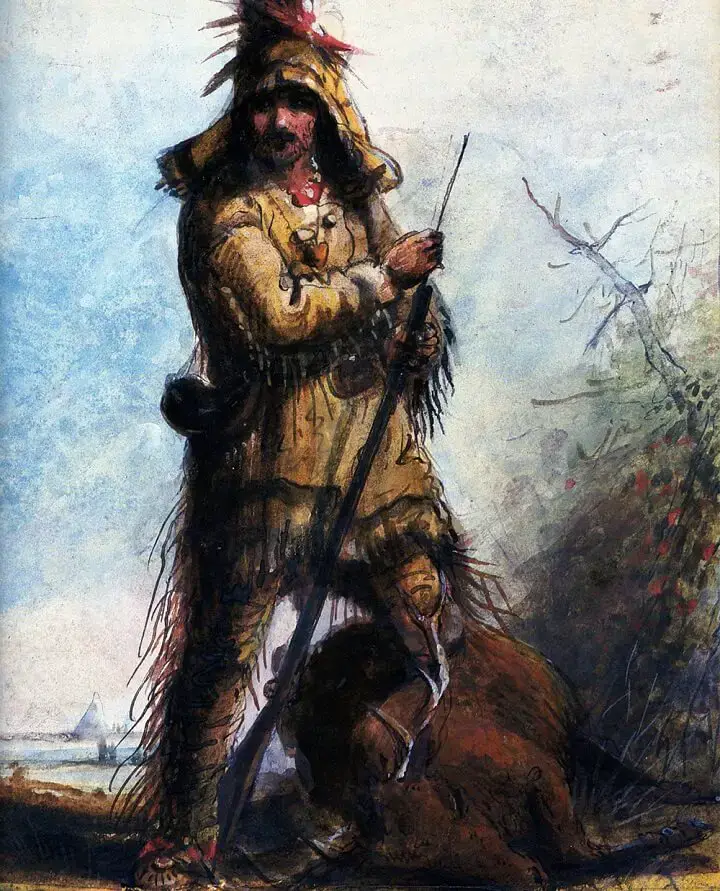
What an 18th Century Frontiersman Can Teach Us About Prepping- For the vast majority of human history, trappers, pilgrims, soldiers, explorers, and settlers across the world were forced to brave the elements and survive for years at a time away from civilization

For the vast majority of human history, trappers, pilgrims, soldiers, explorers, and settlers across the world were forced to brave the elements and survive for years at a time away from civilization. The skills and lessons they have to teach us about prepping and survival are innumerable, and we have likely forgotten as many valuable lessons as we have retained.

In today’s article, I want to touch on a few things that have stood out to me while reading about my fur trapping ancestors. I also want to mention that there are hundreds of little skills (like concealing a fire) that we could glean off of the frontiersman of old, but those would take many books and years to cover completely.

While those skills will be highlighted in some future articles, today’s article focuses more on some general philosophies of frontiersman survival.

Painting Of Frontiersman Fishing

Traveling Light and Efficiently

A lot of modern survival gear is well designed with new-age materials that allow them to be more effective, as well as smaller and lighter. At the same time, many of those going out to brave the wilderness these days take more equipment than a frontiersman would’ve needed in a year.

Now, of course, packing light or efficiently isn’t some sacred science lost to time (in USMC Recruit Training, one of the first things you’re taught is how to cram all your gear inside your bag as effectively as possible), but the efficiency of our modern gear and equipment, as well as the shorter duration of our stays out in the wild, mean that our ability to “do more with less” like the fur trappers of old has been diminished.

For example, in 1807, a pioneer was recorded as saying, “I was alone and on foot carrying a pack of thirty pounds…” This was during a journey without known parameters, out for an indefinite amount of time. Today’s average hiker is carrying a pack of around 30 pounds as well (the “optimal” weight by backpackers today is said to be 15 lbs), and the long hike Appalachian trail competitors will be carrying around 22lbs.

These two are pretty comparable in terms of daily needs, but you must also take into account the frontiersman was staying out indefinitely, did not have modern and lightweight materials, and had to bring along self-defense items (as well as extra gunpowder) not included in today’s kits. Almost everything he had would be more cumbersome and more massive and would need to last longer.

While expert backpackers of today can get the weight of their gear extremely low, this was a skillset common amongst our ancestors who knew it could mean the difference between life and death.

Frontiersmen could match us in weight-ratio with much bulkier gear, but it is worth noting that at the same time, they aimed for that same optimal number of pounds. Roughly 30 lbs (for a 150 lb man) max, unless otherwise absolutely necessary.

Painting Of Frontiersman Travelling

Herbs and Natural Medications Can Be Very Useful

It’s true that the efficacy of modern medicine, and the vast array of crackpot science around natural remedies, have given many herbal treatments a lousy name. You only need to do a quick Google search to see how pseudoscientists are trying to make money off gullible people, with what they say are the secret medicines of that past.

That said, just like survival gear, some plants and treatments have been found time and again amongst human societies. Some of these plants are so widespread in ancient European, Native American, and Asian cultural medicine that scientists began to investigate them.

Yarrow as an Example

One plant that has been incredibly popular as a herbal remedy throughout history is Achillea Millefolium. Achillea Millefolium is more commonly known as Yarrow and has been referred to by names such as Soldier’s Woundwort due to its use in ancient medical practices.

In fact, even the ‘Achillea’ in Achillea Millefolium is named after the great Achilles and a tale where he used Yarrow to stop the bleeding of his friends’ wounds. Some even speculate that the stories of his invulnerability may be tied to the discovery of the “healing plant.”

Yarrow Illustration From Old Book

Yarrow was used by medieval knights, ancient Greeks, Native Americans, and countless other cultures to create poultices and pack wounds to stop swelling and bleeding and to withdraw infection. 

Some will take it as a tea for internal issues; others will use the powdered dry herb or a fresh herb poultice to stop bleeding, or as a topical cream for burns.

Scientists decided to test this plant to see if it could do what it was claimed it could do. Numerous studies found that the plant really was effective in stopping bleeding and in fighting inflammation, vindicating centuries of traditional remedies. Other studies are still pending.

While you need to look at every treatment on a case by case method, know that there is much to be learned from the ways our ancestors treated and cared for wounds and disease. It wasn’t all dark age leeches and hacksaws.

Yarrow blooms from June to October and is found throughout North America and temperate Europe, Australia, and Asia. 

Old Illustration Of Man And HorseSome Gear Truly is Essential

I realized the things they brought were incredibly similar, even more so than I would have assumed at first. It seems the optimal kit was pretty much agreed on a few thousand years ago, and people have just been tweaking it for their unique circumstances each generation.

This coincides perfectly with more recent theories of the “Five C’s of Survival”, or the even more recent “Ten C’s.” These are concepts where multiple experts have gone through and examined the critical necessities of human survival.

The Five Basic C’s of Survival are: Cutting, Combustion, Cordage, Container, Cover.

If you only have room for five items, it is said that these will be the most important for your well-being. These tools are the most difficult to replicate with natural materials, and they can mean the difference between a relative standard of comfort and possible death from exposure.

Over time, these tools were added onto by survivalists, and today we have the modern 10 C’s. The second 5 basics of survival (to make the full 10 C’s) are a cotton bandana, compass, candles, canvas needle, and cargo tape.

The modern 10 C’s:

  1. Cutting
  2. Combustion
  3. Cordage
  4. Container
  5. Cover

  1. Cotton bandana
  2. Compass
  3. Candles
  4. Canvas needle
  5. Cargo tape

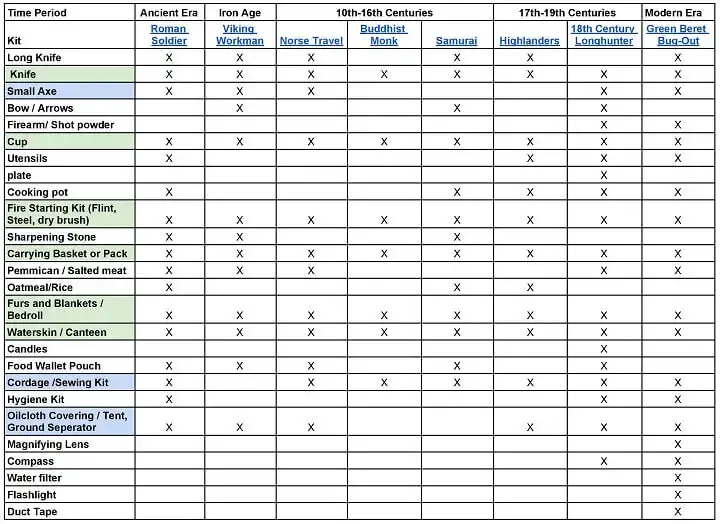
So, to amateurishly test the concept, I got a handful of videos about frontiersmen and other adventures through history and what they carried. Of course, they may have missed some items or may have been mistaken about something, and a single video isn’t exactly hard proof. Regardless, it was a fun experiment.

Here is a quick summary of what I found researching EDC trekking gear throughout history:

EDC Trekking Gear Throughout History

As you can see, almost every kit covers the 5 C’s, and almost 9 of the 10 C’s pretty well. There are some key exceptions though, that likely stem from the culture (Buddhist Monks often rely on strangers they pass for food rather than carry it themselves) and are uniquely situational.

There are also some little commissions, like the Green Beret not having a bag to store his food… he just put it in with the general pack I believe, so there are a few nuances that throw the chart off.

While I wouldn’t try to pass this chart off for hard science, it gives us a bit of insight into what is truly necessary.

Here are the things that everybody seemed to carry throughout most of human history:

  1. Weather appropriate clothing w/layer options
  2. Knife
  3. Fire-starting kit
  4. Cordage and/or sewing kit
  5. Containers for holding water and food
  6. Extra cup or small bowl for cooking and storage
  7. Efficient carrying system (bags or straps)
  8. Extra furs and blankets

Each of these was either carried by all or was omitted in only a case or two (but I’m led to believe these were accidental omissions rather than anything else).

Honorable mentions:

  1. Small Axe / Saw tool
  2. Oilcloth ground covering and/or tent-type structure
  3. Sharpening Stone
  4. Compass

While the modern 10 C’s are a better way to make sure you are covering all of your bases, it’s interesting to see how closely they match up with kits through history. Really, cargo tape, candles, and specifically a cotton bandana are the only items not well covered by past trekkers.

To bring it all back around, we can see that by looking at the gear of a frontiersman (in this case, an 18th-century longhunter), we find complete coverage of the 10 C’s… minus the duct tape for obvious reasons.

3 Frontier Tips You Shouldn’t Leave Home Without

While I didn’t plan to list general frontiersman themed survival tips in the article, some are too good—or necessary—not to include.

1. You Only Want to Shoot Once When SHTF

Steven Rinella made this point in the past, and though I’m not sure what historical document he pulled it from (he attributed it to Daniel Boone), it makes sense.

Back in the day, when hostile natives shared your hunting grounds, you didn’t want to take a second shot while hunting. A single shot will be heard, but it can be hard to place the direction it came from. The second shot, once hostels are listening, can give away your position much clearer.

2. Cook Wild Meat Thoroughly

Nobody wants worms. Trichinosis can come from eating wild meat that has not been blasted by fire. In the wild (unless you can measure 160 degrees), this means cooking all of your meat until there is no pink left showing.

3. View the Landscape Through Waterways

Most of us who studied topographical maps in the past did so because we were in the military. When I was looking at those maps, I know that the only time I would take notice of rivers or waterways was when they would impede movement or provide a danger zone. For frontiersmen, everything from rivers to creek beds gives away vital information about the surrounding area.

When you are far from civilization, these waterways will still be one of your best methods for orienting yourself and finding people. Small waterways usually flow into bigger ones, and humans tend to live where water flows. If you are hopelessly lost, follow the water.

Design a site like this with WordPress.com
Get started