This article is my own creation and I have full copyright!
Have you ever stopped to think about those little-known ordinances that could get you in trouble with the law if actually enforced? What violation of a silly regulation might result in a hit to your pocketbook with a fine or possibly even land you in jail?
Let’s take a look at some of the ridiculous laws that are on the books in cities around our great country.
Maybe the most common local legal issue with which we are all familiar is the far-reaching sign ordinance. How many times do you drive down the street and see a vacant trailer, van, or panel truck parked in parking lot? The owner is obviously advertising a business and, rather than conform to the city sign ordinances, the “eyesore” vehicle is parked in plain sight for the public to view. Should this unwelcome visual distraction be banned from our city’s parking areas, or is this just a creative way to create publicity?
One Midwestern city has an ordinance in place that authorizes law enforcement to issue tickets to anyone who is deemed “annoying.” This annoyance could be performed by mouth, sign, or motion. Talk about a violation of free speech.
A city in one of our Western states requires that homeowners have front lawns covered with flat, green grass. This guideline was fine until an extended drought hit the area. Many home dwellers violated the ordinance by not watering their grass or simply replacing it with rocks or shrubs.
In a small town in Florida, any broken window must be boarded up by a window covering that matches the exterior color of the building. And, after the board is in place, the clock starts running. The window must be replaced within thirty days after the initial damage.
This guide below can help you in a survival situation
If society collapses, you can bet that the foods the pioneers ate will become dietary staples
Several municipalities in southern California instituted a ban against cutting down oak trees in an attempt to curb development. Even the simple pruning of such a tree by a homeowner is against the law.
The code enforcement officers in one South Florida town are hard at work ticketing those property owners who haven’t taken down seasonal holiday decorations by January 10. I guess their holiday spirit disappears pretty quickly!
In various towns around the country, the list of silly laws continues. Did you know that somewhere in the United States it is illegal to …
* Operate a moving vehicle while blindfolded
* Stop a child from jumping over a puddle of water
* Cross a street on your hands
* Fall asleep under a hair dryer, but only if you are a female
* Sing in public in bathing suit attire
* Give a lighted cigar to a domesticated pet
* Attend a theater within four hours of eating garlic
* Kiss for more than five minutes
* Carry an ice cream cone in your pocket
* Shoot a teller with a water pistol while robbing a bank
Isn’t it about time that we finally get tired of the politicians and the senseless rhetoric that comes from their legislation? Don’t you think that the local guys are just as intrusive as the politicians in Washington?
In his new novel, Tuey’s Course, James Ross shares the story of a man who has reached his breaking point with city government and the members who enjoy wielding their power over those who cannot fight back. As with Ross’ two previous novels, Lifetime Loser and Finish Line, this new novel provides social commentary on race and class in our country. And, as always, the author uses the backdrop of St. Louis and the fictional Prairie Winds Golf Course to develop his story.
If you have any dissatisfaction with my content, you can tell me here and I will fix the problem, because I care about every reader and even more so about your opinion!
This article is my own creation and I have full copyright!
Have you ever stopped to think about those little-known ordinances that could get you in trouble with the law if actually enforced? What violation of a silly regulation might result in a hit to your pocketbook with a fine or possibly even land you in jail?
Let’s take a look at some of the ridiculous laws that are on the books in cities around our great country.
Maybe the most common local legal issue with which we are all familiar is the far-reaching sign ordinance. How many times do you drive down the street and see a vacant trailer, van, or panel truck parked in parking lot? The owner is obviously advertising a business and, rather than conform to the city sign ordinances, the “eyesore” vehicle is parked in plain sight for the public to view. Should this unwelcome visual distraction be banned from our city’s parking areas, or is this just a creative way to create publicity?
One Midwestern city has an ordinance in place that authorizes law enforcement to issue tickets to anyone who is deemed “annoying.” This annoyance could be performed by mouth, sign, or motion. Talk about a violation of free speech.
A city in one of our Western states requires that homeowners have front lawns covered with flat, green grass. This guideline was fine until an extended drought hit the area. Many home dwellers violated the ordinance by not watering their grass or simply replacing it with rocks or shrubs.
In a small town in Florida, any broken window must be boarded up by a window covering that matches the exterior color of the building. And, after the board is in place, the clock starts running. The window must be replaced within thirty days after the initial damage.
Several municipalities in southern California instituted a ban against cutting down oak trees in an attempt to curb development. Even the simple pruning of such a tree by a homeowner is against the law.
The code enforcement officers in one South Florida town are hard at work ticketing those property owners who haven’t taken down seasonal holiday decorations by January 10. I guess their holiday spirit disappears pretty quickly!
In various towns around the country, the list of silly laws continues. Did you know that somewhere in the United States it is illegal to …
* Operate a moving vehicle while blindfolded
* Stop a child from jumping over a puddle of water
* Cross a street on your hands
* Fall asleep under a hair dryer, but only if you are a female
* Sing in public in bathing suit attire
* Give a lighted cigar to a domesticated pet
* Attend a theater within four hours of eating garlic
* Kiss for more than five minutes
* Carry an ice cream cone in your pocket
* Shoot a teller with a water pistol while robbing a bank
Isn’t it about time that we finally get tired of the politicians and the senseless rhetoric that comes from their legislation? Don’t you think that the local guys are just as intrusive as the politicians in Washington?
In his new novel, Tuey’s Course, James Ross shares the story of a man who has reached his breaking point with city government and the members who enjoy wielding their power over those who cannot fight back. As with Ross’ two previous novels, Lifetime Loser and Finish Line, this new novel provides social commentary on race and class in our country. And, as always, the author uses the backdrop of St. Louis and the fictional Prairie Winds Golf Course to develop his story.
If you have any dissatisfaction with my content, you can tell me here and I will fix the problem, because I care about every reader and even more so about your opinion!
This article is my own creation and I have full copyright!
An invasion can be the cause of a war, be a part of a larger strategy to end a war, or it can constitute an entire war in itself. Due to the large scale of the operations associated with invasions, they are usually strategic in planning and execution.
When I hear the word invasion, what immediately comes to mind is one country invading another. We have ultimately learned that the reasons we are given for the invasion are rarely the whole story. There is more often than not a hidden agenda, some element of self-serving and ulterior motives which are never meant to see the light of day. That is the nature of invasion – it is insidious and used for the benefit of the invader and not the invaded. It makes sense – if what we are offering is beneficial to both parties, then an invasion wouldn’t be necessary – an invitation would be extended and the other party given a choice.
We can justify invasion as much as we want – that we are saving and/or improving people’s lives etc. but invasion is still invasion. Some people will always want to be ‘saved’, rather than expending the effort to save themselves, and will welcome the intervention, but there are many who will consider it just a matter of exchanging one form of slavery over another.
If we have invited someone along to a party and they become intrusive, then we can ask them to leave. However, it doesn’t often work that way with invasion. The invader is perceived as the more dominant and powerful, sometimes even as a saviour. However, over a period of time, even if our lives have been saved by the initial invasion, resentment starts to fester and rise to the surface. People start muttering and mumbling, they start asking questions about exactly what benefits the invader received when they ‘saved’ them. These are weighed and measured and often, in hindsight, the cost is agreed to have been much too high. Invasion is never transparent – there is always the danger of exposure.
It is difficult to separate invasion into different categories, because each one tends to bleed into the other. Below are the five types invasion.
Physical invasion
Physical invasion is the most obvious and visible one. It comes in the form of sexual assault, torture, beatings and imprisonment of one form or another.
These are all used as acts of war in order to quell the opposition so victory is assured. It begs the question – can we therefore go one step further and say that invasion is in fact an act of war – in whatever form it comes? Invasion of a country, sexual harassment of a co-worker or bullying of someone at school – isn’t it just a matter of degree?
Some hurt and angry children learn to become bullies. If they aren’t healed or made accountable, they become adult bullies. These adult bullies might then have children of their own, who learn their behaviour and continue it into the next generation. Some adult bullies end up as heads of corporations and powerful public figures. This is where global acts of war are likely to begin. It becomes a self-perpetuating cycle of fear driven behaviour.
Mental Invasion
Bullying doesn’t have to be physical. In these days of social media it has become a violent and cruel form of torture of another human being. Most of these bullies are able to remain anonymous, which makes it more sinister in some ways because there is no-one to be held accountable. The person smiling at you from across the room could actually be the person who is sending the vile messages.
The news is full of stories of people being bullied due to their physical appearance, their sexual orientation, religious beliefs etc. This breaks down the person’s self-worth and self-confidence, to the extent that sometimes even a loving family can’t repair the damage done. This form of invasion can culminate in people taking their own lives, when their feeling of isolation becomes too much to bear.
Forcing our opinions onto others is also a form of invasion. Have you ever had a conversation with someone who is very intense and stares into your eyes while waiting for your response, virtually willing you to agree with them? I have and I know that I have felt very uncomfortable, under pressure and desperately looking for the nearest exit! Invasion has that effect!
Any planting of our own beliefs, or educated guesses, into someone else’s mind as the ultimate truth is a form of invasion. Some years ago I came across the stories of two ladies who had both been diagnosed with the same ‘terminal’ disease, and had both been given 3 months to live by their respective doctors. One of these ladies I met but the other I didn’t because she had taken the doctor’s words to heart, lost hope and passed on a few days before the 3 months was up. The other lady however, though obviously frightened, rejected the doctor’s diagnosis. She had 3 young children and was determined not to leave them. She went on an emotional journey to discover the cause of her illness and went on to heal herself. Fourteen years later and I am told she is still alive and kicking.
It brings to mind a man I met who helped me a lot when I started my own conscious spiritual journey at the age of 19. His name was Joseph Benjamin, and he told the story that 15 years previously his doctor had given him 6 months to live – he was still alive and the doctor was dead. He used to relay that story with gusto.
Spiritual Invasion
I am of the belief that we are spiritual beings having a material experience. Therefore, spiritual invasion strikes at the very core of who we are – it trumps physical and mental invasion every time.
This is where people’s actions come from on a subconscious level – whether they are religious fanatics or atheists, to everything in between those extremes. The physical and mental functions are driven from this core belief.
There are places in the world where people don’t want their photos taken because they believe that their spirit will be captured. There are other places where people believe in being cursed, and that if they don’t behave in certain ways their souls will be condemned to eternal damnation.
I have personally been told about people who cast spells in order to bring someone’s loved one back to them. Maybe a lock of hair, or some belonging, is handed over and a spell is cast. The power of belief is such that often the loved one does return (unless they are strong minded enough to resist), but usually only for a limited period and often it’s not a happy experience. The reason being is that their personal choice has been compromised, they have been manipulated and drawn back against their will – they would never have returned if by invitation alone. Relationships of any kind have to be mutual and not driven by one person, with the other along for the ride.
Everyone is entitled to their own opinion, and to worship or not according to their own inclination. Religious beliefs, like any other, should come from personal experience and not just adopted because it is expected, or because the beliefs have been handed down through generations. What was good enough for your father is not necessarily good enough for you.
Spiritual invasion occurs when people are victimised according to their beliefs, and threatened if they don’t conform. Some years ago I travelled to an island where some of the residents were organising a festival which I participated in. I found some very interesting things there – the ruling family had outlawed any form of medium-ship, tarot reading etc. These were considered as breaking the law, as dictated by a book which had been written in the sixteenth century. There had been a dispensation that for the 3 day festival it was allowed, but after that it was a crime. In fact, one reader who continued doing readings from her hotel room actually had the police knock on the door and tell her to stop. The most interesting, and tragic, thing for me was shown in the handwriting of the youth there – so many young people exhibiting stress, anxiety, depression and sometimes even suicidal tendencies. The future generation were being severely impacted through this enforced lack of freedom to make their own choices.
Acts of love which are actually invasive behaviours
Parents, teachers and mentors who don’t want their charges to ‘grow up’ can become invasive if they aren’t careful. This is usually seen and generally accepted as loving protection. It comes in the form of speaking for their charges long after they should be speaking for themselves, and/or monitoring and over-seeing them so that they never get a feeling of being trusted, or being seen as responsible human beings.
We need to look at our motivation very closely. Are we acting out of love for the other person, or out of fear that we are going to be abandoned, that we won’t be needed any more? Whatever the intention, a feeling of resentment and wanting to escape will inevitably occur, and what could have been a loving and supportive relationship breaks down, and sometimes becomes damaged beyond repair. We all need to know when to let go, and let others make their own decisions without our interference, unless we are invited to comment of course.
Invasive tactics used within business
People who systematically use invasion to acquire their goals are hard-wired into the fear mentality – the belief that if they don’t force people they won’t be successful. People who use invitation, however, are hard-wired into the love mentality – they know that the right people will come to them willingly, and a mutually beneficial relationship can be forged. Invasion might get more sales in the initial stages, as people are manipulated into believing it’s for their own good – but invitation wins out overall, because people who engage in the initial stages are much more likely to stay with us long term, or as long as the relationship remains beneficial and pertinent to both parties.
Politicians and unethical corporations around the world have invasion down to a fine art. They invade people’s minds with the belief that various life threatening practices are quite safe – when, in fact, the only winners are themselves. This is where glitzy and emotion-inducing marketing campaigns come into play. When some of the people prove resistant to that particular form of invasion, another tactic is employed – that of ridicule. To make the non-believers laughing stocks in front of others, and to belittle them to the extent that the general public think they are either crazy or delusional.
I think that most of us have heard what happens to whistle blowers – the full weight of the law is thrown at them and they often lose their reputations and are exiled from their own countries, unless they are prepared to go to jail. It must be a terrifying experience for them, and their belief in the necessity of their actions would have to be rock solid for them to commit such social suicide. This is invasion in an extreme form, because whole populations are put at risk in order that a relatively few invaders can benefit and live luxurious and powerful lives!
Conclusion
I believe that we should only believe what we absolutely know to be true from our own experience, and be prepared to adjust our beliefs on the discovery of further evidence. We should remain open minded, and if we follow that path we will be able to fend off most forms of invasion, because we will know what we stand for and will have developed a strong sense of self.
Due to its insidious nature, I think that we would all do well to look within and see invasion as something we potentially do to others, not just that others do to us. It is easy to take the moral high ground, but whenever we act in our own interests to the detriment of another, we are using invasion in one form or another. Anything we do to manipulate a situation, be it physical, mental or spiritual, is a way of invading someone else’s space in some way and it’s unacceptable.
If, on the other hand, invitation was seen as a necessity rather than just an option, we would have a much happier and more balanced world to live in. All situations would be transparent and negotiation would be open and honest. Hidden agendas would become a thing of the past, and we could have confidence in the people with whom we choose to associate.
If you have any dissatisfaction with my content, you can tell me here and I will fix the problem, because I care about every reader and even more so about your opinion!
When I hear the word invasion, what immediately comes to mind is one country invading another. We have ultimately learned that the reasons we are given for the invasion are rarely the whole story. There is more often than not a hidden agenda, some element of self-serving and ulterior motives which are never meant to see the light of day. That is the nature of invasion – it is insidious and used for the benefit of the invader and not the invaded. It makes sense – if what we are offering is beneficial to both parties, then an invasion wouldn’t be necessary – an invitation would be extended and the other party given a choice.
We can justify invasion as much as we want – that we are saving and/or improving people’s lives etc. but invasion is still invasion. Some people will always want to be ‘saved’, rather than expending the effort to save themselves, and will welcome the intervention, but there are many who will consider it just a matter of exchanging one form of slavery over another.
If we have invited someone along to a party and they become intrusive, then we can ask them to leave. However, it doesn’t often work that way with invasion. The invader is perceived as the more dominant and powerful, sometimes even as a saviour. However, over a period of time, even if our lives have been saved by the initial invasion, resentment starts to fester and rise to the surface. People start muttering and mumbling, they start asking questions about exactly what benefits the invader received when they ‘saved’ them. These are weighed and measured and often, in hindsight, the cost is agreed to have been much too high. Invasion is never transparent – there is always the danger of exposure.
This guide below can help you in a survival situation
If society collapses, you can bet that the foods the pioneers ate will become dietary staples
It is difficult to separate invasion into different categories, because each one tends to bleed into the other. Below are the five types invasion.
Physical invasion
Physical invasion is the most obvious and visible one. It comes in the form of sexual assault, torture, beatings and imprisonment of one form or another.
These are all used as acts of war in order to quell the opposition so victory is assured. It begs the question – can we therefore go one step further and say that invasion is in fact an act of war – in whatever form it comes? Invasion of a country, sexual harassment of a co-worker or bullying of someone at school – isn’t it just a matter of degree?
Some hurt and angry children learn to become bullies. If they aren’t healed or made accountable, they become adult bullies. These adult bullies might then have children of their own, who learn their behaviour and continue it into the next generation. Some adult bullies end up as heads of corporations and powerful public figures. This is where global acts of war are likely to begin. It becomes a self-perpetuating cycle of fear driven behaviour.
Mental Invasion
Bullying doesn’t have to be physical. In these days of social media it has become a violent and cruel form of torture of another human being. Most of these bullies are able to remain anonymous, which makes it more sinister in some ways because there is no-one to be held accountable. The person smiling at you from across the room could actually be the person who is sending the vile messages.
The news is full of stories of people being bullied due to their physical appearance, their sexual orientation, religious beliefs etc. This breaks down the person’s self-worth and self-confidence, to the extent that sometimes even a loving family can’t repair the damage done. This form of invasion can culminate in people taking their own lives, when their feeling of isolation becomes too much to bear.
Forcing our opinions onto others is also a form of invasion. Have you ever had a conversation with someone who is very intense and stares into your eyes while waiting for your response, virtually willing you to agree with them? I have and I know that I have felt very uncomfortable, under pressure and desperately looking for the nearest exit! Invasion has that effect!
Any planting of our own beliefs, or educated guesses, into someone else’s mind as the ultimate truth is a form of invasion.Some years ago I came across the stories of two ladies who had both been diagnosed with the same ‘terminal’ disease, and had both been given 3 months to live by their respective doctors. One of these ladies I met but the other I didn’t because she had taken the doctor’s words to heart, lost hope and passed on a few days before the 3 months was up. The other lady however, though obviously frightened, rejected the doctor’s diagnosis. She had 3 young children and was determined not to leave them. She went on an emotional journey to discover the cause of her illness and went on to heal herself. Fourteen years later and I am told she is still alive and kicking.
It brings to mind a man I met who helped me a lot when I started my own conscious spiritual journey at the age of 19. His name was Joseph Benjamin, and he told the story that 15 years previously his doctor had given him 6 months to live – he was still alive and the doctor was dead. He used to relay that story with gusto.
Spiritual Invasion
I am of the belief that we are spiritual beings having a material experience. Therefore, spiritual invasion strikes at the very core of who we are – it trumps physical and mental invasion every time.
This is where people’s actions come from on a subconscious level – whether they are religious fanatics or atheists, to everything in between those extremes. The physical and mental functions are driven from this core belief.
There are places in the world where people don’t want their photos taken because they believe that their spirit will be captured. There are other places where people believe in being cursed, and that if they don’t behave in certain ways their souls will be condemned to eternal damnation.
I have personally been told about people who cast spells in order to bring someone’s loved one back to them. Maybe a lock of hair, or some belonging, is handed over and a spell is cast. The power of belief is such that often the loved one does return (unless they are strong minded enough to resist), but usually only for a limited period and often it’s not a happy experience. The reason being is that their personal choice has been compromised, they have been manipulated and drawn back against their will – they would never have returned if by invitation alone. Relationships of any kind have to be mutual and not driven by one person, with the other along for the ride.
Everyone is entitled to their own opinion, and to worship or not according to their own inclination. Religious beliefs, like any other, should come from personal experience and not just adopted because it is expected, or because the beliefs have been handed down through generations. What was good enough for your father is not necessarily good enough for you.
Spiritual invasion occurs when people are victimised according to their beliefs, and threatened if they don’t conform. Some years ago I travelled to an island where some of the residents were organising a festival which I participated in. I found some very interesting things there – the ruling family had outlawed any form of medium-ship, tarot reading etc. These were considered as breaking the law, as dictated by a book which had been written in the sixteenth century. There had been a dispensation that for the 3 day festival it was allowed, but after that it was a crime. In fact, one reader who continued doing readings from her hotel room actually had the police knock on the door and tell her to stop. The most interesting, and tragic, thing for me was shown in the handwriting of the youth there – so many young people exhibiting stress, anxiety, depression and sometimes even suicidal tendencies. The future generation were being severely impacted through this enforced lack of freedom to make their own choices.
Acts of love which are actually invasive behaviours
Parents, teachers and mentors who don’t want their charges to ‘grow up’ can become invasive if they aren’t careful. This is usually seen and generally accepted as loving protection. It comes in the form of speaking for their charges long after they should be speaking for themselves, and/or monitoring and over-seeing them so that they never get a feeling of being trusted, or being seen as responsible human beings.
We need to look at our motivation very closely. Are we acting out of love for the other person, or out of fear that we are going to be abandoned, that we won’t be needed any more? Whatever the intention, a feeling of resentment and wanting to escape will inevitably occur, and what could have been a loving and supportive relationship breaks down, and sometimes becomes damaged beyond repair. We all need to know when to let go, and let others make their own decisions without our interference, unless we are invited to comment of course.
Invasive tactics used within business
People who systematically use invasion to acquire their goals are hard-wired into the fear mentality – the belief that if they don’t force people they won’t be successful. People who use invitation, however, are hard-wired into the love mentality – they know that the right people will come to them willingly, and a mutually beneficial relationship can be forged. Invasion might get more sales in the initial stages, as people are manipulated into believing it’s for their own good – but invitation wins out overall, because people who engage in the initial stages are much more likely to stay with us long term, or as long as the relationship remains beneficial and pertinent to both parties.
Politicians and unethical corporations around the world have invasion down to a fine art. They invade people’s minds with the belief that various life threatening practices are quite safe – when, in fact, the only winners are themselves. This is where glitzy and emotion-inducing marketing campaigns come into play. When some of the people prove resistant to that particular form of invasion, another tactic is employed – that of ridicule. To make the non-believers laughing stocks in front of others, and to belittle them to the extent that the general public think they are either crazy or delusional.
I think that most of us have heard what happens to whistle blowers – the full weight of the law is thrown at them and they often lose their reputations and are exiled from their own countries, unless they are prepared to go to jail. It must be a terrifying experience for them, and their belief in the necessity of their actions would have to be rock solid for them to commit such social suicide. This is invasion in an extreme form, because whole populations are put at risk in order that a relatively few invaders can benefit and live luxurious and powerful lives!
Conclusion
I believe that we should only believe what we absolutely know to be true from our own experience, and be prepared to adjust our beliefs on the discovery of further evidence. We should remain open minded, and if we follow that path we will be able to fend off most forms of invasion, because we will know what we stand for and will have developed a strong sense of self.
If, on the other hand, invitation was seen as a necessity rather than just an option, we would have a much happier and more balanced world to live in. All situations would be transparent and negotiation would be open and honest. Hidden agendas would become a thing of the past, and we could have confidence in the people with whom we choose to associate.
If you have any dissatisfaction with my content, you can tell me here and I will fix the problem, because I care about every reader and even more so about your opinion!
This article is my own creation and I have full copyright!
An invasion can be the cause of a war, be a part of a larger strategy to end a war, or it can constitute an entire war in itself. Due to the large scale of the operations associated with invasions, they are usually strategic in planning and execution.
We have to be ever watchful so as not to be on either side of the fence – the invader or the invaded.
When I hear the word invasion, what immediately comes to mind is one country invading another. We have ultimately learned that the reasons we are given for the invasion are rarely the whole story. There is more often than not a hidden agenda, some element of self-serving and ulterior motives which are never meant to see the light of day. That is the nature of invasion – it is insidious and used for the benefit of the invader and not the invaded. It makes sense – if what we are offering is beneficial to both parties, then an invasion wouldn’t be necessary – an invitation would be extended and the other party given a choice.
We can justify invasion as much as we want – that we are saving and/or improving people’s lives etc. but invasion is still invasion. Some people will always want to be ‘saved’, rather than expending the effort to save themselves, and will welcome the intervention, but there are many who will consider it just a matter of exchanging one form of slavery over another.
If we have invited someone along to a party and they become intrusive, then we can ask them to leave. However, it doesn’t often work that way with invasion. The invader is perceived as the more dominant and powerful, sometimes even as a saviour. However, over a period of time, even if our lives have been saved by the initial invasion, resentment starts to fester and rise to the surface. People start muttering and mumbling, they start asking questions about exactly what benefits the invader received when they ‘saved’ them. These are weighed and measured and often, in hindsight, the cost is agreed to have been much too high. Invasion is never transparent – there is always the danger of exposure, and eventually it’s ‘Mutiny on the Bounty’ all over again.
It is difficult to separate invasion into different categories, because each one tends to bleed into the other. Physical invasion can lead to mental invasion and to spiritual invasion and so on. As I’ve said before, invasion is insidious!
This guide below can help you in a survival situation
If society collapses, you can bet that the foods the pioneers ate will become dietary staples
Physical invasion is the most obvious and visible one. It comes in the form of sexual assault, torture, beatings and imprisonment of one form or another.
These are all used as acts of war in order to quell the opposition so victory is assured. It begs the question – can we therefore go one step further and say that invasion is in fact an act of war – in whatever form it comes? Invasion of a country, sexual harassment of a co-worker or bullying of someone at school – isn’t it just a matter of degree?
Some hurt and angry children learn to become bullies. If they aren’t healed or made accountable, they become adult bullies. These adult bullies might then have children of their own, who learn their behaviour and continue it into the next generation. Some adult bullies end up as heads of corporations and powerful public figures. This is where global acts of war are likely to begin. It becomes a self-perpetuating cycle of fear driven behaviour.
Mental Invasion
Bullying doesn’t have to be physical. In these days of social media it has become a violent and cruel form of torture of another human being. Most of these bullies are able to remain anonymous, which makes it more sinister in some ways because there is no-one to be held accountable. The person smiling at you from across the room could actually be the person who is sending the vile messages.
The news is full of stories of people being bullied due to their physical appearance, their sexual orientation, religious beliefs etc. This breaks down the person’s self-worth and self-confidence, to the extent that sometimes even a loving family can’t repair the damage done. This form of invasion can culminate in people taking their own lives, when their feeling of isolation becomes too much to bear.
Forcing our opinions onto others is also a form of invasion. Have you ever had a conversation with someone who is very intense and stares into your eyes while waiting for your response, virtually willing you to agree with them? I have and I know that I have felt very uncomfortable, under pressure and desperately looking for the nearest exit! Invasion has that effect!
Any planting of our own beliefs, or educated guesses, into someone else’s mind as the ultimate truth is a form of invasion. Some years ago I came across the stories of two ladies who had both been diagnosed with the same ‘terminal’ disease, and had both been given 3 months to live by their respective doctors. One of these ladies I met but the other I didn’t because she had taken the doctor’s words to heart, lost hope and passed on a few days before the 3 months was up. The other lady however, though obviously frightened, rejected the doctor’s diagnosis. She had 3 young children and was determined not to leave them. She went on an emotional journey to discover the cause of her illness and went on to heal herself. Fourteen years later and I am told she is still alive and kicking.
It brings to mind a man I met who helped me a lot when I started my own conscious spiritual journey at the age of 19. His name was Joseph Benjamin, and he told the story that 15 years previously his doctor had given him 6 months to live – he was still alive and the doctor was dead. He used to relay that story with gusto.
Spiritual Invasion
I am of the belief that we are spiritual beings having a material experience. Therefore, spiritual invasion strikes at the very core of who we are – it trumps physical and mental invasion every time.
This is where people’s actions come from on a subconscious level – whether they are religious fanatics or atheists, to everything in between those extremes. The physical and mental functions are driven from this core belief.
There are places in the world where people don’t want their photos taken because they believe that their spirit will be captured. There are other places where people believe in being cursed, and that if they don’t behave in certain ways their souls will be condemned to eternal damnation.
I have personally been told about people who cast spells in order to bring someone’s loved one back to them. Maybe a lock of hair, or some belonging, is handed over and a spell is cast. The power of belief is such that often the loved one does return (unless they are strong minded enough to resist), but usually only for a limited period and often it’s not a happy experience. The reason being is that their personal choice has been compromised, they have been manipulated and drawn back against their will – they would never have returned if by invitation alone. Relationships of any kind have to be mutual and not driven by one person, with the other along for the ride.
Everyone is entitled to their own opinion, and to worship or not according to their own inclination. Religious beliefs, like any other, should come from personal experience and not just adopted because it is expected, or because the beliefs have been handed down through generations. What was good enough for your father is not necessarily good enough for you.
Spiritual invasion occurs when people are victimised according to their beliefs, and threatened if they don’t conform. Some years ago I travelled to an island where some of the residents were organising a festival which I participated in. I found some very interesting things there – the ruling family had outlawed any form of medium-ship, tarot reading etc. These were considered as breaking the law, as dictated by a book which had been written in the sixteenth century. There had been a dispensation that for the 3 day festival it was allowed, but after that it was a crime. In fact, one reader who continued doing readings from her hotel room actually had the police knock on the door and tell her to stop. The most interesting, and tragic, thing for me was shown in the handwriting of the youth there – so many young people exhibiting stress, anxiety, depression and sometimes even suicidal tendencies. The future generation were being severely impacted through this enforced lack of freedom to make their own choices.
Acts of love which are actually invasive behaviours
Parents, teachers and mentors who don’t want their charges to ‘grow up’ can become invasive if they aren’t careful. This is usually seen and generally accepted as loving protection. It comes in the form of speaking for their charges long after they should be speaking for themselves, and/or monitoring and over-seeing them so that they never get a feeling of being trusted, or being seen as responsible human beings.
We need to look at our motivation very closely. Are we acting out of love for the other person, or out of fear that we are going to be abandoned, that we won’t be needed any more? Whatever the intention, a feeling of resentment and wanting to escape will inevitably occur, and what could have been a loving and supportive relationship breaks down, and sometimes becomes damaged beyond repair. We all need to know when to let go, and let others make their own decisions without our interference, unless we are invited to comment of course.
Invasive tactics used within business
People who systematically use invasion to acquire their goals are hard-wired into the fear mentality – the belief that if they don’t force people they won’t be successful. People who use invitation, however, are hard-wired into the love mentality – they know that the right people will come to them willingly, and a mutually beneficial relationship can be forged. Invasion might get more sales in the initial stages, as people are manipulated into believing it’s for their own good – but invitation wins out overall, because people who engage in the initial stages are much more likely to stay with us long term, or as long as the relationship remains beneficial and pertinent to both parties.
Politicians and unethical corporations around the world have invasion down to a fine art. They invade people’s minds with the belief that various life threatening practices are quite safe – when, in fact, the only winners are themselves. This is where glitzy and emotion-inducing marketing campaigns come into play. When some of the people prove resistant to that particular form of invasion, another tactic is employed – that of ridicule. To make the non-believers laughing stocks in front of others, and to belittle them to the extent that the general public think they are either crazy or delusional.
I think that most of us have heard what happens to whistle blowers – the full weight of the law is thrown at them and they often lose their reputations and are exiled from their own countries, unless they are prepared to go to jail. It must be a terrifying experience for them, and their belief in the necessity of their actions would have to be rock solid for them to commit such social suicide. This is invasion in an extreme form, because whole populations are put at risk in order that a relatively few invaders can benefit and live luxurious and powerful lives!
Conclusion
I believe that we should only believe what we absolutely know to be true from our own experience, and be prepared to adjust our beliefs on the discovery of further evidence. We should remain open minded, and if we follow that path we will be able to fend off most forms of invasion, because we will know what we stand for and will have developed a strong sense of self.
Due to its insidious nature, I think that we would all do well to look within and see invasion as something we potentially do to others, not just that others do to us. It is easy to take the moral high ground, but whenever we act in our own interests to the detriment of another, we are using invasion in one form or another. Anything we do to manipulate a situation, be it physical, mental or spiritual, is a way of invading someone else’s space in some way and it’s unacceptable.
If, on the other hand, invitation was seen as a necessity rather than just an option, we would have a much happier and more balanced world to live in. All situations would be transparent and negotiation would be open and honest. Hidden agendas would become a thing of the past, and we could have confidence in the people with whom we choose to associate.
If you have any dissatisfaction with my content, you can tell me here and I will fix the problem, because I care about every reader and even more so about your opinion!
This article is my own creation and I have full copyright!
Throughout time, civilization has gone through phases of being more sensitive to catastrophic events, leading people to act with caution and make preparations. Some time periods involve little concern and people live it up and act without much thought to the future. However, there are phases where signs point to disaster and people find comfort in making preparations. These phases may be related to climactic or economic changes, or it may be due to a date on the calendar. These phases of caution tend to occur around the turn of a century. While it may seem foolish to rush out a build yourself a bunker, you may want to find a happy medium where you prepare for a worst case scenario situation. People have driven themselves to needing a bankruptcy attorney or bankruptcy lawyer preparing for the unexpected. This may not be necessary, but knowing you have the ability to survive can comfort you in times of emergency.
The most important thing you can do when faced with an emergency is to stay calm. In order to stay calm during a cataclysmic event, you are going to need to prepare and feel that survival is possible; even in the harshest of conditions. Make sure you have a place to go, as well as an alternate plan. Speak with your family members about a meeting place away from your hometown. If everyone has an idea of where to drive should there be a disaster or emergency, it gives you direction and comfort. In your home, be sure to have an area that offers protection from weather-related disasters like tornadoes. An area in the basement or a closet may be enough to keep you safe for a few hours.
Should you find yourself in a situation where there are shortages of necessities, survival may grow increasingly more difficult. Some people go as far as stockpiling canned goods and water in levels enough to allow them to survive for years. This may be going overboard, but having a few days worth of supplies in your car and your home may come in handy if faced with an emergency. Even a car breakdown could leave you stranded for ten or twelve hours, a time frame in which you will get hungry and thirsty. It is important to have an emergency kit in your car which includes blankets.
When the calendar changed from 1999 to 2000, there was a lot of concern about the computerized systems we have come to rely upon. While the time change happened mostly without incident, there is always risk of something happening to a computerized system. Have a backup plan for how you will access money during an emergency. Having access to just a few hundred dollars of cash should be enough to get you through a few days of crisis.
Finally, understand that nobody will know what to expect in an emergency. There will be panic and any comfort you can offer to friends and loved ones will be helpful. Rely on those around you for support and do what you can to help them.
If you have any dissatisfaction with my content, you can tell me here and I will fix the problem, because I care about every reader and even more so about your opinion!
This article is my own creation and I have full copyright!
Preparing yourself and your car to handle the many winter driving hazards all drivers face will help keep you, your loved ones, and other drivers on the road safe.
Winter driving can be extremely hazardous due to poor road conditions or reduced visibility from heavy or blowing snow or rain. During these times, travel is difficult if not dangerous, and often not recommended. However, many people still venture outdoors not knowing what they will encounter. This is why being properly prepared is a must–it may save your life and the lives of those traveling with you.
According to the Federal Emergency Management Agency (FEMA), the leading cause of death during winter storms are transportation accidents. Preparations for the winter season and knowing how to react if stranded or lost on the road are the keys to safe winter traveling.
Preferably before winter arrives; or least before a trip, have your car inspected to be sure it is ready for the road conditions. You can do this yourself or take it to a qualified mechanic. Check the battery, wipers and fluid, thermostat, brakes, ignition system, antifreeze, exhaust system, lights, oil level (remember to have winter grade oil), heater and defrosters. Make sure everything is operational to keep you safe throughout the cold weather or your trip.
Don’t forget to check the tires. Make sure the tires have adequate tread. All-weather radials are usually adequate for most winter conditions. However, some jurisdictions require that to drive on their roads, vehicles must be equipped with chains or snow tires with studs. Keep at least a half tank of gas in the car during the winter season.
Prepare an emergency kit to keep in the back of your car. This will ensure that you are prepared in the event that you get stuck in the snow. Things to include in the kit:
Ice scraper
Small broom
Small shovel
Set of tire chains or traction mats
Kitty litter or a bag of sand (to give traction if you get stuck in snow or ice)
Blankets or a sleeping bag
Flashlight with extra batteries
Flares or warning triangles
Plastic bags (for sanitation)
First aid kit
Tool kit
Matches/candles
Jumper cables
Bright cloth to use as a flag
Help sign for back window
Extra hat and gloves or mittens
Necessary medications
Canned food (with hand can opener) and bottled water to sustain you
A book, games, cards to keep you busy and calm in the event you get stuck
Charged cell phone (always carry this, especially in the winter)
If you are stranded, you may feel helpless, stuck in the snow in a lonely place, but there are things you can do to survive until help reaches you.
Stay in the car.
Do not leave the car to search for assistance unless help is visible within 100 yards. You may become disoriented and lost in blowing and drifting snow.
Display the help sign.
Hang the brightly colored cloth on the radio antenna and raise the hood.
Occasionally run engine to keep warm.
Turn on the car’s engine for about 10 minutes each hour. Run the heater when the car is running. Also, turn on the car’s dome light when the car is running.
Beware of carbon monoxide poisoning. Keep the exhaust pipe clear of snow, and open a downwind window slightly for ventilation.
Watch for signs of frostbite and hypothermia.
Do minor exercises to keep up circulation.
Try not to stay in one position for too long. If more than one person is in the car, take turns sleeping.
For warmth, huddle together.
Use newspapers, maps, and even the removable car mats for added insulation.
Cold weather puts an added strain on the heart. Avoid overexertion, such as trying to dig a car out of the snow.
Be aware of symptoms of dehydration.
Listen to the Weather Report before heading out. It can be a life saver.
Pay attention to the weather terms used.
Most used Winter Weather Terms
Winter Storm Warning: Issued when dangerous weather such as heavy snow, heavy freezing rain, or heavy sleet is about to happen or occurring. Winter Storm Warnings are usually issued 12 to 24 hours before the weather is expected to begin.
Winter Storm Watch: The possibility of a blizzard, heavy snow, heavy freezing rain, or heavy sleet is in the weather outlook. These Storm Watches are usually issued 12 to 48 hours before the beginning of a Winter Storm.
Winter Storm Outlook: Issued preceding a Winter Storm Watch. The Outlook is given when meteorologists believe circumstances can create a storm and are normally issued 3 to 5 days in advance.
Blizzard Warning: Issued for sustained or gusty winds of 35 mph or more, and falling or blowing snow limits visibility to one quarter mile or less; this situation should last for at least three hours.
Lake Effect Snow Warning: Issued when heavy lake effect snow is pending or occurring.
Wind Chill Warning: Issued when wind chill temperatures are anticipated to be perilous to life within several minutes of exposure.
Wind Chill Advisory: Issued when wind chill temperatures are expected to cause considerable difficulty to life with protracted exposure, and, if care is not taken could lead to life threatening exposure.
Winter Weather Advisories: Issued for accumulations of snow, freezing rain, freezing drizzle, and sleet which will cause considerable problems and could lead to critical situations.
Bad weather in winter driving requires you to be extra vigilant and prepared, but the most important tip for winter driving is slow down! Always allow plenty of time to get where you are going, and get off the road before you get stuck by severe weather.
If you have any dissatisfaction with my content, you can tell me here and I will fix the problem, because I care about every reader and even more so about your opinion!
This article is my own creation and I have full copyright!
Preparing yourself and your car to handle the many winter driving hazards all drivers face will help keep you, your loved ones, and other drivers on the road safe.
Winter driving can be extremely hazardous due to poor road conditions or reduced visibility from heavy or blowing snow or rain. During these times, travel is difficult if not dangerous, and often not recommended. However, many people still venture outdoors not knowing what they will encounter. This is why being properly prepared is a must–it may save your life and the lives of those traveling with you.
According to the Federal Emergency Management Agency (FEMA), the leading cause of death during winter storms are transportation accidents. Preparations for the winter season and knowing how to react if stranded or lost on the road are the keys to safe winter traveling.
Preferably before winter arrives; or least before a trip, have your car inspected to be sure it is ready for the road conditions. You can do this yourself or take it to a qualified mechanic. Check the battery, wipers and fluid, thermostat, brakes, ignition system, antifreeze, exhaust system, lights, oil level (remember to have winter grade oil), heater and defrosters. Make sure everything is operational to keep you safe throughout the cold weather or your trip.
Don’t forget to check the tires. Make sure the tires have adequate tread. All-weather radials are usually adequate for most winter conditions. However, some jurisdictions require that to drive on their roads, vehicles must be equipped with chains or snow tires with studs. Keep at least a half tank of gas in the car during the winter season.
Prepare an emergency kit to keep in the back of your car. This will ensure that you are prepared in the event that you get stuck in the snow. Things to include in the kit:
Ice scraper
Small broom
Small shovel
Set of tire chains or traction mats
Kitty litter or a bag of sand (to give traction if you get stuck in snow or ice)
Blankets or a sleeping bag
Flashlight with extra batteries
Flares or warning triangles
Plastic bags (for sanitation)
First aid kit
Tool kit
Matches/candles
Jumper cables
Bright cloth to use as a flag
Help sign for back window
Extra hat and gloves or mittens
Necessary medications
Canned food (with hand can opener) and bottled water to sustain you
A book, games, cards to keep you busy and calm in the event you get stuck
Charged cell phone (always carry this, especially in the winter)
If you are stranded, you may feel helpless, stuck in the snow in a lonely place, but there are things you can do to survive until help reaches you.
Stay in the car.
Do not leave the car to search for assistance unless help is visible within 100 yards. You may become disoriented and lost in blowing and drifting snow.
Display the help sign.
Hang the brightly colored cloth on the radio antenna and raise the hood.
Occasionally run engine to keep warm.
Turn on the car’s engine for about 10 minutes each hour. Run the heater when the car is running. Also, turn on the car’s dome light when the car is running.
Beware of carbon monoxide poisoning. Keep the exhaust pipe clear of snow, and open a downwind window slightly for ventilation.
Watch for signs of frostbite and hypothermia.
Do minor exercises to keep up circulation.
Try not to stay in one position for too long. If more than one person is in the car, take turns sleeping.
For warmth, huddle together.
Use newspapers, maps, and even the removable car mats for added insulation.
Cold weather puts an added strain on the heart. Avoid overexertion, such as trying to dig a car out of the snow.
Be aware of symptoms of dehydration.
Listen to the Weather Report before heading out. It can be a life saver.
Pay attention to the weather terms used.
Most used Winter Weather Terms
Winter Storm Warning: Issued when dangerous weather such as heavy snow, heavy freezing rain, or heavy sleet is about to happen or occurring. Winter Storm Warnings are usually issued 12 to 24 hours before the weather is expected to begin.
Winter Storm Watch: The possibility of a blizzard, heavy snow, heavy freezing rain, or heavy sleet is in the weather outlook. These Storm Watches are usually issued 12 to 48 hours before the beginning of a Winter Storm.
Winter Storm Outlook: Issued preceding a Winter Storm Watch. The Outlook is given when meteorologists believe circumstances can create a storm and are normally issued 3 to 5 days in advance.
Blizzard Warning: Issued for sustained or gusty winds of 35 mph or more, and falling or blowing snow limits visibility to one quarter mile or less; this situation should last for at least three hours.
Lake Effect Snow Warning: Issued when heavy lake effect snow is pending or occurring.
Wind Chill Warning: Issued when wind chill temperatures are anticipated to be perilous to life within several minutes of exposure.
Wind Chill Advisory: Issued when wind chill temperatures are expected to cause considerable difficulty to life with protracted exposure, and, if care is not taken could lead to life threatening exposure.
Winter Weather Advisories: Issued for accumulations of snow, freezing rain, freezing drizzle, and sleet which will cause considerable problems and could lead to critical situations.
Bad weather in winter driving requires you to be extra vigilant and prepared, but the most important tip for winter driving is slow down! Always allow plenty of time to get where you are going, and get off the road before you get stuck by severe weather.
If you have any dissatisfaction with my content, you can tell me here and I will fix the problem, because I care about every reader and even more so about your opinion!
This article is my own creation and I have full copyright!
Throughout time, civilization has gone through phases of being more sensitive to catastrophic events, leading people to act with caution and make preparations. Some time periods involve little concern and people live it up and act without much thought to the future. However, there are phases where signs point to disaster and people find comfort in making preparations. These phases may be related to climactic or economic changes, or it may be due to a date on the calendar. These phases of caution tend to occur around the turn of a century. While it may seem foolish to rush out a build yourself a bunker, you may want to find a happy medium where you prepare for a worst case scenario situation. People have driven themselves to needing a bankruptcy attorney or bankruptcy lawyer preparing for the unexpected. This may not be necessary, but knowing you have the ability to survive can comfort you in times of emergency.
The most important thing you can do when faced with an emergency is to stay calm. In order to stay calm during a cataclysmic event, you are going to need to prepare and feel that survival is possible; even in the harshest of conditions. Make sure you have a place to go, as well as an alternate plan. Speak with your family members about a meeting place away from your hometown. If everyone has an idea of where to drive should there be a disaster or emergency, it gives you direction and comfort. In your home, be sure to have an area that offers protection from weather-related disasters like tornadoes. An area in the basement or a closet may be enough to keep you safe for a few hours.
Should you find yourself in a situation where there are shortages of necessities, survival may grow increasingly more difficult. Some people go as far as stockpiling canned goods and water in levels enough to allow them to survive for years. This may be going overboard, but having a few days worth of supplies in your car and your home may come in handy if faced with an emergency. Even a car breakdown could leave you stranded for ten or twelve hours, a time frame in which you will get hungry and thirsty. It is important to have an emergency kit in your car which includes blankets.
When the calendar changed from 1999 to 2000, there was a lot of concern about the computerized systems we have come to rely upon. While the time change happened mostly without incident, there is always risk of something happening to a computerized system. Have a backup plan for how you will access money during an emergency. Having access to just a few hundred dollars of cash should be enough to get you through a few days of crisis.
Finally, understand that nobody will know what to expect in an emergency. There will be panic and any comfort you can offer to friends and loved ones will be helpful. Rely on those around you for support and do what you can to help them.
If you have any dissatisfaction with my content, you can tell me here and I will fix the problem, because I care about every reader and even more so about your opinion!
The following article was first published in 2019. We are featuring it here because it provides useful insight, as germane as ever, into how the globalist enemies of Mankind propaganda machine operates.
The Propaganda Multiplier It is one of the most important aspects of our media system, and yet hardly known to the public: most of the international news coverage in Western media is provided by only three global news agencies based in New York, London and Paris.
The key role played by these agencies means Western media often report on the same topics, even using the same wording. In addition, governments, military and intelligence services use these global news agencies as multipliers to spread their messages around the world.
A study of the Syria war coverage by nine leading European newspapers clearly illustrates these issues: 78% of all articles were based in whole or in part on agency reports, yet 0% on investigative research. Moreover, 82% of all opinion pieces and interviews were in favor of a US and NATO intervention, while propaganda was attributed exclusively to the opposite side.
The Propaganda Multiplier:
How Global News Agencies and Western Media Report on Geopolitics
“Therefore, you always have to ask yourself: Why do I get this specific information, in this specific form, at this specific moment? Ultimately, these are always questions about power.”
Introduction: “Something strange”
“How does the newspaper know what it knows?” The answer to this question is likely to surprise some newspaper readers: “The main source of information is stories from news agencies. The almost anonymously operating news agencies are in a way the key to world events. So what are the names of these agencies, how do they work and who finances them? To judge how well one is informed about events in East and West, one should know the answers to these questions.” (Höhne 1977, p. 11)
A Swiss media researcher points out: “The news agencies are the most important suppliers of material to mass media. No daily media outlet can manage without them. () So the news agencies influence our image of the world; above all, we get to know what they have selected.” (Blum 1995, p. 9)
In view of their essential importance, it is all the more astonishing that these agencies are hardly known to the public: “A large part of society is unaware that news agencies exist at all … In fact, they play an enormously important role in the media market. But despite this great importance, little attention has been paid to them in the past.” (Schulten-Jaspers 2013, p. 13)
Even the head of a news agency noted: “There is something strange about news agencies. They are little known to the public. Unlike a newspaper, their activity is not so much in the spotlight, yet they can always be found at the source of the story.” (Segbers 2007, p. 9)
“The Invisible Nerve Center of the Media System”
So what are the names of these agencies that are “always at the source of the story”? There are now only three global news agencies left:
The American Associated Press (AP) with over 4000 employees worldwide. The AP belongs to US media companies and has its main editorial office in New York. AP news is used by around 12,000 international media outlets, reaching more than half of the world’s population every day.
The quasi-governmental French Agence France-Presse (AFP) based in Paris and with around 4000 employees. The AFP sends over 3000 stories and photos every day to media all over the world.
The British agency Reuters in London, which is privately owned and employs just over 3000 people. Reuters was acquired in 2008 by Canadian media entrepreneur Thomson – one of the 25 richest people in the world – and merged into Thomson Reuters, headquartered in New York.
In addition, many countries run their own news agencies. These include, for instance, the German DPA, the Austrian APA, and the Swiss SDA. When it comes to international news, however, national agencies usually rely on the three global agencies and simply copy and translate their reports.
Figure 1: The three global news agencies Reuters, AFP and AP, and the three national agencies of the German-speaking countries of Austria (APA), Germany (DPA) and Switzerland (SDA).
Wolfgang Vyslozil, former managing director of the Austrian APA, described the key role of news agencies with these words: “News agencies are rarely in the public eye. Yet they are one of the most influential and at the same time one of the least known media types. They are key institutions of substantial importance to any media system. They are the invisible nerve center that connects all parts of this system.” (Segbers 2007, p.10)
Small abbreviation, great effect
However, there is a simple reason why the global agencies, despite their importance, are virtually unknown to the general public. To quote a Swiss media professor: “Radio and television usually do not name their sources, and only specialists can decipher references in magazines.” (Blum 1995, P. 9)
The motive for this discretion, however, should be clear: news outlets are not particularly keen to let readers know that they haven’t researched most of their contributions themselves.
The following figure shows some examples of source tagging in popular European newspapers. Next to the agency abbreviations we find the initials of editors who have edited the respective agency report.
Figure 2: News agencies as sources in newspaper articles
Occasionally, newspapers use agency material but do not label it at all. A study in 2011 from the Swiss Research Institute for the Public Sphere and Society at the University of Zurich came to the following conclusions (FOEG 2011):
“Agency contributions are exploited integrally without labeling them, or they are partially rewritten to make them appear as an editorial contribution. In addition, there is a practice of ‘spicing up’ agency reports with little effort: for example, unpublished agency reports are enriched with images and graphics and presented as comprehensive articles.”
The agencies play a prominent role not only in the press, but also in private and public broadcasting. This is confirmed by Volker Braeutigam, who worked for the German state broadcaster ARD for ten years and views the dominance of these agencies critically:
“One fundamental problem is that the newsroom at ARD sources its information mainly from three sources: the news agencies DPA/AP, Reuters and AFP: one German/American, one British and one French. () The editor working on a news topic only needs to select a few text passages on the screen that he considers essential, rearrange them and glue them together with a few flourishes.”
Swiss Radio and Television (SRF), too, largely bases itself on reports from these agencies. Asked by viewers why a peace march in Ukraine was not reported, the editors said: “To date, we have not received a single report of this march from the independent agencies Reuters, AP and AFP.”
In fact, not only the text, but also the images, sound and video recordings that we encounter in our media every day, are mostly from the very same agencies. What the uninitiated audience might think of as contributions from their local newspaper or TV station, are actually copied reports from New York, London and Paris.
Some media have even gone a step further and have, for lack of resources, outsourced their entire foreign editorial office to an agency. Moreover, it is well known that many news portals on the internet mostly publish agency reports (see e.g., Paterson 2007, Johnston 2011, MacGregor 2013).
In the end, this dependency on the global agencies creates a striking similarity in international reporting: from Vienna to Washington, our media often report the same topics, using many of the same phrases – a phenomenon that would otherwise rather be associated with »controlled media« in authoritarian states.
The following graphic shows some examples from German and international publications. As you can see, despite the claimed objectivity, a slight (geo-)political bias sometimes creeps in.
Figure 3: “Putin threatens”, “Iran provokes”, “NATO concerned”, “Assad stronghold”: Similarities in content and wording due to reports by global news agencies.
The role of correspondents
Much of our media does not have own foreign correspondents, so they have no choice but to rely completely on global agencies for foreign news. But what about the big daily newspapers and TV stations that have their own international correspondents? In German-speaking countries, for example, these include newspapers such NZZ, FAZ, Sueddeutsche Zeitung, Welt, and public broadcasters.
First of all, the size ratios should be kept in mind: while the global agencies have several thousand employees worldwide, even the Swiss newspaper NZZ, known for its international reporting, maintains only 35 foreign correspondents (including their business correspondents). In huge countries such as China or India, only one correspondent is stationed; all of South America is covered by only two journalists, while in even larger Africa no-one is on the ground permanently.
Moreover, in war zones, correspondents rarely venture out. On the Syria war, for example, many journalists “reported” from cities such as Istanbul, Beirut, Cairo or even from Cyprus. In addition, many journalists lack the language skills to understand local people and media.
How do correspondents under such circumstances know what the “news” is in their region of the world? The main answer is once again: from global agencies. The Dutch Middle East correspondent Joris Luyendijk has impressively described how correspondents work and how they depend on the world agencies in his book “People Like Us: Misrepresenting the Middle East”:
“I had imagined correspondents to be historians-of-the-moment. When something important happened, they would go after it, find out what was going on, and report on it. But I didn’t go off to find out what was going on; that had been done long before. I went along to present an on-the-spot report.
The editors in the Netherlands called when something happened, they faxed or emailed the press releases, and I’d retell them in my own words on the radio, or rework them into an article for the newspaper. This was the reason my editors found it more important that I could be reached in the place itself than that I knew what was going on. The news agencies provided enough information for you to be able to write or talk your way through any crisis or summit meeting.
That’s why you often come across the same images and stories if you leaf through a few different newspapers or click the news channels.
Our men and women in London, Paris, Berlin and Washington bureaus – all thought that wrong topics were dominating the news and that we were following the standards of the news agencies too slavishly.
The common idea about correspondents is that they ‘have the story’, () but the reality is that the news is a conveyor belt in a bread factory. The correspondents stand at the end of the conveyor belt, pretending we’ve baked that white loaf ourselves, while in fact all we’ve done is put it in its wrapping.
Afterwards, a friend asked me how I’d managed to answer all the questions during those cross-talks, every hour and without hesitation. When I told him that, like on the TV-news, you knew all the questions in advance, his e-mailed response came packed with expletives. My friend had relalized that, for decades, what he’d been watching and listening to on the news was pure theatre.” (Luyendjik 2009, p. 20-22, 76, 189)
In other words, the typical correspondent is in general not able to do independent research, but rather deals with and reinforces those topics that are already prescribed by the news agencies – the notorious “mainstream effect”.
In addition, for cost-saving reasons many media outlets nowadays have to share their few foreign correspondents, and within individual media groups, foreign reports are often used by several publications – none of which contributes to diversity in reporting.
“What the agency does not report, does not take place”
The central role of news agencies also explains why, in geopolitical conflicts, most media use the same original sources. In the Syrian war, for example, the “Syrian Observatory for Human Rights” – a dubious one-man organization based in London – featured prominently. The media rarely inquired directly at this “Observatory”, as its operator was in fact difficult to reach, even for journalists.
Rather, the “Observatory” delivered its stories to global agencies, which then forwarded them to thousands of media outlets, which in turn “informed” hundreds of millions of readers and viewers worldwide. The reason why the agencies, of all places, referred to this strange “Observatory” in their reporting – and who really financed it – is a question that was rarely asked.
The former chief editor of the German news agency DPA, Manfred Steffens, therefore states in his book “The Business of News”:
“A news story does not become more correct simply because one is able to provide a source for it. It is indeed rather questionable to trust a news story more just because a source is cited. () Behind the protective shield such a ‘source’ means for a story, some people are inclined to spread rather adventurous things, even if they themselves have legitimate doubts about their correctness; the responsibility, at least morally, can always be attributed to the cited source.” (Steffens 1969, p. 106)
Dependence on global agencies is also a major reason why media coverage of geopolitical conflicts is often superficial and erratic, while historic relationships and background are fragmented or altogether absent. As put by Steffens: “News agencies receive their impulses almost exclusively from current events and are therefore by their very nature ahistoric. They are reluctant to add any more context than is strictly required.” (Steffens 1969, p. 32)
Finally, the dominance of global agencies explains why certain geopolitical issues and events – which often do not fit very well into the US/NATO narrative or are too “unimportant” – are not mentioned in our media at all: if the agencies do not report on something, then most Western media will not be aware of it. As pointed out on the occasion of the 50th anniversary of the German DPA: “What the agency does not report, does not take place.” (Wilke 2000, p. 1)
“Adding questionable stories”
While some topics do not appear at all in our media, other topics are very prominent – even though they shouldn’t actually be: “Often the mass media do not report on reality, but on a constructed or staged reality. () Several studies have shown that the mass media are predominantly determined by PR activities and that passive, receptive attitudes outweigh active-researching ones.” (Blum 1995, p. 16)
In fact, due to the rather low journalistic performance of our media and their high dependence on a few news agencies, it is easy for interested parties to spread propaganda and disinformation in a supposedly respectable format to a worldwide audience. DPA editor Steffens warned of this danger:
“The critical sense gets more lulled the more respected the news agency or newspaper is. Someone who wants to introduce a questionable story into the world press only needs to try to put his story in a reasonably reputable agency, to be sure that it then appears a little later in the others. Sometimes it happens that a hoax passes from agency to agency and becomes ever more credible.” (Steffens 1969, p. 234)
Among the most active actors in “injecting” questionable geopolitical news are the military and defense ministries. For example, in 2009 the head of the American news agency AP, Tom Curley, made public that the Pentagon employs more than 27,000 PR specialists who, with a budget of nearly $ 5 billion a year, are working the media and circulating targeted manipulations. In addition, high-ranking US generals had threatened that they would “ruin” him and the AP if the journalists reported too critically on the US military.
Despite – or because of? – such threats our media regularly publish dubious stories sourced to some unnamed “informants” from “US defense circles”.
Ulrich Tilgner, a veteran Middle East correspondent for German and Swiss television, warned in 2003, shortly after the Iraq war, of acts of deception by the military and the role played by the media:
“With the help of the media, the military determine the public perception and use it for their plans. They manage to stir expectations and spread deceptive scenarios. In this new kind of war, the PR strategists of the US administration fulfill a similar function as the bomber pilots. The special departments for public relations in the Pentagon and in the secret services have become combatants in the information war.
For their deception maneuvers, the US military specifically uses the lack of transparency in media coverage. The way they spread information, which is then picked up and distributed by newspapers and broadcasters, makes it impossible for readers, listeners or viewers to trace the original source. Thus, the audience will fail to recognize the actual intention of the military.” (Tilgner 2003, p. 132)
What is known to the US military, would not be foreign to US intelligence services. In a remarkable report by British Channel 4, former CIA officials and a Reuters correspondent spoke candidly about the systematic dissemination of propaganda and misinformation in reporting on geopolitical conflicts:
Former CIA officer and whistleblower John Stockwell said of his work in the Angolan war: “The basic theme was to make it look like an [enemy] aggression. So any kind of story that you could write and get into the media anywhere in the world, that pushed that line, we did. One third of my staff in this task force were propagandists, whose professional career job was to make up stories and finding ways of getting them into the press. () The editors in most Western newspapers are not too skeptical of messages that conform to general views and prejudices. () So we came up with another story, and it was kept going for weeks. () But it was all fiction.”
Fred Bridgland looked back on his work as a war correspondent for the Reuters agency: “We based our reports on official communications. It was not until years later that I learned that a little CIA disinformation expert had sat in the US embassy and had composed these communiqués that bore absolutely no relationship at all to truth. () Basically, and to put it very crudely, you can publish any old crap and it will get into the newspaper.”
And former CIA analyst David MacMichael described his work in the Contra War in Nicaragua with these words: “They said our intelligence of Nicaragua was so good that we could even register when someone flushed a toilet. But I had the feeling that the stories we were giving to the press came straight out of the toilet.” (Hird 1985)
Of course, the intelligence services also have a large number of direct contacts in our media, which can be “leaked” information to if necessary. But without the central role of the global news agencies, the worldwide synchronization of propaganda and disinformation would never be so efficient.
Through this “propaganda multiplier”, dubious stories from PR experts working for governments, military and intelligence services reach the general public more or less unchecked and unfiltered. The journalists refer to the news agencies and the news agencies refer to their sources. Although they often attempt to point out uncertainties (and hedge themselves) with terms such as “apparent”, “alleged” and the like – by then the rumor has long been spread to the world and its effect has taken place.
Figure 4: The Propaganda Multiplier: Governments, military and intelligence services using global news agencies to disseminate their messages to a worldwide audience.
As the New York Times reported …
In addition to global news agencies, there is another source that is often used by media outlets around the world to report on geopolitical conflicts, namely the major publications in Great Britain and the US.
News outlets like the New York Times or the BBC may have up to 100 foreign correspondents and additional external employees. However, as Middle East correspondent Luyendijk points out:
“Our news teams, me included, fed on the selection of news made by quality media like CNN, the BBC, and the New York Times. We did that on the assumption that their correspondents understood the Arab world and commanded a view of it – but many of them turned out not to speak Arabic, or at least not enough to be able to have a conversation in it or to follow the local media. Many of the top dogs at CNN, the BBC, the Independent, the Guardian, the New Yorker, and the NYT were more often than not dependent on assistants and translators.” (Luyendijk p. 47)
In addition, the sources of these media outlets are often not easy to verify (“military circles”, “anonymous government officials”, “intelligence officials” and the like) and can therefore also be used for the dissemination of propaganda. In any case, the widespread orientation towards the major Anglo-Saxon publications leads to a further convergence in the geopolitical coverage in our media.
The following figure shows some examples of such citation based on the Syria coverage of the largest daily newspaper in Switzerland, Tages-Anzeiger. The articles are all from the first days of October 2015, when Russia for the first time intervened directly in the Syrian war (US/UK sources are highlighted):
Figure 5: Frequent citation of major British and US media, exemplified by the Syria war coverage of Swiss daily newspaper Tages-Anzeiger in October 2015.
The desired narrative
But why do journalists in our media not simply try to research and report independently of the global agencies and the Anglo-Saxon media? Middle East correspondent Luyendijk describes his experiences:
“You might suggest that I should have looked for sources I could trust. I did try, but whenever I wanted to write a story without using news agencies, the main Anglo-Saxon media, or talking heads, it fell apart. () Obviously I, as a correspondent, could tell very different stories about one and the same situation. But the media could only present one of them, and often enough, that was exactly the story that confirmed the prevailing image.” (Luyendijk p.54ff)
Media researcher Noam Chomsky has described this effect in his essay “What makes the mainstream media mainstream” as follows: “If you get off line, if you’re producing stories that the big press doesn’t like, you’ll hear about it pretty soon. () So there are a lot of ways in which power plays can drive you right back into line if you move out. If you try to break the mold, you’re not going to last long. That framework works pretty well, and it is understandable that it is just a reflection of obvious power structures.” (Chomsky 1997)
Nevertheless, some of the leading journalists continue to believe that nobody can tell them what to write. How does this add up? Media researcher Chomsky clarifies the apparent contradiction:
“[T]he point is that they wouldn’t be there unless they had already demonstrated that nobody has to tell them what to write because they are going say the right thing. If they had started off at the Metro desk, or something, and had pursued the wrong kind of stories, they never would have made it to the positions where they can now say anything they like. The same is mostly true of university faculty in the more ideological disciplines. They have been through the socialization system.” (Chomsky 1997)
Ultimately, this “socialization system” leads to a journalism that no longer independently researches and critically reports on geopolitical conflicts (and some other topics), but seeks to consolidate the desired narrative through appropriate editorials, commentary, and interviews.
Conclusion: The “First Law of Journalism”
Former AP journalist Herbert Altschull called it the First Law of Journalism: “In all press systems, the news media are instruments of those who exercise political and economic power. Newspapers, periodicals, radio and television stations do not act independently, although they have the possibility of independent exercise of power.” (Altschull 1984/1995, p. 298)
In that sense, it is logical that our traditional media – which are predominantly financed by advertising or the state – represent the geopolitical interests of the transatlantic alliance, given that both the advertising corporations as well as the states themselves are dependent on the transatlantic economic and security architecture led by the United States.
In addition, the key people of our leading media are – in the spirit of Chomsky’s “socialization system” – often themselves part of transatlantic elite networks. Some of the most important institutions in this regard include the US Council on Foreign Relations (CFR), the Bilderberg Group, and the Trilateral Commission, all of which feature many prominent journalists.
Most well-known publications, therefore, may indeed be seen as a kind of “establishment media”. This is because, in the past, the freedom of the press was rather theoretical, given significant entry barriers such as broadcasting licenses, frequency slots, requirements for financing and technical infrastructure, limited sales channels, dependence on advertising, and other restrictions.
It was only due to the Internet that Altschull’s First Law has been broken to some extent. Thus, in recent years a high-quality, reader-funded journalism has emerged, often outperforming traditional media in terms of critical reporting. Some of these “alternative” publications already reach a very large audience, showing that the “mass” does not have to be a problem for the quality of a media outlet.
Nevertheless, up to now the traditional media has been able to attract a solid majority of online visitors, too. This, in turn, is closely linked to the hidden role of news agencies, whose up-to-the-minute reports form the backbone of most online news sites.
Will “political and economic power”, according to Altschull’s Law, retain control over the news, or will “uncontrolled news” change the political and economic power structure? The coming years will show.
Case study: Syria war coverage
As part of a case study, the Syria war coverage of nine leading daily newspapers from Germany, Austria and Switzerland were examined for plurality of viewpoints and reliance on news agencies. The following newspapers were selected:
For Germany: Die Welt, Süddeutsche Zeitung (SZ), and Frankfurter Allgemeine Zeitung (FAZ)
For Switzerland: Neue Zürcher Zeitung (NZZ), Tagesanzeiger (TA), and Basler Zeitung (BaZ)
For Austria: Standard, Kurier, and Die Presse
The investigation period was defined as October 1 to 15, 2015, i.e. the first two weeks after Russia’s direct intervention in the Syrian conflict. The entire print and online coverage of these newspapers was taken into account. Any Sunday editions were not taken into account, as not all of the newspapers examined have such. In total, 381 newspaper articles met the stated criteria.
In a first step, the articles were classified according to their properties into the following groups:
Agencies: Reports from news agencies (with agency code)
Mixed: Simple reports (with author names) that are based in whole or in part on agency reports
Reports: Editorial background reports and analyses
Opinions/Comments: Opinions and guest comments
Interviews: Interviews with experts, politicians etc.
Investigative: Investigative research that reveals new information or context
The following Figure 1 shows the composition of the articles for the nine newspapers analyzed in total. As can be seen, 55% of articles were news agency reports; 23% editorial reports based on agency material; 9% background reports; 10% opinions and guest comments; 2% interviews; and 0% based on investigative research.
Figure 1: Types of articles (total; n=381)
The pure agency texts – from short notices to the detailed reports – were mostly on the Internet pages of the daily newspapers: on the one hand, the pressure for breaking news is higher than in the printed edition, on the other hand, there are no space restrictions. Most other types of articles were found in both the online and printed editions; some exclusive interviews and background reports were found only in the printed editions. All items were collected only once for the investigation.
The following Figure 2 shows the same classification on a per newspaper basis. During the observation period (two weeks), most newspapers published between 40 and 50 articles on the Syrian conflict (print and online). In the German newspaper Die Welt there were more (58), in the Basler Zeitung and the Austrian Kurier, however, significantly less (29 or 33).
Depending on which newspaper, the share of agency reports is almost 50% (Welt, Süddeutsche, NZZ, Basler Zeitung), just under 60% (FAZ, Tagesanzeiger), and 60 to 70% (Presse, Standard, Kurier). Together with the agency-based reports, the proportion in most newspapers is between approx. 70% and 80%. These proportions are consistent with previous media studies (e.g., Blum 1995, Johnston 2011, MacGregor 2013, Paterson 2007).
In the background reports, the Swiss newspapers were leading (five to six pieces), followed by Welt, Süddeutsche and Standard (four each) and the other newspapers (one to three). The background reports and analyzes were in particular devoted to the situation and development in the Middle East, as well as to the motives and interests of individual actors (for example Russia, Turkey, the Islamic State).
However, most of the commentaries were to be found in the German newspapers (seven comments each), followed by Standard (five), NZZ and Tagesanzeiger (four each). Basler Zeitung did not publish any commentaries during the observation period, but two interviews. Other interviews were conducted by Standard (three) and Kurier and Presse (one each). Investigative research, however, could not be found in any of the newspapers.
In particular, in the case of the three German newspapers, a journalistically problematic blending of opinion pieces and reports was noted. Reports contained strong expressions of opinion even though they were not marked as commentary. The present study was in any case based on the article labeling by the newspaper.
Figure 2: Types of articles per newspaper
The following Figure 3 shows the breakdown of agency stories (by agency abbreviation) for each news agency, in total and per country. The 211 agency reports carried a total of 277 agency codes (a story may consist of material from more than one agency). In total, 24% of agency reports came from the AFP; about 20% each by the DPA, APA and Reuters; 9% of the SDA; 6% of the AP; and 11% were unknown (no labeling or blanket term “agencies”).
In Germany, the DPA, AFP and Reuters each have a share of about one third of the news stories. In Switzerland, the SDA and the AFP are in the lead, and in Austria, the APA and Reuters.
In fact, the shares of the global agencies AFP, AP and Reuters are likely to be even higher, as the Swiss SDA and the Austrian APA obtain their international reports mainly from the global agencies and the German DPA cooperates closely with the American AP.
It should also be noted that, for historical reasons, the global agencies are represented differently in different regions of the world. For events in Asia, Ukraine or Africa, the share of each agency will therefore be different than from events in the Middle East.
Figure 3: Share of news agencies, total (n=277) and per country
In the next step, central statements were used to rate the orientation of editorial opinions (28), guest comments (10) and interview partners (7) (a total of 45 articles). As Figure 4 shows, 82% of the contributions were generally US/NATO friendly, 16% neutral or balanced, and 2% predominantly US/NATO critical.
The only predominantly US/NATO-critical contribution was an op-ed in the Austrian Standard on October 2, 2015, titled: “The strategy of regime change has failed. A distinction between ‘good’ and ‘bad’ terrorist groups in Syria makes the Western policy untrustworthy.”
Figure 4: Orientation of editorial opinions, guest comments, and interviewees (total; n=45).
The following Figure 5 shows the orientation of the contributions, guest comments and interviewees, in turn broken down by individual newspapers. As can be seen, Welt, Süddeutsche Zeitung, NZZ, Zürcher Tagesanzeiger and the Austrian newspaper Kurier presented exclusively US/NATO-friendly opinion and guest contributions; this goes for FAZ too, with the exception of one neutral/balanced contribution. The Standard brought four US/NATO friendly, three balanced/neutral, as well as the already mentioned US/NATO critical opinion contributions.
Presse was the only one of the examined newspapers to predominantly publish neutral/balanced opinions and guest contributions. The Basler Zeitung published one US/NATO-friendly and one balanced contribution. Shortly after the observation period (October 16, 2015), Basler Zeitung also published an interview with the President of the Russian Parliament. This would of course have been counted as a contribution critical of the US/NATO.
Figure 5: Basic orientation of opinion pieces and interviewees per newspaper
In a further analysis, a full-text keyword search for “propaganda” (and word combinations thereof) was used to investigate in which cases the newspapers themselves identified propaganda in one of the two geopolitical conflict sides, USA/NATO or Russia (the participant “IS/ISIS” was not considered). In total, twenty such cases were identified. Figure 6 shows the result: in 85% of the cases, propaganda was identified on the Russian side of the conflict, in 15% the identification was neutral or unstated, and in 0% of the cases propaganda was identified on the USA/NATO side of the conflict.
It should be noted that about half of the cases (nine) were in the Swiss NZZ, which spoke of Russian propaganda quite frequently (“Kremlin propaganda”, “Moscow propaganda machine”, “propaganda stories”, “Russian propaganda apparatus” etc.), followed by German FAZ (three), Welt and Süddeutsche Zeitung (two each) and the Austrian newspaper Kurier (one). The other newspapers did not mention propaganda, or only in a neutral context (or in the context of IS).
Figure 6: Attribution of propaganda to conflict parties (total; n=20).
Conclusion
In this case study, the geopolitical coverage in nine leading European newspapers was examined for diversity and journalistic performance using the example of the Syrian war.
The results confirm the high dependence on the global news agencies (63 to 90%, excluding commentaries and interviews) and the lack of own investigative research, as well as the rather biased commenting on events in favor of the US/NATO side (82% positive; 2% negative), whose stories were not checked by the newspapers for any propaganda.



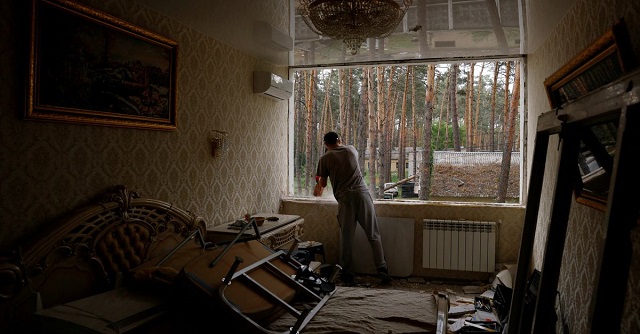


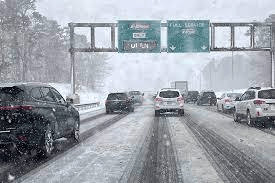

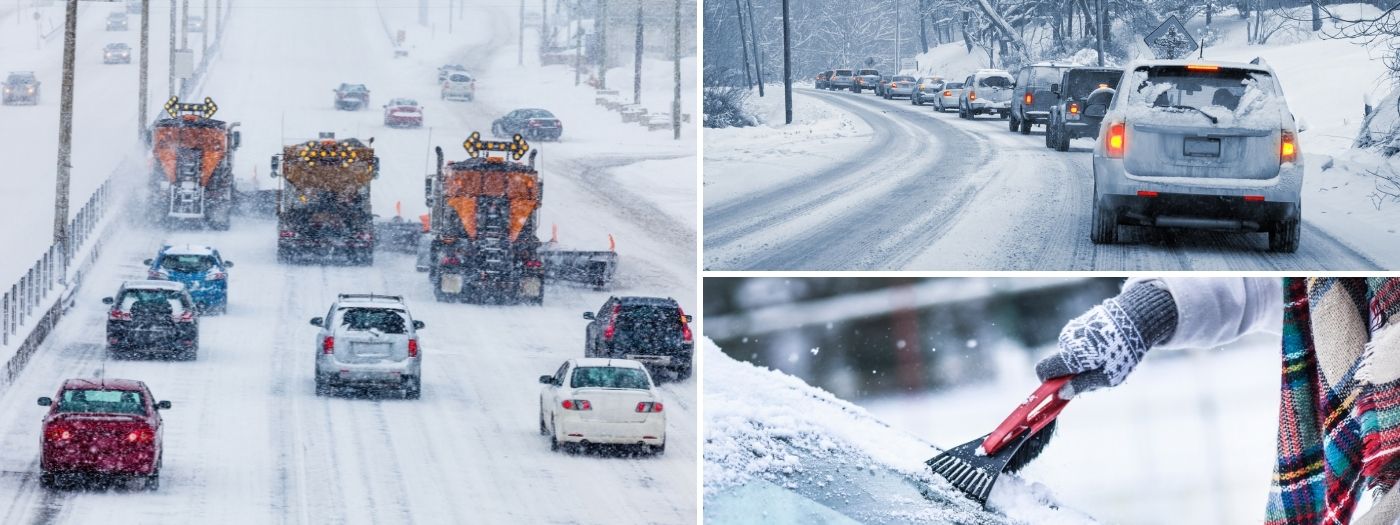

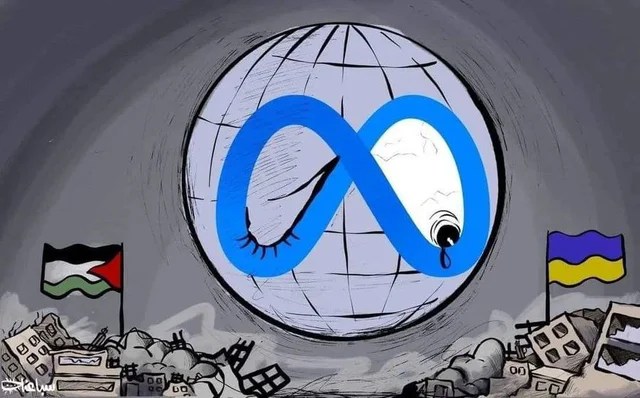

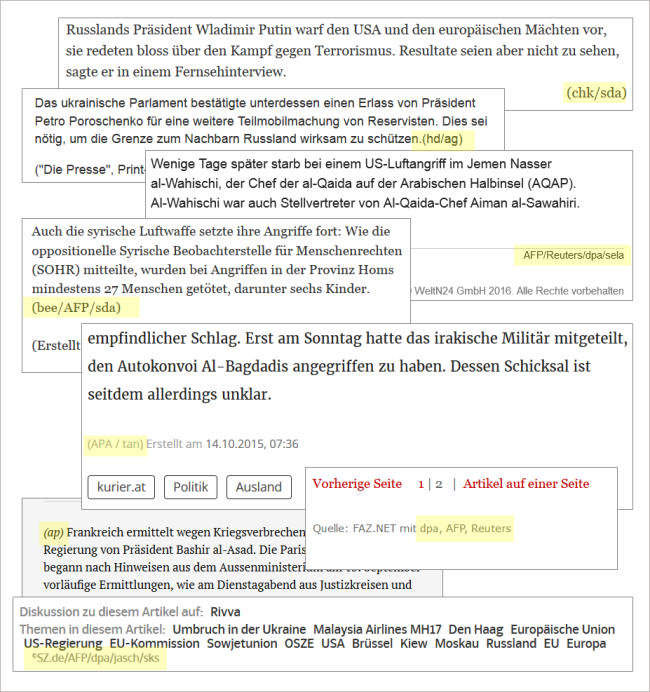
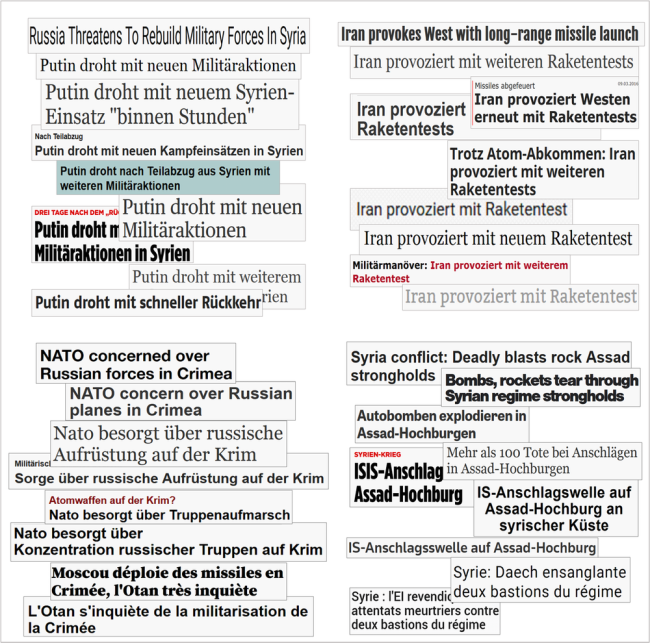
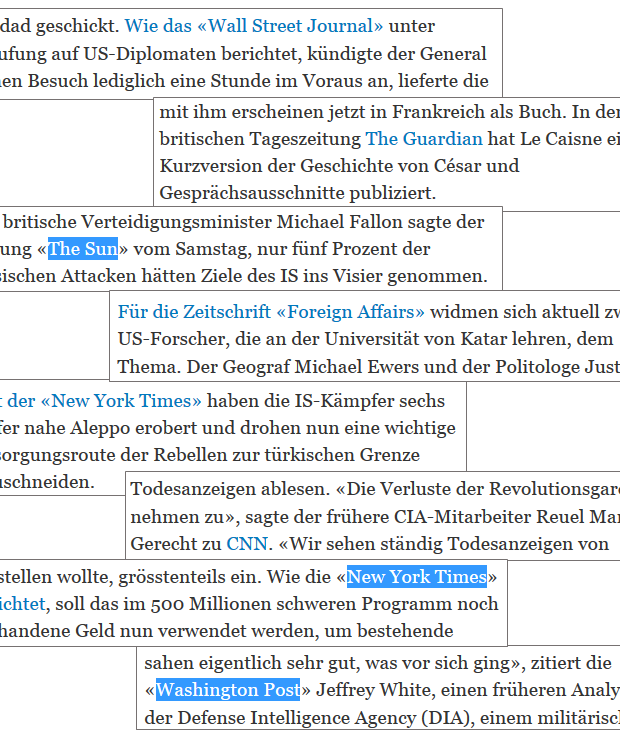
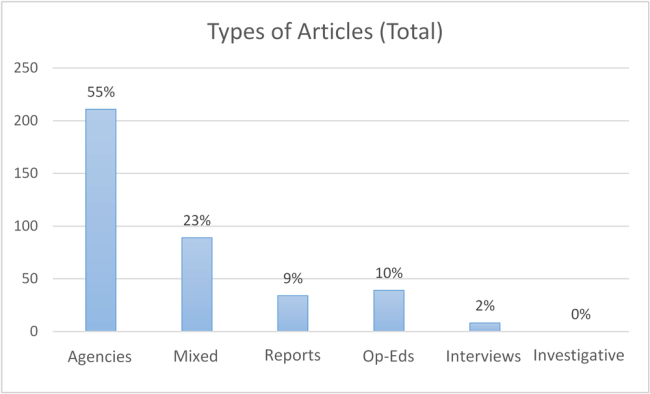
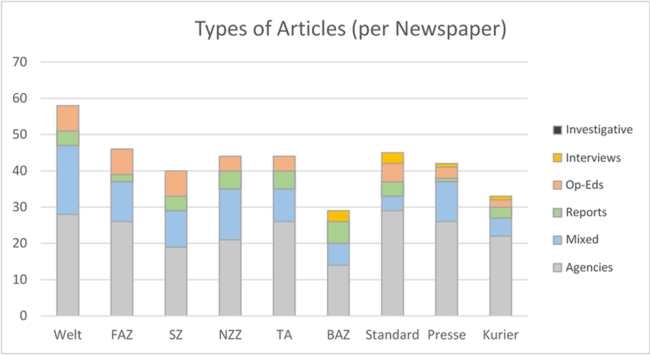
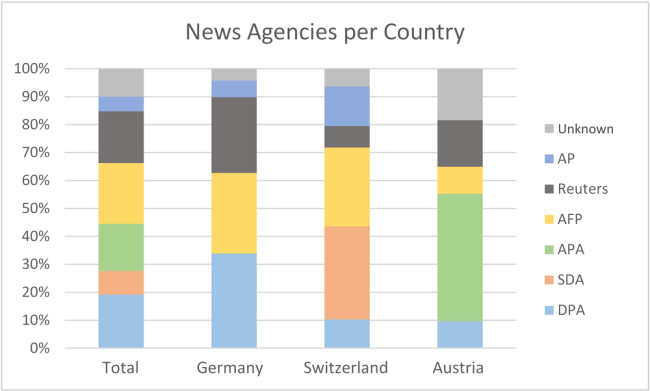
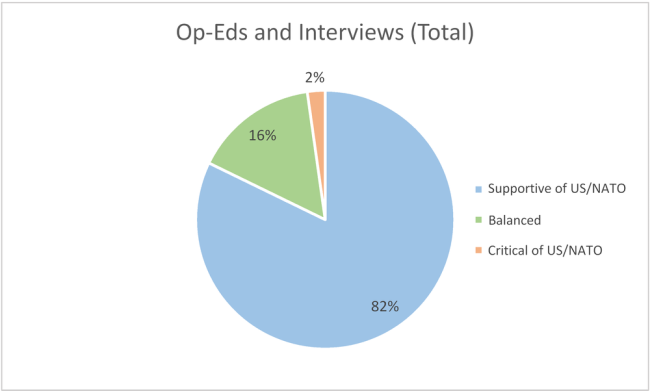
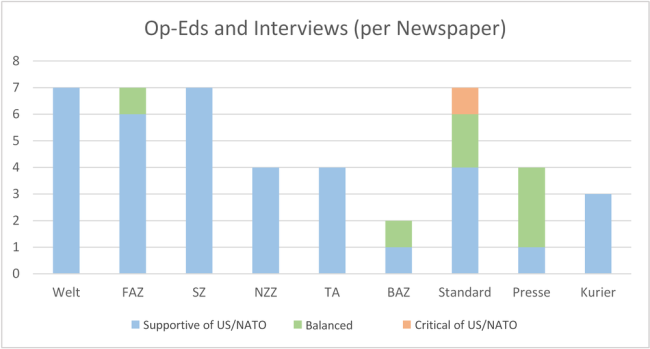
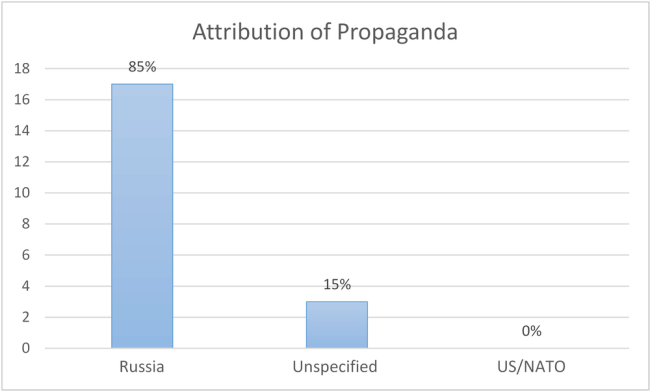
 The End 2026