Don’t be lulled into a false sense of security: When SHTF, survival skills are still more important than your stockpile

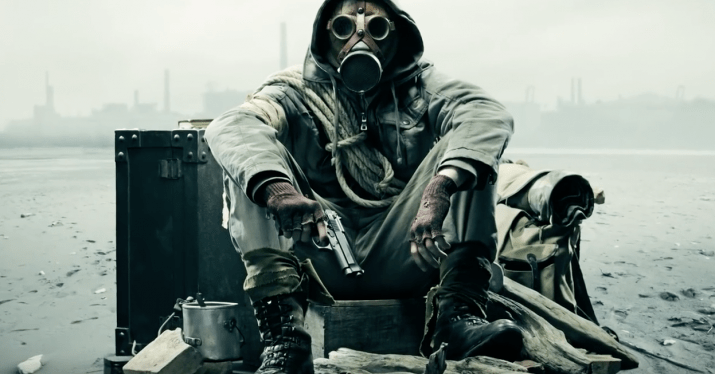
The last thing any prepper should do is buy into a feeling of peace of mind and safety. Even after amassing a seemingly sufficient stockpile, you need to acquire and maintain survival skills that will serve you even better than supplies.

In addition to stockpiling resources for SHTF scenarios, you must be able to protect your emergency supplies. You will need weapons, the skill to use those weapons, and the right philosophy and strategy to secure your stash during the entire crisis.

Eventually, you will need to leave your bug-out shelter to interact with other people and get certain supplies that you lack or have run out of. Potential methods of interaction include bartering, negotiating, trading, and fighting.

As a prepper, you need the appropriate strategy and skill set to succeed at such interactions. You must assemble a network of trusted people who may help you out.

You must know a ton of information about different groups of people, customs, the criminal mindset, and the like. You must also develop skills in communicating with other people and fighting.

Avoid relying on a single location or source for supplies

Another essential thing that preppers must remember is mobility. The ability and freedom to bug out and stay on the move may prove much more vital than stockpiling a lot of supplies and equipment at home or in the bug-out shelter.

Mobility means always having a survival backpack and weapon handy in case SHTF and you must get out of Dodge and head for the hills. It involves avoiding heavy dependence on just a single location or source of supplies.

SHTF scenarios may force you to bug out of your home due to various reasons. Due to the likelihood of losing the house, avoid stockpiling too many supplies at home.

You must develop a SHTF plan that lets you stay mobile while ensuring that you retain access to resources. Set up a bug-out shelter somewhere safe. You must also prepare several survival caches on the way to the shelter as well as nearby.

You should also come up with bug-out plans for disaster scenarios like earthquakes and storms. Map out different ways to get to the bug-out shelter. Again, develop a network of people who will make it easier to get to the shelter.

Planning for SHTF scenarios

Finally, you must acknowledge that an SHTF scenario will likely catch you unawares. As such, you should prepare ahead of time so that you are ready in case an emergency takes place during an inconvenient time and in an unlikely place.

Survival is about acting correctly in an SHTF situation. Preppers enjoy an advantage over non-preppers since they already prepared for this kind of crisis. They just need to stay calm and follow the plan they readied in advance.

In summary, prepping doesn’t end once you complete your stockpile of emergency supplies at your home and bug-out shelter. You must continue preparing for SHTF scenarios by developing the right strategies for any potential crisis.

In particular, you must come up with strategies regarding trade during SHTF scenarios. You must plan and prepare beforehand so that you stock up on items that are easy to carry and trade yet will become invaluable during emergencies.

Learn about the people in your region, their preferences, and possible locations for trading. Lastly, you must look out for the inevitable group that will take over the black market.

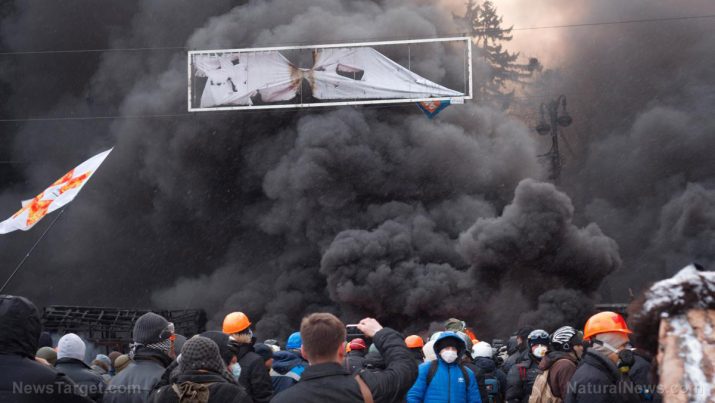
Are you prepared for a martial law situation? Here’s what you need to know

The term “martial law” evokes an image of checkpoints manned by grim soldiers wearing gas masks, tanks, and other armored vehicles packed to the brim with guns and other ordnance. This is certainly scary, but more so the fact that these soldiers are not bound by the same rules as in times of peace. The question is how would it affect you? What would living in a world where the state places more importance on national security than individual liberty look like?

Surviving martial law

The answer is to survive first and ask questions later. Here’s a guide to help you do the first.

Assemble a bug-out kit

It’s a good idea to make a bug-out kit as soon as you can. Also called a BOB (bug-out bag) or battle box, it normally contains essential items you would need to survive for at least 72 hours. While some people may confuse a bug-out kit for a survival kit, a bug-out kit is meant to tide you over until cooler heads prevail and martial law is lifted. As such, its contents are focused simply on evacuation.

Typically, a bug-out kit contains food and water, among other important and portable items. You need about a gallon of water a day, but pack water purification supplies if possible. Choose non-perishable or ready-to-eat food, but cooking equipment – if compact enough – fall under this category, too.

Other essential items include vitamin supplements, multipurpose tools, lamps, a hunting or survival knife, a hatchet, a tarp, and a length of paracord.

Stay away from areas under martial law

Invest in an isolated rural safehouse beforehand, ideally within a 10-hour drive from your home. Map an escape route from your home to your retreat, especially if it’s walkable and hidden. Failing this, you can simply chart several safe places to bug out to. Like your safehouse, you should have a ready route to them planned just in case.

Note that some declarations of martial law are imposed because of natural disasters, which means it may be unsafe for you to make the journey alone. Weigh your options.

Create alliances

It’s usually wiser to get out of Dodge alone, but teamwork may open locked doors that you alone cannot. Look for like-minded individuals. When SHTF and people are switching to survival mode, you need someone to watch your back, after all. Numbers have a quality of their own.

Keep your head down

Figuratively, but sometimes literally too when bullets are flying. In other words, do not attract attention to yourself. Stockpile supplies, especially food, but don’t let others know you’re doing so. Stay away from areas with civil unrest. Under martial law, protesters will likely be high-priority targets for detainment (or worse). Professional soldiers will not think twice about eliminating threats to national security.

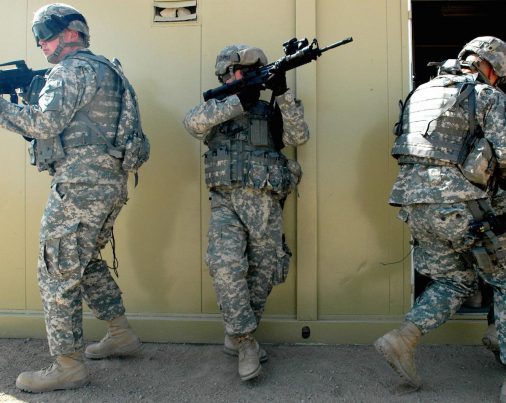
The military is not your friend (nor an enemy)

Soldiers are neither good nor evil. Remember that their first order of business, especially during martial law, is to enforce order, though that is subject to the interpretation of the ones calling the shots. If the order comes to ration supplies and your neighbor rats you out (see previous section), your supplies may be parceled out to others, leaving you with little to none for yourself.

The best way to survive martial law, however, is to stay informed. Martial law is reserved only for the most extreme of circumstances, and the government has several checks to keep it from interfering with the average Joe. Keep calm, know your options, and treat the situation as you would any natural disaster – one that you can see coming and prepare for.

Surviving urban hell: A prepper’s essential guide to finding your way in a grid-down city

Urban preppers must be prepared to face survival scenarios in the city, especially since these areas are often very congested. When SHTF, even preppers may have trouble bugging out due to heavy traffic in certain cities.

People flock to cities because most high-paying jobs are based in urban areas. But when disaster strikes, cities may also present unique obstacles.

When SHTF in your city, how do you decide when to bug in, bug out, or team up with other preppers?

When to bug in

During a disaster scenario, your first prepping decision involves two options: bugging in (staying at home) or bugging out (evacuating).

The following scenarios may require you to bug in when SHTF:

  • If there’s a pregnant woman in your family or you have very young children who may have trouble bugging out.
  • You or someone in your family has a disability that makes it difficult to bug out.
  • You’ve already prepped your home with enough firearms and ammunition to defend yourself against looters or rioters.

If you decide to bug in, you must first secure your location. Preppers who live in apartments must lock their doors and reinforce them with heavy furniture.

Unfortunately, cities usually have some of the most stringent gun laws. If your city forbids the ownership of firearms, consider non-lethal self-defense weapons such as tactical flashlights or pens, stun guns, pepper spray or gel, tactical whips, a steel baseball bat, or other improvised weapons like a homemade monkey fist.

Make sure you stock up on enough food, water, and supplies for at least one week up to 30 days. Should you decide to bug in, you’ll have one less thing to worry about if you have a fully stocked survival cache.

When to bug out

Certain scenarios may require you to bug out with your whole family, such as severe flooding or a terrorist attack.

However, it can be difficult to bug out of the city due to heavy foot or car traffic. Before SHTF, prepare an emergency plan that incorporates several safe routes to your bug-out location.

Try to find rarely used alleys or streets in your routes. This way, when SHTF you won’t have trouble getting from point A to B. Taking smaller streets reduces your contact with other people, which also minimizes your exposure to potentially hostile confrontations with desperate people who may try to steal your gear. 

You must also prepare bug-out bags (BOBs) for yourself and each family member (and pet if you have one). Include survival gear and enough food and water for at least 72 hours (three days) so you can safely reach your intended destination.

When it’s time to hit the road, wear seasonally appropriate clothing. The last thing you need is to suffer from hypothermia when you’re bugging out.

If you have the funds to do so, rent a boat when you’re bugging out from somewhere along the coast.

When to team up with other preppers

Whether in daily life or when SHTF, there is safety in numbers. With enough manpower, you can secure your property against the dangers that you may be exposed to during large-scale disaster scenarios.

In your spare time, search for prepping groups online or around your neighborhood and get to know your fellow preppers. If you deem them trustworthy enough, you can make arrangements with them to improve everyone’s chance of survival.

Additionally, teaming up with fellow preppers gives you access to unique skills that everyone has to offer the rest of the group.

Urban preppers must take additional measures to address unique challenges that they may face when SHTF. Set up your preps to ensure your safety whether you decide to bug in, bug out, or team up with others.

What to do when SHTF: Are you prepared to deal with a grid-down scenario?

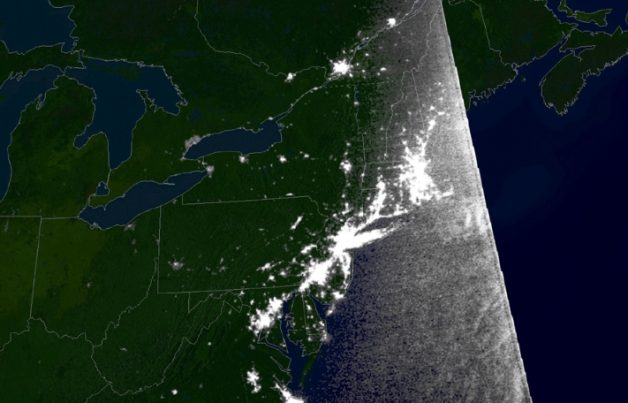
The power grid is often taken for granted: People are too busy with their individual lives every day and barely have the time or energy to be concerned about anything else. However, it’s becoming more apparent that the U.S. power grid is aging, reaching its capacity, and even under attack. Should the power grid get disabled at a moment’s notice, are you prepared to deal with and survive the ensuing chaos?

Preparing for a grid-down

It’s not an exaggeration – a grid-down scenario is most likely to be followed by discord. Businesses will be interrupted or completely shut down; basic infrastructure such as communications, mass transportation, and supply chains will stop; ATM machines will not operate; facilities such as schools, workplaces, and government and public facilities may close; and the supply of clean water will be a serious issue. These situations call for planning and preparation way before SHTF to ensure the survival of everyone in your family.

Below are the main things to address when preparing for a grid-down scenario.

Backup power

One of the very first things to consider when planning for a grid-down scenario is backup power. It will help with nearly all the other problems you will encounter in a short-term power outage. If you have the funds (or consider saving for it right now) and space available, purchase a generator and learn how to use it. You also need a heavy-duty extension cord for your appliances or have an electrician hardwire your home’s electrical system.

For a long-term power outage, solar panels are a sustainable source of electricity – if you can afford the costly installation.

Lighting

If you don’t have backup power, lighting is one of the more pressing things to prepare for. You must have even just a small flashlight in your car, each bedroom, the bathroom, the kitchen, the garage, and a spare. You should also have one in your bag and on your office desk in case it happens while you’re out.

If you have money to spare, consider buying at least one industrial flashlight for your home. A crank-powered flashlight or solar-powered camping lamp are also good options.

That said, you can never have enough batteries, so stock up on lots of extras. To avoid having to buy different types of batteries, standardize your flashlights and other battery-powered gear on AA or AAA. Consider buying rechargeable batteries as well and solar-powered or crank-powered chargers.

Candles are another source of light as well as heat, but they are also potential fire hazards, so use them with caution.

Water

If you suspect the power might go out, fill buckets with water, fill your bathtub and sink, and flush your toilets. Designate a bucket for dishwater, bathwater, and cleaning water. Keep used or dirty water for flushing toilets. If the power goes out, use your water supply sparingly.

As for drinking water, keep a couple cases of water bottles around. A 55-gallon drinking potable water drum with a pump and roller base is a good option for water storage. Note that water goes stale after a long time in storage, so make sure to rotate your water supply.

In case you need to find drinking water, have a good water filter on hand – such as Big Berkey or Lifestraw – to make questionable water drinkable.

Food and cooking

Stock up on foods that can be stored without electricity or refrigeration, such as granola bars, cereals or canned food. Like water, it’s important to rotate your food supply – consume the oldest ones as you restock to keep your supplies fresh.

For foods that need cooking, consider an outdoor grill. Stockpile lots of charcoal or extra propane. Account for the space available and family size to determine how much you need. Cook meat that would go bad first.

For indoor cooking, consider a small butane stove. It can be used for cooking simple meals and can be stored in a space about the size of a briefcase.

Garbage and waste disposal

A grid-down scenario may disrupt regular garbage pickup, so work out a plan for garbage disposal and management. Like batteries, you can never have too many garbage bags on hand. Stock up on paper plates and plastic cutlery to save on dishwater. If you have to choose between less garbage or less dishwashing, consider choosing the option that saves water.

If you must burn your trash, build a burn barrel that burns safe and clean.

As mentioned above, if you suspect the power might go out, flush the toilets before it happens. If the power goes out, use dirty water for flushing. Stock up on extra toilet paper and wet wipes as well.

For long-term power outages, it’s inadvisable to use a regular toilet. The sewer or septic may rely on power to pump sewage. Having disrupted pump sewage only opens a whole ‘nother can of worms. Have a DIY portable toilet on hand and keep human waste in black plastic bags.

First-aid supplies

Whether you choose to buy or make your own first aid kit, make sure to have one for home, one for your car, and one for work.

Your kit should contain the following items that will cover your emergency medical needs for at least a week if professional help can’t reach you at once.

  • Basic first aid items
  • OTC and prescription medicines
  • Insulin
  • Inhalers
  • Epinephrine (adrenaline)

Consider basic first aid training and CPR training for the whole family before they become necessary.

Communications

Keeping communication lines open is crucial in any disaster scenario. Smartphones, tablets, laptops and other electronic devices will run out of battery power, so prepare backup charging options such as a solar charger, crank USB charger and car charger. Be sure to regularly check your charging options so they won’t fail you when you need them.

Keep printed or written copies of important contact numbers and local paper maps. A crank-powered radio is also useful for keeping up with emergency broadcasts.

In a grid-down scenario, it’s important to have banknotes (especially small bills) on hand, since the businesses that do manage to stay open are most likely to only accept cash.

Would you know how to get out of buildings if the power goes out and the elevators aren’t working? Head over to Collapse.news to learn more tips.

Government will use anti-hoarding laws to take your food, water and supplies

On April 5, 1933, with a desperate nation in the throes of the Great Depression, President Franklin D. Roosevelt signed Executive Order 6102, “forbidding the Hoarding of gold coin, gold bullion, and gold certificates within the continental United States.” The effect of the order, in conjunction with the statute under which it was issued, was to criminalize the possession of monetary gold by any individual, partnership, association or corporation, and at a time when Americans were desperate to regain lost wealth.

The order was issued to allow the Federal Reserve to bypass restrictions contained in the Federal Reserve Act of 1913, regarding the amount of gold reserves it had to retain in relation to the amount of Federal Reserve notes (dollars) it was creating.

Fast forward to 1994. Then-President Bill Clinton issued an executive order that combined a number of laws that would take effect in the event martial law was declared. One of the laws including in his order, EO 10998, permits the federal government to seize hoarded food supplies from both public and private holders.

Preparedness Hacks: Once a nuke is heading your way, you might think that there isn’t much left to do, but you would be wrong!

Because we will show you America’s natural nuclear bunkers that are also EMP proof. When the sirens start wailing, all you need to do is pick the closest one to your home, where you can take cover before it hits.

“Some people may feel the federal government does not have the right to confiscate stored food in the event of a national emergency where access to food is limited, they believe the Fourth Amendment of the Constitution — which prohibits unreasonable search and seizure — protects their privacy and should be upheld to protect their food supplies even if other people do not have access to food in a disaster.”

Only, that’s not going to be the case, as any declaration of martial law would essentially nullify any constitutional protections and civil rights that inhibit the government from self-preservation and preservation of the civil society.

In fact, the government’s hand – not yours – was strengthened even further in March 2012, when President Barack Obama signed the National Defense Resources Preparedness executive order, which “grants the Department of Homeland Security, the Department of Agriculture, the Department of Labor, the Department of Defense and other agencies complete control of all U.S. resources, including the ability to seize, confiscate or re-delegate resources, materials, services, and facilities as deemed necessary or appropriate to promote the national defense as delegated by the following agencies.

Included in the order is all farming equipment; all forms of energy and energy production; “food resources,” which means all food commodities; all water resources; and so forth.

What’s more, under the order all Americans are automatically registered with the government according to their skill level, so – like the military draft – they can be forced to perform jobs and services the government deems vital to the nation’s functioning [as part of a National Defense Executive Reserve].

And by the way, it won’t just be your food and water the government will take; if you’ve stored fuels, weapons, medicines and other supplies, Uncle Sam will help himself to those items, too, leaving you nothing but dependent (and vulnerable).

We bring you this information not to make you angry, but to make you think – about who you tell of your preparedness plans and what items you’re stockpiling; about where you may consider moving your stash to avoid detection; about finding additional ways to feed yourself in times of trouble. A food-and-water stash won’t do you any good if it’s confiscated “for the greater betterment of the country,” so you ought to take the time now to consider ways to protect what you’ve built or what you’re building.

During a SHTF situation, pain could become an annoyance for some, but unbearable for others.

If doctors are scarce and medicine becomes even scarcer, this one little weed, found all over North America and similar to morphine, could be a saving grace.

Should you get a Ham Radio License or Hide from the Government?

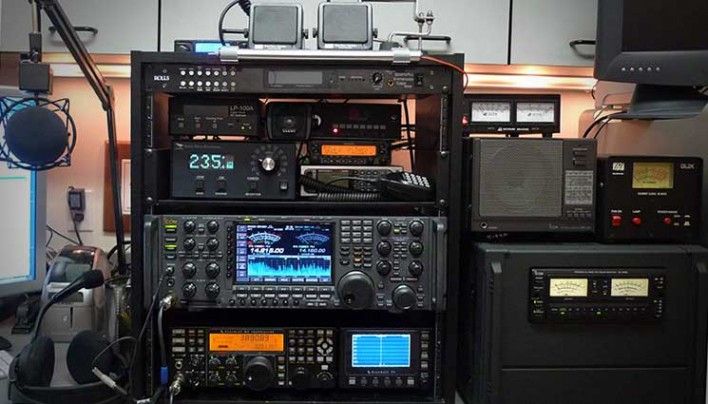
In another video this same guy went on to explain and demonstrate his own personal Ham Radio setup complete with a really nice antenna that was suspended from trees and hidden from view with additional comments about how he would not get his Ham license because he didn’t need to be on any government lists and if TSHTF, the first place they would go would be the Ham operators and take them offline.

During a SHTF situation, pain could become an annoyance for some, but unbearable for others.

If doctors are scarce and medicine becomes even scarcer, this one little weed, found all over North America and similar to morphine, could be a saving grace.

This got me to thinking a while back and I really debated whether or not I should be like this guy and be a conscientious objector to the whole notion of licensing and just be a rebel with my antenna hanging in a tree. After a lot of thought and some research I decided to pull the trigger and get my Ham license and I want to explain why and discuss why you might want to do the same.

Isn’t Ham something yummy and delicious?

As context, let me explain what Ham is to those of you who aren’t familiar with the term. Ham Radio is also known as Amateur Radio and is a network of radio communications that rely on antennas and individual pieces of equipment to communicate using radio waves. Ham Radio has many strengths but chief among them for Preppers is its ability to be counted on in a disaster. Ham radio is perfect for grid down communications.

Ham Radio operators can still communicate if there is no electric power, satellites or cellular service. That is the primary reason they are the go-to method of communication for preppers as well as emergency response teams in virtually every large city. With the right equipment, Ham operators can talk to people in other countries using technology that was around in the early 1900s. If some disaster knocks out the cell phone service, emergency communications can be routed through Amateur Radio and you can keep in touch with others in your family, group, region or state pretty easily.

Ham radio is a valuable Prepper skill.

Ham or Amateur radios fall under the control of the FCC and there is a licensing process associated with being able to communicate on the radio. In order to speak on the air legally, you must first obtain your Technician level license and a call sign from the FCC. Your name and information will be listed in at least one public database and this information is freely accessible to anyone who wants to look.

Reasons Why You shouldn’t get a license

Like my friend above, I had some initial concerns regarding licensing because like any good Prepper, I am concerned with OPSEC. Even if I wasn’t into prepping, I wouldn’t want my name and address posted anywhere that someone could easily access it and part of communicating on Ham Radio is that you are required to give your call sign. Anyone you are talking to, or anyone simply listening in can look up your call sign and see where you are from. After learning all of this I started to weigh my options with Ham radio.

Like I mentioned above, Ham radio is probably the single best – disaster proof communication method the average person can use. As I began prepping my own family, the topic of communications came up several times. How would I communicate with my family in an emergency? How would we get news from others if for some reason there was a media blackout? The ubiquitous walkie-talkies that everyone has are effective at limited ranges, but what about longer distances? Ham Radio addressed both of those concerns nicely.

The only problem was that darned license.

At this point I could do one of two things. I could either get my license and put my name and address out there for everyone to see or I could simply buy the radio equipment and use it illegally. The thought process for some people is that if TSHTF, nobody is going to care if you have a license so the latter option is one I considered just like the YouTube guy above.

Experts predict that an EMP strike that wipes out electricity across the nation would ultimately lead to the demise of up to 90% of the population. However, this figure begs an important question: if we were able to live thousands of years without even the concept of electricity, why would we suddenly all die without it?

How hard can it be?

IMG_4073
Ham radio works when other traditional communication methods are offline.

It turns out that two things influenced my decision on whether or not to be a law abiding citizen. The first and most obvious was my address out there on the interwebs. To get around that, I simply purchased a PO Box in a nearby town and used that for my FCC information. This is perfectly legal and still protects my address somewhat. Could someone look up my name, and then cross reference me in the phone book? I guess so, but who are we talking about here? If you have a psychopath running around trying to find you, chances are there are much easier ways of getting to your house. If this is in a post-collapse scenario, I have bigger problems.

Now, does that mean I should let my guard down and talk about anything on the radio? Not at all. The airwaves are public and anyone can listen in. For that reason alone, you should take great care in choosing what you talk about or divulge when you are talking on the Ham bands.

(Here are 23 survival uses for honey that you didn’t know about.)

The second and more important factor that influenced my decision was the learning curve that is associated with Ham Radio. Getting started is pretty simple and once I had a radio, I was listening in on channels fairly quickly, but there is so much you can do that is outside of dialing through some frequencies. To fully take advantage of Ham Radio, I would need to practice and you can’t do that illegally, well without risk that is. Technically you can get on the radio and start talking without a call sign or you could lie, but just because radio waves are invisible, that doesn’t mean you can’t be found. Hams make a game out of finding antennas and it’s called a fox hunt. If you are talking on the radio and

shouldn’t be, someone can report you, they will find you and the fines from the FCC are steep.

Baofeng makes a great, affordable radio for preppers.

On the Radio – Almost

So with all that said, I went and took the exam for my Technician level license and passed. Now, as soon as the Government opens back up, and the backlog clears I will have a call sign and my name will start appearing in those databases. I am looking forward to finally being able to talk on the radio, but more importantly learning about the different frequencies and antennas I can use to communicate to others should our normal method of communications go down. I think of this as a decent trade-off for being able to communicate legally over the radio and besides, it isn’t like my name isn’t in several databases already. I am in the database for prior military service, the firearm database, IRS database etc. etc. If they want to find me they already know where I am and just because I have a radio now, that won’t be much more motivation to come get me I don’t believe. We’ll see.

I will add some Ham links to the site on our Resources page and will post from time to time on this subject as I learn more. I think if you are seriously considering how you could communicate in a grid-down environment, HAM radio deserves a close look.

Preparedness Hacks: Once a nuke is heading your way, you might think that there isn’t much left to do, but you would be wrong!

Because we will show you America’s natural nuclear bunkers that are also EMP proof. When the sirens start wailing, all you need to do is pick the closest one to your home, where you can take cover before it hits.

Should you get a Ham Radio License or Hide from the Government? If SHTF, The First Place They Would go Would be The Ham Operators And Take Them Offline

In another video this same guy went on to explain and demonstrate his own personal Ham Radio setup complete with a really nice antenna that was suspended from trees and hidden from view with additional comments about how he would not get his Ham license because he didn’t need to be on any government lists and if TSHTF, the first place they would go would be the Ham operators and take them offline.

This got me to thinking a while back and I really debated whether or not I should be like this guy and be a conscientious objector to the whole notion of licensing and just be a rebel with my antenna hanging in a tree. After a lot of thought and some research I decided to pull the trigger and get my Ham license and I want to explain why and discuss why you might want to do the same.

Isn’t Ham something yummy and delicious?

As context, let me explain what Ham is to those of you who aren’t familiar with the term. Ham Radio is also known as Amateur Radio and is a network of radio communications that rely on antennas and individual pieces of equipment to communicate using radio waves. Ham Radio has many strengths but chief among them for Preppers is its ability to be counted on in a disaster. Ham radio is perfect for grid down communications.

Ham Radio operators can still communicate if there is no electric power, satellites or cellular service. That is the primary reason they are the go-to method of communication for preppers as well as emergency response teams in virtually every large city. With the right equipment, Ham operators can talk to people in other countries using technology that was around in the early 1900s. If some disaster knocks out the cell phone service, emergency communications can be routed through Amateur Radio and you can keep in touch with others in your family, group, region or state pretty easily.

Ham radio is a valuable Prepper skill.

Ham or Amateur radios fall under the control of the FCC and there is a licensing process associated with being able to communicate on the radio. In order to speak on the air legally, you must first obtain your Technician level license and a call sign from the FCC. Your name and information will be listed in at least one public database and this information is freely accessible to anyone who wants to look.

Reasons Why You shouldn’t get a license

Like my friend above, I had some initial concerns regarding licensing because like any good Prepper, I am concerned with OPSEC. Even if I wasn’t into prepping, I wouldn’t want my name and address posted anywhere that someone could easily access it and part of communicating on Ham Radio is that you are required to give your call sign. Anyone you are talking to, or anyone simply listening in can look up your call sign and see where you are from. After learning all of this I started to weigh my options with Ham radio.

Like I mentioned above, Ham radio is probably the single best – disaster proof communication method the average person can use. As I began prepping my own family, the topic of communications came up several times. How would I communicate with my family in an emergency? How would we get news from others if for some reason there was a media blackout? The ubiquitous walkie-talkies that everyone has are effective at limited ranges, but what about longer distances? Ham Radio addressed both of those concerns nicely.

The only problem was that darned license.

At this point I could do one of two things. I could either get my license and put my name and address out there for everyone to see or I could simply buy the radio equipment and use it illegally. The thought process for some people is that if TSHTF, nobody is going to care if you have a license so the latter option is one I considered just like the YouTube guy above.

How hard can it be?

IMG_4073
Ham radio works when other traditional communication methods are offline.

It turns out that two things influenced my decision on whether or not to be a law abiding citizen. The first and most obvious was my address out there on the interwebs. To get around that, I simply purchased a PO Box in a nearby town and used that for my FCC information. This is perfectly legal and still protects my address somewhat. Could someone look up my name, and then cross reference me in the phone book? I guess so, but who are we talking about here? If you have a psychopath running around trying to find you, chances are there are much easier ways of getting to your house. If this is in a post-collapse scenario, I have bigger problems.

Now, does that mean I should let my guard down and talk about anything on the radio? Not at all. The airwaves are public and anyone can listen in. For that reason alone, you should take great care in choosing what you talk about or divulge when you are talking on the Ham bands.

The second and more important factor that influenced my decision was the learning curve that is associated with Ham Radio. Getting started is pretty simple and once I had a radio, I was listening in on channels fairly quickly, but there is so much you can do that is outside of dialing through some frequencies. To fully take advantage of Ham Radio, I would need to practice and you can’t do that illegally, well without risk that is. Technically you can get on the radio and start talking without a call sign or you could lie, but just because radio waves are invisible, that doesn’t mean you can’t be found. Hams make a game out of finding antennas and it’s called a fox hunt. If you are talking on the radio and

shouldn’t be, someone can report you, they will find you and the fines from the FCC are steep.

Baofeng makes a great, affordable radio for preppers.

On the Radio – Almost

So with all that said, I went and took the exam for my Technician level license and passed. Now, as soon as the Government opens back up, and the backlog clears I will have a call sign and my name will start appearing in those databases. I am looking forward to finally being able to talk on the radio, but more importantly learning about the different frequencies and antennas I can use to communicate to others should our normal method of communications go down. I think of this as a decent trade-off for being able to communicate legally over the radio and besides, it isn’t like my name isn’t in several databases already. I am in the database for prior military service, the firearm database, IRS database etc. etc. If they want to find me they already know where I am and just because I have a radio now, that won’t be much more motivation to come get me I don’t believe. We’ll see.

I will add some Ham links to the site on our Resources page and will post from time to time on this subject as I learn more. I think if you are seriously considering how you could communicate in a grid-down environment, HAM radio deserves a close look.

Introduce Yourself (Example Post)

This is an example post, originally published as part of Blogging University. Enroll in one of our ten programs, and start your blog right.

You’re going to publish a post today. Don’t worry about how your blog looks. Don’t worry if you haven’t given it a name yet, or you’re feeling overwhelmed. Just click the “New Post” button, and tell us why you’re here.

Why do this?

  • Because it gives new readers context. What are you about? Why should they read your blog?
  • Because it will help you focus you own ideas about your blog and what you’d like to do with it.

The post can be short or long, a personal intro to your life or a bloggy mission statement, a manifesto for the future or a simple outline of your the types of things you hope to publish.

To help you get started, here are a few questions:

  • Why are you blogging publicly, rather than keeping a personal journal?
  • What topics do you think you’ll write about?
  • Who would you love to connect with via your blog?
  • If you blog successfully throughout the next year, what would you hope to have accomplished?

You’re not locked into any of this; one of the wonderful things about blogs is how they constantly evolve as we learn, grow, and interact with one another — but it’s good to know where and why you started, and articulating your goals may just give you a few other post ideas.

Can’t think how to get started? Just write the first thing that pops into your head. Anne Lamott, author of a book on writing we love, says that you need to give yourself permission to write a “crappy first draft”. Anne makes a great point — just start writing, and worry about editing it later.

When you’re ready to publish, give your post three to five tags that describe your blog’s focus — writing, photography, fiction, parenting, food, cars, movies, sports, whatever. These tags will help others who care about your topics find you in the Reader. Make sure one of the tags is “zerotohero,” so other new bloggers can find you, too.

Design a site like this with WordPress.com
Get started