Coronavirus fears spur growing interest in rural areas and survival retreats

As densely populated cities like New York City and Madrid suffer significant losses from coronavirus, people are increasingly heading for more remote areas to help reduce their odds of catching the deadly illness.

Data provided by Redfin shows that daily searches for rural properties were 125 percent higher during the first three weeks of March, with searches spiking by 364 percent over the previous year on March 7.

The president of a North Carolina real estate company specializing in rural land called Retreat Realty, John E. Haynes, told Reuters that the current outbreak has caused people to realize they should have invested in a “bugout property” a long time ago.

He’s seen a large uptick in business thanks to the outbreak, with sales of rural properties climbing significantly in recent weeks. He said many of those buying these properties had already been contemplating such a move for some time, and the virus prompted them to finally take the leap.

All this interest in rural areas is causing those already living in such places some concern, however. Places like Door County, Wisconsin, have issued advisories asking people with seasonal or second homes in the area to stay away. Half the county’s population is made up of elderly people, and they only have a small, 25-bed hospital.

Sixty percent of the properties and second homes there are owned by residents from out of state, many of whom are now headed to the area looking for safety. The county isn’t enforcing the advisory, and they say lots of people have been arriving there, exhausting resources in grocery stores.

Some areas are taking a stronger stance, like Dare County on North Carolina’s barrier islands. Visitors and non-resident property owners have been prohibited from entering to protect the community’s public health and safety.

Growing interest in survival retreats and underground bunkers

Survival retreats and underground bunkers are also reporting big surges of interest. The survival community Fortitude Ranch, for example, has seen a tenfold rise in interest in joining the survival retreats they offer during the pandemic.

The company’s chief executive, Drew Miller, said that many people he’s heard from are concerned that if the virus mutates or the quarantines aren’t successful and the economy collapses, food distribution could be disrupted and law and order would break down.

Rural areas may not be the coronavirus respite some people believe

While it’s true that viruses can spread more easily in densely populated areas, outbreaks in rural communities are on the rise in the U.S. Many hotspots are popping up in rural areas, especially in the south, and the numbers can be quite alarming when you adjust for population size. There are also higher death rates in some areas of Louisiana, Alabama, and northern Mississippi than we’re seeing in urban settings.

One big reason these areas are seeing so many problems is the fact that people are leaving cities to ride it out in rural areas and bringing the virus with them. There’s also the fact that the states that have been slow to adopt official social distancing policies could be putting their rural populations at risk and sending the public mixed messages in terms of how dangerous this disease really is. There’s also a strong sense of community in rural areas, where people often have big gatherings with family and friends.

As far as the elevated death rate in rural areas goes, these communities tend to see higher rates of many chronic health conditions as well as reduced access to medical resources. There tends to be more obesity, high blood pressure and cigarette smoking, which is a recipe for disaster when combined with poverty and less access to healthcare.

Whether you live in a big city or a rural area, it remains essential during this pandemic to practice social distancing and wash your hands frequently. It’s also a good idea to start learning some survival skills if you haven’t already – they just may prove useful sooner than you think!

6 Ways to Sterilize Your N95 Mask for Endless Protection

With the shortage of surgical and N95 masks in the country today, people are getting somewhat desperate.

Many people are making their own masks out of cloth, mostly because they don’t have any other option. But medical personnel can’t count on that. They are required to wear proper personal protection equipment (PPE) when at work.

The mask that everyone wants and the mask that has been touted as the one to use is the N95 mask. Designed to be a disposable mask, these have been in short supply since the beginning of the pandemic. People who have them probably bought them before the pandemic hit, as most businesses have given their stocks to local hospitals.

If you’re one of the fortunate people to have some N95 masks to use, you’re probably hoarding them, trying to get the most mileage possible out of them. That probably means that you’re not changing them when you should. These are disposable masks, intended to be replaced.

The big risk with not replacing your mask is that you could end up infecting yourself with the mask, rather than that mask protecting you. While the masks will physically last much longer than just one usage; if a mask is not decontaminated after each use, how can you be sure that it’s safe to use?

Fortunately, there are ways of decontaminating an N95 mask, even though most people don’t bother. If you use these techniques, rotating your stock, your masks should last much longer, giving you protection far beyond what would normally be expected.

Using Time to Sterilize Your Masks

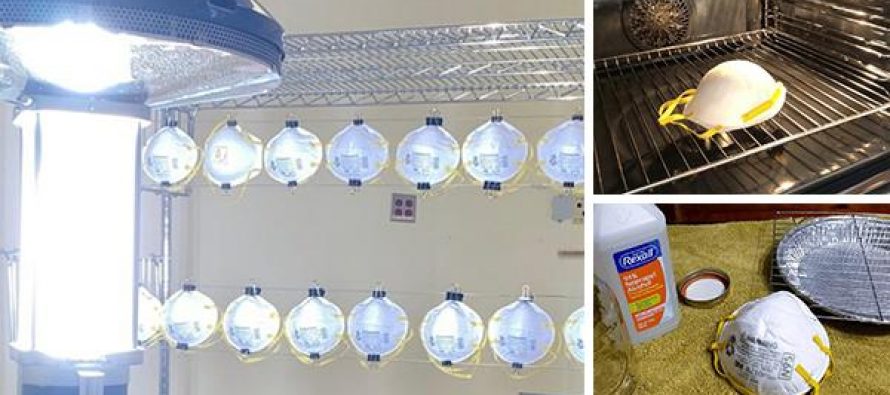
Probably the easiest way to sterilize your N95 masks is to just let them sit. The CDC has quantified how long the SARS-CoV-2 virus can live, putting an upper limit on it at three days.

But that three days is on a hard surface, such as metal or plastic. Viruses don’t survive anywhere near on soft surfaces, as they do on hard ones.

Allowing your masks to sit someplace safe, where nobody is going to have contact with them, will allow the viruses to die, just by leaving them there.

If you can leave them there for four days, you can be sure that when you go back, your mask will be free of the virus and ready to be used again.

Using Heat to Sterilize Your Masks

The French Scientist Louis Pasteur discovered in the mid-1800s that microscopic pathogens, specifically bacteria, die at 159°F.

That knowledge has since been extended to include bacteria. So, if all we’re concerned about is killing the virus, all we need is to heat the mask up to more than 160°F.

6 Ways to Sterilize Your N95 Mask for Endless Protection 2

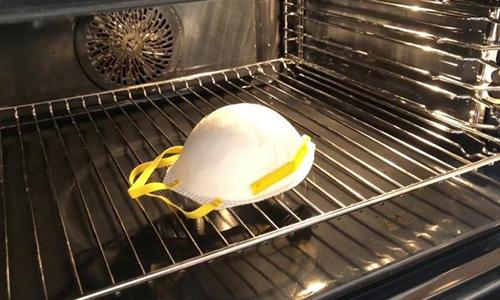
The easiest way to do this is to put it in one of the better food dehydrators. While your oven will get much hotter, we really don’t want to overdo the heat. If we can do it at 165°F, to give ourselves a few degrees extra of tolerance, then it will be much less damaging to the materials used in the filter to decontaminate it at that temperature, rather than 200°F.

While 165°F or even 200°F won’t cause the paper in the filter to burn or the rubber in the elastic band to melt, it will dry the materials out.

So you may see some drying of the rubber in the masks after a few tries, making it more likely to break.

Using UV Light to Sterilize Your Masks

It has been discovered that ultraviolet light (UV light) between 200 and 400 nanometers is uniformly deadly to both bacteria and viruses.

Hospitals use this to decontaminate rooms as well as putting wall scones in the hallways with UV light to kill any bacteria or viruses in droplets, floating in the air.

6 Ways to Sterilize Your N95 Mask for Endless Protection 1

You can find plenty of UV light by stepping outside your door. The sun provides UV for free, usually much more than we want.

But we can use that sunlight for good, by leaving those masks out in the sun and allowing it to kill the virus. Please note though, this does not work well on an overcast day, as the cloud cover will block as much as 70% of the UV.

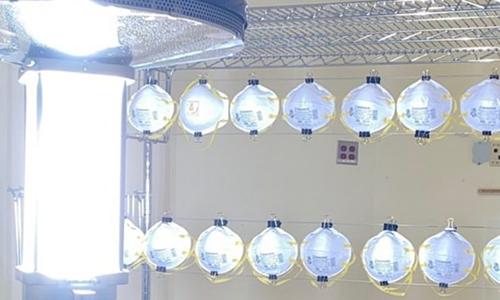
Another option is to use a UV light indoors. There are special lights used for this purpose, but you can also use a “black light” of the type used with fluorescent paint. These operate at 320 to 350 nanometers, which is in the range necessary to kill the virus.

Three Different Chemicals You Can Use to Sterilize Your Masks

Chemical sterilization is one of the most common means of disinfecting. The problem is, we’re dealing with a paper mask, so we have to be a bit careful about how we go about using it. Too much of a good thing could end up destroying your mask.

6 Ways to Sterilize Your N95 Mask for Endless Protection 3

So what are these three chemicals?

  • Chlorine bleach
  • Rubbing alcohol
  • Hydrogen peroxide

Editor’s Note: Using these 3 substances listed above will remove the static charge in the microfibers in N95 facial masks and can reduce filtration efficiency well below its factory designed 95%. So please use them at your own risk, and ONLY if it’s the only solution you have left. After all, something is always better than nothing.

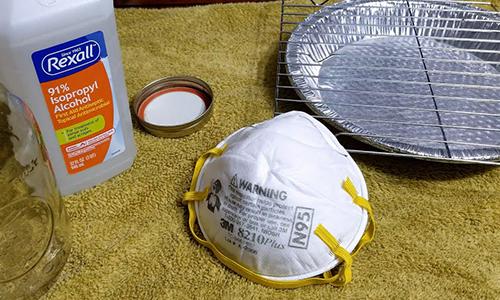
One thing that’s needed for this is something to act as a mold or form. This can be just about anything that is waterproof and about the same size as the inside of the mask. A tennis ball will work or an inverted glass. As long as it can hold the mask in the right shape until it dries, it will be okay.

In the case of any of these, we want to spray a fine mist of the chemical on the outside of the mask. Spray it thoroughly enough to cover the entire surface, without soaking the mask. Then set it on your mold and leave it to dry. Please note that it must dry fully before you use the mask, as these chemicals can be toxic if you breathe them in.

Chlorine bleach will evaporate overnight, which is just about ideal for using the mask again the next day. But even if you use one of the other chemicals listed above, you still want to give the mask overnight to sit, allowing the disinfectant to dry thoroughly.

Important Note: All three of these disinfectants can be poisonous when inhaled. When you first put a mask on, which you have sterilized for reuse, take a good whiff and make sure you can’t smell the disinfectant. If you can, set it aside and don’t use it. Rather, rinse off the disinfectant and allow the mask to air dry, before trying it again.

Is Putin Laying A Petroleum Trap For Trump? (The president is heralding a deal that commits Russia to cuts in oil production, but a closer look reveals a more complicated path.)

The G20 met in virtual session on April 10, ostensibly to address the crippling one-two punch brought on by the economic impact of coronavirus and the simultaneous collapse of the price of oil resulting from Russia and Saudi Arabia flooding an already depressed market.

In the end, the world’s leading oil producers finalized an agreement on sweeping oil production cuts, building on a previous agreement between Russia and Saudi Arabia to stop their price war. The United States is taking credit for this breakthrough, however, citing the role it played in helping bring Mexico to closure. 

But the U.S. contribution was, and is, illusory—President Trump is in no position to promise cuts in U.S. oil production, and as such remains unable to meaningfully contribute to the global oil production reduction scheme. Void of any substantive final agreement, global energy markets will continue to suffer as production far outstrips demand. For U.S. oil producers, who have already seen a 2.5-3 million barrel per day decrease in production, the results will be catastrophic, driving many into bankruptcy and helping push the U.S. economy into a tailspin that will lead to a depression potentially worse than that of the 1930’s.

Trump’s only recourse may be to turn to Russia for help in offsetting needed U.S. oil production quotas, which appears to have been the Russian plan all along.

On Monday March 30, President Trump spoke on the phone with Russian President Vladimir Putin. The suppressed price of oil, and Russia’s role in facilitating that vis-à-vis its refusal to cut its oil production, thereby triggering a price war with Saudi Arabia, was the dominant topic. A Kremlin read-out of the call noted that “opinions on the current state of global oil markets were exchanged. It was agreed there would be Russo-American consultations about this through the ministers of energy.” 

During the call, Trump mentioned America’s need for life-saving medical supplies, including ventilators and personal protective equipment. Putin asked if Russia could be of assistance, and Trump said yes. 

The decision to allow Russian aid (purchased by the U.S.) into the country, however, directly contradicted guidance that had been issued by the U.S. State Department a full week before Trump’s phone call with Putin. On March 22, the State Department sent out an internal email to all U.S. Embassies with guidance on how to proceed with seeking out critical support. “Depending on critical needs, the United States could seek to purchase many of these items in the hundreds of millions with purchases of higher end equipment such as ventilators in the hundreds of thousands,” the email stated. The email noted that the request applies to all countries “minus Moscow,” indicating the United States would not ask Russia for support.

While the two leaders, according to the White House, “agreed to work closely together through the G20 to drive the international campaign to defeat the virus and reinvigorate the global economy,” the March 30 phone call apparently did not directly touch upon U.S. sanctions on Russia. In fact, Trump told  Fox News prior to the leaders’ exchangethat he fully expected Putin to bring it up. He did not say how he might respond if Putin did.

Trump’s confidence in a Putin sanction request most likely stemmed from a statement made by the Russian President to a virtual meeting of G20 leaders on March 22, where he noted that “ideally we should introduce a…joint moratorium on restrictions on essential goods as well as on financial transactions for their purchase.” Putin’s comments were more pointed toward the lifting of sanctions for humanitarian purposes on nations like Iran and Venezuela, but his conclusion hinted at a larger purpose: “These matters should be freed of any politics.”

Russia has been operating under U.S. and European sanctions following its annexation of Crimea in 2014 and its role in the Ukraine crisis. But the sanctions that have angered Russia the most—and which have contributed to Russia’s price war with Saudi Arabia targeting U.S. oil producers—were those levied against NordStream 2, the Russian pipeline intended to supply Germany, and Europe, with natural gas. Trump signed a bill authorizing these sanctions in December 2019. Russia immediately condemned this action.

Instead of asking Trump outright to lift sanctions, Putin got Trump to help underscore Russia’s position that sanctions were an unnecessary impediment to relations between the U.S. and Russia during the coronavirus pandemic. In agreeing to allow the Russian AN-124 aircraft to deliver medical supplies to the U.S., Trump unwittingly played into a carefully laid bit of Russian propaganda. 

Among the aid Russia delivered were boxes of Aventa-M ventilators, produced by the Ural Instrument Engineering Plant (UPZ). UPZ is a subsidiary of Concern Radio-Electronic Technologies (KRET) which, along with its parent holding company ROSTEC, has been under U.S. sanctions since 2014. According to the State Department, which payed for 50 percent of the equipment on the flight, the sanctions do not apply to the purchase of medical equipment. But by purchasing critical medical equipment from sanctioned companies, the State Department simultaneously violated its own guidance against buying Russian equipment while underscoring Putin’s point—sanctions should be waived for humanitarian purposes.

But Putin’s trap had one more twist. According to the Russians, half of the aid shipment was paid for by the U.S. State Department, and the other half by the Russian Direct Investment Fund (RDIF), a Russian sovereign wealth fund which, like ROSTEC, was placed on the U.S. lending blacklist in 2014 following Russia’s intervention in Crimea. The arrival of an airplane full of critical medical equipment ostensibly paid in part by a sanctioned Russian sovereign wealth fund provided a window of opportunity for Kirill Dmitriev, the CEO of RDIF, to gain access to the U.S. mainstream media to push the Russian line.

On April 5, Dmitriev published an OpEd on the CNBC web page titled “The US and Russia should work together to defeat the coronavirus.” Dmitriev likened the current global struggle against the coronavirus pandemic to the fight against Nazi Germany. “During World War II, American and Russian soldiers fought side by side against a common enemy,” he wrote. “We achieved victory together. Just as our grandfathers stood shoulder to shoulder to defend our values and secure peace for future generations, now our countries must show unity and leadership to win the war against the coronavirus.”

But Dmitriev’s true target was oil, and by extension, sanctions. “In times like this,” he noted, “new approaches to explore close collaboration between the U.S., Russia and other countries are needed to stabilize energy and other markets, to coordinate policy responses and to revitalize economic activity. For example, Russia proposed to jointly undertake significant oil output cuts with the U.S., Saudi Arabia and other countries to stabilize markets and secure employment in the oil industry.”

Getting the U.S. to lift sanctions was a big ask, something Dmitriev acknowledged. “To change the views on Russia in an election year may be an insurmountable challenge. But so it also seemed in 1941, when the U.S. and the Soviet Union put behind the differences of the past to fight the common enemy.”

While the “common enemy” referred to by Dmitriev was clearly the coronavirus pandemic, he could also have been speaking about Senator Ted Cruz, and others of his ilk, who led the charge to sanction NordStream 2. The current oil crisis has hit Texas particularly hard. In an indication of things to come, Whiting Petroleum, a major player in the shale oil industry,filed for Chapter 11 bankruptcy protection. Whiting specialized in North Dakota fracking, which required oil prices of $60 per barrel to be economically viable. The current price of sub-$25 doomed the company. Texas fracking is slightly cheaper, with a profitability margin of around $49. With oil prices depressed, Texas companies are feeling the pinch, and are on the verge of collapse.

Trump agreed to participate in the G20 meeting because of the promise of a Russian-Saudi production cut; on this, Putin delivered. But the Russians made any final agreement contingent upon Trump agreeing to significant reduction in U.S. oil production. This was never a possibility—whereas both Russia and Saudi Arabia have national oil companies whose operations are a matter of national policy, the U.S. oil industry is privately owned in its entirety, and dependent on supply and demand equations derived from a free market to determine profitability. 

While the G20 meeting resulted in collective cuts of close to 10 million barrels a day, the drop in demand for oil brought on by the coronavirus pandemic has created a glut in which the world produces some 27.4 million barrels per day in excess of global needs. The bottom line is the G20 cuts won’t solve the problem of too much oil, and without additional cuts, the bottom will continue to fall out of the oil market, dooming U.S. producers. 

Trump cannot turn on or off the U.S. oil-producing spigot, a fact Russia knows only too well. When Trump attempted to gain credit for a 2.5-million-barrel reduction in production brought on by bankruptcy, Russia refused to allow it. Likewise, when Trump promised cuts in oil production to help Mexico meet G20 targets, it was a promise the American president is unable to deliver on. In getting the U.S. to agree to attend a G20 summit on oil production, the Russians lured the U.S. into a policy trap from which there is no escape.

Void of any final agreement, the U.S. oil industry will inevitably collapse. Trump claims that the G20 virtual summit came up with cuts totaling up to 20 million barrels per day, without explaining how he came up with this number. This number is fictional; the U.S. production crisis is not. Trump’s only hope is for a further softening of the Russian position on production. But this will not come without a price, and that price will be the lifting of energy-sector sanctions targeting Russia.

Freedom Tactics: How to Stop Tyranny From Taking Over the Country- For Most Of Us One Of The Scenarios We Plan For Is Life Under A Tyrannical Government

We try to be prepared to survive any situation we find ourselves in, and for most of us one of the scenarios we plan for is life under a tyrannical government. That speaks to a strong American tradition of resisting tyranny – but we need to be realistic here. When our nation’s founders wrote the Second Amendment it wasn’t actually all that hard for an armed populace to defeat the government. Most fighting was done with swords, muskets and cannon, and an organized citizens’ militia could bring a lot more of those to the battlefield than the government could.

Now the game has changed. The government has an array of incredibly powerful weapons at its disposal that an armed citizenry can’t hope to match. Tanks, attack helicopters and combat aircraft can’t be defeated with the sort of weapons available to the public. We often hear people say “Well, the Taliban are doing pretty well with old rifles,” but this isn’t really true. First, the Taliban have much heavier weapons than that – they’re well supplied with machineguns, RPGs, rockets and even light artillery. Secondly, they’re still not doing all that well. They can murder American soldiers, but the US-backed government still rules Afghanistan and our soldiers dominate the country.

That’s with the incredibly restrictive rules of engagement imposed by a democratic US government, too. Do you really think a tyrant will share our president’s concern with avoiding needless civilian deaths? I don’t. The truth is, if America descends into tyranny we can – we must – resist the tyrant, but we’ll struggle to defeat him.

Winning before the war

Don’t give up just yet, though. There’s an even better way to fight a dictatorship in the USA, and that’s to start fighting before that dictatorship even exists – in fact, start right now.

If a tyrant takes power in this country it’s going to be a tyrant we elected. No foreign nation is powerful enough to invade us and impose a dictator. No coup launched from within our military or government is going to succeed in the face of our loyal soldiers and Marines. The idea that the UN has a secret military force powerful enough to overthrow us is a laughable fantasy. The only way a tyrant can sit in the White House is to be voted into it.

Of course, we’re not going to deliberately elect one, and the chances are we won’t elect one who’s pretending to be a normal politician either. What’s most likely is that we elect a president who genuinely means well, then drifts into tyranny when their ideas don’t work out. Because here’s the really scary thing about tyrants – most of them really believe what they’re doing is in their country’s best interests. Yes, even socialists think they’re helping the people, or would be if the stupid people would sit still and let themselves be helped.

So the way to fight tyranny is to look for the sort of political ideas that can lead to it, then use our votes and our powers as citizens to keep them out of power.

What sort of political ideas do you need to look out for? In a word, collectivism. The US political tradition is individualist and capitalist. The founders’ vision was of a federal government that could protect the people from threats they couldn’t counter themselves, like foreign invasion. Welfare and most other government functions were to be left to states or lower levels.

The USA was never meant to be an anarchistic, every man for himself nation, but it wasn’t supposed to be collectivist either. Welfare should be a safety net for people who need some temporary help. Instead we now have politicians whose main goal is to take money from the people who earn it and give it to people who don’t. The same people also keep trying to restrict our freedoms, “for our own good.”

Spotting potential tyrants

Potential tyrants aren’t going to say openly authoritarian things; people who do that are cranks and they’re never going to get elected. Remember, future tyrants don’t see themselves that way. They have a bunch of ideas they believe will help people, but once in office they’ll get frustrated we don’t seem to want to be helped, and they’ll try to force us to go along with them.

So watch out for politicians with big plans. The “Green New Deal”? That’s exactly the sort of thing that can lead to despotism when its architects give in to frustration. If a politician wants to do something radical there’s always a risk of it morphing into tyranny. Look for politicians that make sensible, moderate proposals. Someone who want to fix things that used to work but don’t now, or make gradual changes, is probably going to be fine. Someone who wants radical chance could be fine, but the more radical ideas the more vulnerable they are to becoming a tyrant.

Be ready to cross party lines. Our two main political parties are big tents and there’s a surprising amount of overlap between them. In recent years things have become more partisan and that overlap is smaller than it used to be, but it’s still significant. When elections at any level come round, read what the candidates say they want to do (and compare it with their past voting records, if they have one). Then vote for the candidate who values freedom over the one who wants more bans, laws and restrictions – even if they’re from the party you don’t usually vote for.

Make libertarianism your political baseline. What other people do is none of our business, unless it harms us. If we stand by while the government bans things other people like, who’s going to help when they ban things that matter to us? Whenever politicians at any level suggest a new restriction or ban, do some research. Is there a good reason for the ban? If not, oppose it. Write to your town council, state politicians or congressman to oppose it.

Do this even if it’s not something that matters to you personally. For example, right now many states and cities are banning or restricting vaping. That makes no difference to you if you don’t vape – but if you support the vapers now, they’ll remember that. When politicians try to ban ham radio, or keeping chickens in a residential area, or “high capacity” magazines, some of those vapers will support you. Even if you personally disapprove of something, unless it’s actually causing you harm you should fight to keep it legal. By doing this you’re maintaining the habit of freedom.

Writing letters, joining protests and even voting aren’t the most exciting ways to fight oppression, but they’re definitely the most effective. If it gets to the point where the only way to defend your freedom is to pick up a rifle, your freedom has already gone – and the government has the firepower to stop you getting it back. Let’s win the fight now, when we can do it bloodlessly.

How to Decontaminate Yourself in 5 Easy Steps when Back at Home from Infected Areas

The number of people infected with the Coronavirus keeps climbing all the time, with more and more cases showing up here at home, now that testing is becoming more widespread.

While the US is still number three, worldwide, in total cases, we can expect that to increase, surpassing even the number of cases that China is willing to admit to.

We are rapidly reaching a point where it will become dangerous to go out in public, due to the high number of people walking the streets who are infected and spreading the disease, even though they may not be symptomatic.

New York City, which is now considered an epicenter of the disease, with over 5% of the total cases worldwide, is probably already at that point. When 1/8 of the population is diseased, you can’t safely make contact with anyone outside your home.

But this doesn’t eliminate the need to leave the house now and then. If nothing else, we are all going to have to replenish our stocks of food and other critical supplies as the lockdown continues. That means going out in public, and if the stores continue with the current restricted hours, there will be no time we can go shopping and not expect to encounter other people.

In this video, i will unearth a long-forgotten secret that helped our ancestors survive famines, wars, economic crisis, diseases, droughts and anything else life trew at them.
So pay chose attention because this video will change your life forever for the good!

Okay, so how can we go out in public, without bringing the disease back into our homes when we return?

We’re going to have to start decontaminating ourselves, the moment we arrive home before we make contact with anything.

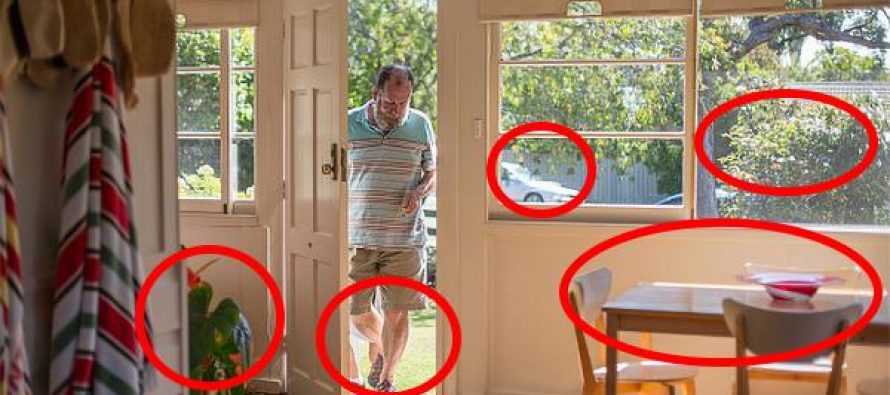
Ideally, this decontamination should be done outside the family home, say on the back patio. If you have a gate in your fence, allowing access to the backyard, it would be good to set up a decontamination area there, allowing you to decontaminate in some level of privacy, yet still, be outside.

When we get to that point, we should also decontaminate anything we bring home with you.

How do you know that the box of breakfast cereal you just bought wasn’t coughed on by someone with COVID-19? You don’t. Since the virus can survive for up to nine days on hard surfaces, it would be good to decontaminate it, along with decontaminating yourself.

There are three basic ways of decontaminating, although only two of them are practical for our needs. The third method, using heat, requires getting the object hot enough to kill off germs.

But that’s also hot enough to kill us; not a desirable outcome. So we’ll leave that one aside for now. The other two are ultraviolet (UV) light and disinfectants.

Decontaminating with UV Light

Ultraviolet light is uniformly fatal to viruses, breaking down their molecular structure. This is extremely handy for us, as sunlight contains a lot of UV.

That UV isn’t blocked by clouds either, although rain will make it hard for it to get through.

To disinfect with UV, every surface must be exposed to the light. While UV can kill bacteria in as little as 10 seconds, for safety sake we need to work with a time frame of three to four minutes.

So the first step in our decontamination process is to stand in the sun for three to four minutes, turning slowly so that the sunlight can reach all sides of our body.

Of course, there will always be parts of our bodies that are shaded, unless we are going to stand on our heads. So this form of decontamination isn’t going to be enough by itself.

However, it can be enough for decontaminating packages, whether delivered to our door or purchased in one of our local stores.

Experts predict that an EMP strike that wipes out electricity across the nation would ultimately lead to the demise of up to 90% of the population. However, this figure begs an important question: if we were able to live thousands of years without even the concept of electricity, why would we suddenly all die without it?

Decontaminating Packages with UV

If you receive a package delivered to your home, pick it up with disposable rubber gloves on and move it to your decontamination area in the back yard.

There, set it in bright sunlight, arranging it in such a way as to ensure that the most possible surface area is exposed to the light. Leave it there for a few minutes, then turn it over, so that whatever sides were not exposed to the sunlight can be exposed.

If there’s a chance that the package is contaminated, we have to assume that there’s a chance that the contents are as well; that the person who packaged the shipment is infected and had coughed on the package. Therefore, it’s a good idea to open the package outdoors and expose the contents to UV light as well.

The package itself can be disposed of in the outside garbage can.

Once you have allowed all sides of the shipment to be exposed to UV light, remove your disposable rubber gloves, and dispose of them, before picking the item(s) up. If you were to pick them up with the gloves on, you might very well re-contaminate the package.

Decontaminating with Disinfectants

Even if you decontaminate yourself with UV, it’s still a good idea to use chemical decontamination as well, especially for the parts of your body which are shadowed when standing in the sun, such as those shaded by your arms.

You’ll need some sort of disinfectant for this, such as:

  • A commercially manufactured disinfectant spray
  • Isopropyl rubbing alcohol – must be at least 60%. Do not use denatured alcohol, as it has additives which make it poisonous for human contact
  • Hydrogen peroxide – must be at least 3% (check out our guide of multiple uses for Hydrogen Peroxide here)
  • Chlorine bleach – most bleach is 6%; dilute it at a ratio of 1/8 cup + 4 teaspoons per gallon of water
  • Tincture of iodine (however, this tends to stain)

Whatever type of disinfectant you choose to use, it’s best to have it in a spray bottle for convenience, speed of decontamination and to reduce waste. If possible, adjust the spray bottle for a fine mist. To disinfect:

  1. Spray the disinfectant over your entire body. You’ll need an assistant to help you get your back, as it’s really hard to spray your back and you can’t see if you’ve done a thorough job.
  2. Allow the disinfectant to sit for a minute, and then rinse off of any parts of your body where you feel it is necessary. Note: In most cases, it isn’t necessary to rinse off, as it will evaporate.
  3. Wash your hands for a minimum with normal hand soap and water. Although you can use antibacterial soap, it isn’t necessary and won’t help with eliminating Coronavirus any better than normal soap will.
  4. When you enter the home, change your clothes, putting the clothes you’ve been wearing in the hamper to be washed.
  5. Wash your hands again, after removing your clothes.

Please note that no system of decontamination is totally perfect; but the more thoroughly you disinfect, the less chance that you will bring any virus into the home. In a sense, this is a game of odds and what you’re trying to do is tilt the odds in your favor. You’ll know you’ve lost or won by whether or not anyone in your family comes down with the disease.

Solar energy is a renewable source of energy with has many benefits.

The best thing is that you’ll save money on you electric bill.

To build your own solar panel almost for free, you’ll need to watch this video

A Guide: How To Prepare Your Home For Coronavirus

The Centers for Disease Control and Prevention is telling Americans that they should be prepared for the possibility of a COVID-19 outbreak in their community.

But what does preparedness look like in practice? The short answer: Don’t panic — but do prepare.

That “means not only contingency planning but also good old-fashioned preparedness planning for your family,” says Rebecca Katz, director of the Center for Global Health Science and Security at Georgetown University. In other words, what you’d do in case of a possible hurricane or another natural disaster.

We spoke with Katz and other health experts about common-sense things you can do to be ready should the virus hit where you live.

Should I stock up on food and meds?

The reason to stock up on certain products now isn’t so much to avoid potential shortages in the event of an outbreak but to practice what experts call social distancing. Basically, you want to avoid crowds to minimize your risk of catching the disease. If COVID-19 is spreading in your community, the last place you want to be is in line at a crowded grocery store or drugstore.

If you take daily medications — for example, blood pressure pills — make sure you have enough to last a couple of weeks, suggests Katz, as long as you can get approval for an extended supply from your insurance provider.

Also worth pre-buying: fever reducers like acetaminophen or ibuprofen, says Edith Bracho-Sanchez, a pediatrician with Columbia University Medical Center.

Think about adding enough nonperishable foods to your pantry to carry you through for a couple of weeks, adds Amesh Adalja, an infectious disease physician and a senior scholar at Johns Hopkins University’s Center for Health Security.

Bracho-Sanchez suggests having on hand your go-to sickbed foods, like chicken or vegetable broth and crackers in case of illness, as well as hydrating drinks such as Gatorade and Pedialyte for kids (though so far, kids seem less vulnerable to COVID-19). That’s because if you do get sick, you want to be ready to ride it out at home if need be. So far, 80% of COVID-19 cases have been mild. (Think cold or flu symptoms.)

Are special cleaning supplies needed?

We still don’t know exactly how long the coronavirus that causes COVID-19 can survive on surfaces. But Stephen Morse, a professor of epidemiology at Columbia University Medical Center, says what we know from other coronaviruses is that most household cleansers — such as bleach wipes or alcohol — will kill them.

Even wiping down surfaces with soap and water should do the trick, he says, because this coronavirus has a lipid envelope around it — like a coat that keeps the RNA inside the viral particle. And soap is a detergent that can break down lipids. “We use them to take grease and oil, which is a lipid, off our dishes,” he notes.

If COVID-19 does start circulating in your community or there’s someone sick at home, plan on cleaning surfaces that get touched frequently — such as kitchen counters and bathroom faucets — several times a day, says Dr. Trish Perl, chief of the infectious disease division at UT Southwestern Medical Center. That advice, she says, comes from studies on other diseases “where they’ve shown that if you do clean up the environment, you can actually decrease the amount of virus that is on hard surfaces significantly.”

What about face masks?

The science on whether it’s helpful to wear a face mask out in public is really, really mixed, as we’ve reported in depth. (For starters, it depends on what kind of mask you are wearing and whether you use it correctly.)

Some infectious disease experts are reluctant to recommend that people wear masks as a preventive measure because they can provide a false sense of security.

What experts do agree on is that wearing a mask is a good idea if you are sick, so you can reduce the chances that you’ll infect others, whether it’s family members at home or people at the doctor’s office if you go in to be seen. Perl says that wearing a mask when sick is especially a good idea if you live with someone whose immune system is compromised or who’s elderly, since people in their 60s and above seem to be the most vulnerable to COVID-19.

Some research suggests that wearing a mask can help protect you if you’re caring for a sick family member, but only if you wear it all the time in the presence of the sick person and if you are careful not to touch the front of it, which could be contaminated with pathogens.

What to do about work — and telecommuting?

Now is the time to talk to your boss about your ability to work from home if COVID-19 is spreading locally, says Morse. Obviously, if you’re sick, you should stay home. But even if you are well, telecommuting makes sense in the event of a local outbreak to reduce the chances that you’ll be infected.

“That might be the prudent thing for many people to do if they’re able to do it,” he says, especially in big cities like New York, where large crowds of people are concentrated on public transport.

Pill planner.

What’s the plan if you get sick?

If you show early signs of illness — like a fever or a dry cough — Bracho-Sanchez says you should call your doctor’s office but don’t necessarily head straight to the emergency room or urgent care, where you might infect others.

“Do you really need to come into the office? Can we work this out through the phone?” Bracho-Sanchez says. “Of course, if you’re having trouble breathing, if you’re dehydrated, that’s a different story.”

Schoolbook.

Do you have a plan for kids and older relatives?

Perl and Katz suggest you start figuring out now what you would do if day care centers or schools start closing because of an outbreak. Do you have a backup child care plan in place?

“Having a plan for these kinds of eventualities now — instead of like it happened in China, where one minute things were open and the next minute they weren’t — can be very helpful and a lot less disruptive,” Perl says.

“For example, for me, I’m trying to think about, what if my mother gets sick? She doesn’t live in Dallas,” where Perl is. “What am I going to do? How am I going to get her cared for?”

Perl says it would be wise to reach out now to friends or neighbors who might be able to help in such situations.

Are there any habits I can practice at home to stay healthy?

Bracho-Sanchez suggests everyone in the house start a new habit today: Wash your hands as soon as you walk through the door.

You’ve heard it over and over, but one of the best ways to protect yourself against infection from COVID-19 — or cold or flu, for that matter – is good old-fashioned hand hygiene. Washing your hands frequently, as well as avoiding touching your face, eyes and nose, is a tried-and-true way to cut down on respiratory infections, Perl says.

Studies have shown that “good hand-washing and frequent hand-washing will decrease the risk of transmission of these viruses anywhere from 30 to 50 percent,” she says. “You can use the alcohol-based hand gels, or you can use soap and water. It doesn’t need to be any kind of antibacterial soap.” And you should scrub your hands for at least 20 seconds — about as long as it takes to sing the “Happy Birthday” song twice.

Also, if you’re not already doing it, start practicing good respiratory etiquette: Cough into your elbow instead of spewing virus-laden particles into the air (and wash your hands right after), and make sure to throw out your used tissues, since they might have virus particles on them.

“Those are very, very effective kinds of measures just in terms of decreasing exposure of others,” says Perl.

Energy Is The Key To Everything: In A Survival Situation, Especially An Extreme One, Having An Energy Source That Allows You to Live Is Very Important

When people are sitting around making lists and deciding what they need to survive or just get by in the future there is one thing they need to give great thought to. Energy is the basis of everything. Energy takes many forms such as food, electricity, liquid fuels, mechanical, nuclear, solid fuels, solar and wind to name a few. Without it your body will not function, you will have no light, no heat, no transportation or communication. Energy is the foundation of everything humans do in this world. Without energy in its many forms we cannot live.

If you can produce enough energy you can do just about anything. You can live deep underground, live on the moon or even in space. You can heat your home, produce light to see, grow food, power vehicles and radios, produce goods from raw materials and power equipment to keep you alive.

Most people do not think about this very often because they can simply walk outside and feel the warm sun on their skin, do numerous tasks and even feed themselves as a result of this energy from the sun. They can do many things without modern technology because the sun provides the energy to do it. Knowing how to generate and utilize the various types of energy allows you to survive in many different environments. Here is one example to think about to show you what I mean.

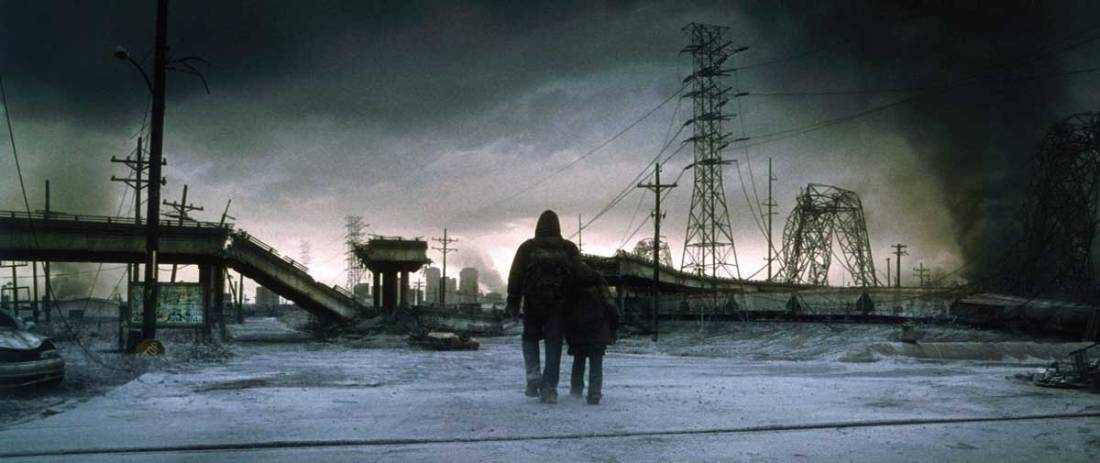
In the movie The Road, the earth is consumed by an environmental disaster that leaves the world in a cloudy haze, leaving it cold and dead. The survivors wonder around looking for any type of sustenance they can find including each other.

Even under the circumstances given these people still have the ability to produce energy. Energy means life. Nuclear power would still work under these circumstances especially in navel vessels. Even though all of the trees seem to be dead, they can still be burned for fuel. As long as water falls from the sky hydroelectric power will still work. Where you have power generation you have the means to provide heat and light to grow food. You only need the knowledge and skills to do it.

In a survival situation, especially an extreme one, having an energy source that allows you to live is very important. That is one reason why knowledge and skills are so important to many preppers. Knowledge and skills allow you to construct a new living environment following an event and energy plays a major role in that. It is idiotic to walk around like the survivors in The Walking Dead, with no food, water, equipment or transportation when there are resources scattered all around you that can be utilized.

Simply burning wood can provide you with energy to run a vehicle, produce power for lighting and communications and produce heat for cooking. With sufficient energy you can grow food, produce clothing, distill water, even provide fresh air and refrigeration. Energy is the key to living and the more knowledge you have in producing and controlling it the more likely you are to survive long term. The types of energy produced and the ways you utilize them are entirely up to you when your survival is in your hands. The more energy you can produce, the better your living standard is likely to be.

When an abnormal event occurs that can bring civilization to a screeching halt, the energy you have available to you will determine if you survive or not. Energy in all of it’s forms is something most people never think about until it is too late. It does not matter if it is the sun, wind, hydro, wood, oil, bio fuels, coal or thermoelectric. You need to be ready to utilize what you have available when the time comes. Your ability to create and utilize the energy available to you is your ability to live.

5 Fatal Mistakes To Avoid When Bugging In- The Decision to Live Off The Grid Will Present Many Challenges, As Will Bugging Out to A Survival Group Or Other Safe Location

The decision to live off the grid will present many challenges, as will bugging out to a survival group or other safe location.

Interestingly enough, it can also be very hazardous to stay at home during and after a major crisis or upheaval.

Ultimately, there are five, relatively simple but often overlooked things you should try to avoid at all cost. While it may take a bit of work to ensure you do not fall into these traps, it can save you time, money, and well-being in the long run.

1. Lack of Awareness about Your Surroundings

If you have been actively prepping, then you are always thinking about ways to improve your situational awareness. As with so many other things in life, sometimes it is very hard to distinguish between routine background elements of your life that won’t matter in a crisis situation, and those that will.

Some areas where you may be blindsided include:

  • Overall suitability of the land and building where you will be bugging in
  • An accurate and thorough assessment of risk of exposure to rioters
  • An accurate and thorough assessment of how government and first responders will respond to the crisis and post crisis period
  • How your personal advantages and limitations will change over time
  • Lack of knowing how zoning laws and other regulations will either prevent you from making viable prepping plans or even prevent you from doing what is needed after a crisis occurs

Today, many people that are working on their survival plans figure that if the situation is bad enough, local, state, and federal governments won’t be around or able to enforce the kinds of regulations that make it difficult to store and operate necessary survival equipment.

These very same people are unaware that we are living in a world with a global government that can and will send troops, and other forms of “support” to governing bodies that can no longer control or manage any given situation.

2. Believing You Will Always Be Safer in Your Own Home

No matter what happens in life, chances are you will just want to be in your own home where you can get something to eat, go to bed, or take a shower.

Your home isn’t just a place where you carry out the daily tasks associated with taking care of yourself, it is your ultimate safe haven. In fact, even when people are very sick and need extensive care in a hospital, they always tend to feel safer at home and want to return as soon as possible.

On the other hand, there can be any number of situations where being at home can pose more of a risk than being somewhere else. In a post crisis world, it is anyone’s guess which option will be better for you.

Even in a flood, earthquake, or hurricane scenario, the house next to you may be demolished while yours remains relatively unscathed. Never simply avoid looking at the fact that your home may be too dangerous to stay in before, during, and after a crisis period.

Here are just a few things that should alert you to the fact that you may have some problems if you choose to bug in:

The floors, walls, or roof are in disrepair

You would be amazed at how many people have enormous credit card, mortgage, and car payment loads even as their home is propped up on jacks or they need 5 gallon buckets to catch leaks from the roof when it rains.

A home that is in this condition may seem like “home” to you, and impossible to leave, however it can spell death for you in a crisis scenario. While you may feel “at peace” with that kind of ending, you may find yourself thinking and feeling differently when you or a loved one are pinned under a beam and screaming for hours or days for help that may not arrive.

Your debt profile and how it impacts where you live

Many people quagmired in debt would not necessarily mind an upheaval that essentially causes all debts to be excused. Waiting for such an event and thinking that you can survive in your current home is about as rational as believing drinking poisoned Kool-Aide will get you to the promised land courtesy of Hale Bopp.

Make sure that you understand how your debt and income profiles affect your ability to bring your home up to suitable standards or how your finances prevent you from getting into a safer apartment or neighborhood.

If you need to let go of other prepping activities in favor of focusing on these matters (and resolving them), then do not hesitate to do so. You can always go back to more conventional elements of prepping once you have secured a safer home for bugging in.

While you are tending financial matters, you can still be amassing information and fine tuning your plans so that you know what to buy, where to get it, and how to use it.

3. Insufficient Training and Knowledge Development

Just because you start each day off with a shower and a decent breakfast, it does not mean that you know enough to survive a major crisis scenario staying at home. In fact, many of the habits you take for granted may prove fatal in certain conditions. Consider a situation where you are decided to bug in during a hurricane or other massive flooding.

Chances are, if you live in a city or town, then you will also be relying on municipal water or other local water supplies that may have been contaminated by sewer system overruns. As strange as it may seem, when people hear a “boil water” advisory for cooking, they will still hop in the shower and assume that the water is clean enough to wash their bodies with!

Not only will you run the risk of exposing yourself to raw sewage and all kinds of dangerous chemicals, but you may also wind up being exposed to any number of deadly diseases.

This is just one example of insufficient training and knowledge development in areas where you may feel confident of your skills. Other things that people bugging in may overlook as they make their plans are:

How bathing and other hygiene protocols will change in a survival scenario

Even being a frequent camper and outdoor activity person cannot truly prepare you for days on end where you will need to conserve water and must use bath wipes and other resources to keep your skin and teeth in reasonably good condition.

Changes in cooking and food preparation routines

f you are the type that stores up and stocks up on frozen foods or pre-packaged meals, everything will be lost when there is no power to run refrigerators and freezers. If your cooking skills don’t go much beyond the coffee maker and the microwave, you will find it very hard to safely manage a propane stove or an open fire.

If you decided on bugging in so that you could avoid “outdoorsy” scenarios, then you may find yourself at a distinct disadvantage even though you are in your own home.

Changes in how you manage medical conditions and needs

Even though you can buy a virtual pharmacy of useful herbal remedies, the vast majority of people don’t know how to choose good quality products let alone use them to their best advantage. There tends to be a distinct lack of interest in topics such as bystander CPR, general and advanced first aid, and emerging trends in medical technologies.

While you may have no interest in being a doctor or other type of medical provider, that does not mean you should avoid learning how to splint a broken bone or stop excessive bleeding. It is also very important to keep up with new learning in the field of medicine.

Many things that were thought to be true about various conditions are being disproven. As a case in point, do some research on leaky gut syndrome and find out about all the conditions it can lead to.

If you are suffering with any of these conditions, you can put yourself at an advantage by looking for alternatives that will restore your well-being instead of hoping that your medicine stockpile will get you through a crisis situation.

The words “situation awareness” scare you

The more active your imagination may be on this matter, the less prepared you will actually be to defend yourself or escape during a house invasion or riot.

No matter how calm and cool you think you will be in a situation, rest assured that adrenalin alone will have you shaking as every thought flees from your mind, and your punches and kicks seem to be moving through some weird goo and miss their target.

If you have never been in a real street fight or had to pull a knife/gun or use it on an attacker, then you truly don’t know what is involved let alone how to defend yourself and your home from multiple attackers. Never assume that being in your own home will mean you are safe regardless of the condition of society.

Dedicating the term “situation awareness” to self-defense alone. This particular term can be applied to just about any area of life. Invariably, the more you know about what is going on around you and within yourself, the more you will discover needs to be done.

Lack of structuring your home’s internal landscape. Regardless of the neighborhood or how nice you want your home to look, there are some disastrous orientations of furniture that will make it very easy for attackers to get in and take over your home.

Make sure that you know how to use fields of fire and how to direct invaders to locations where you can deal with them more easily. Do not assume that this is sufficient.

If you have a gun, practice hitting targets in these areas with the laser sights, throw knives, shoot soft darts, and practice with rubber arrows. The more muscle memory you have and the more confidence you have in the fields of fire within your home, the better chance you will have of defending it and yourself.

An accurate understanding of human behavior and intentions. In crisis scenarios, it is all too easy to become paranoid and lose all sense of how people can work together to overcome a crisis.

Make sure that you know when to defend yourself with words or how to shift a situation to your advantage. Simply “shooting and asking questions later” can easily leave you as a target for gangs and just about anyone else that sees you as a threat.

This in turn, can make it difficult, if not impossible to get out of the situation alive, especially as others begin working together and rebuilding the area.

4. Lack of an Exit Plan

There are many situations where you may decide that you would simply rather die in your home than face all that goes with trying to bug out. As many people in 9/11, hurricane and tsunami zones have learned, you don’t always have a choice about whether or not you will survive the actual crisis event.

No matter whether you stepped away from your home at a critical moment or some other event leaves you as a survivor, you may well find out that you are alive and relatively well, but can no longer live in your home.

Lack of an exit plan from this type of situation can prove worse than fatal. Never forget that others around you that may have passed on or been badly injured would give anything to have what you have now.

Do not waste the good fortune that you have if you survive a major crisis by not developing a viable exit plan just in case you cannot bug in. Some basic things that your plan should include are:

  • The names and locations of friends or relatives in near and distant locations that can give you a place to stay in time of need. Often, the hardest part of bugging out is the fear that you will have no place to go. At the very least, if you have a person or location in mind, then you can focus on that goal and use it as a means to get started moving out of the crisis zone.
  • A bug out bag that has the tools required for navigation, food gathering, food preparation, water purification, and basic medical supplies. If you are traveling to an area with a different climate, then be sure to wear layers of clothes that will enable you to avoid common pitfalls. This may include clothes that will help you stave off frostbite as well as ones that will help prevent heat stroke and dehydration.
  • The financial means to support yourself once you are outside of the crisis zone. If you are in a fairly localized situation, it may still be possible to gain access to debit cards and other bank funds. To maximize your chances of getting at these funds, make sure that you have at least one pre-paid debit card that is backed by a bank large enough to have branches all over the world. As may be expected, cash or coins are always the best option if you don’t want to be tracked, however then you will still need to be able to defend yourself from various thieves and other criminals.
  • A list of skills and knowledge that you need to acquire. Make it your business to learn how to hunt, fish, build a shelter, purify water, tend basic medical needs, navigate, and defend yourself. You should also make it a point to learn at least one extended trade that you can use for barter as you move from one area to another. Even if you wind up remaining in your local area, these skills will still help you as you interact with others trying to overcome the same nightmare scenario.

5. Not Having a Bug in Bag

As you read the term “bug in bag” you may find yourself wondering why you would want to pack a set of essential gear when you have your whole home to survive in.

Basically, any given scenario may make certain rooms inaccessible or other problems may limit you to a very limited space. At the same time, if you need to leave, you can cut several hours off your time by having a bag with everything you need for long term survival.

Your bug in bag can be limited to essential tools that you will need to obtain water and purify it as well as tools for obtaining and preparing food. In some cases, you can follow guidelines for a bug out bag, however bear in mind that limited traveling distances and your neighborhood features may make some things useless unless you are going to bug out.

For example, a classic bug out bag might include fishing gear. If you are living in an inner city, chances are you won’t be going fishing let alone catch anything that is safe to eat.

On the other hand, you might find it more practical to have a paper list of all food pantries or other food preparation locations where you can get something to eat, plus seeds and suitable containers. While this won’t provide food immediately, eventually you will be able to feed yourself at home.

Over the years, many preppers that have studied a wide range of scenarios conclude that it will be easier, cheaper, and safer to bug in. Sadly, these same people may be lulled into making some fatal mistakes simply because they are planning to remain in known territory where they feel safe. A crisis situation can turn even your home into a nightmarish, strange, and dangerous landscape.

Take the time now to make sure you avoid these mistakes and you will have a better chance of thriving on your bug in plans.
Are You Prepared For 19th Century Living? (You May Not Find Yourself Living In The 19th Century Tomorrow, But What If?)

Those that are aware of the EMP commissions report have probably also heard the statement that this type of event would suddenly transport everyone involved back to the 1800’s almost instantly. It is also possible that up to 90% of the population could die within 2 years due to the sudden lack of modern technology. It does not matter if it is an EMP, CME, cyber attack or terrorist attack on the grid, the results will be largely the same.

This is a sobering notion that you can either believe or disbelieve. If you think it is all hype you need only to go back to your daily activities and hope it never happens and leave your survival to someone who will do something if it ever happens. For those hardy souls that take responsibility for their own fate and that of their family, it falls to you to determine what this type of event will mean for you. An event of this magnitude will affect different people in different locations in different ways.

It is important to first realize what changes you will likely see following this event. To understand this you must look at what a 19th century lifestyle would look like to you. Understanding these differences will help you to determine what plans you need to make ahead of time to adjust to these changes in a way that will allow you to survive. Here are some of the things you will face with a collapse in modern technology and this does not even take into account problems you will face from the ill prepared.

19th Century support systems included the following

Sailing ships for cargo and human transport
Steamships for cargo and human transport
Steam locomotives for cargo and human transport
Horses and wagons for cargo and human transport

Horses, mules and oxen for cultivation and harvesting
Root cellars for common storage
Ice houses to store ice cut in winter
Open pollinated seeds for planting
Livestock manure for fertilizer
Local mills for processing grains
Shallow dug water wells for fresh water
Manual tools for building and repairs

Developed systems for kerosene, whale oil and candle making for lighting
Mechanical power systems for factories and machinery
Telegraph lines for communication
Local craftsmen to build and repair items
Human and animal means to produce coal

Wood stoves for cooking and heating
Outhouses for sanitation needs
Buildings designed for natural ventilation

Limited clean water systems
Limited hospitals and doctors
Limited drugs, medications and medical equipment
Limited firefighting capabilities
Limited law enforcement capabilities

Physical currency of silver and gold
Banks utilizing paper records

Many of these systems exist today only in museums or historical sites and in insufficient quantities to support the population we now have. So simply going back to 19th century living standards would be impossible for the vast majority of people even under the best of circumstances. This brings to light the conclusion that 90% of the population would not survive long term under these conditions.

Assuming this type of event did occur, what would you need in advance to insure your survival? That is a question many people need to ask but most will not simply because their belief system would be shattered if they acknowledged potential threats and that they need to be responsible for their own lives.

There is the potential for many types of catastrophic events that we may never see but the potential should be enough to cause reflection on the individuals part to at least ask the important questions for their own survival. To prepare mentally as well as physically is important to survive the worst of the potential events we could face. You may not find yourself living in the 19th Century tomorrow, but what if?

11 Things You Need to Have Ready for when the Power Grid Fails- Many have talked about the loss of the grid as returning us to living like the 1800s, but it’s not… it’s worse

It finally happens and you hear it… or rather, you don’t hear it. You don’t hear anything at all. Everything just seems so quiet. Must have been how things were, before all the cars and machinery entered our lives. Things just seem to have come to a stop, like the power grid went out. Oh wait, the power grid did go out. Now, what do we do?

The loss of the grid, whether through an EMP attack, terrorism or cyberwarfare is the nightmare scenario – everything we depend on coming to a complete stop. If ever there was a difficult survival scenario for us to face, this is it. Modern society is so dependent on electrical power to operate, that the loss of the grid would leave most people at a loss for what to do.

Many have talked about the loss of the grid as returning us to living like the 1800s, but it’s not… it’s worse. At least our ancestors who lived back in the 1800s knew how to do without all the things that we’ll be doing without. We won’t. We will have to depend on ourselves and our own resourcefulness for the most basic of necessities. Things that our infrastructure now provide for us, will no longer exist, unless we can reproduce them ourselves. That’s just what we’ll have to do if we want to survive.

So, here’s my “top ten” list of things we will need to have ready, so that we can meet our own needs, when society no longer can meet them for us.

#1. The first thing we’d better concern ourselves with is heating our homes. Of all the things that could kill us in a grid-down scenario, the fastest and easiest killer is hypothermia. Without electricity, it doesn’t matter what source of heating we’re used to using… it will be out. We’ll need something else.

For most of us, this means heating with wood; using a fireplace or wood-burning stove. Of the two, the wood-burning stove will provide us with the most heat. It’s also easier to install. But the big question is fuel. How much firewood do you have? Where can you get more? How can you haul it home?


#2. Without electricity, we won’t have a municipal water system, with fresh, clean water delivered right to our homes. While it might run for a day or two, until the gas for the generator is used up and the water in the tanks runs out; but that’s about it. After that, we’re either going to have to haul water from a nearby river or lake, or we’re going to have to harvest it from rainwater or a well.

No matter how much water you have stockpiled, you can be sure it’s not enough. Even a swimming pool full of water will only last so long. You’re going to need more than that. So it’s best to be ready to harvest your water right from nature, preferably on your own property.


#3. In a post-disaster world, you’ll have to assume that all water is suspect. That means drinking only water that you have purified. While you can use unpurified water for a lot of things, you can’t ingest it in any way. That means purifying enough water for drinking, cooking and washing the dishes at a minimum.

Most people count on filtration for water purification. There’s nothing wrong with that. There are a number of excellent water filters on the market. But what are you going to do, when you run out of filters? You’ll need something else, in addition to that filtration system, to make sure that you can continue to have clean water to drink.


#4. Most of us cook over either electric or gas stoves. Even so, the gas stoves depend on electricity as well. While most gas pumping stations generate their own electricity to run their pumps, chances are that they will shut down as well. Even if they don’t shut down automatically from the loss of electric power, they will probably be shut down by the operators, as a safety measure.

This will mean that we are left without our most common method of cooking food. The most likely replacement, once again, will be wood, with people turning to barbecue grills or fire pits to cook in. Another option is using solar power for cooking, with some sort of solar oven.


#5. The beginning of prepping for most people is to build a stockpile of food. That’s something that just never seems to end. No matter how much you have, there’s always a desire to reach the next level, increasing your preparedness just a little bit more.

Don’t forget to have some off-site caches of food as well, in case you are forced to abandon your home. you never know what might cause you to need to bug out and you might not be able to take it all with you.

Of course, food isn’t the only thing you need to stockpile, it’s just the most obvious. You’re going to need everything from fuel to sewing needles. So, even if you start with food, be ready to expand your thinking, adding everything else you’re going to need.


#6. No matter how big your food stockpile is, it will eventually run out. That’s why many preppers are turning to grow their own food at home. even if you have a huge stockpile to use, growing your own will allow you to extend that stockpile out, surviving longer.

In the case of some of those disastrous causes of the grid going down, there’s a good chance that it will take over a decade to bring things back online again. With that being the case, it’s unlikely that your food stockpile will be enough, no matter how big it is. Whether or not you survive will depend a lot on your ability to grow enough food to meet your needs.


#7. If you’re going to be growing all that food, you’re going to need to preserve it as well. Food preservation probably started with our ancestors trying to survive the most common disaster of all… Old Man Winter. Without the ability to hunt or gather, the only food that those ancestors had to keep them alive through the winter was whatever they had harvested and dried.

Today, we have a number of food preservation techniques available to choose from. But you’d better learn how to do those, as well as stockpiling the necessary supplies. Don’t skimp on the salt, as that is needed for just about every method of preserving food.


#8. One of the trickier areas we have to be ready to take care of is our own health. While doctors and other health care professionals won’t just disappear, there will be severe shortages of the supplies they use. If you don’t have your own, you might just be out of luck.

But don’t just depend on having those supplies, you’d better have a pretty good idea of how to use them, as well. Without electrical power, you won’t be able to just go to the corner station and fill up your car’s tank. So you might not be able to get to wherever any doctors are anyway. In that case, critical things, like first-aid will become of prime importance.


#9. While waste disposal isn’t a glamorous part of survival, it is a necessary one. Human waste is one of the ways that disease travels around. Without the ability to quarantine it or dispose of it, your body’s own waste could become one of the most toxic things you deal with. Digging an outhouse isn’t all that high tech a solution, but it’s one that takes time, muscle and tools. It’s nice to have some lime on hand as well.

Of course, that’s not the only kind of waste you’re going to be dealing with, just the most dangerous. What about packaging from the food and other supplies you’ll be using? You’ll need to have some way of dealing with that too, in order to keep it from taking over and showing everyone how well you’re stocked. Even if that means nothing more than burning it, you will still have to deal with the cans and the ashes from that fire.


#10. Lighting isn’t as much a need as it is a convenience. You could just do everything during daylight and then go to sleep when the sun goes down. However, we are accustomed to having more hours in the day to use, because of lighting our homes. Having some way of doing that, after the power goes out, will give you more usable time for your many survival tasks.

I’m a firm believer in flashlights, but I also recognize their limitations. Once your battery supply runs out, those fancy tactical flashlights and headlamps won’t do you the least bit of good. You’ll need to revert to something simpler, like candles and oil lamps. Do you have any way of making more oil?


#11. With everything listed above, chances are that you’re eventually going to attract the attention of those people who aren’t prepared. When that happens, you can count on them knocking on your door, asking you for help. Whether or not you help them is up to you, but the reality is that you can’t feed the world.

Turning people away is only a temporary solution. They’ll be back, trying again. If you keep refusing help to them, they’ll eventually come prepared to take it; and take your life as well, if that’s what’s necessary to get what you have. You’ve got to be ready for that eventuality, just like everything else.

Home defense is more than just buying guns and ammo. You’ve got to make your home defensible, essentially turning it into a fortress, preferably without doing so in an obvious way. You’ll also need a defensive plan, that you’ve practiced so that you know what to do when the time comes.

That’s my list, and it’s really just the basics. I can think of a lot of other things I’d add, like the ability to make and repair your own tools. But those aren’t the basic needs; they’re more like additional useful skills for long-term survival and rebuilding society. What would you add to this list?

Design a site like this with WordPress.com
Get started