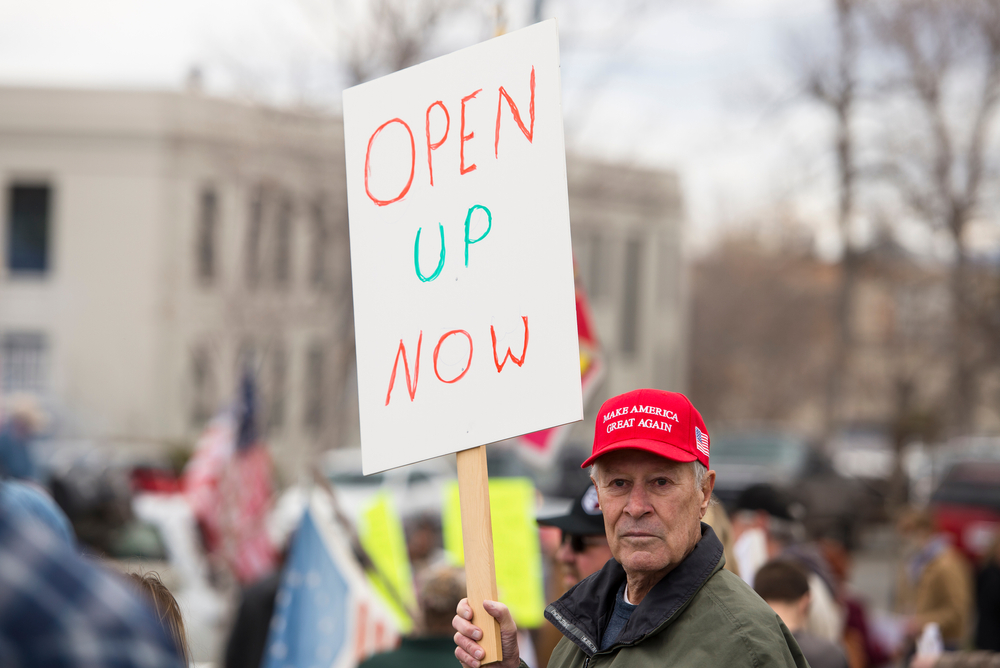
10+ Steps to Take Now for the Upcoming Economic Collapse (If crime rates will be going up, you’re going to need to be ready to repel any home invaders who are patient enough to break out your windows,even with the security window film on them.)

As the nation is finally starting to open up for business again, v e r y  s  l  o  o  o  o  w  w  l  y, we’re all wondering how things are going to pan out. Early indicators show that we might manage to have managed to flatten the curve with all the lockdowns, but at what cost? How badly is this going to damage the economy and just how fall are we going to fall? Those questions are still to be answered.

It seems rather clear at this point, that the real victim of this pandemic is going to be the economy. The current count of people who have applied for unemployment due to COVID-19 is 36 million. Nearly half of Americans are out of work; and nearly half of those jobs aren’t coming back. Of the nation’s 30.2 million small businesses, the SBA expects 40% to shut down permanently due to the financial setback they received. On top of that, some of the nation’s top retailers are in trouble and filing for bankruptcy.

If anyone thinks we’re going to come out of this mess anytime soon, I have to wonder about their understanding of economics. No country can lose that many businesses and jobs, without it having a major impact on the overall economy. We’ve already gone way past the statistics from the Great Recession, next stop is to see if we beat out the Great Depression.

With that in mind, we need to be preparing for whatever form this coming economic collapse takes.

Reevaluate

Economic collapses usually mean two things, at least for those of us who aren’t money moguls on Wall Street. Those are high unemployment and runaway inflation. Even if you manage to keep your job, you’re going to have to deal with the inflation aspect of it.

That will mean that your money won’t go as far as you’re used to. In preparation for that, it’s a good idea to find your unnecessary expenses now and do what you can to get rid of them. If you don’t do it now, you’ll probably have to do it later and that’s going to be much harder.

Downsize

As part of reducing your expenses, take a look at your big-ticket items, your home, and vehicles. Do you need that big a home and that fancy a car? Could you get by with something less, without it totally messing up your life?

It’s a buyer’s market right now, so it’s a good time to be looking for homes and cars, especially if you can reduce your monthly payments in the process. Reducing those payments could make all the difference to your family, especially if you or your spouse loses your job.

Debt

The people who suffer the most in any financial collapse are those who are in debt. When they can’t make those payments, either due to job loss or inflation, they end up losing whatever they bought on credit or whatever they used as security for those loans.

This can mean losing your home, not just because of mortgage debt, but because of other debts and expenses that leave you living from paycheck to paycheck. Eliminating other debt can make it easier to keep paying your home; you don’t necessarily have to get rid of your home mortgage.

I realize that getting out of debt requires a long-term strategy and isn’t something that people can do overnight. But at the same time, we might have debts that we can liquidate rapidly. Those are the ones to take care of, especially if they’re at a high-interest rate.

Job Security

Some jobs, like being a teacher, are more secure than others (such as making and selling decorative items for the home). The question is, how is yours? If you’re working in a “non-essential” occupation, you need to realize that when the economy goes south, chances are pretty good that you’ll be out of work. We’ve already seen that with all the layoffs due to the Coronavirus. If you can find a job which will offer you more security in these difficult times, it seems like a good idea to do so.

But there’s another type of job security too; that’s the security that comes from being the indispensable person in your workplace. I don’t care if you’re an emergency room surgeon or a cosmetologist, there are always people whose jobs are more secure than their peers because their bosses can’t see how they would make it without them.

If layoffs happen, these people manage to keep their jobs, even if they don’t have seniority. Why? Because they’re the people who go the extra mile and do the things that nobody else wants to do. Their bosses will do whatever they can to keep them because they’re worth their weight in gold.

Side Gig

No matter what your job is or how secure it is, it’s a good idea to have something on the side. Many financial gurus today are recommending that everyone have “multiple income streams,” as a means of protecting themselves financially. In other words, that side gig.

I’m not talking about revitalizing your high school rock band here. Any side gig you try to do, in order to give yourself more financial security, has to be something where you are providing an essential product or service. It’s got to be something that people are going to need, regardless of how bad things get, like electronic repairs, food service, or selling medical supplies.

Invest

One of the things that goes hand-in-hand with a financial collapse is the reduction in value of most investments and of the currency in general. That’s what inflation is, a reduction in the value of the nation’s currency. It manifests in the value of everything “financial” going down, with the exception of one thing… precious metals.

Whenever the value of the currency goes down, the value of precious metals, especially gold and silver, goes up. Surprisingly, it seems that silver goes up more than gold does, even though gold is a more expensive commodity. If you have the money to invest in these precious metals, especially in the form of coins rather than ingots, then now’s the time to do so; prices are down.

If you don’t have enough to invest in gold and silver, then there are still ways you can invest. There are many things that run short in times of financial crisis, not because producers are unable to produce them, but because the rapid inflation makes it hard to get them to market profitably. Things like food. Stocking up on these items will give you something you can later use as trade goods in bartering for things you need.

Stocked Up

Speaking of buying food and there being shortages of common necessary items, you might want to check your own food stockpile and make sure it’s okay. During the Argentinean collapse of ’99, there were extensive food shortages in the cities. Barter groups rose up, where people were trading foodstuffs and other necessities. So, having a good stockpile of food not only can help you feed your family, but also put you in the position to trade for other things you need.

There’s another really good reason why you want to make sure you’re stocked up on food and other necessities. That’s to help make sure you’re not one of those people who are stuck deciding between buying food and making your mortgage payment. You will be able to eat out of your food stockpile while making your house payment.

Stocks & Savings

If the economy really does tank, as I suspect it will, it’s not the time to have money sitting in the stock market or a savings account. When times of high inflation come, the relative value of money invested in both of those goes down proportionately. You’re better off getting your cash out and investing it elsewhere.

So, where should you invest that money? In any of several of the things, I mentioned above. You could use it to pay down debt, buy precious metals or just stock up on food. For that matter, you could also use it to get that side gig going, so that you have a secondary income stream.

Homeschooling

This one might get me shot at, especially in the wake of everyone having their kids home during the lockdown, but it might be a really good time to consider making homeschooling a permanent part of your life. I raised all three of my kids that way and it was well worth it.

During the Argentinean collapse of ’99, kidnapping kids for profit became a cottage industry. People who were financially desperate would kidnap the kids of those they thought had money and hold the kids for ransom. It didn’t just happen to rich kids either; a lot of the kids kidnapped were middle-class. When people are desperate, they’re not all that picky.

Homeschooling your kids is a whole lot cheaper than hiring bodyguards for them and it keeps you from having to take time out from your work to be their bodyguards. It’s something worth thinking about.

Your Home

Speaking of security, now’s the time to make sure that your home is secure. I’m not talking about just installing a deadbolt here; but really making it secure. Did you know that your deadbolt won’t stop a criminal? They can just kick the door open and the deadbolt will break right through the door frame. You need to add a good security striker plate, with long screws that go into the studs behind them.

Windows are even harder to secure than doors since they are glass. If you don’t want to install steel burglar bars over them, then put security window film on the inside. Not only is that cheaper than the steel bars, it looks better. But it’s not a perfect solution; a criminal who wants in can still breakthrough. It’s just going to take him a lot of work.

Crime rates go up in any time of the financial crisis. That’s a natural result of people being desperate. In order to avoid becoming a statistic, you need to make sure your home is secure; one that those desperate people can’t break into, either while you’re home or when you’re away. That mostly means making sure that your doors and windows are protected, so that they can’t be broken, giving criminals free access to your home.

Shooting Range

No, I didn’t add this to the list just for fun. While I like going to the range and practicing, there’s a practical side to this as well. That is, if crime rates will be going up, you’re going to need to be ready to repel any home invaders who are patient enough to break out your windows, even with the security window film on them.

Contrary to Hollywood’s image of firearms, you can’t just pick up a gun and start blazing away, without even aiming. Shooting accurately is a skill that takes time to learn; and you’re going to want to be able to shoot accurately, especially with your family there.

So there’s my list of 10… make that 11 things to do. Did I miss any?

When Grocery Stores Go Empty, These Four Foods Will Help You Survive

You should ask yourself, what would you do if you were one of those people who race to the grocery store at the last-minute during a disaster.

The only thing preppers fear more than masses of unprepared people during an emergency, is being one of those people. That’s why our ultimate nightmare scenario would be not having any non-perishable food on hand during a serious disaster. However, there’s plenty of reasons why an otherwise prepared person might not be prepared when the SHTF.

You could be out-of-town or out of the country, visiting family members who aren’t preppers. Or perhaps you’re having financial problems. So maybe you’ve had to dip into your food supply, or if you prefer buying canned food over freeze-dried food, you haven’t been able to restock items that have spoiled. Or perhaps you’re new to prepping, and you haven’t gotten around to building up a food supply.

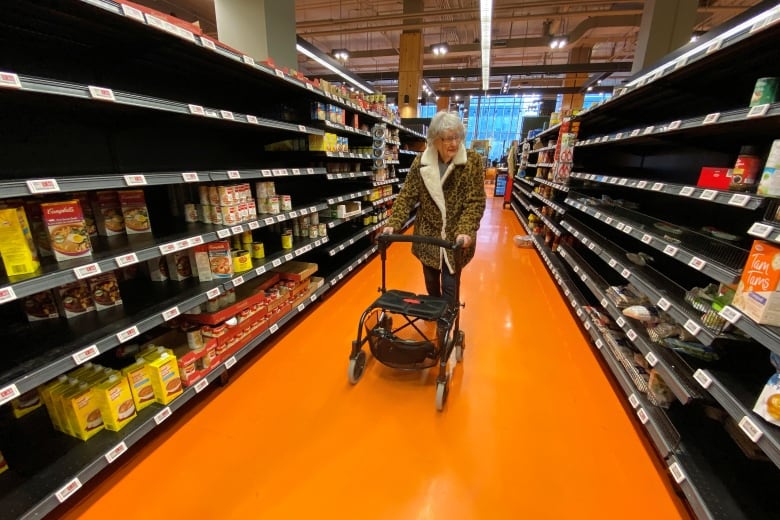
Whatever the case may be, you should ask yourself, what would you do if you were one of those people who race to the grocery store at the last minute during a disaster? Before you answer that, you have to consider the very real possibility that by the time you reach the grocery store, the shelves will be at least partially stripped.

The first food items that will sell out mostly consist of things that are already cooked or prepared in some way, including canned foods, frozen dishes, and bread. Fresh meat and eggs would also disappear pretty fast, despite the fact that they need to be cooked.

Ideally, you want to avoid this scenario altogether by prepping beforehand. In The Prepper’s Cookbook, Tess Pennington highlights key strategies for building an emergency pantry. This takes planning, so if you haven’t already done so, start today. Ideally, you want to store shelf stable foods that your family normally consumes, as well as find foods that are multi-dynamic and serve many purposes.

Have a Back-Up Plan For the Grocery Store

If you end up having to rush to the grocery store during an emergency, you should be prepared to employ a different strategy for finding food. If, when you arrive at the store, there are already a lot of people grabbing the low hanging fruit like canned foods, bread, etc., don’t join them. You’re probably only going to find the scraps that they haven’t gotten to yet. Instead, move immediately towards the food items that won’t disappear as quickly, and can substitute the foods that everyone is going to fight over first.

To employ this strategy properly, you only need one thing. Something to cook with that doesn’t require the grid, such as a camp stove with a few fuel canisters. You’ll need something like that, because many of the food items that disappear later in the game, tend to need some preparation.

These Four Emergency Food Alternatives Can Keep You Alive

So with that said, what kinds of foods should you go after when you arrive at a grocery store later than everyone else?

  • Instead of bread, go straight for the flour. Don’t worry if you can’t find any yeast. You can always make hardtack, tortillas or naan. You might also find that the sacks of dried rice and beans won’t disappear until after the canned foods go. When combined, these two make a complete protein and are perfect for emergency food meals. Keep cooking times in mind with the beans and go for small beans like navy or lentils.
  • If you find that the produce section is stripped bare, go to the supplement aisle instead. There you’ll find all of the vitamins and minerals that are normally found in fresh produce. Look for food based or whole food vitamins. You’ll also find protein powders that can at least partially substitute fresh meat. As well, look for seeds to sprout. Sprouts provide the highest amount of vitamins, minerals, proteins and enzymes of any of food per unit of calorie. Enzymes are essential because they heal the body, cleanse the body, prevent diseases, enhance the overall functioning of bodily organs, aids in digestion, and removes gas from the stomach.
  • If fresh meat or canned meat is gone from the shelves, a substitute for is dog food. Though this may disgust most people, desperate times call for desperate measures. It’s really cheap and packed with protein. The only downside, of course, is that pet food usually doesn’t face the same health standards as human food. If it can be helped, go for the wet food instead of the kibble. Though you’ll probably be fine eating any dog food for a couple of weeks, dry dog food isn’t as safe as wet food. Plus, the cans of wet food will be much more hydrating.
  • And finally, instead of trying to find butter, which will be one of the first food items to disappear, try looking for alternatives. Remember, you need fats in your diet. Healthy oils like coconut oil or avocado oil provide healthy nutrition and canI be used for cooking, added to coffee, oats, beverages, and other foods. In addition, one of the most nutrient dense foods that are often forgotten during emergency food planning is in the health aisle. Look for granola and nuts. Nuts are calorie dense and full of fiber to help you stay full longer. Due to the high protein count of this natural food, it can be an efficient meat replacement too. Look for non-salted nut varieties to keep you hydrated longer. It’s packed with calories and can go weeks without spoiling when it’s not refrigerated. Alternatively, if all the healthy oils and nuts have been taken, look for some lard. It’s sometimes labeled “manteca.” It will probably be overlooked, but has just as many calories as butter, and lasts a really long time.

Of course, many of these items aren’t the best tasting or the most healthy. They’re certainly not ideal. But then again, neither is being caught in a disaster without your food preps. If you arrive at the grocery store before everyone else, by all means, go after the good stuff. However, if you aren’t lucky enough to beat the crowds, now you know what kinds of foods you should grab first.

What Effect Will the Coronavirus Pandemic Have on Migration Issues?

Labour migration in Russia has suffered the shocks of the pandemic and the coming economic crisis, bringing about major changes to its present and future. Even today, many migrants find themselves in the difficult position of having to wait for the restrictive measures to be lifted, and their prospects of going home are vague (due to the borders being temporarily closed, as well as the fact that their home countries suffer from unemployment). Additionally, the access of migrants to the Russian labour market is shrinking rapidly. But do the massive changes that have taken place in 2020 constitute a turning point? How significant will their impact on the future of labour migration in Russia be? How will the situation in Russia be affected (and how much has it already been affected) by the changes in the Eurasian and global migration systems that have been brought about by barriers to migration that have only appeared recently? [1]

The Global Context

The “perfect storm” that has combined the coronavirus pandemic, a dramatic drop in oil prices, the unfolding economic crisis (that is worse than the crises of the last decades), the closing of borders between states (including borders within regional unions such as the EU and the EAEU), the sharp restrictions in international trade, the long-term demand for political populism in most host countries stemming from playing the “migrant card,” the drought expected in Europe and the United States, and the unprecedented plague of locusts in Africa, Asia and the Middle East, will all make it far more difficult to manage migration flows throughout the world.

The consequences of this “perfect storm” that is unfolding before our eyes are so significant that they have prompted a series of negative forecasts, ranging from doubling the scale of the expected famine (according to the United Nations World Food Programme, or WFP, over 265 million people across the globe may face acute food shortages by the end of 2020, which is 130 million more than predicted in 2019) to predicting a revision of the outcomes of globalization, partially abolishing the global division of labour and gradually drifting towards the principle of the self-sufficiency of national economies (if governments fail to take control of the crisis within a year). All these forecasts focus on factors that will ultimately affect migration processes, from prompting new refugee flows out of Africa to the increased vulnerability of migrant workers in most host countries.

New Changes and Changes Long Underway

Rapid changes taking place all over the world in 2020 have altered the challenges involved in controlling migration.

Over the past few decades, Russia has seen major changes in external migration, including differentiation of inbound flows (an increase in the share of families migrating, more migrant women and children, and greater age diversity); growing numbers of migrants from small towns and rural areas; falling education and income levels, as well as greater cultural diversity (including languages and faiths), among newly arriving migrants; and a change in the structure of migration flows, with migrants from Central Asia dominating.

On the other hand, the main incentives for migration to the Russian Federation have not changed: Russia has the best economic situation within the Eurasian migration system; it has an aging population and thus needs a labour force, including unskilled workers. Demand for unskilled labour is evidenced by a stable inbound flow of migrant workers who are mostly employed in unskilled, physically demanding and low-paying (as seen from the calculations of person-hours) jobs.

Migrant workers have essentially become an integral part of Russia’s labour market, and the changes that have taken place in labour migration over recent decades, coupled with the emergence and growth of a “parallel community” with “migrant” services and infrastructure, make their rapid and large-scale return home less likely. For many of them, Russia has already become a second home, and their principal hope for a better future. Nevertheless, some migrant workers will go home in 2020 (let us not forget that many of them are natives of small towns and rural areas who will be able to sustain themselves through their small farmsteads), although the contributing countries have very limited opportunities for supporting their returning citizens. For instance, experts propose giving away land in rural areas and decreasing the tax burden.

Recent expert reviews analyzing the effects that the coronavirus pandemic has had on labour migration mostly focus on the short term, while predictions of falling labour migration into Russia use the 2008 and 2014 crises as points of reference. However, the 2020 economic crisis in Russia has its own specifics: the economic situation has deteriorated sharply, and the pandemic has only added to its woes; there has been a sharp drop in oil prices; international sanctions have continued; borders have been closed and economic activities suspended. Another important factor is the social anxiety that the people of Russia have increasingly experienced over the past several years, which has been exacerbated by the negative socio-economic consequences that can already be observed (small and medium-sized businesses closing, large numbers of Russian citizens being laid off and having difficulties paying their mortgages, the vulnerability of mass medical services that has been highlighted by the pandemic, etc.). The state’s mitigating response has been slow in coming, even though it involves minimal costs. Consequently, we can predict an unstable socio-economic (and even political) situation, which will lead to issues of managing migration flows being relegated to the background, while homebound migrant flows will be greater than during previous crises.

The difficult situation today is fraught with unpleasant consequences both for migrant workers themselves and for the Russian labour market. In the coming months, migrant workers will be partially pushed out from the niches of Russia’s legal labour market in big cities. We know this from past experience (the crises of 2008–2010 and 2014–2016). However, purchasing power, which has been limited by the economic crisis, will work major changes in the shadow sector as well, curtailing the number of jobs even in those businesses that do not pay taxes (or do not pay them in full) and minimize their expenditures by way of the super-exploitation of labour. The shadow sector of the labour market is expected to grow. Foreign workers will compete with Russian citizens, and migrants will have certain advantages here, such as a willingness to work for lower hourly wages and in hazardous conditions, including those that are detrimental to their health. Today, the expected drop in quality of life in contributing countries (due, in part, to smaller money transfers from Russia) makes migrant workers a group that easily offers itself up for super-exploitation.

The changes that have taken place on the Russian labour market as a result of the pandemic (increased numbers of delivery persons, greater numbers of white-collar employees switching to online work, etc.) mean that jobs in delivery services that unemployed Russian citizens typically take as stop-gap solutions until they find a more permanent position will go to foreign workers in the medium term. The caregiving services (domestic workers) will continue to grow due to the aging of the Russian population, which will open up new opportunities for foreign citizens. In the medium term, agriculture will also offer more jobs to foreigners.

Two opposing trends will develop: the state will strive to collect more taxes, and entrepreneurs will strive to minimize their expenditures by hiring more foreigners, sometimes semi-legally and sometimes entirely illegally.

Obviously, in both the short and medium term, at greater or lesser pace, migration legislation will continue to be liberalized and the management of migration flows will become more flexible. For instance, during the pandemic, the President issued an executive order that eased the situation of migrants. In addition, a law was passed allowing those who wish to become Russian citizens to keep their previous citizenship, temporary residence permits were abolished and categories for obtaining Russian citizenship were introduced. These developments appear to be links in the chain of this gradual liberalization, no matter how slow it might be.

The events of 2020 will increase the number of foreign citizens willing to obtain a Russian residence permit or Russian citizenship, particularly among migrant workers who have years of experience living and working in Russia. Given the increasing competition with Russian citizens, migrant workers who want to reduce their outgoings will strive to improve their employability, and acquiring a more protected status will help them minimize risks in terms of finding employment and a place to live.

In the short term, when the restrictive measures imposed in response to the coronavirus pandemic are lifted, emigration of Russian citizens, including skilled workers, might increase against the background of the economic crisis. Educational migration from post-Soviet states (states contributing to Russia-bound migration) will increase, and the number of migrants studying at Russian vocational educational institutions whose graduates have good employment prospects in Russia will noticeably increase.

Many experts expect an uptick in Russia political activity among the Russian people after the pandemic. This may lead to populist parties enjoying more influence in political life, using xenophobic and migrant-phobic myths to boost their popularity.

Migration Challenges for Russia

The changes that have already taken place and are taking place now have brought the issue of modernizing migration challenges in Russia to the foreground.

Crime and Terrorism

Foreigners have never accounted for more than 3–4 per cent of all crimes committed in Russia, as attested by the official data of the Ministry of Internal Affairs of the Russian Federation. Even given the difficult circumstances that migrant workers have found themselves in over the past few months, we can confidently say that crime is unlikely to surge among them. Their long-term plans are geared towards working in Russia, and Russia has strict rules in place that involve deportation after two offenses (including administrative offenses), followed by a lengthy ban on entering the country. These two factors are a powerful deterrent against any illegal activities. Migrant workers typically find themselves breaking the law when it is difficult for them to overcome the barriers to their acquiring legal status in a lawful manner, and when it is cheaper to solve their immigration issues through illegal means. We are talking about buying fake registrations cards and/or employment contracts, not felonies that involve harm to life or health. However, such situations raise more questions about the height of the hurdles that migrants must overcome in order to obtain legal status than about the migrants themselves.

In both the short and medium term, mass migration into Russia is unlikely to generate an increased terrorist threat. However, terrorism challenges will become more relevant in the long term if the state withdraws the previous funding for integratory measures aimed at migrants of all categories, including the integration of foreign-born Russian citizens, particularly children of naturalized migrants. Additionally, given the possible increase in nationalistic sentiments and the growing numbers of terrorist attacks and right-wing crimes, targeting migrants will become a serious long-term challenge.

Healthcare

The risk of the coronavirus and other infectious diseases quickly spreading among migrants is rather high: studies show that migrants tend to live in overcrowded conditions, have limited resources for purchasing protective equipment and medication, are poorly aware of the recommended preventive measures, and generally do not have medical coverage as the price of even the most medical insurance that would include semi-regular check-ups is prohibitively high for them [2]. Consequently, healthcare for migrants is the gravest challenge of all. Migrants fall under the most vulnerable categories during pandemics throughout the world, not just in Russia. International organizations have already voiced this problem.

Growing Xenophobia and Migrant-Phobia

It is possible that xenophobia and migrant-phobia in Russia may grow, and with Russian citizens losing jobs in large numbers, the possibility will only increase. In times of economic crisis, migrants are traditionally seen as competition for Russian citizens who work in menial jobs, which is only fair if heavily qualified, yet this idea is actively explored by populist politicians. Migrant- and xenophobia are unlikely to lead to serious ethnically motivated conflicts in the near future, but it will certainly increase the popularity of political parties and movements that use anti-migrant rhetoric.

Closed Borders

The situation of foreign migrants has already deteriorated significantly due to the restrictions on inbound, outbound and domestic travel imposed during the pandemic. These restrictions apply equally to Russian citizens and the citizens of the EAEU states. Travel barriers being lifted gradually will hardly result in a quick and full recovery of the migration opportunities that existed before the pandemic. This is also a major challenge, since restrictions on the free movement of labour curtail both regional and international economic growth pace.

Increased Job Competition

The upsurge in unemployment in Russia that began in March–April 2020 and is expected to continue in the coming months will increase the competition between Russian citizens and migrant workers somewhat in the short term. In the medium term, the decrease in the size of the working-age population will weaken this competition. However, if the negative scenario materializes (see below), domestic migration will push job competition between Russian citizens and migrants in large cities to higher levels than before the pandemic.

Depopulation of Russian Provinces

One challenge that has invited little discussion is domestic migration, including seasonal work, i.e. Russian citizens from economically depressed regions travelling for seasonal work to regions that are the strongest economically. Crisis phenomena will spur on domestic migration, especially after the peak of the pandemic has been passed, and this will lead to the faster depopulation of Siberia and the Russian Far East. This is a long-term challenge.

The “Brain Drain”

The emigration of skilled workers from Russia will continue to be partially offset by the influx of talented and educated professionals, primarily young persons, from post-Soviet states. This includes educational migration. A small uptick in the “brain drain” from Russia can be expected in the short term, mostly due to the narrowing windows of opportunity for the young generation due to the socio-economic crisis in Russia, and inbound migration will not entirely offset Russia’s “brain drain.”

Prospects and Conclusions

As of right now, in May 2020, it is difficult to make any accurate estimates about the migration consequences of the “perfect storm” that we are currently experiencing. Not until the pandemic ends and the socio-economic crisis that is brewing becomes clearer. Nevertheless, some consequences for the global community, as well as for Russia, can be seen quite clearly even now.

The International Situation

In the coming years, migrants around the world will experience greater labour exploitation and become increasingly vulnerable. This will be due, among other things, to the growing poverty in countries that contribute to the workforce, as well as to the growing need for migrants to transfer money back home.

Against the background of tightened restrictions and greater obstacles to legal migration, both undocumented (illegal) migration and human trafficking will increase.

Famine and social unrest (including armed conflicts) stemming from unresolved problems with food supplies in Africa, Asia and the Middle East will increase the risks of new refugee flows.

If deglobalization does not lead to outright border closures and integration associations shutting themselves off (for instance, the European Union closing its borders), then it may, to a greater or lesser degree, result in new restrictions on migration. Having said that, the triumph of globalization is that it has been interfering with or even destroying the self-sufficiency of most countries for decades, increasing their dependence on the international division of labour, tourism, and trade. The cutting of international ties during the pandemic has worsened the situation in all states that depend on international supply chains. Consequently, a new upsurge in industrialization and reindustrialization in both developed and developing countries appears quite realistic. In the medium and long term, this development will bolster the demand for both skilled and unskilled workers and result in the obstacles to migration flows being somewhat relaxed.

Russia

Russia fits into most of the global trends outlined above.

In the short term, the EAEU partnership will take on more pragmatic, or perhaps stricter, forms. However, migration flows will not shrink. Instead, they will change their format: shadow labour relations will increase, as will the number of human rights violations; labour protection standards will deteriorate, and human trafficking will be on the rise. Thus far, the negative consequences of these changes are hard to assess, but in the medium term (the next three to four years), Russia can expect to see the following scenarios, all of which directly depend on the socio-economic measures the government adopts in the short term.

1. The optimistic scenario.

Once the restrictive measures are lifted, the Government of the Russian Federation will launch intensive purchasing power support by pouring money into the economy and helping it emerge from the “slowdown,” with special attention being paid to small- and medium-sized businesses [3]. Demand for migrant labour (both skilled and unskilled) will gradually increase, and in the medium term, those migrant workers who had gone into the shadow economy immediately after the restrictive measures were lifted and those who had temporarily returned home will have more opportunities for legal employment.

Centripetal trends in domestic migration (people moving to Central Russia) will remain in place, but there will be no major increases in seasonal workforce. Educational migration in Russia will continue at the same pace and will gradually become differentiated due to the influx of foreign students into Russian vocational educational institutions. Migration legislation will be further liberalized, thus stimulating the legal employment of Migrant workers. Considerable attention will be paid to the influx of skilled labour and to curtailing the “brain drain.”

This scenario implies migration flows returning to their previous levels in the short term and gradually increasing in the medium term.

2. The pessimistic scenario.

The Russian economy is slow to recover. Solvent demand is low. Real unemployment is growing. Jobs in economic niches that had been traditionally occupied by migrants are moving into the shadow economy. Migration-related corruption does not drop, or even grows and becomes a part of everyday life, making it more difficult for the authorities to manage the migration system. Business owners, particularly small business owners, prefer to hire migrant workers off the books. Super-exploitation of migrants continues or even increases. Non-payment of wages and other elements of human trafficking are not suppressed effectively and become more widespread. Foreign workers (including workers from Central Asia) are partially re-oriented to other labour markets. The “brain drain” and emigration from Russia continue, mainly in the form of young people.

Domestic migration into Central Russia is on the rise, as is seasonal work. Educational migration to Russia shows little growth, but Russian vocational educational institutions attract more foreign students. The liberalization of migration legislation slows down.

In this scenario, the migration flow will recover within the next one to three years.

Just which scenario will appear depends directly on the socio-economic situation in Russia and on the stability of its political development. Right now, the second (pessimistic) scenario appears more realistic.

How To Effectively Prepare Your Family For Power Grid Failure: What would it really be like to have no running water, electricity, sewer, newspaper or Internet? No supermarket or fire department close at hand?

Imagine yourself and your family, forced from your home in the dead of winter, with nothing more than the few supplies you were able to carry amongst yourselves. Then imagine being shuttered into a community center with thousands of other families, displaced from their homes as well, relying on what few supplies the government could provide.

If you live a comfortable middle-class lifestyle in a first world country, this situation sounds preposterous, doesn’t it? It is not. Families, just like yours, faced this exact plight on December 20, 2013, when a massive ice storm hit parts of central Canada and the U.S., crippling many cities and leaving tens of thousands without power for days, sometimes weeks. Those who were prepared for such an event, having items such as blankets and medications to bring with them, fared much better than their ill-prepared counterparts.

In today’s modern society, we’ve come to rely almost implicitly on having a dependable source of power. When power fails, it causes utter and complete chaos for those not fortunate enough to have had the foresight to prepare.

What Is Power Grid Failure and Why Should I Care?

Of all the threats your disaster plan should consider, power grid failure is one of the more realistic and among the most likely to occur.  When a power grid fails, a substantial geographic area can be without power for hours, days, or sometimes even weeks.

In addition to the 2013 ice storm that decimated power sources to many areas of central Canada and the U.S., there have been several other power grid failures in the last decade that brought panic and chaos to areas all over the world:

  • In 2007, Indonesia suffered major grid failure due to a drop in demand that affected nearly 100 million people for over 7 hours
  • India faces ongoing grid issues due to sporadic increases in demand
  • In 2003, the Northeast Blackout at Con Edison left 55 million people in Canada and the U.S. without power; in some cases, this lasted for more than 2 days
  • In 2005, Louisiana and surrounding areas dealt with the aftermath of Hurricane Katrina that left 2.6 million people without power; some for extended periods of time due to the extensive flooding that structurally damaged buildings and blocked access to power sources
power grid failure
A view of the 2003 Blackout in the Northeast

What Causes Power Grid Failure?

The two most common causes of power grid failure are system failure and equipment failure, but other events can also wreak havoc.

System Failure

The power grid system may fail due to a disruption of equilibrium in power supplied and power drawn, triggering the line to trip and cutting off the supply of power. System failure was the culprit in Indonesia’s outage as well as in the frequent outages suffered by India.

A system failure can occur at the supply-end during extreme weather changes, such as a heat wave that causes an increase in the power drawn from the system to power cooling devices, or at the supplier-end if an error occurs in regulating the power input.

Equipment Failure

An equipment failure can occur at the station, transmission line, or transformer level. Any number of factors can be the cause of an equipment failure, such as an error in the digital processing system or physical damage due to an accident, construction, or weather.

Both the 2003 Northeast Blackout and power outages during Hurricane Katrina were caused by equipment failures.

Other Causes

Power grid failure can also be the result of malicious or criminal behavior, such as cyber terrorist or infrastructure attacks against a nation or a nuclear electromagnetic pulse (NEMP) designed to disable electronic equipment. In the wake of 9/11, many feared the Northeast Blackout in 2003 was in fact a terrorist attack.

Power grids can also fail due to large-scale electromagnetic storms, an electromagnetic pulse (EMP), or a reversal in the Earth’s magnetic field – which can cause temporary disruptions or permanent damage to electronic devices.

While events such as these have the potential to completely shut down power systems for an indefinite amount of time, the likelihood of their occurrence – and the extent of ensuing damage – has been hotly debated.

power grid failure

What Can I Expect During a Power Grid Failure?

The immediate aftermath of a power grid failure is the loss of power, which means modern day methods of communications, sanitation, lighting, cooking, refrigeration / preparation, and transportation will all be unavailable.

Within the first few days of a power outage, the disruption in supply of fuel for transportation will lead to shortages in other supplies such as food and medication. Many who wait several days before stockpiling will be greeted with empty and pillaged Supermarket shelves. Don’t rely on any emergency services – medical facilities, emergency responders, and public officials will more than likely be overwhelmed and unavailable.

If the outage continues for a week or more, civil unrest will begin to grow as food and other resources become scarce. People will no longer be able to run generators or vehicles as fuel supplies run out, and many will experience a disruption in their finances or incomes.

In the event a power outage stretches out into the long-term, such as several weeks or perhaps indefinitely, alternate means of power will need to be found along with long-term solutions to meet everyday needs.

What Will I Need to Prepare My Family?

The best thing you can have during a power grid failure is a positive attitude. Make sure to do whatever you can to encourage hopefulness and keep spirits high.

In addition to the right attitude, I recommend doing the following to properly prepare yourself and your family:

  • Create a storage space that can be easily accessed in the dark
  • Stockpile at least two-weeks worth of supplies
  • Design a plan for preparing food, sanitation, living / sleeping quarters, entertainment (especially for children), and rationing for fuel and power sources
  • Store jugs of water in the fridge now to be used during an outage to keep food from spoiling; however, once the water melts, it should be used for cleaning or flushing, not drinking
  • Store a flashlight or lantern by every bed

There are ten integral categories that should be part of every well thought out power grid failure disaster plan:

  1. Drinking Water
  2. Food
  3. Lighting
  4. Heating
  5. Communication
  6. Sanitation
  7. First Aid
  8. Protection
  9. Additional Items
  10. Backup Power Systems

The following is a detailed discussion of the key knowledge and items to have as part of your disaster plan to ensure all the above categories are accounted for.

Drinking Water

For drinking water, the general rule is that you should have 1-2 gallons per day available for each member of your household. A two-week supply of water for a family of four would mean having 56-112 gallons on hand. If you have pets, consider their needs as well; a rule of thumb is 1 ounce of water per pound of pet per day, so a 20 lbs dog would need 20 ounces a day.

You can further ensure access to clean drinking water by having a water filtration method available such as the LifeStraw Personal Water Filter or water purification packets. This will allow you to draw on water from unclean sources.

Food

When stockpiling food for your family, you’ll want to plan for three meals per day, plus some snack foods for each member of your household. Don’t forget pets – include a two-week supply of food for them as well.

Choose food items that require little to no heating and that your family is familiar with. Consider that cooking requires substantially more fuel than heating; therefore, canned foods that need only be heated are favorable to dried foods that will require boiling. Oversize cans are great if you feel your family can consume all the contents in one sitting, otherwise the leftovers will spoil in the absence of refrigeration.

A convenient option for long-term food storage is to store some MREs (Meals Ready-to-Eat) which are designed for the military use but are a popular choice for stockpiling.

You can check out our Food Storage Guide here to help you decide what the best way is for YOUR family to keep your food supply.

Other key considerations when planning your food stockpile are as follows:

  • Gas supply lines may also be affected by an outage so ensure you have an alternative means for cooking and boiling water, e.g. a camp stove, fire pit, or gas or charcoal grill
  • For any of the above, be sure to have a two-week supply of fuel on hand such as firewood, propane, or charcoal
  • Be sure to store at least two manual can openers with your food supply
power grid failure

Lighting

In a power outage, electrical lighting sources will be unavailable so be sure to have a stash of lighting sources that can run independently of electricity, e.g. flashlights, candles and headlamps, as well as the means to power or light those items such as batteries, matches and lighters.

You should also have a lantern that is bright enough to light an entire room. Whether you choose one powered by batteries, propane, or a hand crank depends on your own personal preference.

To conserve as much power as possible, consider storing a solar battery charger set along with multiple batteries of different sizes to accommodate all of your emergency gear. Solar garden lights and glow sticks can also be used to light up hallways and other frequently traveled areas without draining your battery power.

Heating

In the case of a power outage in cold climates, conserving and maintaining heat will be key to survival. Should you find yourself in this situation, gather everyone in your household into one room and lay a towel along the bottom of the door to seal it. Do the same for any windows to limit the possibility of drafts. By lighting several candles and relying on residual and body heat, you can expect to keep the temperature comfortable for at least 48 hours. After that, you will need an alternative source of heat until the power is restored.

A fireplace or wood stove can serve as an excellent alternative source for heating. Should you have access to either, ensure your stockpiles include plenty of fuel to keep your fireplace or stove burning.  If this is how you will be warming your family, building an upside-down fire is a good way to have a long burning, self feeding fire.

Another option is a portable propane space heater; however, this carries the risk of carbon monoxide poisoning without proper ventilation. No matter what heating source you choose, ensure you have a fire extinguisher available and ready should you need it.

An option for overnight heating that doesn’t involve the risk of flames or noxious fumes is to heat rocks on a fire then transfer them to a Dutch oven or other heat-safe cookware. The heat emitted from the rocks should be enough to provide heat throughout the night without compromising your safety.

In terms of gear, you will want to have blankets and low-temperature rated sleeping bags stored in an easily accessible location, so as to ensure quick retrieval even in the dark. You will also want to ensure each member of your household has enough clothing to cover them from head to toe, and enough layers so that they can add or remove clothing to regulate their temperature.

Communication

Having a hand crank radio can be invaluable in a power outage. In addition to providing important communications from the outside world, it can also be used to charge other electronic devices, such as cell phones. Keep in mind that cell phones and landlines cannot be depended on to work during power outages. It is always best to have backup methods of communication ready.

Sanitation

Having proper sanitation protocols in place can not only help with hygiene, but also boost morale.

Here are some helpful hints for ensuring you and your family can cope with sanitation issues during a prolonged power outage:

  • Store plenty of disposable tableware to cut down on washing needs
  • Stock plenty of antibacterial wipes and hand sanitizer, as these can be used without water
  • Immediately after the power goes out, fill your bathtub and, if you have one, your washing machine with water to use for flushing and washing; if you don’t have a bathtub, fill as many buckets as you can from the shower or sink
  • Find out ahead of time whether or not your toilet will flush without power – this can prevent sewage backup in your home
  • If manually flushing your toilet by pouring water into the tank is not an option, make sure to add heavy duty contractor bags and kitty litter to your stockpile – these can be used to craft a toilet by lining a bucket with the contractor bags and adding kitty litter
    • You can also purchase a toilet seat to attach to the top of the bucket, which can be especially helpful with children who may be apprehensive about using it
    • When the bag is full, or before it becomes too heavy to lift, tie it off and store it outside
  • Keep a supply of baby wipes on hand to use in place of bathing, this will help conserve water
  • In the case of a long-term outage, you will need a means of doing laundry; consider purchasing a hand-operated mobile washer with two buckets – one for washing and one for rinsing
    • Don’t wait until you are down to your last set of clean clothes before doing laundry – remember, there are no dryers and air drying can sometimes take all night

First Aid

In the case of a power outage, you will most likely be bugging-in and therefore have access to your household first aid supplies. However, it is still prudent to have a separate store of essential items such as bandages, antibiotic ointments, tools, any over-the-counter medications your family uses, and antidiarrheal medication to help your family cope with the change in sanitary and dietary conditions.

It is also important to remember that emergencies services will most likely be overloaded and response times could be slow or the services unavailable completely. Include a copy of The American Red Cross First Aid & Safety Handbook to help you independently deal with medical emergencies.

Protection

As a power outage drags on, people will become increasingly desperate and the need to protect yourself and your family from those who aren’t so well prepared may arise. While firearms are always a popular choice, there are other options as well. Consider reinforcing the entranceways to your home and stocking weapons such as pepper spray.

Additional Items

Any additional items you pack need to be based on your family’s particular needs. Every household is unique, so make sure to pack items because they are essential to your family, not because your neighbor is storing them or you read it was a good idea on a blog.

Typical items to include would be:

  • Prescription medications
  • Toiletries
  • Pet care
  • Diapers
  • Feminine hygiene products
  • And anything else you wouldn’t want to be without for two weeks or more.

If you have children, ensuring entertainment options are available is critical. Make sure to have items such as games, books, cards and crafts readily available. Adding some special, non-perishable treats to your food storage can also serve as a morale booster.

Backup Power Systems

Depending on your budget and location, having a backup power system for your home can be an excellent way to prepare for power grid failure.

The most popular choice as a backup power source for emergencies are gas-powered generators. The DuroMax XP4400E is an excellent choice for a gas-powered generator for your home. If you choose to get a generator, make sure it’s installed correctly and that you test it out to ensure you’re familiar with how it works.

Solar panels are a great option for homes with adequate sun exposure and can be used year-round to save on energy bills; however, they are expensive to purchase and install. As they don’t require fuel, solar panels are an excellent way to live off the grid in the long-term.

You may also want to consider the following, less expensive alternatives:

  • A bicycle generator can be used to power small devices and appliances; some kits even include 12V battery charging attachments for creating stored power.
  • A solar battery charger can provide power indefinitely for cell phones and battery-operated devices.
  • A portable generator, such as the WEN 56200i, that is less powerful but can still come in handy for charging cell phones or running a small space heater.
power grid failure
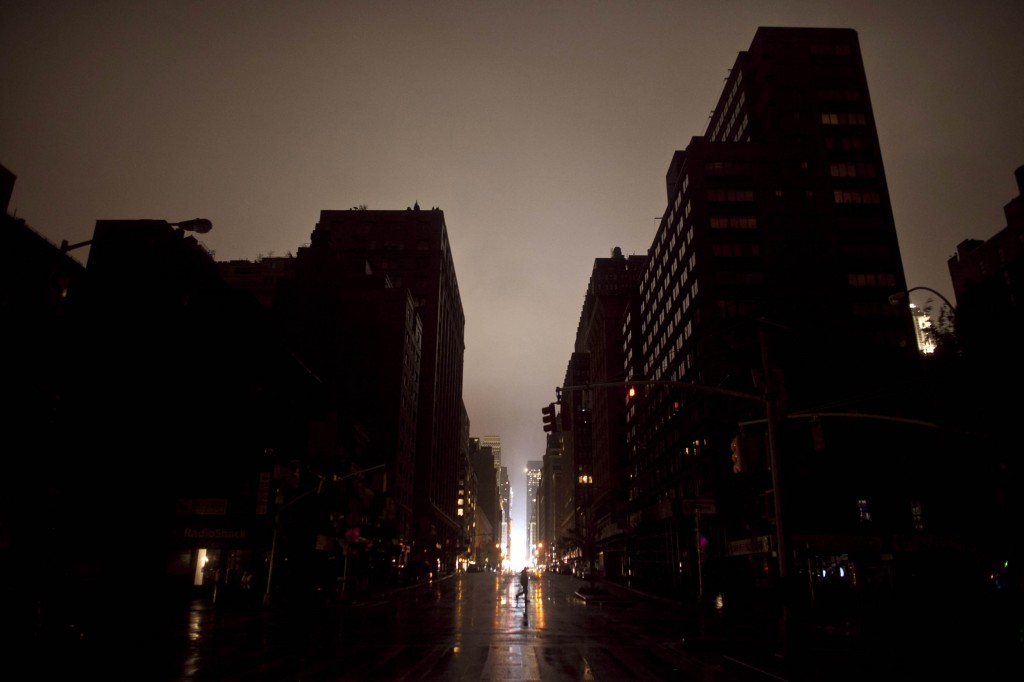
The blackout in NYC after Hurricane Sandy

Conclusion

As our reliance on electrical devices and appliances grows, the need to have a solid plan prepared in case of power grid failure becomes ever more pressing. As the ice storm of 2013 demonstrated, going without power for even several days can have devastating effects.

While power grid failure may be one of the more likely disaster scenarios, it is by no means any less calamitous than other scenarios. Use the advice and tips provided in this article to ensure you and your family will stand a fighting chance should you be faced with having to survive without power for a prolonged period of time.

Above all else, remember to maintain a positive attitude and that chance favors the well-prepared!

What Happens When the Government Becomes Your Worst Enemy

Chile has struggled to become a thriving democracy. Once a dictatorship under Augusto Pinochet, the country has gone through considerable turmoil since his death. Capitalism has not treated everyone fairly in this country, even though Pinochet was once lauded for the dynamic free-market economy he created, once cited as the “model for the developing world.”

By no means has Chile been the only country which has struggled to become a free-market democracy. Russia is still struggling, decades after the collapse of the Soviet Union. Iraq really hasn’t accepted democracy as a political model, even after enormous amounts of investment by the US government. Other countries have struggled as well, but not with the same results.

In this video, i will unearth a long-forgotten secret that helped our ancestors survive famines, wars, economic crisis, diseases, droughts and anything else life trew at them.
So pay chose attention because this video will change your life forever for the good!

Much of the problem that Chile has been experiencing has been due to the vast income inequality that exists in that country. While there are portions of the population which are thriving, many others are still suffering, especially those who are dependent on retirements that were established under the Pinochet regime. Many schoolteachers are still working into their 80’s, because they can’t survive on their $300 a month pension.

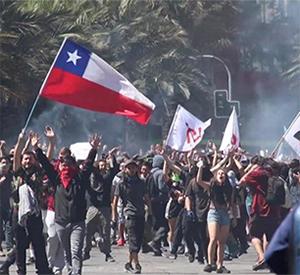
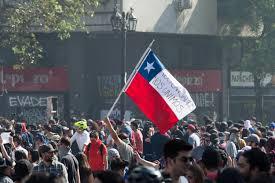
For those working in non-skilled jobs, public transit to take them to and from their work costs as much as 21% of their weekly wages. Thus, when the government announced a 30 peso rise in the cost of the metro, it was met with anger. A student-led protest, called evasión swarmed the metro, jumping the turnstiles to avoid paying the increased fare. Workers took advantage of the opportunity to save a little money and joined the protest.

While protests are nothing new in Chile, these seem to have gained traction. A demonstration which started in the capital has now spread to many of the major cities, with continued evasión of fares and widespread protests in the streets.

It appears that socialist organizers and anarchists have joined in the protests, working to turn it to their political ends. As in many such cases, word coming out of Chile is a bit confused, with each side accusing the other of what they themselves are doing. Much of the reporting is tainted by the political leanings of the reporters who are on the scene. But one thing is certain, the government’s response doesn’t stand up under scrutiny.

The Government’s Response

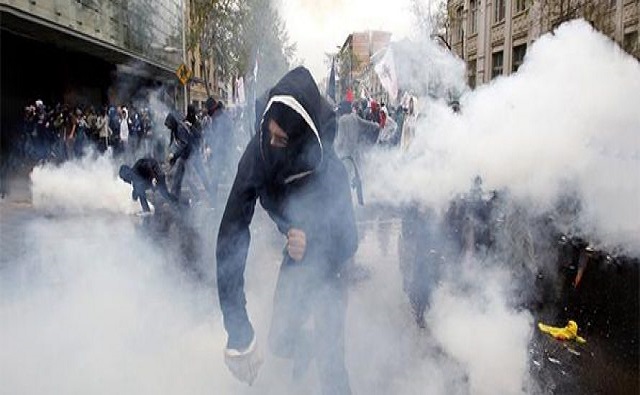
President Sebastián Piñera has declared that his country is “at war.” But if it is, it’s a war between the government and the citizens. While some government response is required to the violent acts of the protesters, that should be a police response, arresting the worst of the offenders and those who are inciting others to commit illegal acts. Protests, as our own government has learned, are not the reason to call out military forces armed and equipped to use deadly force.

What Happens When the Government Becomes Your Worst Enemy

We’ve seen that before in this country; at Kent State University in 1970. National Guard troops were called out in response to a protest. Although the National Guard does receive some training in how to respond to a riot, they are first and foremost soldiers, equipped and trained to kill, not to arrest people. In this case, the results were four dead college students and another nine who were injured.

The soldiers on the streets of Chile reminded many of the older citizens of the years of Chilean dictatorship, when such sights were common; a parallel that was lost on the students who started the protest. For the older citizens, that sight struck fear in their hearts.

The government has admitted to eight people being killed in the protests, but information leaking out of the country claims over 20 killed. There are also widespread reports of police and military brutality against the population, including against people who were not protesting, but merely in the wrong place at the wrong time.

Martial law was declared by the President, early on in the protests, allowing for the use of military forces and imposing ever more restrictive curfews on the people. Interestingly enough, whenever the protesters have gotten the upper hand, troops have retreated to wealthy areas of the cities, focusing on protecting the wealth centers. It seems clear from that action alone, that the leadership of the country is only interested in protecting their financial standing, not protecting the people.

Under martial law, police and military forces have beaten hundreds or perhaps even thousands of innocent people, often plucking them off the streets in civilian clothes, in an attempt to hide their identity. Civil rights are being trampled daily, as the government attempts to regain control.

Experts predict that an EMP strike that wipes out electricity across the nation would ultimately lead to the demise of up to 90% of the population. However, this figure begs an important question: if we were able to live thousands of years without even the concept of electricity, why would we suddenly all die without it?

Could that Happen Here?

Regardless of where you stand politically, Americans have grown afraid of politicians on the other side, especially as the political divide has grown. Each side assumes that the other is likely to declare martial law, on the thinnest of pretexts, imprisoning those who have declared themselves aligned with the other side. Yet that sort of thing has never happened in this country. For that matter, we haven’t seen people rounded up and put in any sort of detention camps since World War II.

Those on the left decry the “oligarchy” regularly, declaring that this country is actually run by them. But I’d like to propose a different viewpoint on that. That is, every government that has ever existed has been an oligarchy of one sort or another. Even monarchies are oligarchies, as the wealth is concentrated in the hands of the royalty.

Successful merchants could buy themselves titles under such a regime, gaining political respectability. But that’s not all they bought; they bought access to the throne, the seat of power. That’s what their titles and their money did for them, just like the oligarchy we have today.

Why is this important? Because in reality it has always been the oligarchy, the elite, who have been in control. I don’t care if you’re talking about the Rothchilds, the Bilderberg group, George Soros or our own political parties, they have kept the power to themselves. Much of the reason why they hate President Trump, is that he has defied their rule and has been working to do whatever he can to overthrow it.

What Happens When the Government Becomes Your Worst Enemy

As we’ve seen in the last few years, these power-brokers will do whatever they have to, in order to keep their power. Rumors have existed for years about how the Clintons have done away with anyone who could be a whistleblower on their nefarious actions. The same sort of rumors existed about Obama when he was in office. I’m sure if we searched around the world, we would find many more examples.

The accumulation of power and money is the central focus of these people’s lives. As such, they will do whatever it takes to retain that money and power. They don’t mind if we “little people” accumulate wealth or even some local power; but they aren’t sharing theirs with us. They will use whatever they have to, in order to keep control. Whatever they have to includes military forces.

These power brokers have control of large portions of our government, just like they do in other countries. As long as things go their way, they will allow us the illusion of our freedom. But if things don’t go their way, you can be sure they will take the necessary action to retain power.

What that Means for Us

One big difference between the United States and Chile is the Second Amendment. Even though there are those who are constantly chipping away, trying to take that right, the Second Amendment guarantees our right to keep and bear arms. There is no such equivalent in Chile.

That’s not to say that the Chilean people can’t own firearms. They can; but there are huge hurdles to overcome in order to get a permit to own one. Even bigger hurdles exist to having a permit to carry that gun outside your home. On top of that, private ownership of semi-automatic arms is prohibited.

Should martial law ever be declared in the United States, you can almost guarantee that it will be accompanied by widespread gun confiscation. This happened in New Orleans, in the wake of Hurricane Katrina. Probably the only thing that kept that from turning ugly and kept armed citizens from defending their right to keep and bear arms, was that there were so few of them still in the city; government forces had them outnumbered.

Many have declared that widespread gun confiscations would result in civil war. I tend to agree with that. While there are many gun owners who would give up their guns, albeit reluctantly, rather than fight government troops, there are enough of us who would stand up for our rights. How that war would end is anyone’s guess.

Recently, the new Democrat majority in Virginia’s state legislature passed a number of very restrictive gun control laws, without taking into account public opinion. They ended up being forced to retract those laws, when citizens got up in arms about it and law enforcement officers declared that they would not enforce those laws.

The same thing has happened in other parts of the country, as Democrat controlled state legislatures have tried over and over again to tamper with our Second Amendment rights. But in each and every case, while there have been some who have complied like good little sheeple, the majority refused.

This means that any protests against government overreach here in the United States have the potential of becoming much more violent than they do in other countries. While those of us on the right, who own most of the guns, are not the kind to take violent action, there are always a few who don’t see it that way. All it takes is one or two of them to start the ball rolling, and things could turn ugly, real quickly.

A second American Civil War would be even bloodier than the first. Not only are there more privately owned guns in the hands of citizens, than there are citizens, but the level of military technology has increased by several orders of magnitude. Hunters alone have our military grossly outnumbered. On the other side, the military has all the tanks, planes and artillery. As I said, it would be bloody.

This is probably why there are those in government service who are so bent on disarming the population. It also explains why the AR-15 is the main target of these people. You can’t win a war with pistols and even trying to win it without semi-automatic rifles would be difficult. Those who want to control us don’t want us to be able to fight back.

Throughout the last century, there have been numerous examples of what happens when the government disarms the civilian population. What we’re seeing in Chile today is nothing new; it has been done time and time again. Those who want to be despotic dictators (regardless of what political name they hide behind) know they must disarm the people first. It’s much easier to get sheep to submit, than it is to get sheep dogs too. The sheep dogs have teeth.

If anything, Chile serves as one more reminder as to why we need to defend our Second Amendment rights. Otherwise, it’s much too easy for those who would take away what remains of our liberty, the freedom to do so.

Preparedness Hacks: Once a nuke is heading your way, you might think that there isn’t much left to do, but you would be wrong!

Because we will show you America’s natural nuclear bunkers that are also EMP proof. When the sirens start wailing, all you need to do is pick the closest one to your home, where you can take cover before it hits.

Freedom Tactics: How to Stop Tyranny From Taking Over the Country- For Most Of Us One Of The Scenarios We Plan For Is Life Under A Tyrannical Government

We try to be prepared to survive any situation we find ourselves in, and for most of us one of the scenarios we plan for is life under a tyrannical government. That speaks to a strong American tradition of resisting tyranny – but we need to be realistic here. When our nation’s founders wrote the Second Amendment it wasn’t actually all that hard for an armed populace to defeat the government. Most fighting was done with swords, muskets and cannon, and an organized citizens’ militia could bring a lot more of those to the battlefield than the government could.

Now the game has changed. The government has an array of incredibly powerful weapons at its disposal that an armed citizenry can’t hope to match. Tanks, attack helicopters and combat aircraft can’t be defeated with the sort of weapons available to the public. We often hear people say “Well, the Taliban are doing pretty well with old rifles,” but this isn’t really true. First, the Taliban have much heavier weapons than that – they’re well supplied with machineguns, RPGs, rockets and even light artillery. Secondly, they’re still not doing all that well. They can murder American soldiers, but the US-backed government still rules Afghanistan and our soldiers dominate the country.

That’s with the incredibly restrictive rules of engagement imposed by a democratic US government, too. Do you really think a tyrant will share our president’s concern with avoiding needless civilian deaths? I don’t. The truth is, if America descends into tyranny we can – we must – resist the tyrant, but we’ll struggle to defeat him.

Winning before the war

Don’t give up just yet, though. There’s an even better way to fight a dictatorship in the USA, and that’s to start fighting before that dictatorship even exists – in fact, start right now.

If a tyrant takes power in this country it’s going to be a tyrant we elected. No foreign nation is powerful enough to invade us and impose a dictator. No coup launched from within our military or government is going to succeed in the face of our loyal soldiers and Marines. The idea that the UN has a secret military force powerful enough to overthrow us is a laughable fantasy. The only way a tyrant can sit in the White House is to be voted into it.

Of course, we’re not going to deliberately elect one, and the chances are we won’t elect one who’s pretending to be a normal politician either. What’s most likely is that we elect a president who genuinely means well, then drifts into tyranny when their ideas don’t work out. Because here’s the really scary thing about tyrants – most of them really believe what they’re doing is in their country’s best interests. Yes, even socialists think they’re helping the people, or would be if the stupid people would sit still and let themselves be helped.

So the way to fight tyranny is to look for the sort of political ideas that can lead to it, then use our votes and our powers as citizens to keep them out of power.

What sort of political ideas do you need to look out for? In a word, collectivism. The US political tradition is individualist and capitalist. The founders’ vision was of a federal government that could protect the people from threats they couldn’t counter themselves, like foreign invasion. Welfare and most other government functions were to be left to states or lower levels.

The USA was never meant to be an anarchistic, every man for himself nation, but it wasn’t supposed to be collectivist either. Welfare should be a safety net for people who need some temporary help. Instead we now have politicians whose main goal is to take money from the people who earn it and give it to people who don’t. The same people also keep trying to restrict our freedoms, “for our own good.”

Spotting potential tyrants

Potential tyrants aren’t going to say openly authoritarian things; people who do that are cranks and they’re never going to get elected. Remember, future tyrants don’t see themselves that way. They have a bunch of ideas they believe will help people, but once in office they’ll get frustrated we don’t seem to want to be helped, and they’ll try to force us to go along with them.

So watch out for politicians with big plans. The “Green New Deal”? That’s exactly the sort of thing that can lead to despotism when its architects give in to frustration. If a politician wants to do something radical there’s always a risk of it morphing into tyranny. Look for politicians that make sensible, moderate proposals. Someone who want to fix things that used to work but don’t now, or make gradual changes, is probably going to be fine. Someone who wants radical chance could be fine, but the more radical ideas the more vulnerable they are to becoming a tyrant.

Be ready to cross party lines. Our two main political parties are big tents and there’s a surprising amount of overlap between them. In recent years things have become more partisan and that overlap is smaller than it used to be, but it’s still significant. When elections at any level come round, read what the candidates say they want to do (and compare it with their past voting records, if they have one). Then vote for the candidate who values freedom over the one who wants more bans, laws and restrictions – even if they’re from the party you don’t usually vote for.

Make libertarianism your political baseline. What other people do is none of our business, unless it harms us. If we stand by while the government bans things other people like, who’s going to help when they ban things that matter to us? Whenever politicians at any level suggest a new restriction or ban, do some research. Is there a good reason for the ban? If not, oppose it. Write to your town council, state politicians or congressman to oppose it.

Do this even if it’s not something that matters to you personally. For example, right now many states and cities are banning or restricting vaping. That makes no difference to you if you don’t vape – but if you support the vapers now, they’ll remember that. When politicians try to ban ham radio, or keeping chickens in a residential area, or “high capacity” magazines, some of those vapers will support you. Even if you personally disapprove of something, unless it’s actually causing you harm you should fight to keep it legal. By doing this you’re maintaining the habit of freedom.

Writing letters, joining protests and even voting aren’t the most exciting ways to fight oppression, but they’re definitely the most effective. If it gets to the point where the only way to defend your freedom is to pick up a rifle, your freedom has already gone – and the government has the firepower to stop you getting it back. Let’s win the fight now, when we can do it bloodlessly.

The second wave of the Spanish Flu of 1918 was more deadly than the first. So we can surmise that the second wave of the coronavirus may be even deadlier than the first

Although the number of COVID-19 cases and deaths continue to rise, there are indications that we have flattened the curve. This shows that the steps we’ve taken are slowly but surely having an effect on this fight against coronavirus.

The world faces pandemics so infrequently that it’s difficult to fully comprehend their effect. However, history has taught us that illnesses like this don’t simply disappear. They continue to circle the Earth with wave after wave until humans collectively develop some antigens to the virus and slow the rate of transmission.

In this video, i will unearth a long-forgotten secret that helped our ancestors survive famines, wars, economic crisis, diseases, droughts and anything else life trew at them.
So pay chose attention because this video will change your life forever for the good!

The Spanish Flu of 1918

The second wave of the Spanish Flu of 1918 was more deadly than the first. So we can surmise that the second wave of the coronavirus may be even deadlier than the first.

Fortunately, just knowing and accepting this fact can help you prepare better for subsequent waves of this virus. If history holds true, this current pandemic will loom like a shadow over the Earth for the next two years.

In the video below, City Prepping shares five reasons the next wave could be worse. Here they are:

1. It’s not going to disappear and go away. The primary reason is that the virus is easily transmissible which makes stopping it almost impossible.

Succeeding waves will create herd immunity, but the Spanish flu had frequent waves before it ended as a pandemic in late 1919.

2. Vaccines take time and are difficult to create. It also will not create 100% immunity from the virus. The timetable for rolling out a new vaccine is 12 to 18 months. What makes the coronavirus particularly challenging is that it is mutating.

As a result, a vaccine may be designed for one version of the virus but will not defend against a mutated version. Researchers then have to modify their vaccine and this takes more time.

Experts predict that an EMP strike that wipes out electricity across the nation would ultimately lead to the demise of up to 90% of the population. However, this figure begs an important question: if we were able to live thousands of years without even the concept of electricity, why would we suddenly all die without it?

3. Governments don’t coordinate efforts well. Many governments have taken specific steps to forestall the spread of the coronavirus from lockdowns to social distancing. But some governments have either not taken these steps or have taken them in a limited way.

Individuals in many countries have also chosen to ignore recommended steps which will cause the virus to continue to spread. And that gets to number 4.

4. Some communities and individuals don’t take it seriously. This is a significant reason the virus will continue to spread and why the second wave will be worse.

As people grow tired of lockdowns and shuttered stores, they rebel. And the unwillingness to heed the common-sense precautions fuels the spread of the disease.

5. It’s not too late to prepare for the second wave of the pandemic. If the coronavirus behaves like the Spanish flu, the second wave will occur in the fall of 2020.

Governments will no doubt implement past protocols to control the spread, but governments take time to act. That’s why you should prepare:

  • Begin to store non-perishable food.
  • Learn gardening and plant a robust .
  • Purchase and store personal protective equipment

For a more detailed discussion of the second wave of coronavirus, be sure to watch the video below.

Preparedness Hacks: Once a nuke is heading your way, you might think that there isn’t much left to do, but you would be wrong!

Because we will show you America’s natural nuclear bunkers that are also EMP proof. When the sirens start wailing, all you need to do is pick the closest one to your home, where you can take cover before it hits.

The Coronavirus Could Create A New Populist Backlash- The public has a new appetite for challenging China and freezing immigration. Now Washington must respond.

The political establishment thought they could breathe a sigh of relief in 2020. Left-wing populists like Bernie Sanders had seen their political revolutions fail. They had successfully marginalized progressives after Democrats united behind former vice president Joe Biden. On the right, Donald Trump’s administration had been co-opted by establishment figures who have made sure it remains business as usual, except for the occasional tariff on China and reduction to illegal immigration to appease the base.

The establishment believed they had finally halted the rising tide of populism and nationalism. Now the coronavirus could reverse all of that.

As the pandemic leaves a path of death, illness, and economic collapse in its wake, Americans are re-evaluating their positions on globalization, immigration, and the economy. They are taking a long hard look at why these supposed panaceas aren’t benefiting the working class.

The public has awoken to the downsides of globalization and trade, especially in the context of China. According to Pew Research, the portion of Americans with an unfavorable view of China rose from 47 percent in 2017 to 66 percent in 2020, the highest number on record. For the first time, a majority of younger Americans also shared this opinion of the communist nation. The poll also found that 85 percent of Americans see the trade deficit with China as either a “very serious” or “somewhat serious” concern. A similar percentage had similar feelings on the loss of jobs to China and the growing military and technological threat they pose.

The shift is most noticeable even among conventional free traders like Senator Marco Rubio. Back in 2016, he attacked then-candidate Trump for even mentioning the prospect of tariffs on China. Now he has become one of the biggest China hawks in Congress. In a recent Fox News interview, he stated that China must pay “diplomatically, economically, and beyond” for their role in the coronavirus. However, Congress has yet to act in any forceful way.

Immigration is another issue where Americans have turned against the globalist consensus. Polls by The Washington Post and USA Today have found that 65 percent and 79 percent, respectively, want a temporary freeze on all legal immigration during the coronavirus outbreak. That’s a position more populist and nationalist than anything that Trump has implemented.

At the same time, there’s been a renewed understanding of the class divide in the United States. The economic toll of the virus and the subsequent shutdown is predominately felt by young and working-class Americans, a majority of whom say they’ve experienced some job upheaval. Loopholes in the Paycheck Protection Program that were supposed to prevent small business layoffs have allowed funds to go to billion-dollar businesses, like Harvard, the LA Lakers, and Shake Shack. (Those three did later reject the money after being publicly shamed.)

As Main Street shuttered and over 30 million Americans headed for the unemployment line, America’s billionaires added $238 billion to their fortunes. 

The contrasting experiences between the working class and the upper class has all the ingredients of a populist backlash. Washington has thus far proven incapable of acting on voters’ demands to punish China and halt immigration. While millions of Americans are going to bed uncertain as to whether they’ll be able to feed their families, Speaker Nancy Pelosi showcases her $25,000 freezer full of ice cream to late-night TV hosts.

The reality is that the Washington political class is more concerned with protecting its donors’ supply of cheap labor and products than with helping everyday Americans.

The coronavirus crisis has left neoliberals on both sides of the aisle scrambling to defend the institutions that have failed Americans and the world during this crisis. The managing director of the George W. Bush Institute published an article condemning tariffs and “manipulating the market” to bring American manufacturing back to its shores. Likewise, former President Jimmy Carter attacked President Trump for defunding the World Health Organization. Media outlets have also published stories sympathetic to the Chinese Communist Party (CCP). 

Americans are desperate for a government that can react to the current crisis and respond to their needs. If politicians fail, the populists of the future will look a lot more compelling to voters than Bernie Sanders—and a lot more dangerous to the current political establishment than Donald Trump.

The Art of War in the 21st Century (The supreme art of war is to subdue the enemy without fighting.)

Sun Tzu’s The Art of War is one of the most influential books written on military strategy and philosophy. This is not confined to just Asians but Europeans and Americans alike have attempted to study The Art of War hoping its wisdom would be revealed to them.

However, it is clear with how the western intergovernmental military alliance, known as NATO, has chosen to conduct itself since its inception in 1949, that western understanding of long-term military strategy has left much to be desired.

The largest folly they continue to commit is that they think that it is through stubborn force and intimidation that one gets their way. True one may be successful to a certain extent using mainly force, one may achieve that assassination of a key figure, one may convince the people that their ally is their foe, and one may get that regime-change they were hoping for, but these have all proven themselves temporary orientations in the long-term scheme of things. One reason for this is that the truth almost always eventually comes out

It is a very tiring strategy one has to admit, to be always using stubborn force, and despite all this force that one is constantly applying to the subject they wish to bend it never quite behaves as one commands it to, at least not for very long.

Despite this strategy being the most inefficient and energy intensive, that has not deterred imperialists from mulishly using it over and over again. The world has been an unbending subject to such a strategy since Churchill’s announcement of the Iron Curtain in 1946. That is, the world has been subject to an ongoing cold war for 74 years.

However, this seemingly never ending war has been a complete failure.

Russia, China and India are much stronger in every way than they were in 1946, despite all efforts to prevent this, and have become veritable leaders in the world. The world population in 1946 was roughly 2.5 billion people. No doubt there was the thought that if war continued as it did during WWII (which caused roughly 85 million deaths), that with a few more rounds of those kind of numbers, the ‘subject lands’ would be nicely culled and obedient to their masters. Instead we have seen the world population increase to 7.8 billion people, most of this growth occurring in the so-called ‘subject lands’.

Despite all the havoc and destruction, force has most clearly shown itself not to be the most powerful tool in weakening the ‘enemy’.

So what went wrong with a military strategy that seemed impossible to lose?

You must know yourself before you can know the ‘enemy’

If you know the enemy and know yourself, you need not fear the result of a hundred battles. If you know yourself but not the enemy, for every victory gained you will also suffer a defeat. If you know neither the enemy nor yourself, you will succumb in every battle.
– Sun Tzu

Despite the ridiculous amount of money that has been poured into the beast-man, otherwise known as the military industrial complex, the west is increasingly finding itself growing weaker and weaker against its said ‘enemy’.

So what are the ‘good guys’ doing wrong?

Ironically, while the west has been obsessively fantasising over all the things they relish doing to Russia and China when they have finally won this war, Russia and China have decided to actually focus on cooperation and the improvement of their nation states.

In other words, it is because Russia and China HAVE NOT been focused on war as their ultimate priority that their countries have been able to flourish and are prospering.

Here is an example.

Many in the west put anything to do with space, that is, the universe we live in, as the lowest priority on their list and I do mean lowest. There is more excitement and media coverage over a guy who broke the Guinness book of records for how many hot dogs he ate than astronauts going into space.

While the United States has been focused on tearing down its space program, Russia, China and India have been doing the very opposite. If you think the U.S. still has the best space program and will always be best, you may not be aware that American astronauts need to use Soyuz (Russian) rockets to go into space because the Americans shut down their own shuttle program in 2011.

While the U.S. State Department along with European nations, such as Britain, continue to mount a dangerous level of aggression against Russia, American and European astronauts need to fly to Russia so that they can ride in Russian Soyuz rockets to get to the International Space Station.

How boorish and ungracious is that?

That at the same time that there is hardly anything nice ever said about Russia by western politicians and press, these same countries then take for granted what Russia is doing in supporting their space programs. To showcase the grace of the Russians in all of this, Soyuz means ‘union’, and the Russians most evidently see this as a union not just for Russians but an international union.

In addition, the United States has banned any cooperation between American and Chinese astronauts and consequentially banned China from using the International Space Station, which ironically will be shut down by 2024. It was under Barack Obama’s presidency that this ban was implemented in 2011. The Chinese are planning on building a space station before the ISS is obsolete. And I think it is safe to say they will be open to American astronauts boarding their space station, in light of the fact that they have kept an open invitation to the U.S. to join the AIIB and the Belt and Road Initiative.

As a consequence to all the accomplishments Russia and China are making with their space programs, a wave of optimism for the future has swept their populace. Just ask anyone living in these countries what they think of their cosmonauts and taikonauts and they will all tell you the same, that they are heroes and a symbol for hope. When was the last time we in the west felt genuine optimism and hope?

This is a very indicative example of how the west’s priorities have caused themselves to look increasingly inconsequential on the world stage. They have viewed themselves as number one for so long that they really cannot fathom that this could ever change, despite it glaringly staring them in the face. The world is moving forward, no matter how much one beats their chest and stamps their foot, and the longer the tantrum the more time lost and the further back in the line one finds themself.

Increasingly the judge for success on the world stage in the 21st century, has not been shaped by the size of one’s military but rather on the growth of industry and science driver programs.

Warfare in the 21st Century

For to win one hundred victories in one hundred battles is not the pinnacle of skill. To subdue the enemy without fighting is the pinnacle of skill.
– Sun Tzu

There a many different forms of warfare, but namely there is warfare that exists in the physical domain of aggression vs defense and warfare that exists in the mental domain of ideas.

The majority of tyrants from the ancient times to present day, have always had a network of powerful people behind them (whether they were aware of it or not) that opened up a path for them to sit on the throne so to speak. For example, we now know that there was a very direct support of Hitler coming from the Bank of England amongst other very influential institutions. That is, Hitler did not arise to power ‘naturally’ or by his mere merit.

The desperation of that economic environment in Germany was predictably formulated as a direct consequence of the Treaty of Versailles which was essentially a death sentence to the German people. And Hitler who had started to make a small name for himself was selected and endorsed as the ‘face’ of what had already been decided would be the fate of Germany.

Wars have almost always been the result of funding and organising from powerful groups with geopolitical interests, often of empire, who create an environment of disinformation and desperation amongst the people through economic and military warfare along with color revolutions.

However, once there was the creation of nuclear bombs, geopolitical warfare was changed forever.

Though we still use much of the same old strategies today, war is ever more located on the plane of ideas, and along with this the ever increasing focus on the manipulation of information and the populace’s perspective of who is good and who is bad.

The war that needs to be fought against the present tyranny is thus increasingly a mental war. In the case of the populace, all together they hold more power than they realise. The real crisis of today’s western thinking is that the people have forgotten how to think. Attention spans have gone down drastically along with a functional vocabulary. People are becoming more and more dominated by image based messages rather than content that requires more than a 10 minute attention span. Articles in the news keep getting shorter and shorter because people seemingly cannot be bothered with too much reading. Along with the serious decline in reading in replacement for quick entertainment (more successful than any book burning in history), people no longer bother to work for a comprehensive viewpoint. Information becomes an annoying barrage of ad campaigns, each yelling louder and more frequently than the other.

The solutions to our problems such as the oncoming economic collapse (in case you haven’t noticed we are doing everything the same as pre-2008), have their solutions in what Russia and China are presenting. The initiation of war has almost always been presented as a false ‘necessity’, that is in response to the dominating geopolitical ‘balance’, which is basically meant to service the present system of empire, and the erroneous belief in zero sum game.

However, the idea that humans exist in a zero sum game, doomed to battle forever over a diminishing return of resources, was disproven time and again in modern history through the application of successful principles of national political economy. Notable examples of which include Colbert’s dirigisme of France’s 17th century (later revived during the presidency of Charles De Gaulle), the Hamiltonian system of America as exemplified by Abraham Lincoln’s Greenbacks, FDR’s New Deal, and JFK’s space program as well as its most recent expression of China’s Belt and Road Initiative.

This system understands that fast money is parasitical and acts in direct opposition to the long-term investments required for projects that will revolutionise a nation’s infrastructure, including science-driver programs.

That debt for such long-term projects is not qualitatively the same as the present debt we see accruing today, and that debt towards investing for the future will always yield a higher return than the cost over time. This is why debt towards long-term investment on infrastructure and science driver projects, such as space exploration, will always be sustainable with a massive return quantitatively and qualitatively. Whereas, the gambling of fast money will very predictably lead to a collapse as was clearly indicated by the 2008 financial crisis, and which insanely has yet to be addressed with a serious bank reform.

The higher battle ground is being fought on the plane of ideas and which proposed ‘new system’ will replace the current collapsing one we are presently in. On the one side the hegemonic rule of a one world government who thinks that they can use force and oppression to rule and on the other side a multi-polar system of cooperating nation states committed to progress that will offer a real qualitative return for the future.

The 75th celebration of Elbe Day just occurred on April 25th, this is the day American and Russian soldiers met for the first time in WWII. Their handshake at Elbe River was a symbol for the end of the war against fascism and a strong comradery formed between these men who became united as defenders of liberty.

So who is the ‘enemy’?

The enemy is our lesser selves.

Our most base fears, desires and obsessions. The voice that whispers in our ears telling us not to believe in anything genuine or honest, that the world we live in will ultimately destroy itself and thus it is all about looking out for number one. That it is our fate to be the play things of higher powers.

This is the voice of a prisoner of Plato’s cave, neck shackled and looking at only shadows on a wall. This is not reality. This is the voice of someone who has been enslaved for most of their life. The voice of someone who has become so disempowered that they wholly accept whatever ugly condition is imposed upon them and will even work to defend it as necessary.

There is a way out of all of this, but you will have to become an optimist in order to see the solution.

President Putin has used The Art of War most skillfully and has shown that he not only knows himself but knows the said ‘enemy’. That it is not by force that one will win this drawn out war but by the ability to predict your opponents actions and circumvent them with something…positive.

And therefore, President Putin understands the most important lesson of all in this philosophy, that The Art of War is in fact The Art of Peace:

The supreme art of war is to subdue the enemy without fighting.

– Sun Tzu

Capitalism After Corona Lockdown: Having the Power to Walk Away

For we wrestle not against flesh and blood but against principalities, against powers, against rulers of the darkness of this world, against spiritual wickedness in high places. – Ephesians 6:12

Are you prepared for the ‘new normal’? What likely awaits us after the ‘reopening’ of society is not going to be acceptable to people who still have a basic sense of justice and dignity. In our previous piece on a possible post-corona economic paradigm, Coronavirus Shutdown: The End of Globalization and Planned Obsolescence – Enter Multipolarity, we broke down how the fragility of global supply lines necessitated by the wastefulness of the planned obsolescence model of consumerism would come to an end. However, it is far, far from a foregone conclusion. We did not delve there into what it may take to achieve this more ideal outcome. But in our past pieces before this, Rage and Bloodshed Ahead: Democrat Betrayals and the Coming National Labor Movement and in Trump Defies All Odds & Outflanks the Left we did describe the rising populist movement that will bring together large swaths of the Trump base with what we can best call a ‘red-organized ‘ labor movement. In that sense, our prognostication is almost complete. Almost.

What we haven’t described is the underlying mind-set that would be required for this transformation. And this is perhaps the most difficult aspect here, because it requires an entire re-orientation of one’s outlook on life. It requires a transcendence past the entire liberal paradigm insofar as it’s internalized at the level of the individual.

This is important, because without a fight, the high unemployment and ‘frozen’ economy that has been unjustifiably subsidized by bail-outs, cannot be transformed into anything that works for people. Instead, we are facing a type of AI-based automation and roboticization that will leave elites with the final solution that 9/10th’s of the world population is too high a number.

If anything good is to come, it will require winning a very big fight

Indeed there are really two potential outcomes that we can see. While we should expect most of the forms and structures of the pre-corona paradigm to persist in the immediate aftermath of the reopening, we will also see a swift transformation into either a pro-human or anti-human outcome.

In our experience in labor and community organizing, we found that militant working-class communities that could engage in successful campaigns were more family oriented and more religious. There were strong figures, both men and women. In Williams’ African American Religion and the Civil Rights Movement in Arkansas (2003) we also find:

<<To alleviate the individual fear of mobilizing against plantation owners, the church and union officials comforted and empowered sharecroppers by suggesting to them that though their struggle for justice occurred in hostile socio-political context, “God was on their side” and “would make a way out of no way.” Believing in the rightness of their union cause, sharecroppers fought back fearlessly when deputy sheriffs, sent by plantation owners to break up an organizing meeting at a church in the Hoop Spur, fired on them.>>

The fight is only possible from a position of strength, and this is a difficult position to have if one accepts how power is defined. In many ways, the quarantine regime was a massive miscalculation on the part of the elite, because they projected a false caricature of human motivations onto how a growing number of people will actually respond. At the present moment, it is those citizens closer to the Trump orbit that understand the over-arching situation if the lockdown, in their demands to reopen society, far better than those traditionally associated with organized labor. For these reasons, even before corona, when we wrote on the coming national labor movement, that it would have very little to do with organized labor (in terms of its leadership’s allegiances, etc.) as we know it now.

While the elite’s read on the situation is based on a model that people would acquiesce, their chances at success exist in inverse proportion to our own ability to understand ourselves and why we are in society in the first place. What is it that they think?

Forbes reported on April 18th that only 46% of Los Angeles County adults can count themselves among the employed as a result of the market-crash/coronavirus with quarantine orders. So it stands to reason that elites think that after being placed into a forced quarantine, if the condition is our being allowed to come out of confinement, we will happily accept whatever conditions we are given. The term used for our collective confinement has been ‘lockdown’ and the fact that until this moment, this term was used for prisons, is quite telling.

Now that we are close to being paroled, we will gladly accept the terms of checking in with medical parole officers if it means some semblance of freedom. But freedom, like wealth, is relative – and so after lockdown, any relative freedom is tremendously more freedom.

We should find optimism, however, in that they continue to misread the situation. This is quite good, because their plans are based on a serious misunderstanding of the public. Looking at MSNBC’s twitter feed, they recently advertised a Q&A they conducted with Bill Gates. It had less than a handful of likes or retweets, and hundreds of negative comments – and not a single positive one.

Likewise, Microsoft’s new ad for ‘mixed reality’, featuring the controversial performance artist Marina Abramovic known for her ‘satanism-evoking imagery’, had to be pulled from YouTube and social media in general, after 24 thousand of viewers gave it a thumbs down with only some 600 likes.

One of the dangers surrounding this literal witch-hunt (or rather, a hunt for a literal witch) is that the erosion of Bill Gates’ standing – while it can serve as a springboard towards something powerful – in itself risks being a form of catharsis which does not lead towards a pro-human society, and as importantly, an economy that functions for people.

One of the biggest obstacles now is the belief-system of the institutional left, which represents a whole segment of the people.

The Institutional Left – Guardians of the Modernity Project

There is much misinformation coming from the corporate/intelligence media outlets like the New York Times, Vice Magazine, and the Washington Post regarding the actually-documented record of what is planned for us. It is such a pervasive problem that a whole layer of society does not know that ID2020 is an already-developed and operative plan to microchip individuals alongside their vaccination.

It isn’t for nothing that these corporate subsidized rags, which regularly looks for approval from the CIA before running a piece, appeal to the institutional left.

A problem within the institutional left, in their efforts to change the system by defending the same system, while believing themselves activists; they are little more than social workers. From a functionalist perspective in sociology, there is no real conflict, they are just mere cogs in the machine of the modernity project. The problems they think they are ‘working against’ the system to solve are merely some of the problems that society would need to solve to continue as it is. Other problems still are practically imaginary, or grossly inflated. They are tilting at windmills, fighting against a supposed version of elite values which in fact have not existed for perhaps two centuries.

Marx, despite his optimism in technology and modernity, did rightly demonstrate that the ideas of the ruling class become the ruling ideas of the epoch. What has plagued the institutional, identity politics left is in failing to understand that their own libertine social values are not in opposition to the ruling class, but are those same values plus limitless money and social power to realize them. The institutional left therefore fights against the same chivalric ‘conservative’ values which in fact were born of and carried over from the medieval feudal period. And yet they wrongly believe they are fighting against ‘bourgeois’ values, when in fact conservative criticisms of capitalism always – and more rightly – understood bourgeois values to be libertine, self-indulgent, secular, and anti-conservative. And so the institutional left paradigm champions the in-fact pervasive bourgeois values identical to those above us. Rather, medieval values that survived into early modernity acted as a limiter upon the libertine excesses made possible in modernity. To wit, this in part demonstrates a problem in the progressivist conception of Marx, for if it were true then the ruling class should be less misanthropic as the historical epoch waxed.

We can see this across media and entertainment, and the mingling between old money, new money, and the entertainment industrial complex. In short – any quick survey of the various nighttime interview/comedy shows reveals this. It is odd that the institutional left – believing they are fighting against the system – isn’t able to put together that every single piece of system-promoted messaging reflects their own worldview. They must somehow view the very same entertainers, who are taking orders of a kind, as rather instead being very brave in the face of ‘the man’. It doesn’t occur to the institutional left that ‘the man’ signs the giant checks – if it does occur to them, they take solace in the notion that ‘at least free speech is still alive and well’.

The liberal world-view and its secularism, a corner-stone of the baby-boomer paradigm alongside the cult of progress, has proven one of the greatest deterrents to having a society worth living in. Part of this is a fear of real conflict, half created by a life-style so filled with goodies, the other half created by repressing a horror that at the end of this physical life, is the end of life itself.

Profound religious convictions that transcend this paradigm, even secular religions like militant ideologies, have a proven record of supporting the levels of militancy and determination to overcome the fear of harm, the fear of death.

Getting things done means driving a hard bargain, and willing to walk away from it all.

When we recall the great militant labor movement of the 19th and early 20th century, we didn’t see people afraid of being fired. They went on strike. They weren’t afraid of being shot and killed. Because the conditions they faced were worse than death. They had nothing to lose.

The Forgotten Truth of the Social Contract

Conservative ideas on social obligations derive from the medieval period where the existence of society itself was taken for granted. And in that way, the truth of the social contract lays in front of us even while obscured. Obscuring it has been our transplantation of these medieval norms onto modernity –whereas feudal obligations were a two-way street, bourgeois norms manipulate an older sense of obligation to extract a one-way loyalty. We’ve been involved in society, in this civilizational project for so long, that we forgot who it benefits and what it’s for.

It is civilization’s duty to entice us, to seduce us into its fold. It must somehow offer something better for us than what we could do on their own. That is the real essence of the social contract. When all the ‘dangers’ that society protects us from are increasingly just the dangers that society itself poses, what we have entered into is slavery.

The comedian turned make-shift philosopher, Jim Carey, has some remarkable pearls of wisdom that we’ll need: “I think everybody should get rich and famous and do everything they ever dreamed of so they can see that it’s not the answer”.

To enter into this fight against the elites from the starting point that we can’t leave their society and can’t stand to die fighting for something just and dignified, means we have already surrendered. Like Mowgli, men enter into society and labor within its confines surrendering freedom, and in exchange have access to security and the possibility for a family that can enjoy that inclusion and security.

If society has successfully gas-lit us into thinking that it’s we who wanted and needed society, and not the other way around, then we have already lost. To win the fight against their version of a ‘4th Industrial Revolution’, means knowing first and foremost that we don’t need most of what society today has to offer, and would rather die free than live as slaves. That’s the power to walk away.

Design a site like this with WordPress.com
Get started