12 Essential Things to Buy Before the Second Wave of COVID-19

As the country starts opening up again, many of us are waiting with baited breath. The lockdowns worked to flatten the curve, but what now? Initial projections showed a surge in the number of COVID-19 cases, once the lockdowns were lifted, but no bigger than the original surge of cases. However, the models have been notoriously wrong all the way through and this may just be one more time in which they are wrong. We might very well see a larger surge than the first one.

Normally, we could expect a reduction in the pandemic in the heat and sun of summer. That’s what happens with the flu every year. Ultraviolet light destroys viruses, so it would make sense that the virus would not do well in summer. But the people who are catching the disease probably aren’t catching it outdoors, but rather indoors.

What this means is that the second surge, which the doctors predicted would come in the fall, may be here before we know it. Looking at the rise in cases worldwide, we might be seeing the beginning of it already. With that in mind, we need to ensure that our stockpiles are ready, before it is upon us.

Now is the perfect time to look over your stockpile, applying the lessons we’ve all learned in the last few months. I don’t know about you, but I’ve seen that my normal stocking levels of things I need for the pandemic was too low. So I’m adding to those items now, in order to ensure that should the second wave be worse than the first, I am ready.

Masks
12 Essential Things to Buy Before the Second Wave of COVID-19

Our political leaders are finally waking up to the importance of masks.

Cities, counties and even whole states are being put under mask orders, in an effort to curb the spread of the virus. That should have happened months ago, but at least it’s happening now.

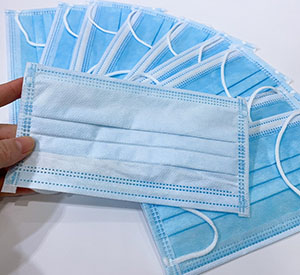
If you are using surgical masks or commercial N-95 masks, you need to have enough of them that you can treat them like the disposable masks they are supposed to be. Medical personnel normally change their masks between patients, to help avoid the risk of cross-contamination. You may not need to do so that often, but the longest you should use one of these masks is eight hours, before disposing of it and replacing it.

If you’re using homemade or commercial cloth masks, you don’t need to worry about replacing them every day. But you shouldn’t use them more than a day, without washing them. if the mask is doing its job and catching droplets of virus-rich spittle during the day, then when you arrive home, the mask is contaminated. Treat it as such and don’t touch it again until it has been cleaned.

This means having enough cloth masks so that you can rotate them, not wearing them again until you do the wash. I’d recommend having at least a week’s worth, as most people do their wash about once a week.

Face Shields
12 Essential Things to Buy Before the Second Wave of COVID-19

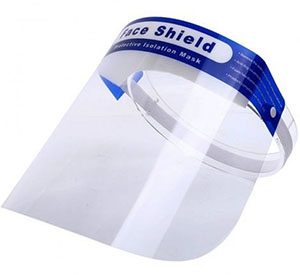
There’s some pretty good evidence that face shields might be even more effective than masks. They cover the eyes, granting protection to that tissue, which masks can’t. While they don’t do a thing to absorb aerosol droplets, they can block those droplets out.

Medical personnel wear face shields, often in conjunction with masks. That should tell us something.

While I don’t bother wearing a face shield everywhere I go, if I’m going into an area where there are a lot of people or where I know there are people who are infected with the disease, I will make sure to wear one. It’s an inexpensive way of upping my security another notch.

Disposable Gloves
12 Essential Things to Buy Before the Second Wave of COVID-19

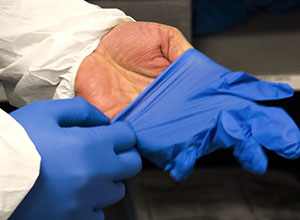
Medical experts are still recommending against the use of gloves; but that’s mostly because people aren’t using them correctly.

These, like the masks, are supposed to be disposable. That’s important, so as to avoid cross-contamination. If you wear the same gloves into a number of different stores, you might just be spreading the disease with those gloves, rather than protecting yourself.

The only way to use gloves is to take them off and throw them away, as soon as you leave the store. That’s what I’ve been doing when I go to Walmart and the grocery store. I wear them in those stores, because there are so many customers in the stores, touching items and then I’m touching those items as well. putting gloves on ensures that if I’ve picked up the virus off something in the store that someone coughed on, I won’t be carrying it anywhere else.

If you’re going to use disposable gloves, then be sure to get plenty of them. Fortunately, you can buy them in boxes of 100 (50 pair), an amount which matches up nicely with the number of masks that typically come in a package.

Disposable Booties

12 Essential Things to Buy Before the Second Wave of COVID-19

Stepping your PPE up a notch, you might want to consider buying disposable Tyvek booties to go over your shoes.

Studies have shown that the SARS-Cov-2 virus can be picked up on the soles of people’s shoes, causing them to take it home with them.

These booties provide a way of making sure that there’s nothing on the soles of your shoes that shouldn’t be there.

I’ve been using booties like this whenever I go into any of the big box stores or supermarkets; basically anywhere where there are a lot of people. The more people there are in an area, the greater chance of infection. So, if I’m going to be wearing rubber gloves, I wear the booties as well.

Disinfectants of All Kinds

12 Essential Things to Buy Before the Second Wave of COVID-19

One of the things that flew off the shelves when the pandemic started was disinfectants. It doesn’t matter if you were looking for disinfectant cleaner, rubbing alcohol or even bleach, it was gone.

Part of this was because many of those items come from China and our shipments from China were interrupted by them quarantining over there and ships being quarantined over here.

Nevertheless, we’ve all gone though a huge amount of disinfectants in the last few months, and there’s no end in sight. It is essential that we all have the ability to disinfect anything that comes into our homes, so that we can ensure that we aren’t allowing the disease in.

If you can’t find other disinfectants, you can probably find bleach. Chlorine bleach is an excellent disinfectant. Mix it at a ratio of 1/3 cup bleach to 1 gallon of water. Other unusual things that can be used for disinfectants include:

  • 3% hydrogen peroxide is an effective disinfectant
  • 20 mule team borax, when mixed with water, forms hydrogen peroxide
  • Hydrogen peroxide is also the active ingredient in color-safe bleach
  • Windex has more ammonia in it than Clorox disinfectant spray

Disinfectant Wipes (If You Can Find Them)
12 Essential Things to Buy Before the Second Wave of COVID-19

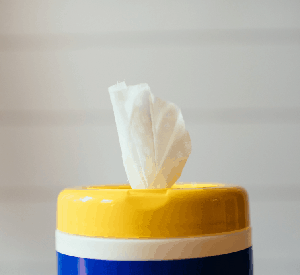
One of the hardest items to find is still disinfectant wipes. The Clorox wipes which are so popular use ammonia as the disinfectant, not chlorine bleach. This is important, as it is dangerous to mix the two chemicals together.

Ammonia is a gas, so you and I can’t readily mix it into liquids in our kitchens.

So if we can’t find these wipes in the store, we need an alternative. Fortunately, there is something else we can do, which will work just about as well.

If you can find the heavy blue paper towels that are sold in auto parts stores, you can use them to make disinfectant wipes. To fit them into a container, you’ll need to cut the roll in half. A serrated bread knife works well for this. Then cut the core out of it, finding the last towel and loosening the end of it. In use, the roll of wipes is used from the inside out, rather than the outside in.

You’ll want to make the bleach mixture I mentioned in the last section, adding 1/4 cup of dish washing liquid to it as well. That way, it can work as a cleaner as well. Soak the towels in it, until they are soaked all the way though. Then put the roll of now-wet towels into a container to keep it wet, along with a small amount of the liquid to keep them wet.

Please note that you must clean out any wipes container, before putting these wipes into it, as you can’t mix chlorine bleach and ammonia. Another container option is to use one of the 35 oz. square peanut jars. These are just the right size for a half roll of the blue towels.

Hand Sanitizer

12 Essential Things to Buy Before the Second Wave of COVID-19

Currently there is plenty of hand sanitizer making it to the stores, although I still see stores running out of it. With the need to wash our hands constantly, you just about can’t have too much hand sanitizer.

Please note that antibacterial hand soap and hand sanitizer aren’t the same things. Hand sanitizer has a minimum of 70% alcohol, which is very effective in killing viruses. There are different chemicals used in antibacterial soaps, which are not effective against viruses.

If you need hand sanitizer and can’t find it, you can make your own out of 91% rubbing alcohol and aloe vera gel. Please note that you can’t use 70% alcohol, as by the time you mix it with the aloe vera, you won’t have a minimum of 60% alcohol content, the minimum required for the hand sanitizer to be effective. The proper ratio of these two ingredients is 2 parts 91% alcohol to 1 part aloe vera gel.

Paper Towels
12 Essential Things to Buy Before the Second Wave of COVID-19

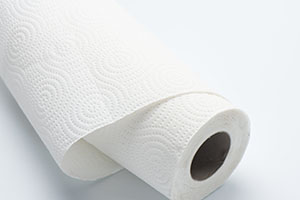
I’ve already mentioned the blue paper shop towels above. I’ve found them to be much more effective for disinfecting things than normal paper towels. Even the best paper towels will fall apart, if you try and use them to disinfect your groceries when you get home from the supermarket.

Having said that, you still need to stock up on normal paper towels. The stores ran out of them and will probably run out again. If we are going to keep our homes and vehicles decontaminated, then we are going to need to have paper towels. Cleaning cloths can be used, but they will need to be disinfected thoroughly and often, to keep them from spreading the disease, rather than helping us to decontaminate our homes.

Toilet Paper
12 Essential Things to Buy Before the Second Wave of COVID-19

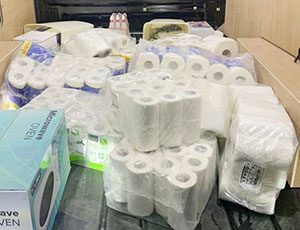
We all know that the grocery stores ran out of toilet paper from the first wave of COVID-19 and it will probably do so again. It still doesn’t make any sense, because there isn’t any reason why people would need so much toilet paper.

Nevertheless, it seems to be a part of the landscape in this pandemic. So, since so many other people are stocking up on it, we need to at least make sure we have enough for our family’s needs, or we won’t have any.

Bottled Water

12 Essential Things to Buy Before the Second Wave of COVID-19

Water is another thing that people panicked on and stockpiled in the first round of COVID-19. Again, this doesn’t make much sense, because there is no reason to think that anything will happen to our water supplies.

Nevertheless, people were panic buying water and will probably do so again.

So if you need bottled water to drink, rather than drinking tap water or your own filtered water, you might want to stock up again. Personally, I use my own filtered water.

Food
12 Essential Things to Buy Before the Second Wave of COVID-19

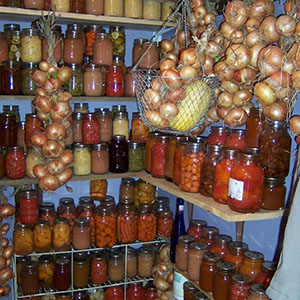
Many of us ended up getting into our stockpiles, when the grocery store shelves were all but empty. There were many items which were hard to get, because of other people stockpiling. But, that’s why we have a stockpile.

The question is whether or not you have depleted your stockpile during the first wave.

If you have, then now’s the time to restock it, bringing your levels back up to normal, before things get bad again. The grocery store is one of those dangerous places to be, because so many people go there. So stock up now, rather than later; preferably at a time when there aren’t many others in the store.

Entertainment

12 Essential Things to Buy Before the Second Wave of COVID-19

Many people suffered from some rather severe cases of cabin fever, due to being locked up in their homes for so long.

There’s a chance that this added to the demonstrations and rioting associated with the killing of George Floyd.

People were uptight before that happened and that just gave them the push they needed, to put them over the edge.

The solution to this problem is to make sure that you can comfortably isolate yourselves in your home, without going stir-crazy. That will probably look different to everyone, as we are all different people. For some, it will mean having a good collection of books or movies; for others, some sort of hobby. I’d recommend a combination, so you don’t get bored.

If you don’t have a hobby already, then this might be a good time to start one, especially some sort of hobby where you are making something. It might be a good time to learn and old-time craftsman’s trade, adding to your long-term survival skills.
15 Vital Items The Pioneers Stockpiled For Hard Times

We tend to think that stockpiling food and supplies for an emergency is a modern invention. But it’s not. It actually started thousands of years ago, with people stockpiling food for a snowy day. Those ancestors of ours knew something that most of us today have forgotten: the fact that winter comes every year and you can’t grow crops or hunt game very effectively when the freeze hits.

In fact, the earliest recorded instance of stockpiling is in Chapter 41 of Genesis, in the Bible. Joseph, a son of Abraham, correctly interpreted Pharaoh’s dream and instituted a system of stockpiling grain in preparation for the seven years of famine.

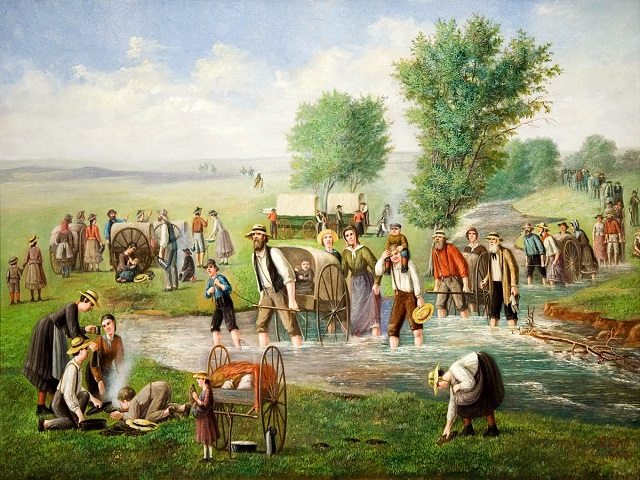
To the pioneers, stockpiling had to be a way of life. When Old Man Winter came to call, the only thing that would keep them alive was the food and fuel they had stored. If they were not ready, chances were that they wouldn’t make it through the winter.

Those who stockpile are returning back to the roots that our pioneering ancestors established, taking matters into their own hands.

So what sorts of things did the pioneers stockpile — and why did they stockpile them?

We can really break down the pioneer’s stockpiling into two categories — things that they bought and things that they raised, hunted, preserved or prepared themselves. The things from the store were precious to many of these people, as they didn’t have much cash money to spend. It was only when they sold a cash crop that they were actually able to pay off their account at the local general store and buy themselves a few new items.

Things the Pioneers Bought and Stockpiled

A trip to the general store was a big deal in those days and something that a pioneer might only do once a month, or less. It might be an all-day affair, which took time away from working the farm. Nevertheless, they had to make it to town once in a while for supplies, or they were stuck with living solely off the land.

1. Wheat flour and other grains

While many farmers raised grain, they usually didn’t eat their own. Their grain would be sold and then they’d turn around and buy flour and other ground grains from the general store. A few people would have their own hand-operated mills for grinding grains, but those were for grinding cornmeal, rather than flour.

Going back in history, we find that grinding grain was a major part of a woman’s housework. In Medieval times, a woman might spend as many as six hours per day grinding grain so that she could make the bread of the day. Being able to buy ground wheat was one of the first true kitchen conveniences.

Bread was an important staple in the diet. It was a great source of carbohydrates, giving them the energy they needed to burn during the day. Of course, the breads they ate back then were very different than today’s, being much harder and heartier than our modern bread.

2. Baking soda

15 Vital Items The Pioneers Stockpiled For Hard Times

Artist: Jeremy Winborg

You couldn’t bake bread without baking soda, unless you happened to have yeast. Of course, many people made sourdough bread, always saving a bit of the dough to act as a starter for the next batch. But sourdough starter doesn’t work for biscuits, pies or bear sign (what they called donuts). So a stock of baking soda gave them much more variety in their diet.

3. Salt

Salt has always been highly valued. In fact, in the Roman Empire part of a soldier’s pay was given in salt. That became the root of the word “salary.” We need salt in our diets to survive, as well as to preserve meats. While some pioneers would harvest it themselves from salt licks, that only worked for those who had a natural salt lick on their property.

4. Sugar

While not an absolute necessity, sugar was an important item to stockpile. Not only is it used as part of the process of canning fruit, but even the toughest of cowboys and miners wanted a sweet treat every now and then.

5. Rice

Like grains, rice was an important staple for many people. But it wasn’t grown in many parts of the country, making it an item pioneers picked up at the general store.

6. Bacon

Bacon managed to become the default travel meat of choice in pioneering days. Cowboys would carry a chunk of bacon in their saddlebags, wagon trains carried it, and most families had a few slabs on hand. If you had bacon, you had meat to eat.

7. Coffee and tea

Who doesn’t like a good cup of coffee? Actually, coffee drinking in this country started with the Revolutionary War, in response to the Stamp Tax. Rather than pay the tax for British imported teas, many people switched over to coffee. Whereas before the revolution most people drank tea, after it the nation switched to coffee. By the time of the revolution, tea was mostly drunk only by the wealthy.

8. Dried beans

Just as it is for the average homesteader today, dried beans were a favorite staple for the pioneers. Chili con carne became a popular dish, starting in Texas and then moving north along the cow trails. Eventually, it was eaten all across the west.

Beans also could be eaten alone, or with tortillas. The Southwest culture had a strong Mexican influence, including the eating of refried beans as a staple. Many a meal was beans and biscuits or beans and bread. Even when they had meat, beans were often served on the side.

9. Dried and canned fruit

15 Vital Items The Pioneers Stockpiled For Hard Times

Some people grew fruit. When they did, they’d can it or dry it. But not all kinds of fruit can be grown in all parts of the country. Besides that, not everyone was a farmer. The general store would stock dried and canned fruit, making it possible for people to buy these foods.

Since it kept well, dried fruit was another popular trail food, both for wagon trains and for drifting cowboys. It helped give variety to an otherwise dull diet, as well as providing them something sweet to eat.

Things the Pioneers Grew, Hunted, Preserved and Prepared

Many pioneers were involved in farming and ranching. Those who were grew as much of what they ate as they could. Since cash money was so rare, being able to hunt, gather or grow your own food was a real advantage. Even townspeople would have a garden patch behind their homes, growing their own vegetables and herbs.

10. Smoked meats

One of the signs that you’d “made it” was to have a smokehouse on your property. While the ability to smoke your own meats was incredibly useful, not everyone could afford the time or expense to build one. Those who could were usually well-established families who already had their homes and barns built. By then, they were producing enough that it was worthwhile to be able to smoke meats when it was time to slaughter a cow or pig.

11. Jerky

The pioneers learned how to make jerky from the Native Americans. While smoking was great, not everyone had a smokehouse. Plus, jerky lasts longer than smoked meats and is much more portable. Drifting cowboys and other travelers would often take jerky along just to ensure they had some meat to eat. A few strips of jerky and a couple of campfire biscuits made a pretty good lunch in the saddle.

12. Corn

Many pioneers grew their own corn, even if it was just enough for their family. They might grow wheat or some other grain for sale, but they’d put in a small patch of corn, as well. That corn was usually dried and kept for making cornmeal.

13. Vegetables

15 Vital Items The Pioneers Stockpiled For Hard Times

A vegetable garden alongside or behind the house was almost a requirement for pioneer families. Without it, their food would be bland and repetitive. Not only did they grow their own veggies, but their own herbs, as well.

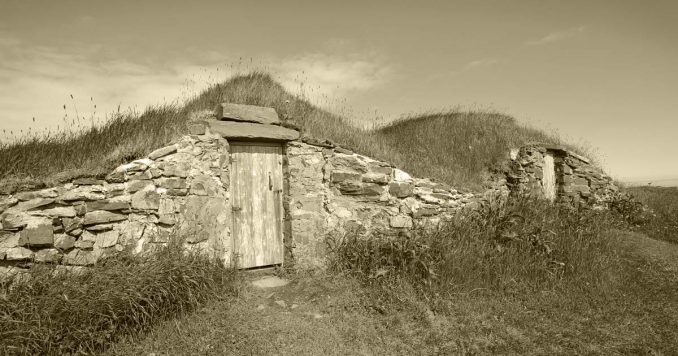
Most vegetables were harvested and kept in a root cellar, not canned. Canning required owning a goodly supply of canning jars, something that most people didn’t have. It wasn’t until later, when towns were well-established and trade was more regular, that canning jars became common in the west.

14. Feed for the animals

Anyone who had animals had to consider their needs. Whether horses, cows or chickens, they were a valuable part of the homestead and needed to eat. Just like the family would stockpile food to get themselves through the winter, they’d stack hay and other feed for their farm animals.

Most hay was cut from wild grass growing near the farm. It would be cut by hand with a scythe and stacked in towering haystacks for the winter months. Some farmers who had larger barns with lofts would stack the hay in the loft. But that required hay bales, which meant having the equipment for baling hay. So that only happened in well-established areas on well-established farms.

15. Firewood

The only heat that most homes had was from the fireplace or wood-burning stove. That created the need for a wood pile, which was started in the spring so the wood could dry through the hot summer. In some places, they would stack their wood to act as a defensive breastwork for the home, giving themselves a good firing position for any attacks from Native Americans.

The Most Important Thing That Is Missing From Your Stockpile

As you’ve built your stockpile, I’m sure you’ve seen countless articles which made recommendations to you. We all see those articles and we all read them, just to be sure that we haven’t missed something important. But no matter how good our stockpile gets, there’s always room for improvement. Specifically, there’s room for the items we forgot.

I don’t know about you, but I’m constantly reviewing my stockpile, trying to find the things I’ve missed. The recent pandemic is an ideal example. When the Ebola outbreak happened in 2014, I made sure to buy PPE and disinfectants, in case it managed to come across the ocean.

While we did have a few cases here in the US, we never really had an outbreak. So I kept those supplies and thought I was good, until COVID-19 came along and I found that I didn’t have enough PPE or disinfectants and the stores ran out.

I’ll be ready for the next pandemic though, or the next phase of this one, whichever comes first.  Now that those items are back in stock, I’ve made sure that I’m stocked up on them. But what else am I missing? That is the question.

If I was to look for the things most likely to be missing from someone’s stockpile, these are the places I’d look:

A First Investment Worth Making

Ok, maybe this isn’t something that you’ve ever thought of having in your stockpile. But it’s there, nevertheless. Or, should I say that all that you have is in your stockpile. The question then becomes, is that enough?

Survival is an all-encompassing task, when the time comes. But the more experience you have, the easier it becomes. Really, that’s just like anything else in life. The more you do it, the more experience you gain and the more experience you gain, the easier it is to do and the better results you get.

The problem is that our day-to-day lives don’t normally lead us to do the same tasks necessary for survival. So we have to be deliberate about them, if we want to gain experience. That means making time in your schedule and using that time to practice your survival skills. It’s an investment worth making.
A Second Important Thing To Have

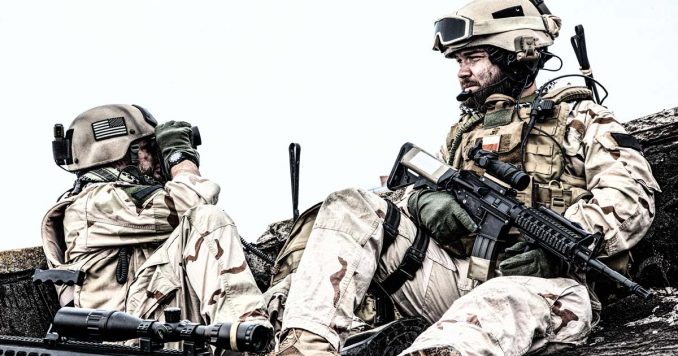
Yeah, this is another one of those that most people don’t think of having in their stockpile; but just like experience, it’s essential. Actually, confidence comes with experience. That’s why elite military units have a lot of confidence. They know how well they’re trained and how well they can perform their work. That makes them confident and that confidence helps them stay alive.

You and I need that same level of confidence. Knowing that we will survive will help us through the hard times, so that we can survive. If we’re unsure of ourselves, it’s much too easy to give up. But that confidence will motivate us to power through and do everything we need to do.

One More Non-Physical Item

There’s no such thing as too many survival skills. But that’s really not why I put this here. Yes, we need to have our survival skills down pat; but that’s not really what I’m talking about here. I’m more referring to the kinds of skills which make us self-sufficient, rather than basic survival skills. I assume you’ve already got those down pat.

But what are you going to do, when you need things and can’t just go out to buy them? Those are the kind of skills I’m talking about. I guess you’d call them old-time trade skills and/or homesteading skills. I’ve been working on learning as many of those as I can, over the last few years. When push comes to shove and I can’t buy a pair of shoes or even the leather to make them, I want to be able to take care of that myself.

Nutritious Food

There was some teaching going around the prepping and survival community a few years ago, saying to stockpile whatever foods you like. Considering that most of us don’t eat a very healthy diet, that’s dangerous. I’ve also seen a number of food lists, showing people how to build a survival pantry for $200 or something like that. Of course, they do that by stockpiling mostly carbohydrates, ignoring the other nutrients we need.

You can get by for about 30 days on a survival diet that’s high in carbs, fats and protein, but that’s about it. If you go any farther than that, you’ll run the risk of denying your body essential nutrients that it needs to have, in order to maintain its health. So if you’ve got one of those $200 stockpiles, I highly recommend adding a bunch of canned goods to it, especially vegetables and meats. Make sure that everything you have is packaged to last a good 20 years, so that it will be ready when you need it.

Vitamins

Speaking of nutrition, here’s something I rarely see anyone put in their survival stockpile: vitamins. Granted, good vitamins are expensive, so I can see why it’s something that most people put off. But if you’re going to be in a long-term survival situation, those vitamins just might be what you need to keep yourself alive and healthy.

Even a low-cost vitamin is better than nothing. But if you can afford the good ones, then I’d recommend spending the extra money. Start slowly, just like you did with everything else in your stockpile, and build your stock of vitamins up slowly.

You Can Never Have Too Much Of This

If there’s any one thing I see missing in most people’s stockpile, more than anything else, it’s salt. I’m not talking about having a couple of those 26 oz. round containers of salt, I’m talking about hundreds of pounds of it. If you’re ever in a long-term survival situation, you’re going to need lots of it.

Salt is used in almost every form of food preservation, from canning, to smoking, to dehydrating. So if you’re planning on growing or hunting your own food in a post-disaster world, you’re going to need a lot of salt. How much salt do you need to smoke an entire steer? How much to make salt fish? Unless you have a salt mine or salt lick available to you, you’re probably going to be in trouble.

I’m fortunate, in that I live on the coast. So I can always extract salt from the ocean by allowing salt water to evaporate. But that’s a lengthy process. So, while I’m planning on using it, I’ve still got a couple of hundred pounds of salt stashed away in five gallon buckets.

Additional Parts

If you’ve got something that you’re depending on using in a post-disaster world, you’d better be ready to repair it. I don’t care if we’re talking about your favorite gun or the pressure pump for your Coleman lantern. If it can break, then you have to assume that it will sometime.

I make it a habit to buy repair parts for a wide variety of things, shortly after buying them. As an engineer, I’m accustomed to looking at things and seeing what parts are likely to cause problems. So I buy power switches, bearings, belts, springs, pins and filters all the time, filling up a cabinet in my workshop with those parts. If I have to use something in there to make a repair, I make sure I replace it; usually with two, just to be sure.

Lumber & Hardware

Speaking of fixing things, are you ready to repair your home? Many natural disaster scenarios can cause serious damage to your home and you may not be able to get it repaired right away. I’ve seen tarps on roofs for six to nine months after a hail storm, just because it took that long for the local roofing companies to get around to all the houses they had to repair.

Not only are you going to have to make repairs, there’s a good chance that you’re going to have to make other useful things; things that you don’t need now, but you’ll find you need in a post-disaster world.

Take cooking, for example. We all cook in our kitchens now, but we might find ourselves cooking outside, over a fire. Are you ready for that? Do you have a table out by your grille, which you can use when you’re cooking? Do you have a lamp stand, so that you can get the best out of whatever lantern you’re going to be using?

Not only do you need the lumber and hardware to do these things, you need to make sure you have manual tools to work with. We’re all so accustomed to using power tools, that we’re going to be in trouble when we have to drill a hole without our cordless drill. Make sure you’ve got at least the basics and that you know how to use them.

When You Need To Keep Quiet

I’m a gun buff, but I recognize the limits of handguns and rifles. There are times when they aren’t the ideal thing to use, like when you need stealth. Even with a really good suppressor on the gun, it’s going to be heard from a long way.

The bow has survived for millennia because it is such a good weapon. It is effective for both hunting and fighting. While it can’t really hold a candle up to a good rifle for distance and firepower, it’s probably the next best thing. Not only that, but you can reuse arrows and make your own, if you have to.

Yes, it takes time to learn to use a bow properly and accurately. But it’s time well spent. Besides, shooting a bow is just about as much fun as shooting a gun, and you can do it in your backyard. Try that with your guns and you’ll probably be getting a visit from the boys in blue.

One More Important Thing

Fuel is one of those things I see people short-changing themselves on all the time. I don’t care if we’re talking about gasoline for their chainsaw and other tools or firewood to heat their homes. For that matter, they might have oil lamps, but only a couple of bottles of oil.

If you’re planning on heating your home with wood, then you’d better plan on four to six cords of wood to get you through the winter. That’s good hardwood too, not pine. If you want to try to use pine (not something I recommend), you’d better count on needing twice that.

Gasoline is hard to store, because the most volatile hydrocarbons evaporate first, reducing the effectiveness of the fuel. It’s normally only good for about six months or 12 months if you add a fuel extender to it. But that doesn’t mean that you shouldn’t store gasoline. It’s just a matter of figuring out how to do so effectively.

I keep a 55 gallon drum of gasoline in my garden shed, laid on its side on a steel rack I built for it. That allows me to fill it easily through the larger bung hole and siphon off gas through a brass valve through the small bung hole (which is located at the bottom). I keep my gasoline fresh by siphoning off a take full every month and burning it in my car. I then replace that fuel with fresh gas, which means that I replace everything in the drum about every four months.

Why 90% of the Population Would Die Without Electricity: Experts Predict That An EMP Strike That Wipes Out Electricity Across The Nation Would Ultimately Lead to The Demise Of Up to 90% Of The Population

Experts predict that an EMP strike that wipes out electricity across the nation would ultimately lead to the demise of up to 90% of the population. However, this figure begs an important question: if we were able to live thousands of years without even the concept of electricity, why would we suddenly all die without it?

While it may seem as if going without electricity would be nothing but an unfortunate inconvenience, the truth is much more harrowing. To better understand why 90% of the population would die if the lights went out, consider the following ways in which losing electricity would impact our society.

No Electricity Means No Water

Almost no one in the United States still carries a bucket to a well to draw up water. What this means, though, is that our water sources are now dependent on electricity. If an EMP strikes, the vast majority of the population would lose access to fresh water as soon as the water towers run dry.

Some people would be able to find other sources, but many would not. For those without water, the length of their lifespan would be measured in days.

No Electricity Means No Food

Those who are able to find water sources not dependent on electrical power now have another concern: food. Almost everyone who lives in an urban location is completely dependent on markets and grocery stores for their food supply. Even those who live in rural locations are largely, if not completely, dependent on buying food from outside sources.

However, if the electricity goes out, the supermarkets are going to be looted and possibly never restocked. From transportation to refrigeration, to even the growing of the food itself, our entire system of keeping the population fed is reliant on electricity.

Sure, there will be small farmers who are able to feed small amounts of people nearby, and there will be those who are able to adapt and grow their own food, but an alarming number of people would starve to death in a matter of months.

No Electricity Means No Climate Control

Some areas of the United States, such as Minnesota in the winter and Arizona in the summer, are only habitable because of climate control. If not for indoor heating and cooling, these places wouldn’t have been inhabited by so many people.

Once indoor heating and cooling disappear, surviving during the hottest and coldest times of the year will become a real problem. Some people would relocate or figure out a way to get by, but many who are unable would die of heat stroke or freeze to death.

No Electricity Means No Modern Medicine

Think of all the things that used to kill so many people before modern medicine. From polio to a ruptured appendix, there are countless things that once would have been fatal that are now either treatable or wiped out.

Modern medicine, however, is entirely dependent on electricity. Without it, all of these things would come roaring back with a vengeance. Hospitals that didn’t close their doors would lose a large majority of their effectiveness without all the machines they rely on.

Meanwhile, pharmaceutical companies would be unable to produce the wide array of prescription drugs that are keeping so many people alive.

To make matters worse, the fact that access to fresh water would be greatly diminished means sanitation would become a real problem. Without proper sanitation, diseases would spread at an exponential rate. Due to these factors, no electricity means far more sick people and fewer ways to treat them.

No Electricity Means More Murders

Within days of the electricity going out, our society is almost guaranteed to collapse into chaos. If you aren’t convinced that would happen, just look at what happens when a natural disaster devastates just a single area of the US, then multiply that by the entire country. Looters would quickly steal anything they could get their hands on, and armed gangs would roam the streets.

Law enforcement would clash with them at first, but they would almost certainly be overwhelmed in little time at all. The chaos would cause people who were once law-abiding citizens to turn to crime, and the number of criminals law enforcement would have to deal with would go through the roof.

In addition, effective law enforcement is largely dependent on good communication and teamwork – both things that become a lot more difficult in a world without electricity.

All of this is to say that, without electricity, going outside your home would suddenly become a much more dangerous endeavor. Those who are able to avoid starvation, dehydration, disease, and death by the elements would constantly have to look over their shoulders to avoid being killed. It’s not a pretty picture of human nature, but it’s a grim reality.

How to Avoid Being One of the 90%

As you’re probably well aware by now, surviving in a world without electricity would be a very tall order. The fact that a single detonation could devastate us so completely is disconcerting, to say the least, which is why many of the nation’s top defense experts agree that an EMP is the most troubling threat we would face if we ever went to war with a country that was able to hit us with one.

That said, 90% of the population dying without electricity means that 10% will make it, and a little preparation will go a long way toward ensuring you and your family are one of the 10%. Start by making sure you have access to food and water supplies that are not dependent on electricity, and stockpile all the medical supplies you can.

If you live in an area where climate control is necessary for survival, either plan for an alternative way to heat or cool your home or put together a bug out bag and be prepared to leave fast. Lastly, make sure to lay low and avoid going out unless absolutely necessary.

Surviving without electricity certainly wouldn’t be easy, and the threat of an EMP is one that should not be taken lightly. However, it can be done.

Many Americans Are Not Prepared To Deal With Depression Level Living: How Will You Cope With A Lower Standard Of Living?

The forces are mounting that will eventually overwhelm most Americans and send their standard of living to unknown depths. Americans that have only known the post WWII prosperity are ill equipped and educated to deal with depression level living. Easy credit and instant gratification have created a nation of whining, self absorbed, entitlement minded people with no moral or mental toughness.

Doug Casey believes we are headed for what he calls a super depression created by the ending of a debt super cycle. The bigger the debt cycle the bigger the depression that follows. That’s how reality works and most people are not prepared for reality.

When this depression, which has already started, gets momentum, it will overwhelm the plans of a society that is expecting to get things like social security, pensions and payouts from retirement plans they have paid into for many years. All of those things will disappear almost overnight and leave society gasping and stupefied over what to do. Their reactions will be to yell and scream and try to identify who to blame but the only person they should blame is the one in the mirror.

Many very smart people have raised the alarm and done their best to warn the sleeping public, but those slumbering masses have ignored the warnings and hit the snooze button one more time. The masses do not understand economics, do not want to understand economics and they will pay dearly for that ignorance in the coming days.

When the real unemployment rate becomes common knowledge as it increases substantially, people will be left to survive on what resources they have saved up outside the banking system that cannot be stolen by the politicians and bankers. That is a key point here. The assets you have outside the system that cannot be stolen from you with a few key strokes on some computer.

Those hoping for some miraculous event that will send the U.S. back to the days of manufacturing might and jobs for all will never see it happen. Those days are gone. The west line theory tells us our economy will slow down and become more modest as the shipping center of the world moves west to the next powerhouse region which is Asia. This is what history teaches us.

When people suddenly wake up one morning and they have no job, their retirement is gone and they need to care for their family, what will they do? When government services have collapsed and they suddenly realize they are now living in a third world country with few government services, what will they do? When the banks are closed and only a select few connected people have any type of money or access to goods, what will they do?

This is the reality that many people will face in the future and they have no idea how bad it can get. They refuse to contemplate the harsh reality they will be living in and take steps to mitigate the effects. To do so would be to acknowledge it could happen and they are taking personal responsibility. Personal responsibility is a dirty phrase in today’s entitlement society. To see some of the effects one only has to look at the collapse of society in Venezuela today to see what awaits.

When it happens it will all fall back to you to take responsibility for your family and take care of them for the duration. To do that you need to plan now for that eventuality and build up the resources you will need to provide food, shelter, clothing and security when the system fails to do it for you. You need to be Noah on his ark not the people watching as he floated away.

Having resources stored up is a must but it may not get you all the way through if the situation lasts for many years. That is why you need some type of plan to replace those resources as time goes by and have some way to generate some type of income or at least items to trade. Usable goods are for the short term and things like gold ,silver and production equipment are for the long term to help you get through the crisis with the least amount of pain.

Even with proper planning the days ahead will not be easy as the standard of living of society will fall substantially to levels only seen in failed third world countries or old pictures. The assets actually owned by people today is very small compared to how they live. They will default on their home loan, their car loan, and their credit card debt leaving them with very few real possessions and few ways to move what they have left even if they have some place to go. Ultimately these people will become the new serfs to the wealthy class that will take possession of anything of value. Feudalism will once again rule.

The lack of planning by society will make this a reality if it is allowed. What will you do when everything you have worked a lifetime for is suddenly taken away? Do you have a plan to keep what you have? Do you have a plan to make money when you cannot find a job? Do you have a way to take care of your family until things stabilize? Do you have a home you will not lose if the whole system breaks down? What will you do if electricity or fuel is too expensive to buy or not available to the general population? These are the questions you should be asking yourself now and you better have a good answer because your family will be asking them when the greater depression sets in.

It Is Better to Prepare 10 Years Too Early Than 10 Minutes Too Late: The 5 Places In America You DON’T Want To Be When Society Collapses

What would you say is the number one threat to lead to an end-of-the-world-like scenario? A terrorist attack? An EMP strike? A natural disaster? An economic collapse?

All of these are possibilities, but in each one, a thick population density will make it far worse. There’s no denying that people panic when a crisis occurs, and that panic is only multiplied when more people are living closely to one another.

More people will be killed in a shorter period of time in the major cities, the roads will be clogged as people and families try to escape, and furthermore, just look at the other threats that we listed first. Many of them are directly connected to population density.

If an economic collapse were to occur, then urbanized cities would be simply unable to rebuild their economies as fast as more rural areas (with coal mining, logging, farmer’s markets, etc.) could.

There are other factors that make certain areas in America unsafe and unsuitable for outlasting an apocalypse:

  • Strong natural disaster risks
  • A weak economy
  • High crime rates
  • Strict gun laws
  • A high cost of living
  • High taxes
  • Heavy traffic
  • Unfertile land for growing crops
  • Close proximity to nuclear/chemical power plants
  • Low populations of wild game and edible plants
  • Limited fresh water

In this story, we’re going to list out the five very worst retreat areas in the United States. These are the areas where you will definitely not want to be when disaster strikes, and if you live in or near any of these areas now, you may want to consider moving or have an alternate plan:

1. East Coast

Many survival and disaster experts agree that the East and West Coasts together are among the worst locations to survive a long-term disaster in the United States. This is because both meet the “unsafe factors” we just outlined. High population density? Check. High cost of living? Check.  Strict Gun Laws? For the Northeastern states, check. High crime rate? In many cities, yes. High taxes and regulations? In the Northeastern states yes. Heavy traffic? Check. Threat of natural disaster, namely hurricanes? Check. Low populations of wild game and edible plants? Check. Potential enemy nuclear targets? For the major cities, definitely.

As a general rule of thumb, avoid anywhere along the East Coast if you can. It’s simply not a safe place if you want to survive a disaster. If you do live on or near the East Coast, fall back to retreat areas in the Appalachian Mountains or northern New England, like New Hampshire or Maine, when worst comes to worst.

2. West Coast

The 5 Places In America You DON’T Want To Be When Society Collapses

Many of our concerns expressed with the East Coast apply to the West Coast as well. The largest state along the West Coast, California, is already an economic disaster and thus not somewhere you would want to be in an economic collapse. Washington and Oregon are both, by far, better off economic-wise, but they still have their problems with high taxes, tough regulations and large government spending. The major cities of San Diego, Los Angeles, San Francisco and Seattle have extremely high population densities and are potential terrorist/nuclear targets.

In addition, the West Coast lies along the Ring of Fire, which adds earthquakes to the list of natural disaster risks to worry about. If you don’t think earthquakes are that big of a deal, well, just look at what happened to Japan in 2011. Plus, in Washington, you have volcanoes. All in all, both the East and West Coasts are dangerous hotspots in an apocalyptic-type scenario and are not recommended.

3. Florida

Florida, in general, is not somewhere you will want to be during a disaster. Not to mention the ever looming threat of hurricanes in the state, Florida also endures a high crime rate, a collapsed housing market and high costs of living, a very dense population, and the fact that much of the state is actually below sea level (the parts of the state that are higher aren’t above it by much).

There’s no denying that Florida has nice weather, which is why many people move there in the first place, but its negatives far outweigh its positives to the point that it’s one of the worst retreat locations you could be in for outlasting a long-term disaster.

4. Alaska

Woah, woah, wait, Alaska? The so-called “last frontier” in America is one of the worst places to survive an apocalypse? First of all, Alaska does have a few positives (not to mention the beauty of its geography) that would make it an initially attractive place to live for someone who wants to be in a safe region from a major disaster. It is true that Alaska has the lowest population density of all 50 states, along with low tax rates. It also has a great abundance of rivers, lakes, wildlife and edible plants.

But when we come to economics, Alaska is practically cut off from the rest of the United States. A lot of the supplies that Alaskans rely on are either flown or shipped into the state. In a disaster scenario, these planes and ships will likely no longer be making shipments, greatly limiting available resources. Furthermore, those who live more inland in Alaska will be extremely limited in what they can do with commerce.

The 5 Places In America You DON’T Want To Be When Society Collapses

Remember when we noted that the West Coast of the USA is prone to earthquakes due to being situated along the Ring of Fire? Well, so is Alaska. There’s also very limited transportation to get oil from the North Slope to where it needs to go, and much of the fuel that Alaskans use is already brought in from the Lower 48 states. The winters in Alaska can also be quite cold and brutal.

Alaska may seem like the prepper’s haven, but on closer inspection it becomes apparent that you’re going to have a much tougher time surviving there than you would think. This is one place you may want to avoid, unless you know how to live 100 percent off the grid.

5. Hawaii

Like Florida, Hawaii may be a great place to vacation, but it’s an utterly terrible location to be in during an apocalyptic scenario. Most of Hawaii’s resources, as with Alaska, are shipped in.  This includes food and fuel. That’s on top of a very high cost of living in the state coupled with generally poor farming soil.

Gun laws are very strict in the state, and there are many military bases on the islands that could be the targets of enemy attacks. Let’s also not forget one more thing: Should a big enough natural disaster ever happen to Hawaii, how will you escape? After all, it’s a series of islands in the middle of the Pacific Ocean. Unless you have access to a plane or a ship, you may be toast.

Every region in the US certainly has its pros and cons, but these are the areas where the cons outweigh the positives the most.

Worst 5 States for Preppers to Retire- If the grid went down nationwide and society as we know it collapsed, would be people be escaping from your state, or escaping to your state?

We don’t all get to choose where we live; at least, not the state we live in. For most of us, that’s determined by our work; we live where our jobs are. But what about when our jobs no longer determine where we live? Can that happen? It usually does when we reach retirement.

Granted, most people don’t move once they retire, but you’d be surprised how many people actually do. The area where I live has tens of thousands of retired winter residents who come down here to escape the cold weather “up north.” Some of those people come for the winter and just end up staying on, becoming permanent residents in the area. So if they can, you and I can too.

That raises the question of where we would go to retire, if we could go anywhere we want. As preppers, there’s more to that question for us, than there is for our friends and neighbors (unless they are preppers too). We obviously would want to go somewhere where we can live comfortably, even should a TEOTWAWKI scale disaster strike.

My Criteria

This is actually a fairly complex question, with a lot of factors involved. So let me see if I can thin it out a bit for you. I’m not going to tell you where you should go; but let me offer you a glimpse of states that you should avoid going to. I’m basing my decisions on the following criteria:

  • Population Density – The higher the population density of an area, the more of a fight for resources. This fight will probably hurt the poor, the aging and single mothers more than anyone, as they will not have the ability to fight. Survival of the fittest will take over, as people literally fight for the available resources. That’s enough to make many areas unattractive.
  • Average Annual Rainfall – We all know that water is going to be a problem in a post-disaster world. Areas with little rainfall and few rivers will be hard to live in. For most of us, the best way of harvesting water is probably going to be rainfall capture, so we’re going to need a lot of rainfall.
  • Political Leaning – While we all assume that government services and interference in our lives is going to be severely curtailed during a post-disaster situation, we have to think about the here and now as well. Many of the bluest states in the country are also the ones which are working the hardest to take away our Second Amendment rights. That alone is enough to say that those states aren’t a good place to move to.
  • Federally Owned Land – A lot of people talk about bugging out to the wild. That’s great; I have my own plans for that as well. But in most cases, the only practical place to bug out into the wild is federally owned land; national parks, national forests and other land under the control of the federal government. So states with little federal land ownership aren’t all that attractive for preppers to retire to.
  • Forestation – The most practical means of heating a home in a post-disaster world, especially one in which there is no electricity, is with wood. That means having a lot of forests available, where you can cut that wood. This leaves out huge swaths of the nation, such as the entire breadbasket, which is farmland, nor forests.

There may be other criteria which are important to consider; but I limited myself to those five. To me, those seem like the major ones which will affect a prepper’s ability to survive, both in a pre-disaster and a post-disaster world.

The Worst States

Based on that, here are my picks for the worst states to retire in, if you’re a prepper:

  • New York – I lived in upstate New York for a number of years and it is absolutely beautiful. There are miles and miles of hardwood forests, lakes and rivers. But even so, the state is one of the most heavily populated in the country. It is also one of the most left-leaning states, politically speaking, with some of the harshest anti-gun laws around. It would be a very difficult state to survive in.
  • California – In many ways, California and New York are copies of each other. Both have a high population and both are strongly blue. While California has a lot going for it, in the area of natural resources, it has the highest population of any state in the Union. We can expect many people to expand outwards from the major population centers, gobbling up everything in their path. I sure wouldn’t want to be in their path.
  • Florida – At first glance, Florida looks like a great place to go and a lot of people retire there. But much of the state is covered up by the Everglades. Unless you are going to learn how to survive in that harsh environment, it might not be a great place to be. The lack of forestation really isn’t much of an issue, as you aren’t really going to have to heat your home. But you are going to have to worry about hurricanes, which seem to have an affinity for the state.
  • Arizona – Another popular retirement state that’s going to be a mess in a post-disaster world. Arizona is extremely hot, even hotter than South Texas and the Florida peninsula. But there is very little water to be found. That alone is enough to put this state on our worst list. I seriously doubt there will be many people surviving in the heat of Arizona, without access to water.
  • Minnesota – Minnesota is known as “the land of 1,000 lakes” so there’s no shortage of water there. They’re pretty good in the forestation department too. So there’s actually a lot going for this state. But it and its neighbor Wisconsin have very high populations. Unless you could get way out in the boonies, it might be hard to avoid the crowds. Of course, way out in the boonies means the coldest parts of the state, so you have the problem of cold to contend with. That not only affects how much wood you need for your fire, but the very short growing season will make it hard to grow enough food to eat.

Granted, there are a lot of other states which we can rule out, based upon the same criteria. Pretty much all of both the eastern and western seaboards would be bad places to go, for the same reasons I’ve already mentioned. The trick is finding someplace that is good to move to.

My Picks for Best States

Everyone has their own opinion, but here are my top picks for the best states or regions for retiring in as a prepper. These choices were made based on the same criteria that I used for picking the worst states.

  • Eastern Texas – While Texas isn’t a perfect survival location, there are a lot of good areas in the Hill Country and eastern Texas where there is good forestation and water.
  • Idaho, Western Montana and Western Wyoming – This whole area is excellent; providing a lot of forestation, water, federally owned land, rainfall and good hunting. Although far enough north that cold would be a bit of a problem, I would call this the best area of the country to have a retirement home and/or survival retreat.
  • The Appalachian Mountains – This mountain range, passing through several states and changing names a number of times, is a great place to live. While there are some high population areas to avoid, there’s still a lot of back country, which would be ideal for our purposes. I’d avoid the Virginias though, for their political leaning.
  • The Gulf Coast – There’s a lot of good land in the gulf states, along with people who like to hunt and fish. While there really isn’t much government land to bug out to, there are lots of forests, lots of water and lots of game to hunt.

5 Ammo Stockpiling Mistakes You Are Probably Making Right Now

If you’re a prepper, chances are you’ve got a few guns and a bunch of ammo around. Or maybe you’re the kind that has a lot of guns and a huge pile of ammo around. Either way, guns and ammo are just one more part of prepping – and important part. How important is something that each of us have to decide for ourselves.

It’s never hard to convince yourself that you need just one more gun, and you know just which one it is. There are a lot of sweet guns out there, making it easy to justify that “one more”.

Should the proverbial brown stuff ever hit the rotary air movement device for real, those guns may end up being the only thing that keep you and I alive. Of course, I’m not sure how some of my friends are going to use 17 rifles and 39 pistols at the same time, but that’s not my problem. I’ll leave that for them to figure out.

Stockpiling guns and ammo is good. But just because you’re stockpiling guns and ammo doesn’t mean that you’re doing it right. Believe it or not, it is possible to do a few things wrong in this regard.

No, I’m not going to tell you that you should own a particular type of gun, or that you should stockpile X number of rounds of ammo. Everyone has their own opinion on that and mine is no more valid than anyone else’s. But there are a few common mistakes I see, which I thought I’d point out to you.

Guns have been referred to as “the great equalizer,” and there’s no weapon which can come close to them in that regard.

A lot of the popularity of firearms is due to the fact that anyone can use them effectively, not only the strong and agile. The young, the old, men, women and child can take up firearms in defense of home and family and do so effectively.

But what do you do if you can’t use a gun – or if you don’t have a gun — to protect yourself?

This image has an empty alt attribute; its file name is untitled-copy-4-1.png

As Far as Quantity Goes

5 Ammo Stockpiling Mistakes You Are Probably Making Right Now

Yes, you read that right. I’ve found that it is possible to buy too much ammo, as hard as that may be to believe. The thing is, many of us subscribe to one of two theories. The first is “the more the merrier” and the second is “1,000 rounds per caliber”. Neither of those is necessarily right and neither of those will necessarily help us to survive.There are calibers for which “the more the merrier” makes sense, specifically your main defensive and hunting calibers. When it comes to your AR-15 and your hunting rifle (especially small game hunting rifle), I can see where there is no point at which you can say, “That will be enough to last the rest of my life in a post-disaster world.” There’s just no way of knowing how much ammo any of us are going to need in that situation.

But on a more realistic level, how many battles do you think you can survive, where gangs are attacking your home? Infantry soldiers carry a basic load of 320 rounds for their rifles, which is considered to be enough for one day’s fighting. Do you really think you’re going to survive more than two or three days of attacks on your home where you use as much ammo as an infantry soldier?

Then there’s pistol ammo. One firearms instructor gave the perfect description for why we carry pistols – they’re so that we have something to fight with, while we’re making our way back to our rifles. With that sort of purpose and with most of us carrying two spare magazines or less; do you really think you’ll ever use 1,000 rounds of pistol ammo in a post-disaster survival situation?

Yeah, you might use 1,000 rounds in training. I can easily go through 100 rounds in one trip to the range. But that’s not from my prepping stockpile; that’s practice ammo. Not the same thing.

As Far as Expenses Go

If you’re buying a lot of ammo, like I do, then you need to be looking at how to get it for a more reasonable price. Buying pistol ammo in boxes of 50 rounds or rifle ammo in boxes of 20 isn’t a bargain. It’s even worse if you’re buying it at your local gun range.

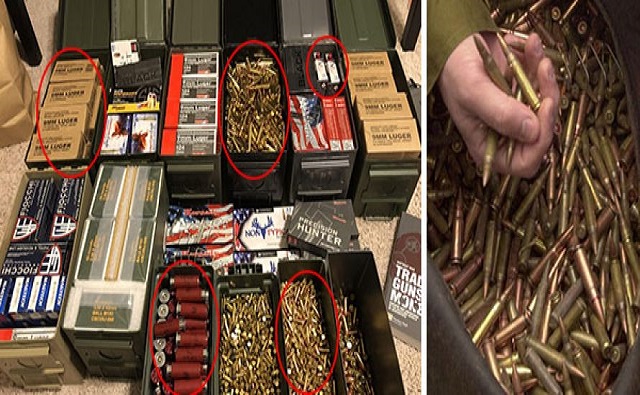
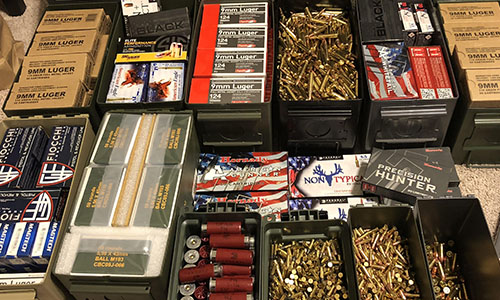
There are two keys here: buying in bulk and buying from a low-cost retailer. Buying 250 round boxes of pistol ammo works out to be roughly 20 percent cheaper than buying 50 round boxes. Larger quantity boxes, or even cases, can be even cheaper. Besides, you can often get those larger quantities packed in ammo cans or other moisture-proof containers, giving you a little extra bonus for your money.

Some of the small-scale ammo manufactures will sell by the can at gun shows. I’ve found that to be about the best deal going, other than buying it off of someone who’s a little cash short. You’re getting the benefit of both buying directly from the manufacturer and buying in bulk, at the same time. If you don’t trust that ammo for your carry gun, you can at least use it for your practice ammo at the range and save yourself a bundle.

Calibers

If you’re a gun collector, chances are that you’ve got a lot of different calibers of firearms in your collection. That’s okay; there’s nothing wrong with that. But I seriously doubt that all of those firearms are part of your survival plan. You probably have just a few guns which you consider your survival guns for yourself and your family.

Hopefully, you’ve selected guns that use commonly available calibers: .22LR, 9mm, 5.56, .308, etc. That makes sense, if you ever have to resort to scavenging ammo or bartering for it. But it also makes sense to have some common calibers for your whole family to use. If your wife’s pistol is a 9mm, because a .45 is too much for her, then plan on carrying a 9mm too. Sharing ammo will save you money and help ensure that you have enough for both guns in a time of crisis.

My EDC pistol is a .45. I carry that because I’m working under the assumption that if I ever have to face off against a criminal, they’ll either be high on drugs or adrenalin. Considering that the .45 was developed for that very purpose, it makes sense for me to carry it as my EDC gun.

But my survival gun is a 9mm Glock. That’s because my wife’s survival gun is also a 9mm Glock; but hers is pink. By carrying the same caliber and the same make, we have commonality of both ammunition and repair parts. Not only that, but I only have to learn how to work on one kind of pistol, not two. Both of our survival rifles are AR-15s, chambered in 5.56 for the same reason.

Storage

5 Ammo Stockpiling Mistakes You Are Probably Making Right Now

Believe it or not, ammo isn’t moisture-proof. While it would seem that it should be, with everything crimped tightly together, it isn’t. The only ammo I know of which is made to be moisture-proof is military ammo, which has shellac over the primer, ensuring that no moisture can get in through that vulnerable route.I suppose you could shellac the primers on all your ammo, if you wanted to. But I’m not sure if that shellac would flake off in your gun’s action while you were shooting. So I wouldn’t do that. But you still need to keep your ammo stored in some moisture-proof way, especially ammo in your stockpile, which you’re planning on keeping for a long time.

Experts predict that an EMP strike that wipes out electricity across the nation would ultimately lead to the demise of up to 90% of the population. However, this figure begs an important question: if we were able to live thousands of years without even the concept of electricity, why would we suddenly all die without it?

The solution is to keep your ammo stored in ammo cans. There’s really more to keeping it stored that way, than just being tacticool. Ammo cans, both the old metal ones and the newer plastic ones, are intended to be moisture-proof, so as to keep ammo from going bad. The US Army had them first developed that way during World War II, to avoid problems with ammo going bad during beach invasions.

Later, the M2 ammo can was replaced by the M2A1, the metal ammo can we all remember as being associated with belted .50 caliber ammunition. That can, and those that followed, have been used for many calibers, all with the intent of making the ammo easy to handle and keeping it protected from moisture.

I figure if it’s good enough for the Army, then it’s good enough for me.

Where to Keep Your Ammo

Keeping all your ammo in one place can end up being disastrous, especially if that one place isn’t where you need it to be. If your home comes under attack during a time of crisis, you may end up fighting from several different parts of the house. That means needing to have access to ammo, wherever you are.

Worse than that, the bad guys could gain control of whatever part of the house you have your ammo stockpile in. Should that happen, they’ll have your ammo and all you’ll have available is whatever is in your gun and on your person. Spreading that ammo out a bit helps to ensure that you’ll always have some of it available to you.

Spreading it around means having some of it stored at your survival retreat too. If you think you’re going to take your ammo stockpile along with you when you bug out, think again. Ammo is heavy, so even if you manage to bug out in a vehicle, you’re going to be limited in how much you can take along. If you have to abandon that vehicle and head out on foot, about all you’re going to be able to carry, along with everything else in your bug out bag, is a couple of boxes. That’s not going to be enough.

Anywhere you build a cache of supplies should also include a cache of ammo; not a lot, but enough to restock your primary survival guns. A box of pistol ammo and a few boxes of rifle ammo, to replace what you might have used getting to that point makes sense. But don’t put more in those caches than you’ll be able to reasonably carry. You won’t want to leave it behind for someone else.

In this video, i will unearth a long-forgotten secret that helped our ancestors survive famines, wars, economic crisis, diseases, droughts and anything else life trew at them.
So pay chose attention because this video will change your life forever for the good!

Nuclear Testing resurgence due to crumbling arms control frameworks

Recent media reports that China started nuclear testing and Trump administration is also mulling ideas to initiate nuclear testing is the precedent of extremely dangerous trajectory in the 21st century. The erosion of arms control framework, may bring us to the obsolete ruins of nuclear testing sites. This paper will discuss the emergence of possibility of limited and high yield nuclear tests by the major nuclear powers especially the US China and Russia at the global level, and India and Pakistan at the regional level. We will note and observe trends which will decipher the quite resurgence of nuclear weapons test sites, not just for delivery means but for its actual yield. The erosion of arms control treaty was perceived as impossible a decade ago, and the arms control frameworks and the verification procedures evolved enough which become routine for the members of any such frameworks, after resurgent posturing from Russia and the new dislike for treaties by the administration in US, which sought solo flight in the global affairs by scraping and renegotiate almost every deal and agreement America made since its came into being. This new fragmented world is reintroducing some serious nuclear fallouts, almost from all the nuclear weapons states, with new ones in the offing, as the commitment to proliferation is eroding, the nuclear testing can be seen in the near future.

Prelude: Throughout the ages the invention of weapons systems brought about a seismic change in the world, whether it’s a castle warfare techniques of the medieval wars, where a formidable castle was an enduring challenge for the invaders, the castle was considered as the political and military heart of any territory, without getting control of the castle the invaders were considered as defeated in their mission. The siege warfare emerges to exhaust the castle strength by laying a siege. The evolution of weaponry to have a decisive edge in any conflict remained the prime focus of humans. The careful examination of conflicts over the ages shows that conflicts intent evolved overtime, first it was about getting more territory, then it shifted to arable lands, then acquiring supremacy through both, the religion was a late entry into the fray, the ideas and ideologies away from religion also shaped the dynamics of conflicts, the ideologies played a crucial role in the conflict we see today. The emergence of nuclear weapons after the two horrific great wars, was the single most event which changed the conflict we see today. The American atomic bombs may have killed millions, but the very nature of this weapons changed the way we see conflict and wars.

The memory of the cold war generation in Europe, Americas and Soviet Union, is a stark reminder that the world divided in two poles on the basis of ideology and economic system, put their bet on the most powerful weapons system human ever built and used, the nuclear genie from 1945 onwards was captured in a transparent fragile glass, but its horrific consequences was periodically shown to the world in the form of nuclear explosion by both poles. The nuclear testing is still the stark reminder of the world which was convinced enough to turn the world into ashes, if other side tried to intrude into its sphere of influence or resort to force to pursue that end. The colonial and major powers used a vast swath of land, air and sea for the nuclear testing. The nuclear testing have two intended objectives to demonstrate the power of the weaponry, and to show the rival pole that they are willing to pursue any end if they are threatened. Vast literature available on the emergence of nuclear testing, testify these findings. The nuclear explosions in the cold war era where not just limited to the gigantic blasts, but were also introduced at the small level, by experimenting atomic weapons at the battlefield and asymmetric or sabotage level, in the form of man pack. The legacy of nuclear testing still haunt us in many ways, whether it’s the cases sought by Marshall Islands and the ex-French colonies against its colonizers, the United States and France and ex-Soviet Union, the nuclear testing today have many facades and emerges as a well-researched area in the nuclear politics realm, the history of nuclear testing by all the 5 major nuclear powers is a history of human suffering. Nuclear explosion is all history and there is much written on the topic, from the world first nuclear explosion to the last one in contemporary history when North Korea tested its thermonuclear weapon on 3 September 2017.  We will focus on the possible emergence of nuclear testing in South Asian region. Both India and United States was the first country to detonate a series high yield nuclear weapon in the bravo test in 1954, followed by the Soviet Union in 1961, the explosion was the most powerful in the human history, the bomb was labeled as Tsar Bomba means Tsar’s bomb.

The culmination of high yield weapons by both countries provided them with evidence about the actual data about the status of damage, in few of the explosion actual military assets are being placed in the range of tests to gauge the effects of nuclear explosion of those assets. The history of nuclear testing and fissile material seem capped till the Obama presidency, but the Trump administration’s revival of the old concepts, like new tactical nuclear weapons, the space force and possible future nuclear tests, as the Trump’s America seem to negate the global treaties and frameworks, the recent pullout from the intermediate nuclear forces treaty, opened the hatch for the testing of new delivery systems, the hypersonic both in Intercontinental ballistic missiles ICBMs and cruise missile realms are ready to be developed by the leading weapons manufacturers.

As the established and time tested, treaties and arms control frameworks fell apart in the form of CFE treaty, INF treaty and the slow but sure erosion of the Open skies treaty, because of the growing mistrust between the major global powers. As we revisit the history of nuclear history, it has three visible trends, that is development of the warheads, its development system, followed by the sabre rattling and potential threats because of offensive nuclear postures In the form of doctrines and strategies, followed by the new frameworks to control the threat, by reaching a common understanding to eliminate the threat posed by that weapon system. The complete architecture of arms control which was the bedrock of global security by not just minimizing the nuclear threat, but excluding it entirely from the conflict scenario, is now crumbling, both at global and regional level. Few years back the concept of crumbling of the arms control framework was unimaginable, though various factors were there to rollback treaties but both Obama administration and Russian government never tried to go for such options, but the world saw a revival in the form of new start and later at regional level in proliferation realm when EU and US opted to go for a treaty with Iran. The spirit of rule based order was seen in all these steps, where threat was being caped using the existing frameworks, which neutralizes threat to the world peace posed by the nuclear realm. The commitment and trust factors are driving major stakeholders away from their global commitments, which already initiated the global arms race, in which the possible resumption of nuclear tests may make a debut, the last reported US nuclear explosion was in the 1992, at the dawn of the new world order, the France and others closed in 1996. The regional nuclear rivals, has its solo show stealer in the 1998, after that the only nuclear mad child North Korea remained in news because of their nuclear testing.

Regional Nuclear Rivals: These explosions Pakistan are observing a moratorium on further nuclear explosions but the changing nature of leadership in India pose a threat to this mutual understanding. The US and French companies involved in the nuclear commerce with India and the recent push by the US to make India a de jure nuclear power by admitting them in the Nuclear Supplier Group, is a step seen with suspicion by Pakistan and China. The blind western eye on India in its human rights violations, and other global issues, mainly with Pakistan shows US clearly accommodating India, in the club, where they have the luxury to go ballistic in the nuclear realm. Pakistan opposition to the Fissile Material Cut Off Treaty FMCT and the US and Indian support to the treaty shows that they lift India out of the fissile material deficiency, and India at any stage can turn this fissile material allowed to obtain for energy use, for the weapons purposes, the steps which validate this argument, are the inclusion of India in various strategic export control regimes, like Wassennar Arrangement, Australia Group, Missile Technology Control regime, MTCR, and its push for NSG Nuclear Supplier Group. India Pakistan nuclear equation can only be balanced with parity between both at the nuclear level. Any gigantic leap on Indian part which is already happening, will move Pakistan away from its commitments, as national interests and its security won’t allow it to observe those moratorium, and will ward off its defensive strategies which are in place since it detonated its first device.

Make in India may mark the end of moratorium: Defense acquisition is normal activity in almost every country, countries acquire weapons from foreign countries according to their arms forces need, few countries in the world go all alone to suffice their defense needs, the prime example of such counties are United States, Russia, China, United Kingdom and France, means all the UNSC permanent members, others countries rely heavily on foreign purchases to either feel safe or threaten others by those acquisitions. India is among this second tier vast grouping which rely heavily on foreign input for its defense needs. India under Nrendar Modi introduced an ambitious plan to convert Indian defense needs into entirely domestic domain, to lessen and at later stage eliminate any foreign input in its defense acquisition, in nuclear realm they gain much by signing up to nuclear deals with United States, France and Russia, at the space level they made sufficient advances, by thrusting for ingenious GPS system and space Prowse which can seriously rival that of major powers, Indian military plans in almost all domains defy its regional posture which they tout being influenced by China and on later stages Pakistan, but its military ends are truly global In nature. Whether its acquisition related to naval assets or aerial combat fighters they are pushing for indigenous build and operate model, by purchasing technology from the lead tech countries. The Indian nuclear programme is running full pace and unnoticed in the western circles because of their newly formed alliance against China. India at later stage may come up with their nuclear testing plans. Totally ingenious India for its defense need and its global economic clout will make it hard for the global powers to punish India the way did in the aftermath of 1998 nuclear tests.

Pakistan and the nuclear tests: Pakistan being vigorously pushed by the leading western scholars in their famous Stimson’s paper the Normal Nuclear Pakistan, written by Toby Dalton and Michael Krepon. The paper said that Pakistan should not wait for India and tread its own way to join the test ban framework. This will put pressure on India, to sign up to those frameworks in response, citing Pakistan recognition at the global level. Pakistan nuclear weapons program remained robust, and emerge as one of the most advanced among the nuclear weapons, the rational posturing vise a vis India, and various proposals being presented by Pakistan, to introduce a strategic restraint regime, and others measures to sign up to those frameworks which can put a visible limit on the uncontrolled arms race being imposed by India on Pakistan. The introduction of other domains into the nuclear foray by India, such as the concept of nuclear triads, aircraft carriers, to carry out long range nuclear air strikes, to dilute Pakistan defenses, the expansion is disturbing enough for Pakistan to commit to any such frameworks in recent future, because the south Asian nuclear politics is still an unfinished business, as Pakistan is being dragged below by its opponent in parity. Any future decision by India to test nuclear devices, whether low of high yield will invite Pakistan to demonstrate its capability to maintain deterrence vis a vis India, and thus remain relevant in the nuclear game. The political and economic fallout will be worse for Pakistan as compared to India. But looking at the development at international and regional level it seem possibility that nuclear testing may become a headline in the strategically unstable South Asia.

China and nuclear testing: China remained the only constant in nuclear equation. Its swift and decisive nuclear forces seem to replace Russians in the Western strategic lens, as the growing literature in leading research organizations is dedicated to China vs. United States nuclear equation, discussing number of delivery means, the strength and type of payload, its role and place in nuclear arms control domain, and the offset technologies China is pursuing and testing in nuclear realm. The Chinese being the efficient partner in nuclear nonproliferation and arms control domain remain committed to nuclear peace.

Russia and nuclear testing: The Russians being labeled as bully in the recent skirmishes in the nuclear realm, by introducing a series of violations, in various treaties and frameworks, most notably the cold war milestone called INF intermediate nuclear forces treaty. The CFE treaty and other framework related to fissile material was set aside by the Russian Federation, citing it as contrary to Russia’s global influence and non-compliance from west. The Russian concept of Poseidon which is in its infant stages, the concept is terrifying for test ban advocates, as the Russian calculations of this weapons till now is only limited to computer generated models, the downward trajectory in US West relation, with harsh sanctions in place, and Russia fighting it out with extending influence In other parts of the world, like Middle East, Asia, Arctic and the Eastern Europe, the United States and Russia may find them in the loggerheads, to offset any coercion in the future the nuclear testing to demonstrate its new arsenal seem possibility.

The Russian introduction of hypersonic missiles in the nuclear and conventional realm, forced other western powers like France and United States to keep up with the pace, in the nuclear delivery, France announced to have hypersonic missiles by 2021, United States also on project to introduce such missiles. The steps in the delivery means by all the rivals, won’t be limited to the delivery means alone, the strength of any weapon is its payload, the gradual evolution of kilotons to megatons, and then its fragmentation according to strategy in the cold war era and post-cold war era, will require these powers especially Russia to come out of computer simulation and test weapons in real time, to reintroduce the concept of arms control for the 21st century, where weapons, range, payload, target and all other parameters got new definitions. The US seem to initiate or follow the testing, as there already plans in place. The Russian actions shows that they are planning for this eventuality to happen.

United States and Nuclear test ban : The US remain the only nuclear weapons state to have conducted the most nuclear tests to gauge its weapons vitality for both performance and signaling purposes. United States is not party to comprehensive test ban treaty. Under Obama, various programs like Nuclear Security Summit and Proliferation Security initiative were bolstered and used to ensure nuclear safety and security, the administration dedicated much focus to these areas, but its last leg the fourth summit was briefly politicized and the major nuclear power Russia skipped the summit, citing nuclear bias. The NSS remained active platforms to discus and implement ideas, the Trump administration is not willing to commit to such platforms.

The nuclear testing threat from United states is two pronged, one, it’s from the United States itself, and second, the United states commitment and concrete steps to export nuclear technology to Kingdom of Saudi Arabia and other Arab states like United Arab Emirates, the geopolitical standing of these countries is precarious in a troubled region, which cite Iran as a security threat, the Iran nuclear program is a no secret and they like United States and Israel are vary of the Europe efforts to stop Iran from acquiring bombs. The India Pakistan nuclear rivalry completing its second decade proved to be the enduring one, but with a rational underpinnings, both countries maintained the relevance of these nukes, by not restoring to cold war’s hair trigger strategies, nor the weapons are being put on table as option like the North Korean regime, the North Korean like nuclear brinkmanship is anticipated from Iran and its Arab rivals, if they get their hand on these weapons.

The nuclear testing genie can erupt from the Arabian sands, because of the blind us strategic exports. With trump at the helm, the United States which is developing and upgrading its SSBN fleet, may find it necessary to test the trident or its successor, with a new payloads. One enduring feature remained constant at the end of cold war, is the development of delivery system but no side tested its revised and updated payload. The evolution in fissile material technology is evident from the fuels like MOX and others, the payload for nukes evolved over time, adding lethality to the device. . The cold war strategies like massive retaliation flexible response are dust now, all the strategies were carefully designed citing the delivery means and payload used in those devices, United States and Russia are both convinced to have updated nuclear delivery means to dilute each other strategies, the nuclear testing remain the most relevant item after they get their hands on updated delivery means.

Nuclear Testing in Brexited Europe, France and UK nukes: The nuclear testing in Europe is not a realistic assumption, France carried out almost its nuclear tests on the foreign occupied territories and islands. The last one being in 1996, The France resorting back to nuke testing holds no ground, the same hold true for United Kingdom, which also remained committed to the nuclear test ban, in the greater interest of humanity. Others factors being on the back foot in this realm, is the gradual military weakness of both countries vis a vis their rivals, the parity is unachievable and they still rely on united states to guard them against any future nuclear threat.

Conclusion: The examination of developments that occurred in all these nuclear countries shows that, the halt in the nuclear weaponry that the world saw in the first two decades of the 21st century is disappearing. Large scale nuclear developments, commitments for upgrading and replacing those weapons with new one is established fact. The United States will have new SSBNs operating in the oceans, a force that clearly offset the major power like China and even Russia, Russia offsetting United States in aerial delivery means, China being the newcomers among both of them on the path to have efficient nuclear force to take on the largest nuclear weapons states, Pakistan, India parity dilemma, European countries grappling with their own security dilemma, all these factors surely bring back the nukes as tool for the survival. A lot have been appearing and written on the delivery means but they payload problem is just resurfacing, and these nuclear weapons states may initiate a new wave of cold and hot tests to rewrite the rules of nuclear game in their respective regions. The major powers need to commit to the test ban, the world may not see high yield testing in the near future, but once a low yield new material weapon is tested by any power, it will reverse the gains of test ban, and will give reprieve to others to start the menace of nuclear testing, which is not just lethal from the environmental and human perspective but will also relive the horrors of nuclear winters, which have just started to fade from the human memory.

The Foundation Of Preparedness Goes Back to The Beginning Of Time: 5 Things the Bible Can Teach Us about Preparedness

While modern society likes to pretend we are somehow more advanced than previous generations, I believe we lack the knowledge, and many of the skills that helped past generations not only survive, but thrive.

What does the Bible say about Prepping?

The foundation of preparedness goes back to the beginning of time; its principles are found throughout the Bible, with numerous passages dedicated to preparedness, planning, and survival. For those that are Christian, many of these passages might sound familiar; for those that aren’t, there are still many truths that can be discovered by reading them.

In this video, i will unearth a long-forgotten secret that helped our ancestors survive famines, wars, economic crisis, diseases, droughts and anything else life trew at them.
So pay chose attention because this video will change your life forever for the good!

Noah didn’t wait until it started raining to build the ark

Unfortunately, this is how most people live today, waiting until the last possible moment to prepare for what’s coming. On a small scale, this can be seen at your local grocery store every time a natural disaster warning is issued. Time after time, the unprepared masses descend on local supermarkets like locust, only to find the store has already been wiped clean by other unprepared people before them.

Genesis 6:21 (KJV)
And take thou unto thee of all food that is eaten, and thou shalt gather it to thee; and it shall be for food for thee, and for them.

The wise prepare, the fool goes blindly ahead to suffer the consequences

This concept of preparedness is nothing new; in fact, long before the word Prepper or survivalist became part of the modern lexicon, the Bible encouraged the wise man to study the dangers ahead, and then take precautions to protect themselves and their family from those threats.

Proverbs 27:12 (KJV)
A prudent man foreseeth the evil, and hideth himself; but the simple pass on, and are punished.

The Wise man takes food storage seriously

Root Cellars

Even during short-term disasters, food supplies can be cutoff in an instant. If that happens, you’re going to have to live off the supplies you currently have on hand in your home for weeks, maybe longer. During a long-term disaster, your food supplies, and your ability to acquire and preserve new supplies are going to be determining factors in whether or not you make it through the crisis.

Proverbs 21:20
The wise store up choice food and olive oil, but fools gulp theirs down.

Be Strong, and Stand Strong in the Faith

Father and Son

We live in a time where being a man and standing strong are frowned upon. Day after day our young boys are being brainwashed into thinking being a man is something to be ashamed of.

Experts predict that an EMP strike that wipes out electricity across the nation would ultimately lead to the demise of up to 90% of the population. However, this figure begs an important question: if we were able to live thousands of years without even the concept of electricity, why would we suddenly all die without it?

Our girls are told they don’t need men. They are told manly behavior is old-fashioned and outdated; they are bombarded with propaganda like “toxic masculinity” and other buzzwords in the media designed to make you think being a man is somehow evil.

Even our military has been assaulted with the idea that there’s no difference between men and women, as physical training requirements are constantly cutback so women can be included in the Special Forces – something that will have disastrous consequences.

I believe this perversion in teaching is a dangerous precedent that sets everyone up for disaster. We need Strong Men who want to love and protect the women in our society; to teach otherwise does nothing to ensure our survival.

1 Corinthians 16:13
Be on the alert, stand firm in the faith, act like men, be strong.

You need to be alert and don’t let society dull your senses

We have a huge problem in today’s society;. People have allowed modern culture turn them into walking zombies; blindly chasing immorality and worldly passions, while totally checking out of the real world. People have become so blinded by their lust and greed for worldly possessions that they have become blind to the very real dangers that are out there.

I’m often asked why I cover the news on a survival site. The reason we focus on current events and news is because we need to be alert.

We need to be awake and on guard to fight back against those that wish to destroy life and take our freedoms. We need to be prepared to protect our families and guide them through times of crisis. We need to stand watch!

We can’t blindly follow the zombies into the pits of hell; we must be alert, and ready for the very real evils that are out there.

1 Thessalonians 5:6
Therefore let us not sleep, as others do, but let us watch and be sober.

While I’m sure there are going to be a number of people who may not agree with the topic, I wanted to talk about it because when it comes to preparedness and survival, I think salvation is the most important survival topic we can talk about. In the end, if Christians are right, it’s the only way one can ensure their ultimate survival.

Preparedness Hacks: Once a nuke is heading your way, you might think that there isn’t much left to do, but you would be wrong!

Because we will show you America’s natural nuclear bunkers that are also EMP proof. When the sirens start wailing, all you need to do is pick the closest one to your home, where you can take cover before it hits.

Design a site like this with WordPress.com
Get started