When Disaster Strikes Your City And You Are Away From Home, One Of The Best Things You Can do to Survive Is to Become What Is Called The Gray Man: 10 Gray Man Tips To Help You Blend In During A Crisis

When disaster strikes your city and you are away from home, one of the best things you can do to survive is to become what is called the gray man. No, being a gray man doesn’t mean wearing gray clothing. It primarily means three things: blend in with the crowd, steer clear of confrontation, and avoid being detected by dangerous people.

So, how do you become a gray man? Here are ten tips:

1. Wear Neutral Colors

First, stick with neutral colors for your clothing This means avoiding both bright colors (yellow, red, orange, pink, etc.) and tactical colors (black, camouflage, etc). Bright colors will make it insanely difficult for you to hide, whereas tactical colors will also stand out and make people think you’re a threat.

Examples of neutral colors include dark blue, dark green, gray, or brown. A simple dark-colored T-shirt and pair of jeans is an excellent example of clothing that will blend in nicely with any crowd.

2. Don’t Wear a Hat

You may believe that wearing a hat is wise because you’ll be keeping your face partially covered (especially if you look down). However, if you look around you, you’ll also see that the majority of people do not wear hats.

Furthermore, the authorities will be on a close lookout for suspects after a disaster or catastrophe has taken place, and they’ll zero in on anybody who’s wearing a hat because they know that could mean you’re trying to keep your face covered.

3. Avoid Eye Contact

Don’t make eye contact with anyone while you’re on the move. This only increases the chances of them confronting you, and even if they don’t, at the very least they will remember you, but being a gray man means that you can slip in and out of a public location without anyone even realizing you were there.

4. Don’t Walk Too Fast

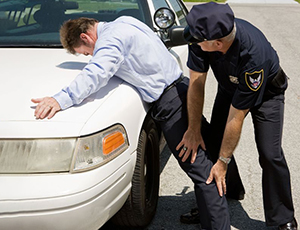
You don’t want to walk too slowly, but you don’t want to walk too fast either. This will especially make you an obvious target for authorities such as law enforcement units; for example, if a bomb has recently gone off in town and they see you running away from it, that will immediately arouse suspicion and they will give chase.

5. Keep Your Valuables Hidden

If you have any valuable items on you such as jewelry, electronics, money, and so forth, keep those items hidden at all costs. Not doing so makes you a prime target for looters or robbers in a disaster scenario who will take advantage of the situation to rob innocent people.

Granted, this can be more complicated if you have a backpack or a messenger bag of some kind over your shoulders (this signals to people that you could have a computer or even weapons with you), so be sure to have the straps firmly around your shoulder and one hand on the pack at all times.

6. Don’t Take Pictures or Record Video

It can certainly be tempting to take pictures or record video during a disaster. You could submit the footage to major news stations or upload it on YouTube and potentially get thousands if not millions of views.

Nonetheless, taking pictures or videos of a disaster is not something a gray man would do as it automatically makes you stand out. Remember, if you have any electronic devices on you, keep them hidden.

7. Stick To Areas Of Cover

The gray man always travels by sticking close to areas of shadow or cover where they can hide at a moment’s notice. Don’t walk out in the open where you are clearly visible to anyone and everyone. Rather, stick close to buildings or natural foliage, but do it in a way that looks natural. Don’t skulk around, quickly moving from way hedge to another. That will just make you stand out even more.

8. Avoid Choke Points

Choke points are any location in a city that will become highly congested with people and traffic during a disaster. They will be the most dangerous and chaotic places thanks to a possible combination of law enforcement units, angry mobs and looters, and swarms of desperate people.

Examples of choke points in a disaster scenario include bridges, tunnels, intersections, stadiums, public parks, grocery stores, sporting goods stores, restaurants, gasoline stations, police stations, hotels, train stations, airports, and even churches.

9. Analyze a Street Before Continuing

The gray man never directly walks down a new street without first inspecting it. Closely observe a new street or block with extreme caution before continuing down it. Again, don’t walk too fast or else you’ll stand out to any law enforcement or dangerous people that are present.

10. Don’t Let Your Guard Down

Finally, just don’t let your guard down. You must be on high alert for potential threats and practice situational awareness. Examples of situational awareness skills include reading the people around you (without staring at them), always identifying at least one exit route before entering a new building or area, and being prepared defend yourself in the event that someone confronts you.

As you can see, anyone can be a gray man and it’s really easier than you think. Becoming a gray man is all about blending in with your surrounding environment, and you can do that if you know what to wear, how to act, and where to travel.

By successfully applying these tips in a disaster scenario, your chances of avoiding detection from the authorities and gangs alike will go down significantly.
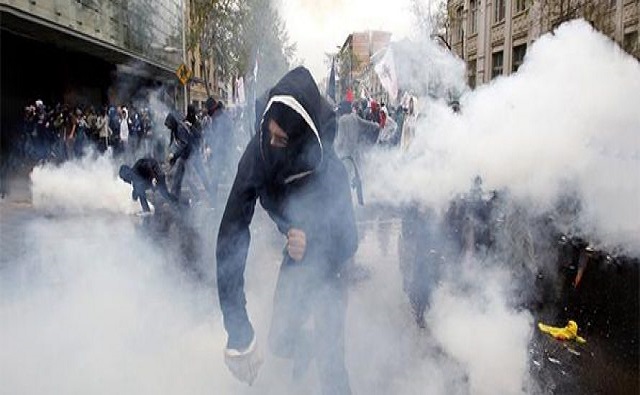

What Happens When the Government Becomes Your Worst Enemy :In the U.S we need to defend our Second Amendment rights.Otherwise, it’s much too easy for those who would take away what remains of our liberty, the freedom to do so.

Chile has struggled to become a thriving democracy. Once a dictatorship under Augusto Pinochet, the country has gone through considerable turmoil since his death. Capitalism has not treated everyone fairly in this country, even though Pinochet was once lauded for the dynamic free-market economy he created, once cited as the “model for the developing world.”

By no means has Chile been the only country which has struggled to become a free-market democracy. Russia is still struggling, decades after the collapse of the Soviet Union. Iraq really hasn’t accepted democracy as a political model, even after enormous amounts of investment by the US government. Other countries have struggled as well, but not with the same results.

Much of the problem that Chile has been experiencing has been due to the vast income inequality that exists in that country. While there are portions of the population which are thriving, many others are still suffering, especially those who are dependent on retirements that were established under the Pinochet regime. Many schoolteachers are still working into their 80’s, because they can’t survive on their $300 a month pension.

For those working in non-skilled jobs, public transit to take them to and from their work costs as much as 21% of their weekly wages. Thus, when the government announced a 30 peso rise in the cost of the metro, it was met with anger. A student-led protest, called evasión swarmed the metro, jumping the turnstiles to avoid paying the increased fare. Workers took advantage of the opportunity to save a little money and joined the protest.

While protests are nothing new in Chile, these seem to have gained traction. A demonstration which started in the capital has now spread to many of the major cities, with continued evasión of fares and widespread protests in the streets.

It appears that socialist organizers and anarchists have joined in the protests, working to turn it to their political ends. As in many such cases, word coming out of Chile is a bit confused, with each side accusing the other of what they themselves are doing. Much of the reporting is tainted by the political leanings of the reporters who are on the scene. But one thing is certain, the government’s response doesn’t stand up under scrutiny.

The Government’s Response

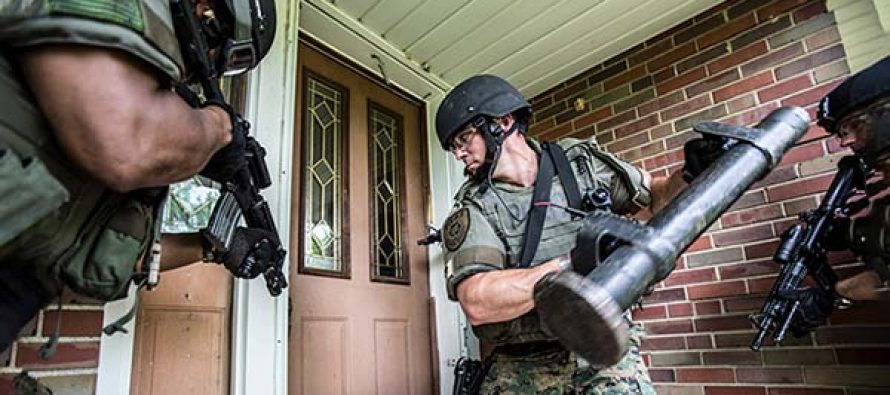
President Sebastián Piñera has declared that his country is “at war.” But if it is, it’s a war between the government and the citizens. While some government response is required to the violent acts of the protesters, that should be a police response, arresting the worst of the offenders and those who are inciting others to commit illegal acts. Protests, as our own government has learned, are not the reason to call out military forces armed and equipped to use deadly force.

What Happens When the Government Becomes Your Worst Enemy

We’ve seen that before in this country; at Kent State University in 1970. National Guard troops were called out in response to a protest. Although the National Guard does receive some training in how to respond to a riot, they are first and foremost soldiers, equipped and trained to kill, not to arrest people. In this case, the results were four dead college students and another nine who were injured.

The soldiers on the streets of Chile reminded many of the older citizens of the years of Chilean dictatorship, when such sights were common; a parallel that was lost on the students who started the protest. For the older citizens, that sight struck fear in their hearts.

The government has admitted to eight people being killed in the protests, but information leaking out of the country claims over 20 killed. There are also widespread reports of police and military brutality against the population, including against people who were not protesting, but merely in the wrong place at the wrong time.

Martial law was declared by the President, early on in the protests, allowing for the use of military forces and imposing ever more restrictive curfews on the people. Interestingly enough, whenever the protesters have gotten the upper hand, troops have retreated to wealthy areas of the cities, focusing on protecting the wealth centers. It seems clear from that action alone, that the leadership of the country is only interested in protecting their financial standing, not protecting the people.

Under martial law, police and military forces have beaten hundreds or perhaps even thousands of innocent people, often plucking them off the streets in civilian clothes, in an attempt to hide their identity. Civil rights are being trampled daily, as the government attempts to regain control.

Could that Happen Here?

Regardless of where you stand politically, Americans have grown afraid of politicians on the other side, especially as the political divide has grown. Each side assumes that the other is likely to declare martial law, on the thinnest of pretexts, imprisoning those who have declared themselves aligned with the other side. Yet that sort of thing has never happened in this country. For that matter, we haven’t seen people rounded up and put in any sort of detention camps since World War II.

Those on the left decry the “oligarchy” regularly, declaring that this country is actually run by them. But I’d like to propose a different viewpoint on that. That is, every government that has ever existed has been an oligarchy of one sort or another. Even monarchies are oligarchies, as the wealth is concentrated in the hands of the royalty.

Successful merchants could buy themselves titles under such a regime, gaining political respectability. But that’s not all they bought; they bought access to the throne, the seat of power. That’s what their titles and their money did for them, just like the oligarchy we have today.

Why is this important? Because in reality it has always been the oligarchy, the elite, who have been in control. I don’t care if you’re talking about the Rothchilds, the Bilderberg group, George Soros or our own political parties, they have kept the power to themselves. Much of the reason why they hate President Trump, is that he has defied their rule and has been working to do whatever he can to overthrow it.

What Happens When the Government Becomes Your Worst Enemy

As we’ve seen in the last few years, these power-brokers will do whatever they have to, in order to keep their power. Rumors have existed for years about how the Clintons have done away with anyone who could be a whistleblower on their nefarious actions. The same sort of rumors existed about Obama when he was in office. I’m sure if we searched around the world, we would find many more examples.

The accumulation of power and money is the central focus of these people’s lives. As such, they will do whatever it takes to retain that money and power. They don’t mind if we “little people” accumulate wealth or even some local power; but they aren’t sharing theirs with us. They will use whatever they have to, in order to keep control. Whatever they have to includes military forces.

These power brokers have control of large portions of our government, just like they do in other countries. As long as things go their way, they will allow us the illusion of our freedom. But if things don’t go their way, you can be sure they will take the necessary action to retain power.

What that Means for Us

One big difference between the United States and Chile is the Second Amendment. Even though there are those who are constantly chipping away, trying to take that right, the Second Amendment guarantees our right to keep and bear arms. There is no such equivalent in Chile.

That’s not to say that the Chilean people can’t own firearms. They can; but there are huge hurdles to overcome in order to get a permit to own one. Even bigger hurdles exist to having a permit to carry that gun outside your home. On top of that, private ownership of semi-automatic arms is prohibited.

Should martial law ever be declared in the United States, you can almost guarantee that it will be accompanied by widespread gun confiscation. This happened in New Orleans, in the wake of Hurricane Katrina. Probably the only thing that kept that from turning ugly and kept armed citizens from defending their right to keep and bear arms, was that there were so few of them still in the city; government forces had them outnumbered.

Many have declared that widespread gun confiscations would result in civil war. I tend to agree with that. While there are many gun owners who would give up their guns, albeit reluctantly, rather than fight government troops, there are enough of us who would stand up for our rights. How that war would end is anyone’s guess.

Recently, the new Democrat majority in Virginia’s state legislature passed a number of very restrictive gun control laws, without taking into account public opinion. They ended up being forced to retract those laws, when citizens got up in arms about it and law enforcement officers declared that they would not enforce those laws.

The same thing has happened in other parts of the country, as Democrat controlled state legislatures have tried over and over again to tamper with our Second Amendment rights. But in each and every case, while there have been some who have complied like good little sheeple, the majority refused.

This means that any protests against government overreach here in the United States have the potential of becoming much more violent than they do in other countries. While those of us on the right, who own most of the guns, are not the kind to take violent action, there are always a few who don’t see it that way. All it takes is one or two of them to start the ball rolling, and things could turn ugly, real quickly.

A second American Civil War would be even bloodier than the first. Not only are there more privately owned guns in the hands of citizens, than there are citizens, but the level of military technology has increased by several orders of magnitude. Hunters alone have our military grossly outnumbered. On the other side, the military has all the tanks, planes and artillery. As I said, it would be bloody.

This is probably why there are those in government service who are so bent on disarming the population. It also explains why the AR-15 is the main target of these people. You can’t win a war with pistols and even trying to win it without semi-automatic rifles would be difficult. Those who want to control us don’t want us to be able to fight back.

Throughout the last century, there have been numerous examples of what happens when the government disarms the civilian population. What we’re seeing in Chile today is nothing new; it has been done time and time again. Those who want to be despotic dictators (regardless of what political name they hide behind) know they must disarm the people first. It’s much easier to get sheep to submit, than it is to get sheep dogs too. The sheep dogs have teeth.

If anything, Chile serves as one more reminder as to why we need to defend our Second Amendment rights. Otherwise, it’s much too easy for those who would take away what remains of our liberty, the freedom to do so.

There are a lot of rumors floating around about EMP and the devastating effects it will have on society- 6 Essential Maps to Store Before an EMP

The US Army has a facility in Fort Irwin, California, known as the National Training Center (NTC). There are a number of other “National Training Centers” operated by various departments of the government, but it’s the one run by the Army that’s the most applicable to us. Army units are sent to the NTC to follow a schedule that’s planned out years in advance.

While there are many different lessons that the NTC is trying to impart to the units visiting there, the primary one is about reconnaissance – find the enemy and don’t let him find you. Many of the mock battles they run are all about figuring out where the enemy is and what they are doing.

Information is said to be the most valuable commodity on the face of the Earth. It certainly is at the NTC. Without fail, units that win the reconnaissance battle end up winning the battle that follows.

That same lesson applies to survival as well, even though death is the enemy we are trying to defeat. Information and knowledge are ultimately just as valuable to the prepper who is trying to survive, as it is to the general who is planning his strategy.

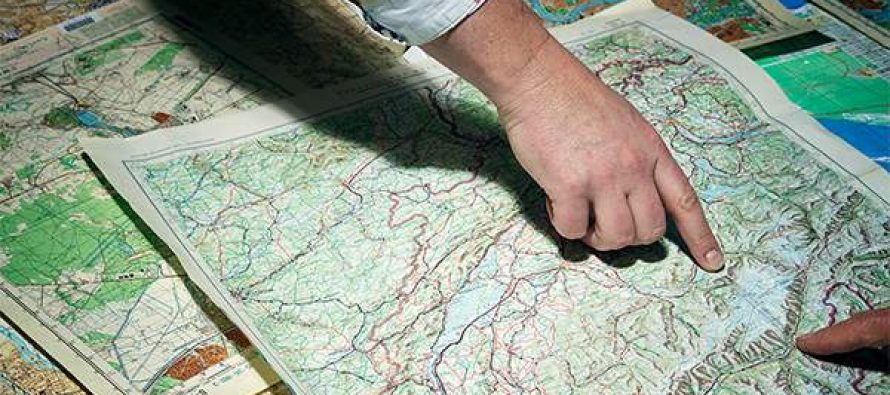
Some of that information can be found on maps, either those you buy or maps you should be compiling for yourself. There is a lot of information out there, which isn’t available on any map, but should be. And those maps must be printed, because electronic maps, especially those which are only available online, are going to be totally worthless to you in the wake of an EMP.

When There’s No GPS

We’re all so accustomed to using our GPS to get around now, making the same trips back and forth to the same places, that most of the time we literally have no idea what’s around us. Whereas there was a time when people had an encyclopedic knowledge of routes, roads and locations, most of us have trouble finding anyplace but our normal hangouts without asking Google how to get there.

You can hardly find someone who still has a road map in his glove compartment. When I moved to the city I now live in, I had to order a city map online. Even then, I had trouble finding one. Yet if an EMP were to take out the internet and our phone system, we would need those maps just to get around.

In addition to a road map of the city you live in, you’ll want road maps that cover the entire area you need to pass through from your home to your survival retreat, as well as the area around your retreat. Go for the maps with the most detail possible, so that you have the best information available. If you can find them, those book-type maps they used to print of major cities are ideal.

Topographical Maps

6 Essential Maps to Store Before an EMP

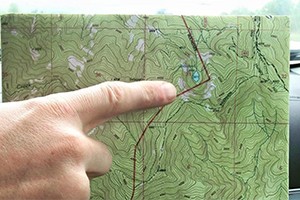
Topographical maps show different things than road maps do. While they will show roads, they do so without most of the name. So they can’t really replace road maps.

But they add a lot of information that you’re not going to find on road maps, such as terrain features, ground water and forests. The terrain features will help you identify mountains, hills, canyons and rivers.

Topographical maps are essential for off-road traveling. They show “jeep trails”, in addition to the terrain features. But it’s really the terrain features which are the most important. You’ll be able to see if there is an insurmountable cliff or riverbank along the route, essential information to avoid getting trapped traveling along a route which doesn’t give you a way out.

Topographical maps will also show you ground water that you might not otherwise know about. While lakes and rivers will usually show up on a road map, streams, ponds and especially canals won’t. So a topographical map will show you critical information that you need to know, in order to survive.

As Far as Food Goes

Many are planning on augmenting their food stockpiles with hunting and fishing; a good idea, if you can do it. But survival hunting isn’t like the sport hunting that many of us do in the fall. With survival hunting, there’s an imperative to bag something and to do so in as little time as possible. That means knowing where to go, so that you have the highest possibility of finding game.

That’s why you want to annotate the best hunting and fishing areas, which are within a reasonable distance of your home and your survival retreat. You’ll also want to note what sorts of game are available in each of those locations and any seasonal information about that game.

Fortunately, a lot of that information is available through your state’s Fish & Game department, as well as hunting and fishing clubs and online groups. What you’re really going to be doing is digging up that information and compiling it into a map that you can use.

Resource Maps

Another map of compiled information that you should put together is a resource map. Now, while things are okay, you’ll want to start seeking out the various resources which are available around where you live. I’m not just talking about the kind of resources you will need to have in order to survive, but also those you’ll need to help rebuild society.

Our cities are filled with warehouses that have essential parts, equipment, tools and supplies. Much of that will just end up sitting there, gathering dust, in the wake of an EMP. But if we are ever going to rebuild society in the wake of an EMP, then we’ll need to know what’s in those various warehouses. We’ll most likely find just about everything we need.

Keep in mind that most of those warehouses are metal buildings. That makes them Faraday Cages. So, even though our electronics will be totally fried by the EMP, there will be working electronics we can use, if we can generate electricity. We’ll just need to know where to find it.

Grab a phone book and keep it with this map as well, even though most of the names of the companies listed in the Yellow Pages will be so innocuous as to be worthwhile. But it might help you find some things that you don’t already have noted on your map.

Your Private Treasure Map

6 Essential Maps to Store Before an EMP

If you have supply caches (and you should), then you need to be sure that you have maps showing where that treasure is stashed.

You can think of this as your own private treasure map, showing where you buried your treasure.

Never build a cache, without annotating its location on your cache map, along with the landmarks you’ll need to find, in order to find your cache again.

Of all your maps, this is the one you want to guard the most, keeping others from seeing it. You never know who will remember what and go looking for it before you do. Better to not let them know it is there.

“Spiderweb” Evacuation Map

We all know that we need to have a bug out plan, including a route from our home to our survival retreat. But I don’t think that’s enough. The Air Force has a concept they use when planning covert insertions and bombing raids, called a spiderweb map.

It contains the planned route for the mission, as well as a number of alternative routes, including connecting legs from each leg of the main route to the alternatives, so that a plan exists to modify the route along the way, if that proves to be necessary.

Considering the high probability of serious traffic problems, as well as natural disasters taking out roads and bridges, it only makes sense to utilize the same sort of system in creating our bug out route.

We need alternatives for each leg of the route, along with ways to get from our planned route to those alternatives and back, should the time come. Each leg should be scouted, with potential dangers and choke points noted on the map.

That’s my list of maps. Are there any you’ve added to your collection, which I missed here? What would you do differently?

12 Dangers That Await You When Bugging Out- Bugging In Is Almost Always A Safer Route to Take Because You Are At Least Somewhat Aware Of The Hazards That Exist In Your Local Area

If you’re preparing for an event where you believe you may be forced to leave your home, you need to be prepared to combat the dangers of bugging out. Bugging in is almost always a safer route to take because you are at least somewhat aware of the hazards that exist in your local area.

If the area around you has become unstable enough that you need to bug out, it means there are new and increasing hazards around you that you aren’t familiar with or even aware of. It is these unknown hazards after any SHTF event that can thwart even the best laid bug out plans if you aren’t prepared to deal with them and adapt your bug out plans quickly in response.

#1. Lack of Clean Drinking Water

You know that you need to include water in your bug in stockpile and have several options for getting fresh water to drink when that runs out. Following a SHTF event, public utilities, like the water and wastewater treatment facilities, could quickly become overwhelmed. Running water provided by the city or public utility may become contaminated or even stop altogether. It’s even possible that groundwater will become contaminated and end up contaminating local wells.

If you’re bugging out, it will be essential that your bug out route and alternative routes put you within reach of multiple places to check for clean water. You’ll also need to know with certainty that you can filter and purify any water you drink. It’s entirely possible that your bug out will take longer because you have to detour in order to get to water.

#2. Dehydration

If you’ve been prepping for any amount of time at all, you’ve heard the warnings about dehydration. The human body must have water on a regular basis in order to continue to function normally. During a bug out, you will be on the move, expending energy to try and get to your bug out and to accomplish many of the physically demanding tasks that are required for survival when bugging out. You’ll be losing more fluids due to perspiration that occurs during physical activity. Depending on the climate, you may also be exposing your body to unrelenting heat. You’ll need more water than normal to keep functioning, not less.

If you’ve ever watched Naked and Afraid on TV, you’ve seen how quickly a lack of water can start to impact motivation, drive, energy, and strength. If your body is weakened from dehydration, you put yourself at increased risk for illness, injury, and being unable to successfully defend yourself against looters or others who want to take your remaining supplies.

#3. Impassable Roadways

Most preppers have planned at least one and maybe more than one bug out route they will use to get from work or school to home and from home to their bug out location. But another one of the dangers of bugging out after a widespread disaster or SHTF event is the likelihood that many roadways in the area will be completely impassable.

Even if you do have a vehicle, there will be many, many other vehicles that simply ran out of gas or were abandoned wherever they were when the event happened. Highways, bridges, overpasses, freeway entry and exit ramps, and intersections may very well be completely impassable due to broken down or abandoned vehicles. Even if your car is operating, you may not be able to get through or turn around, forcing you to abandon your vehicle.

You need to prepare to change routes and even change transportation methods or set off on foot to get where you’re going. Keep in mind that what took several hours by car can easily take several days on foot. So, you will need more supplies but will have less capacity to carry them without your car. Therefore many preppers considering using a cache system.

#4. Hypothermia

Make sure your gear and supplies are adequate to keep everyone as dry and as warm as possible if you anticipate any kind of inclement weather. Hypothermia can set in even in weather that is 50 or 60 degrees Fahrenheit if you are wet and can’t get dry. If your bug out route requires you to cross creeks, streams, or other bodies of water or will mean travel through an area that is flooded or may be plagued with rain storms, plan to use waterproof clothing and other ways to stay dry when bugging out.

#5. Looters/Zombies

One of the greatest dangers to you and your family when bugging out will be other people. Looters and “zombies” who are desperate to feed themselves and their families and who didn’t prepare will not hesitate to take your gear and supplies. Some of these people will resort to violence in order to get what you have. Do what you can to avoid other people when possible, but also make sure you are knowledgeable in self-defense and are prepared to defend your family and your supplies during a bug out.

#6. Disappearing Rule of Law

One of the huge dangers of bugging out will be the disappearing rule of law. There are huge numbers of people in our world today whose tendency to violence and criminal activities are reined in by the rule of law. When a widespread disaster strikes, emergency services personnel, especially law enforcement, will be quickly overwhelmed by demand for assistance. The last thing police and other enforcement personnel will be worrying about is that someone stole your car or that you can’t find your teenage daughter.

Law enforcement will have bigger fish to fry and you will essentially be on your own. People normally reigned in due to laws and fear of punishment will quickly realize that they now have reduced risk of being caught for minor offenses such as burglary, assault, theft, even rape or kidnapping. It will be you against them with very little if any chance of anyone coming to your assistance. You must be prepared to take steps to avoid these people at all costs and to defend yourself and your family if confronted.

#7. Separation from Your Group

Being separated from your group during a bug out can be really dangerous. A widespread disaster or event can impact your communication systems and devices, especially if phone systems and other circuits are overwhelmed with demand. This means if you are separated from your group, you may not be able to get in touch with them to rendezvous or let them know if a pre-planned meeting place is now unsafe. To plan for this, make sure you have a visual system in place to get word to your group about your movements or changes in plans.

#8. Injury

Another one of the most dangerous threats during a bug out is an injury. If you aren’t used to using portable or hand tools you will be more susceptible to injury from misuse. In addition, allowing yourself to become exhausted or weak from malnutrition will increase the likelihood of an injury. An injury during a bug out can limit your mobility and if you don’t have an alternative way to get around and can’t get to safety, an injury can even be fatal. Learn as much as you can about how to prevent and treat injuries that can occur during a bug out to help combat this threat.

#9. Illness/Disease

Sanitation and hygiene after a disaster will be poor due simply because systems will get flooded with demand and some won’t be working because of the disaster or event. In addition, the number of deaths will greatly increase, and emergency services won’t be able to keep up with proper removal and burial of the dead. Animals and rodents will quickly overrun the streets and buildings. All of these things mean the risk of illness will increase.

Many of the diseases we thought were eradicated could once again rear their ugly heads. If you aren’t aware of these diseases and properly prepared to deal with a variety of illnesses using stockpiled medications or natural remedies, your bug out will fail. Talk to your physician about writing an extra script or two so you can stockpile prescription medication or look into animal antibiotics or natural alternatives.

#10. Exhaustion

Even if you choose to bug out by vehicle, it’s possible to become exhausted during a bug out or any extended travel. The stress of being constantly on the move and being continually on high alert for hidden dangers will take its toll. Make sure you plan for adequate sleep. If you choose to bug out on foot, by bicycle, or another method that requires you to physically expend energy in order to travel, adequate breaks to rest will be critical to success.

#11. Malnutrition/Starvation

The human body needs adequate fuel in order to be able to continue to expend the energy required for many of the tasks needed during a bug out. Without the right fuel going into your body, you will start to feel the effects pretty quickly. Ensure that you plan to carry enough food and supplies so that each person in your group can consume the needed number of calories, including protein, to keep moving. If the human body doesn’t get adequate fuel to keep it moving, your ability to stay moving will be negatively impacted.

#12. Lack of Accurate Information

As you read through all of these hazards and dangers of bugging out, it should have become clear that another threat to your safety is going to be the lack of information or misinformation. Finding out what’s really happening around your home, neighborhood, and town will be difficult if not impossible.

You will have to get information from multiple sources and piece information together and then make assumptions based on what you do know. Even if you are lucky enough to have some way to communicate with others, information you get could be delayed, inaccurate, or even deliberately misleading. And if you take action and bug out based on misinformation or incorrect assumptions, your bug out could go wrong quickly.

Wrap-up

If you’ve read through all of these dangers of bugging out, it becomes clear the odds are stacked against you. The only way to begin to even out those odds is to gather as much knowledge and experience as you can about each of the bug out obstacles so that you can deal with whatever comes up along the way. Consider these dangers one at a time and make sure you’ve learned all you can and that you incorporate procedures into your bug out plan to combat them as best you can. There will be incidents where you simply can’t stay where you are. But whatever you do, don’t ignore the dangers of bugging out.

Did miss something that you think is an obvious danger of bugging out? Let us know in the comments below.

Gun vs. Bow – Which One Do You Need for Survival- Having the right tools and weapons could mean a lot when it comes to your survival

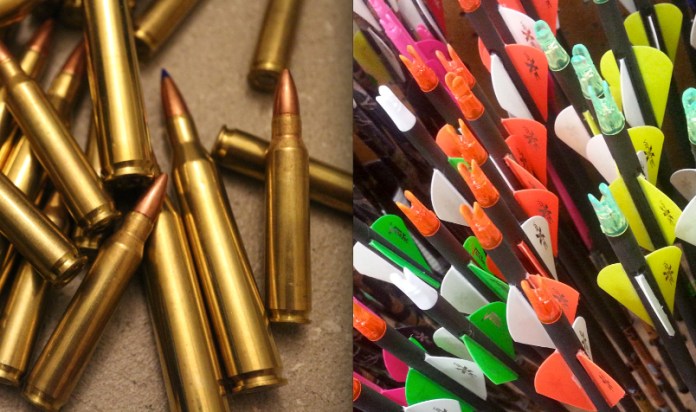
Sometimes you can end up in a situation that needs you to apply any survival skills that you have. Having the right tools and weapons could mean a lot when it comes to your survival. With many options available as survival weapons, for most, it would either be a bow or a gun. So, which one would be the best to use?

The debate about bow vs. gun has been around survivalist forums for years. They always want to know which weapon would help them protect themselves and their family in a critical situation. Some might prefer guns over bows and vice versa, today we get to go into detail to understand which weapon would be the best.

Bows

The bow weapons would come in different shapes and sizes just as it would be the same for the guns. You have to look at the experience you have when it comes to handling the bows. For the sake of survival, you do not want to be an amateur at using the weapon. The same goes for the choice of the bow. Multiple bow types exist today each requiring a different way of handling. No matter whether it is the best compound bow or the best recurve bow, if you are not careful, you might end up with the victim of an accident when shooting the bow as opposed to protecting yourself and family.

The Pros of Using Bow Weapons

  • One good thing about bows is that making the weapons and components, such as arrows, should be easy for many people. Even if the last deer ran off with your last arrow, you can always make new arrows from materials around you. The same could not be said for the guns whereby if you are out of ammo, there is nothing you can do.
  • With a gun, you will make noticeable noise that will make your enemy know your exact position. Having a bow is considered better in some situations due to their quiet nature. Your enemy might end up being defeated by the bow silence and being unable to track your position.
  • The slow speed of the arrow can be a blessing in disguise. If the enemy is smart enough, he can track your position by looking at where the arrow is flying in from. The slow speed should allow you to move from your current position before the arrow hits the target.

Cons of Bow Weapons

  • The first disadvantage can easily be directed towards the rate of fire for a bow. Take the crossbow as an example, it would take long to add the arrow to the bow before firing. This takes time as compared to using a gun. Newer guns will have an increased fire rate and reduced rates of misfires.
  • The amount of training needed to be able to use a bow takes time. The time might not always be on your side in a survivalist situation. Ask anyone who has trained as an archer, the answer is always that the process takes long to master it.
  • Taking bow shots needs the archer to be closer to danger as compared to when using a rifle. You can see that your stealth skills have to be at the top or else you will be noticed before you can take the shot.

Guns

There is no doubt that when compared to bows, guns will easily be seen as a more powerful weapon for survival. New rifles today can deliver impressive ranges, some up to 600 yards easily and still maintain accuracy. The ammo used in guns has the ability to drop the target easily if you know how to handle the gun.

Pros of Guns

  • The ability to deliver the ammo over a longer distance than a bow makes a gun preferred by many people. You can aim easily, in the comfort of your stand, and send the bullet towards your target. A number of factors can affect the type of gun and ammo to use, but on overall a gun would be better at shooting over long distances.
  • The stopping power of a bullet has been always enough to take down the target with ease. It is a minimal effort as compared to using the arrows. You might have to shoot your target with several arrows to get it down.
  • How about learning how to use a gun? As compared to using bows, the guns are always easier to master. You will be a pro in using a gun within a short time as when compared to shooting arrows over a long time.

Cons

  • The shortage of ammo always makes the gun useless. It is not the same as for the bows where, again, you can make arrows in the wild.

By now you have an idea which weapon you would choose. Each weapon has its best applications, so make sure that you keep that in mind before picking a gun or bow.

How Much Cash Should You Have If the Grid Goes Down? (It is the final backup plan for a lot of us in the case of a disaster. A generous supply of cold hard cash to buy our way out of trouble)

It is the final backup plan for a lot of us in the case of a disaster. A generous supply of cold hard cash to buy our way out of trouble, pick up as many last-minute supplies as possible or to acquire resources that are unavailable to anyone with a credit card in a world where the electricity is out and the internet is down. We frequently talk about having cash for emergencies, but how much cash should you have if the grid goes down? What will you be able to purchase with your doomsday supply and how long would it last in the first place?

One of our readers made a recommendation the other day to have between $500 and $1000 in cash for your bug out bag and at the time it prompted me to consider again if this amount makes sense. In my personal preparedness plans I have a supply of cash but I am always trying to figure out if what I have is enough or too much. Will it even matter when TEOTWAWKI comes and how can I best use the cash I have to survive?

Why do you need to have cash on hand?

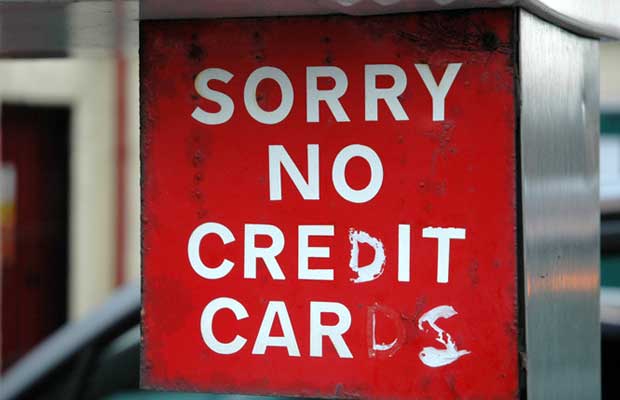
You want to know the time when you will need cash the most? It will be when you can’t get to it. How many of you right now have no cash at all in your wallets or purses? I used to be the same way. I never had cash and relied on the ready availability of cash machines or most often the ability to pay for virtually everything with a debit card. How convenient is it to never have to make change or worry if you have enough cash when with the swipe of a card your bank account funds are at your disposal. This is a great technological advance, but the problem is that this requires two things to be functioning. First, the card readers and ATM machines require electricity. If the electricity is out, neither of these two machines works. The second thing is a network connection. If the network is down, even with electricity the transaction won’t work and you can’t pay for goods or get cash from your bank.

In a disaster, one of the first casualties is electricity. This doesn’t have to be due to some cosmic solar flare that has rendered the grid useless, it could be as destructive and common as a fire, flood, earthquake, tornado or winter storm. It could also be from simple vandalism or perhaps terrorism. A major fiber optic cable was cut in Arizona back in February leaving businesses without the ability to accept payments. When the electricity is out, you aren’t going to be able to access your cash via the normal means so having a supply on hand is going to be a huge advantage for you in the right circumstances.

Even if there is no natural disaster, you are still at the mercy of your bank. What if your bank closes or there is a bank holiday declared because of some economic crisis. In any of these situations, if you are dependent on access to money that is controlled by either technology or physical limitations like a bank office it is wise to have a backup plan should either of those two conditions prevent you from getting cash.

What is cash good for in a crisis?

I think there are two levels to consider when it comes to keeping cash on hand. There is the bug out scenario mentioned above where you would have some “walking around money” to take care of relatively minor needs like food, a hotel or gas. The second is for a longer or more widespread unavailability of funds. Let’s say the economy tanks and the price of everything skyrockets but stores are still open for business. Your bank is one of the casualties, but you had a few thousand dollars of cash stored away that you could use to purchase food, gas and necessary preparedness items for your family. In this scenario, the government is still backing the fiat currency and vendors are still accepting it as a form of payment. For this scenario having a few thousand dollars makes sense.

But what if we have an extreme event where the currency is devalued and is essentially worthless? Your thousands of dollars might only buy you a loaf of bread. Don’t believe it can happen? It did to the Weimar Republic after WWI so it can happen again. That isn’t to say it will, but you should balance how much money you have squirreled away under your mattress with supplies you can purchase now that will last and keep you alive during that same event. My goal is to make sure I have the basics I need to survive at home for several months to a year without needing to spend any cash. This way, if the money is worthless, I still have what my family needs to survive.

If we have a regional disaster where you can bug out to a safer location, your cash should serve you well. Of course if you are in a safer location, assuming electricity was working your access to bank funds should still be working. If this is truly the end of the world as we know it, how long will that cash you have be worth anything?

It is surprisingly simple to disrupt all credit and debit transactions. Do you have cash instead?

How much cash do you need?

So the million dollar question is how much cash should you have if the grid goes down? I always try to plan for the worst case scenario. My rationale is that if I am prepared for the end of the world as we know it, I should be just as prepared for any lesser disaster or crisis I may be faced with. The way I see it is if we do have a disaster, you aren’t going to be using that cash most likely to pay your mortgage, student loans, rent, or your credit card bills. Cash will go to life saving supplies and this will need to be used in the earliest hours of any crisis before all of the goods are gone or the cash is worthless. Once people realize for example that the government has been temporarily destroyed, they aren’t going to want to take your $500 for a tank of gas. They are going to want guns, food or bullets.

I also don’t see you using your cash to buy passage to another country, but that’s just me. I know there is a historical precedent for that, but I am not planning on that being something I realistically attempt with my family. I am also not planning on bribing any officials with cash either. My cash is for last-minute necessities and then it is back into the hopefully safe confines of my home to plan the next steps. For that I have only a couple of thousand dollars in cash stored away. I figure if I need more than that I didn’t plan well. Also, I would rather spend my money on supplies like long-term storable food and equipment than having a large horde of cash. With that amount, I figure I can make one last run if needed or be able to weather any short-term emergency when I can’t access cash.

What is the best place to hide cash in your home?

I wrote a post awhile back titled, How to hide your money where the bankers won’t find it that had lots of good ideas for reasonably safe places you could store cash. As I said in that article, you do have risks involved with keeping cash in your house, but I think you have just the same, if not worse risks relying on banks to keep your money safe and give it back when you want it. There are a million places to hide cash, but you can get tricky and buy a fake shaving cream safe to store several hundred dollars in there. Just be careful you don’t throw that away. There are other options like wall clocks with a hidden compartment inside that might be less prone to getting tossed in the trash. Your imagination is really all that is needed for a good hiding place, but I would caution you that you don’t store cash in too many places or you could forget where you hid it. This happened to me when I had hidden some cash behind an item that I ended up giving to my daughter because I thought I didn’t need it anymore. Imagine my surprise when she came into the living room and said, “Dad, I found an envelope with a lot of money in it”. I gave her a twenty for a reward…

What about you? How much cash do you think you need to have on hand and what do you plan on spending it on if the grid goes down?

Do You Know Your Rights Under Martial Law? (If we see a new level of civil unrest and disobedience, flavored by extremist violence, will we see some form of Martial Law in our biggest cities?)

In 1861, following a riot and the destruction of the transportation system Abraham Lincoln enacted Martial Law in Maryland. 12 voters from the General Assembly were arrested and prevented from voting on secession. The scars of the civil war are so deep that many of them are hard to believe. Its very hard to understand the necessary evil that was required to keep the nation whole.

We have seen glimpses of what Martial Law might look like in America. After the nightmare of Hurricane Katrina, the desperate people of Louisiana had to deal with the threats of looters and hand over their guns to armed police. Curfews were put in place and, in my opinion, it made a bad scene even worse.

We are fast approaching the 2020 Election and there is a lot of talk about radical action leading up to and after the results of the election. If we see a new level of civil unrest and disobedience, flavored by extremist violence, will we see some form of Martial Law in our biggest cities?

What Do You Lose Under Martial Law?

It’s been said many times, many ways, Martial Law is the suspension of most of your rights under a regional military leaders’ rule.

From the moment it was enacted in the civil war, all the way to 2005 Martial Law has been used sparingly in times of disaster and rebellion. It was part of the war of 1812, the San Francisco Earthquake of 1906, the Dock Workers Strike of 1934 and even Hawaii was placed under Martial Law after Pearl Harbor.

While these instances were swift, Americans will never come to grips with the idea of Martial Law. Even if it results in turning chaos into order. That is because the sheer loss of rights under this militaristic rule are many and are invasive.

Worst of all, it’s a situation that has the potential for radical corruption and abuse of power.

In Martial Law the suspension of many, or all, of your constitutional rights is possible.

  • Do You Know Your Rights Under Martial LawGun confiscation is common and your right to bear arms is infringed
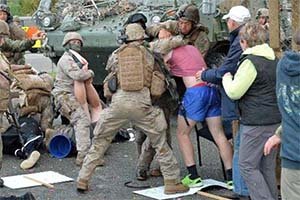
  • Your right to free speech is also at risk
  • Your free travel will be impeded or suspended
  • You will have no protections against search and seizure
  • Curfews are often instilled

Do You Know Your Rights Under Martial Law?

In 1863 Lincoln imposed the suspension of habeas corpus through a congressionally authorized martial law. However, that wasn’t the last word on the subject. Through checks and balances, the president’s proclamation was opposed, and the Supreme Court ruled it unconstitutional.

While this might sound like a victory for the people, this small battle was far from over. What happened next is a very important lesson on government overreach.

The counsel for the US swayed the court and the man who brought the issue to bear, Lambden Milligan, was sentenced to be hanged. Milligan was tried by the military commission under the current Martial Law.

Milligan was not going to go quietly into the night and petitioned the circuit court arguing his arrest and conviction were all unconstitutional. This put an end to military leadership being judge, jury and jailor in a Martial Law situation.

Do You Know Your Rights Under Martial Law

While the average American loses more rights than they retain in Martial Law, this standout circumstance assured our constitutional right to our day in court. Of course, nothing is set in stone and you could still be arrested but likely not sentenced in Martial Law.

Martial Law is a Numbers Game

Remember, Martial Law in the America is about regional tactics. It has been successfully implemented on regional levels in this nation to stop unrest and aid in recovery from disasters. In small areas the numbers are on the side of the imposing force.

In these circles there is this idea that the whole of the nation will be subjugated to Martial Law. This makes for fear inducing YouTube videos and blog articles, but the reality is there aren’t enough soldiers, police, national guard members or even hired heads to conduct a nationwide Martial Law. Keep that in mind.

There are 1.2 million people in the city of Philadelphia alone. Do you know what kind of presence it would take to place the entire city under Martial Law? That is not to mention surrounding suburban areas and counties. Some counties outside of Philly have as many as 500,000 people in them or more!

Now consider the numbers if we added NYC, Chicago, Boston, Miami, Austin, LA and Phoenix. That is nearly 20 million people in those 7 cities alone. It’s a numbers problem. There is no force capable of inducing something like Martial Law on a National level.

If it got to the point where foreign armies were being brought in by the government, then that is no longer Martial Law. I say to you, that is war by any definition.

Two Bullet Proof Solutions for Dealing with Martial Law

There are two great ways to avoid Martial Law. You cannot be sure that your region will not be affected by a disaster that could create calamity. However, there are some steps you can take to make it less likely.

Small Cities and Towns

In large scale disasters, small cities and towns will be last on the list when it comes to Martial Law. These areas will struggle with the same number issues we mentioned earlier. They do not have an unlimited number of resources to pull from.

This means locals will likely take action to restore order, with the help of the police.

Get Rural

Do You Know Your Rights Under Martial Law

If you wanna take it even further, get away from people altogether. If you live in a rural area where town is a bit of a drive, well, you will never see Martial Law. NEVER!

There is no benefit in rolling the military into a stretch of road that is 5 miles long and has 4 neighbors on it. There is just no reason for it, and it will never happen. At most, you might get a knock on your door from the sheriff and he will be asking you for help in town.

Conclusion

Looking at the clock and worrying about curfew is not going to be fun for anyone. Hiding your guns, because you damn sure aren’t giving them up, is also not going to be a good time. However, that is what could be and what has been in Martial Law in the US.

Understanding your position and the population density in your area will help you understand your risk.

Maybe it’s time to make a change in terms of your living circumstances! If you are hell bent on avoiding Martial Law at all costs, it can be done. Remember, this is merely a numbers game and a population game.

Will the Liberals or the Conservatives Start a Civil Unrest? (If That Happens, All The Systems We Rely On In Everyday Life Will Soon Fall Apart Across The Whole Area Affected By The Disorder – And, Unless You’re Prepared For That, You’re In For A Pretty Hard Time.)

Prepping is a safeguard against a whole range of possible scenarios, and everyone has their own opinions about what’s most likely to happen and what would be the biggest threat. There’s one thing pretty much everyone can agree on, though, and that’s that widespread civil unrest is going to bring on a social collapse, at least in the affected areas and maybe right across the country.

Who’s likely to cause this civil unrest, though? Does anyone have the ability to throw large parts of the USA into chaos? We’ve all seen often enough how local issues can spark unrest in a neighborhood or even a small city, but could the same happen on the scale of a county, a state, the whole Midwest or Atlantic seaboard?

Yes it could, and the most likely way it’s going to happen is that some incident upsets politically active people – not just in the town where it happens, but across the state or the country – so much they decide enough is enough, and try to bring about a radical change. That’s happened hundreds of times throughout history, in all sorts of countries – and while the USA is unique in many ways, it’s not unique enough to be immune from the threat of mass civil unrest.

Experts don’t argue about whether unrest could happen in the USA. It could; that’s a done deal. What they do argue about is where it’s most likely to come from. Any part of the political spectrum can be pushed into rebellion but for that to happen to the majority who’re pretty much in the center, things really have to be bad. More usually, when unrest happens it comes from either the right or left. It doesn’t always come from people who could be labeled as extremists either – often it’s people who’re identifiably to one side of center, but not particularly hard line.

Left or Right: Who Wants to Fight?

Listen to anyone on the left and they’ll tell you that the biggest threat of civil unrest comes from heavily armed groups on the “far right” or “alt right”. On the other hand, speak to anyone on the right and they will say that the real danger is the organized and violent flash mobs of Antifa and other “far-left” groups. Are they both correct, or is one – even both – wrong?

There’s no doubt that left and right both have extremes who’re more than willing to use violence. There aren’t a lot of them on either side though, so it’s unlikely they could directly cause widespread civil unrest. What they might be able to do is cause enough trouble to provoke a backlash from the mainstream on the other side, and that really could become civil unrest.

Thanks to the media it’s right-wing extremists who get the most attention, but in fact their numbers are every small. There are neo-Nazi and white supremacist groups in the USA, but most of them are tiny and too disorganized to cause any serious trouble. There have been lone wolf terrorists on the American far right, with Timothy McVeigh being the most notorious. They’re sometimes capable of committing serious atrocities, but mass civil unrest is beyond them.

Left-wing extremists are more numerous, unfortunately. The largest extreme left group in the USA right now is Antifa – but, with an estimated 15,000 hardcore members, even Antifa isn’t big enough to create civil unrest at a national level. Law enforcement could put down an Antifa uprising inside a couple of days. The far left might not like that, but it’s still a fact.

The mainstream menace?

But what about the mainstream left – the tens of millions of Americans who see themselves as on the left of the spectrum, but reject extremist positions like Marxism? Could they reduce the country to chaos? Yes, they could.

Mainstream leftists don’t have the enthusiasm for violence that groups like Antifa are notorious for, but they do have an endless appetite for getting involved in causes. Any perceived “injustice”, from border control to employment policies, is likely to attract a horde of protesting lefties. Usually nothing much happens beyond legitimate political protest, but sometimes things can get out of control.

If there’s a large protest movement, and its members feel they’re not being taken seriously, tempers can rise. If the people who’re getting angry are well enough organized this is where civil unrest can break out – and the problem is that large parts of the left are very well organized. This end of the political spectrum is closely linked to labor unions and a large, interlocking network of pressure groups; they’re very good at spreading messages, exploiting social media and getting people mobilized.

Many on the left also don’t have a lot of respect for the society we live in. They would like to see it “reformed” into something that fits their ideas better, and this attitude makes it easy for them to justify breaking the law. That’s why left-wing protests are prone to violence and looting; if everything you see around you is a symbol of oppression and inequality, it’s tempting to lash out.

The mainstream right is a bit different. It’s nothing like as well organized, for a start. The vast majority of right-of-center Americans aren’t actually very interested in politics, because they’re focused on work and family. When right-wingers do get annoyed about a political issue they’re less likely to do anything about it, for the same reason – they’re busy getting on with their lives.

On the other hand, if the right do get pushed hard enough that they decide to take action, they’re a lot more capable of creating some serious unrest. A lot of that is down to the simple fact that the right have more guns than the left, and tend to know how to use them. Any large, heavily armed, combat-effective insurgency in the USA would pretty much have to come from the right; the left just don’t have many people with those sort of skills.

Where’s the danger?

Both liberals and conservatives have the potential to create mass civil unrest if they decide they want to. That shouldn’t be a surprise; people are people, whatever they believe, and while some belief systems seem to encourage violence in their followers any of us can be pushed to rebellion by the right factors.

If conservatives rose up that would be more disruptive, and more dangerous to the government. Firstly, conservatives are more heavily armed; secondly they have an inbuilt respect for law and order, so for them to start overthrowing society they have to be very angry.

Realistically, though, the political left is the main threat when it comes to civil unrest. They’re organized, they get upset easily and there are a lot of them. Most unrest in western countries is caused by leftist groups, and the USA Is just as vulnerable as anywhere else. Our citizens might be better armed to protect themselves, but mass action by the left could still tear society apart in a hurry. If that happens, all the systems we rely on in everyday life will soon fall apart across the whole area affected by the disorder – and, unless you’re prepared for that, you’re in for a pretty hard time.

10 Expenses You Need to Cut Now for the Upcoming Economic Depression

Nobody has said it yet, but the Coronavirus has turned into a TEOTWAWKI event. Not the kind of “end of the world we knew” event that we all expected, but still one nevertheless. No matter how many people end up getting sick and how many die, the current changes in the ways we do things are so severe, that many of these are likely to end up becoming a permanent part of our society.

Some of them will not necessarily be for the best. Our government, at all levels, has taken a huge amount of authority upon itself, much of which is of questionable legality. While I don’t think that there are many people who would argue the government’s right to quarantine, shutting down churches and other places of worship as “non-essential” comes directly against our First Amendment rights.

But the real question is whether or not the government is going to be willing to give up all that control that they’ve taken. Historically, governments which gain control over something are not quick to give that control up. What’s to make any of us think that they will do so in this case?

Nevertheless, for the moment, many of us are obeying various government mandates to stay home, with companies telling as many of their employees that can, to do so as well. So, as we all sit in our homes, trying to telecommute with noisy kids in the background and our spouses on the other side of the table, working on their computer, we need to start thinking ahead. There will be an end to all this and we will have to emerge from our caves to see the light of the sun once again.

But what sort of world will we emerge into? Experts are forecasting that anywhere from 20 to 34 percent of our workforce will be laid off during the course of this pandemic. If we come anywhere near the top end of those predictions, it will be huge; much worse than the Great Depression. Unfortunately, from the viewpoint of where we are today, a worldwide economic depression seems to be in all of our futures, starting even before the pandemic burns out.

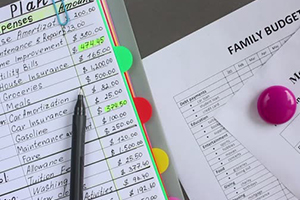
So how can you and I prepare ourselves for that coming depression? There are actually many things that we can do, but the first of them is to restructure our finances. Specifically, get rid of, or at least cut down on unnecessary expenses, so that we are ready when the depression hits.

Car Payments

10 Expenses You Need to Cut Now for the Upcoming Economic Depression

Many families are paying more for their two car payments, than they are for their mortgage payment. If you think about that for a minute, it really doesn’t make much sense.

But cars and light trucks have gone up incredibly in price, at least partially due to all the bells and whistles they put on a car these days.

In a financial collapse, the people who are hit the hardest are those which are in debt. Those car payments are some of the biggest debt you have. So, it only makes sense to attack it first.

Trading your cars in for something used, but still in good condition, can save you a lot of money from your monthly payments. If you’re fortunate to find a good deal, you might even be able to get rid of one of those payments, really saving yourself some money.

Entertainment Expenses

The home computer has evolved into an entertainment center, or maybe the home entertainment center has evolved into a computer. Either way, many of us are spending a fair amount on cable service, plus an assortment of different movie websites. Netflix is no longer enough, producers have decided to divide and conquer, requiring us all to have multiple subscriptions in order to see all the movies we want to.

The obvious problem with this is that it can get rather expensive. Not only that, but it’s obviously an unnecessary expense. Now, I realize you might not agree with that, especially with your kids home from school. But at least find out how to cancel your subscriptions and have the information handy, so that if you have to, you can pull the plug on them.

Service Expenses

10 Expenses You Need to Cut Now for the Upcoming Economic Depression

From mowing our lawns, through curbside pickup of our groceries, to having a mechanic repair our cars, we all pay others to do things for us. That’s fine, when you can afford it, helping others to have jobs.

But when the economy goes belly up, you’re going to need to save that money.

One of my favorite money saving techniques is that I’m a consummate do-it-yourselfer. I do everything from making gifts for my wife to making my own furniture, with car repairs somewhere in-between. The more you can do for yourself, the less you have to pay others to do. And in the midst of the next depression, you probably won’t be able to afford paying someone else to do it.

Coffee Habits

10 Expenses You Need to Cut Now for the Upcoming Economic Depression

How much do you spend on coffee every month? Do you even know? How about every day? You should be able to figure that out.

That can add up to quite a bit over a month, especially if you’re buying the high-dollar made to order lattes and cappuccinos.

You can get just as good a cup of coffee, including all the assorted flavoring syrups, in your own kitchen. It might take a little experimentation to get it right, but you can probably even get a better cup of coffee than what you’re buying right now. And you can do it without paying seven bucks a cup.

Eating Out

Speaking of coffee, let’s expand on that idea. How much do you spend a month on eating out? If you happen to be the average American family, then that figure is somewhere between $250 and $300 per month. If you eat lunch out or from the cafeteria at work, that figure might be even higher.

There’s nothing wrong with eating out, just as long as it’s not in excess. How much is excess? That depends on how much you make. So for most of us, that figure is likely to be changing, sometime in the next few months. With that being the case, wouldn’t it be a good idea to start working on it now?

Don’t go overboard on take-out, just because you’re part of the lockdown going on. Take this time to experiment with some new recipes, so that you can keep your family happy, without having to eat out all the time.

Vices

10 Expenses You Need to Cut Now for the Upcoming Economic Depression

Speaking of coffee again, there are those people who would call coffee an addiction.

This includes people who are at least emotionally addicted to having their two cups in the morning, before they are human enough to talk to anyone without biting their hand off.

Another word we can use for that is “vice”, a word normally associated with smoking, drinking, gambling, prostitution and drugs.

I’m not trying to accuse you of anything, but if you smoke or drink, this might be a good time to think of quitting. The cost of a few beers a day or a couple of packs of smokes may not seem like much, but it does add up. I’m sure you could find something better to do with the extra $150 to $350 a month than a two-pack-a-day habit can cost.

Unnecessary Monthly Payments

Creditors, especially the big credit card companies, have worked overtime to convince us all that the way to buy anything is on credit. That’s led us to having an average credit card debt of $6,028. While some of those purchases may have been necessities, I’d venture to guess that many are things we could have waited to buy, if we had a little more patience.

Either way, they are a problem or, more likely, they will be a problem when the economy collapses and we’re stuck holding that debt. As with any other debt, it will be one more (or several more) creditors calling and asking us when we’re going to pay our bills. If you’ve secured that debt with some sort of collateral, you might end up losing whatever you’ve put up to cover the debt.

Excessive Shopping

10 Expenses You Need to Cut Now for the Upcoming Economic Depression

This one might cause some battles in your home, but how about cutting out unnecessary shopping? The trick here is to determine what really qualifies as unnecessary.

Women will say that all the “toys” that men buy are unnecessary and men will say that all the clothes their wives buy are. Either way, between the toys and the clothes, it can get really expensive.

Here’s something you can try, if you want to get a real handle on your shopping expenses. Make a deal with each other, that before you can buy something, you have to get the other to agree that it is necessary. If she wants a new pair of shoes, she’s got to convince her husband that she actually needs them. Likewise, if he wants to buy a tool, he’s got to convince her that he can’t do the pending repair or other project without it.

Quit Replacing Things

10 Expenses You Need to Cut Now for the Upcoming Economic Depression

Long ago our society transitioned to being a disposable society. Other than some pretty major things, like cars and houses, we no longer repair anything.

We throw it away and replace it. In many cases, there’s no other option.

But we’ve gone far beyond that now, in that we don’t just replace things that are broken, we replace things that are just fine, for no other reason than because they are “old”.

Of course, our definition of old in many cases is highly subject to questioning, as last year’s cell phone model really isn’t old, just because the company has come out with a new one. Yet many of us will replace that phone, just to have the new one, “complaining” that our old one “Just doesn’t work right anymore”.

Smartphones aren’t the only thing we do this with. We also do it with eyeglasses, frying pans and even dishes. Once people had a mixed batch of dishes, because they kept using the remainder of a set, when some of them got broken. Today, we’ll throw away the rest of the set or donate it to charity, just so we can buy a new one.

There’s nothing wrong with using something that’s “old”, as long as it works. Why not try to see how long you can keep that cell phone or those glasses, rather than seeing how quickly you can replace them?

Avoid Gimmick Products

Our homes are filled with gimmicks and gadgets. Some are obvious, while others manage to slip under the radar. One of those is cleaning supplies. There’s really not much you can’t clean with Clorox in a spray bottle, but many of us have special cleaners for the bathtub, the kitchen, our appliances and even the toilet. Not so surprisingly, most of those “special” products are basically the same thing, in different packaging.

Figure out what you really need and stick with it. Don’t let Madison Avenue convince you that you need their latest product, just because it’s “New” and “Different”. It’s probably neither. All that’s new is the packaging and the advertising campaign.

Top 5 Firearms You Need To Get Your Hands On NOW!

To the individual who is either interested in Prepping or already knee-deep into preparing for any number of potential emergencies or disasters, security has to be one of your primary concerns. This is not any truer if you have a family than if you are all alone. The simple fact of life is that when people are scared, hurting or in some other way seriously under duress, the niceness of society disappears quickly. Someone who used to be your best friend will kill you if you are standing between food and their baby is starving.

In this video, i will unearth a long-forgotten secret that helped our ancestors survive famines, wars, economic crisis, diseases, droughts and anything else life trew at them.
So pay chose attention because this video will change your life forever for the good!

It should be clear from any number of recent disasters where looting happened within days that you and your family need to plan for security wherever you are. Firearms are most commonly (and for good reason) associated with security. Are there other options? Sure, but I would rather have my trusty shotgun as opposed to a baseball bat and harsh language if there were a bunch of people trying to knock down my door any day. So, with that in mind, below are my list of the top 5 firearms you need to get your hands on now. This of course assumes you don’t have any firearms for personal protection and you aren’t philosophically opposed to defending your family’s life with deadly force if it comes to that.

#1 Shotgun

The Wilson Combat CQB Shotgun - When you have a lot of money to spend.
The Wilson Combat CQB Shotgun – When you have a lot of money to spend.

As I explained in my earlier post, if you only have the time or means to purchase one firearm to defend yourself and your family it should be a shotgun. Shotguns are everywhere and they are relatively inexpensive to purchase. Where is the best place to purchase a shotgun? You can walk into just about any WalMart and pick up a reasonably priced shotgun without too many people even blinking. Shotguns are pretty simple to use, hold on average 5-6 shots and come with a variety of ammunition options. For home defense or close quarters, a shotgun is very forgiving with respect to nervous aiming. By that I mean you don’t have to be very accurate with a shotgun to do some damage. Even the sound of racking the slide up and down can be an effective deterrent although many will disagree with that assertion. The two most common calibers are .12 and .20 gauge. The .20 gauge is usually recommended for women and smaller kids because the recoil is less.

In addition to home defense, a shotgun is perfectly suited for hunting both small game and larger animals with the right type of ammunition. Another plus is that shotguns are plentiful and the ammunition isn’t 4 times as high now with the recent talk of gun confiscation by the federal government. You can still pick up plenty of ammo and a nice new shotgun fairly easily. For the tactical minded prepper, you can even augment your shotgun with lots of accessories similar to your pistol or AR-15.

#2 AR-15

AR15 - Hands down the most versatile weapon you can have if the SHTF.

Speaking of AR-15’s… This would be my second choice if you have a shotgun already. There are several reasons for making an AR-15 next on your purchase list. The first is that this is the weapon you want to use in a variety of other solutions and its strengths lie outside of the shotgun’s sweet spot. The AR-15 chambered in .556 (will also shoot .223) gives you a highly flexible weapon platform. The AR-15 holds a higher capacity of ammunition so you will need to reload less often. When would you possibly need 30 rounds of ammunition? What if your home was being overrun by 50 people who had wandered off the highway from the town 20 miles away and they were deadly intent on taking your home and your possessions away from you? Or on the other end of the spectrum, what if a whole bus load of zombies was walking across the parking lot towards you. Wouldn’t you rather be able to take out 30 of the closest ones before you had to reload? The AR-15, unlike a shotgun is a medium distance hero. Where the shotgun is good for close quarters, you can’t count on hitting anything using a shotgun with any real power above 40-50 yards. The AR-15, in a competent shooter’s hand is excellent up to 300 meters on any day. I would rather take care of the bad guys when they are very far away from me and my family.

Experts predict that an EMP strike that wipes out electricity across the nation would ultimately lead to the demise of up to 90% of the population. However, this figure begs an important question: if we were able to live thousands of years without even the concept of electricity, why would we suddenly all die without it?

On top of its usefulness at taking out bad guys, it uses the same ammunition that your local police department, National Guard, military and now Homeland security use and are buying more of every day. The chance that you will be able to acquire some ammunition that is compatible with your AR-15 is very high in certain conditions.

Now, the rub is that because of the recent antics by some in our Congress, AR-15’s and the ammunition that go in them is harder to come by. It isn’t impossible though and you can still get an AR-15 for your very own personal use in most locations if you are willing to look around and wait a while. Where can you purchase an AR-15? You can still find quite a few at gun shows everywhere and even at places like Gander Mountain and Cabella’s. Dicks Sporting goods is not stocking them anymore I believe. Pawn shops and gun stores also have them in stock, but you will be paying a premium now unfortunately. I don’t believe this will change any time soon. If you are waiting for the price to go back to what it was last summer I think you will be out of luck. There are also places online you can purchase them and have them shipped to your local FFL dealer. The dealer will usually charge you a small fee ($25 is normal) for the transaction and long wait times are still going to be a factor. Ammunition is tougher to get and more expensive but it is still out there. Shop around online and go to your gun shows. My research shows that the prices are just about the same, once you add in shipping. Know what the price of 500 and 1000 rounds are before you go to the gun show so you can be a savvy shopper.

#3 Full-size Semi-automatic Pistol – .45 or .40

Glock 22 - Perfect as your sidearm or nightstand gun.
Glock 22 – Perfect as your sidearm or nightstand gun.

Pistols are usually the first firearm people choose for a few reasons. They are easier to handle, easier to hide and less wieldy in general. They are the weapon most of the good guys use in the movies so the natural inclination is to get a pistol and you will be all set like Bruce Willis in Die Hard. Pistols definitely have their place, but they would come after an AR-15 and a shotgun in my opinion. Why is that? A wise man once said that “a pistol is what you use to get back to your rifle”. Pistols are for close quarters and you want that to be a last resort. You don’t want to be that close to any bad guys. However, it happens and pistols are an important aspect of your survival battery of arms. Run out of ammunition in your shotgun or AR-15 and then you grab the pistol. Bad guy kicks in the door while you are asleep then you reach for the pistol close to the bed.

Why am I recommending .45 or .40 and not a .9mm? It comes down to stopping power really and I know I may get some blow-back on this topic. I have all three calibers, but if I could only buy one and I was buying this for home defense it would be a .40 caliber. Why not a .45? Well, for the simple fact that you can hold more rounds in the magazine of most .40 calibers because the rounds are a little smaller. That is also why I recommend a full-size and not a sub-compact if you only have one. My 1911 .45 holds 8 rounds and my .40 holds 14. It’s just that I like options and having a few more rounds gives you more options. What about the .9mm you ask? It can hold up to 17 rounds. Yes, and like I said, I have .9mm also, but if you put a big freaked out psychopath in front of me with a machete and told me to pick one gun to use to take him down I would pick up the .45 or .40 before the .9mm.

Where is the best place to purchase a pistol for home defense? Pistols are not as in demand as AR-15’s yet. I was just at Gander Mountain last week and they still had full cases of pistols in all calibers and models. The prices still looked consistent with what I would expect at that store and the only shortage I saw was of Glock. They only had one G27 on display. I personally like purchasing handguns from a gun show but you have to know what you are looking for and the price range you are willing to pay. At a gun show you have a lot more people competing for your business. I recommend finding the gun you are after at every booth, talking to the seller and getting a price. I found $200 worth of difference the last time I went for the same make and caliber of handgun so you should shop around.

Ammunition for handguns is ridiculous now and it’s running about 4 times as expensive as what it used to last year this time. My advice is to get two 50 rounds boxes of hollow-points at a minimum and put those away. After that, go to places like ammunition.com or my new favorite bulkammo.com and order in bulk to build up your supply. Make sure you have at a minimum 4 magazines for each gun also.

#4 Long-Range Rife

Large Caliber .30-06 will take down any game in North America. No matter how many legs it has on it. Perfect for hunting and long-range marksmanship.

When it comes to a long-range rifle, I am talking about between 300 and 600 yards now and this is primarily for hunting. They can also be used to take over where your AR-15 begins to fall short. If you start going too far past 300 yards, your AR-15 will need a little help. Can you still hit targets at that range? Sure but I would rather have a caliber that isn’t slowing down already. My personal recommendation for a long-range rifle is a .30-06.

For one reason, the .30-06 is capable of taking down any big game in North America. You won’t run into an animal that can’t be hunted successfully with a .30-06. Are there other calibers that can do the job? Of course, but in addition to being a great all around hunting weapon, the .30-06 is also a common sniper caliber for police forces.

Where can you purchase a good hunting rifle? They are everywhere from WalMart, Dicks, Cabella’s, Gander Mountain and the local neighborhood pawn shop. You don’t generally need a license to purchase a long rifle and they have lots of use. The ammunition is going to be more expensive, but if you are hunting with this rifle, you will need less; unless you are a horrible shot.

#5 .22 (Pistol and Rifle)

The .22 is great for two things in my mind. In a rifle, the .22 is perfect for small game or varmints. A pistol is great for practice or for use by smaller children. A .22 is a great addition because you can use this to practice your accuracy and not spend a fortune on ammunition. While it is still way more expensive than it used to be you can buy hundreds of .22 ammunition for a fraction of the more common calibers. Additionally, if they ever do try to take away guns, they might leave you with a .22 and something is better than nothing.

Honorable Mentions – Also known as if you have money left over… try these on for size.

Mosin Nagant

The Mosin is a Russian rifle used primarily during WWII and routinely runs around $100 each. For the life of me, I could never find too many of them but if you have no other option, a Mosin is a great rifle to have and could pull dual duty as a hunting rifle or a backup battle rifle. Of course, there are many limitations with the latter approach.

Concealed Carry (.380)

Yes, I do believe every legal firearm owner should carry concealed. In my recent post on the subject I explained all of the reasons I think this is wise and good for society, but it would be one of the last firearms I chose. The reason is that for most people, carrying concealed isn’t a comfortable option unless you have a much smaller weapon. The .380 is perfect and can easily fit in a pocket or purse, but the capacity and stopping power are much lower.

To those of you, who actually finished this post, thank you for reading! I am eager to hear any comments from you on my opinions and what ideas you have for your own personal top 5.

Guns have been referred to as “the great equalizer,” and there’s no weapon which can come close to them in that regard.

A lot of the popularity of firearms is due to the fact that anyone can use them effectively, not only the strong and agile. The young, the old, men, women and child can take up firearms in defense of home and family and do so effectively.

But what do you do if you can’t use a gun – or if you don’t have a gun — to protect yourself?

This image has an empty alt attribute; its file name is untitled-copy-4-1.png
Design a site like this with WordPress.com
Get started