CHILE:What Happens When the Government Becomes Your Worst Enemy :In the U.S we need to defend our Second Amendment rights.Otherwise, it’s much too easy for those who would take away what remains of our liberty, the freedom to do so.

Chile has struggled to become a thriving democracy. Once a dictatorship under Augusto Pinochet, the country has gone through considerable turmoil since his death. Capitalism has not treated everyone fairly in this country, even though Pinochet was once lauded for the dynamic free-market economy he created, once cited as the “model for the developing world.”

By no means has Chile been the only country which has struggled to become a free-market democracy. Russia is still struggling, decades after the collapse of the Soviet Union. Iraq really hasn’t accepted democracy as a political model, even after enormous amounts of investment by the US government. Other countries have struggled as well, but not with the same results.

Much of the problem that Chile has been experiencing has been due to the vast income inequality that exists in that country. While there are portions of the population which are thriving, many others are still suffering, especially those who are dependent on retirements that were established under the Pinochet regime. Many schoolteachers are still working into their 80’s, because they can’t survive on their $300 a month pension.

For those working in non-skilled jobs, public transit to take them to and from their work costs as much as 21% of their weekly wages. Thus, when the government announced a 30 peso rise in the cost of the metro, it was met with anger. A student-led protest, called evasión swarmed the metro, jumping the turnstiles to avoid paying the increased fare. Workers took advantage of the opportunity to save a little money and joined the protest.

While protests are nothing new in Chile, these seem to have gained traction. A demonstration which started in the capital has now spread to many of the major cities, with continued evasión of fares and widespread protests in the streets.

It appears that socialist organizers and anarchists have joined in the protests, working to turn it to their political ends. As in many such cases, word coming out of Chile is a bit confused, with each side accusing the other of what they themselves are doing. Much of the reporting is tainted by the political leanings of the reporters who are on the scene. But one thing is certain, the government’s response doesn’t stand up under scrutiny.

The Government’s Response

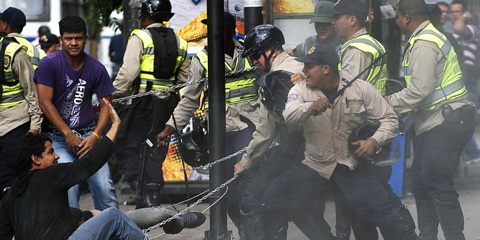
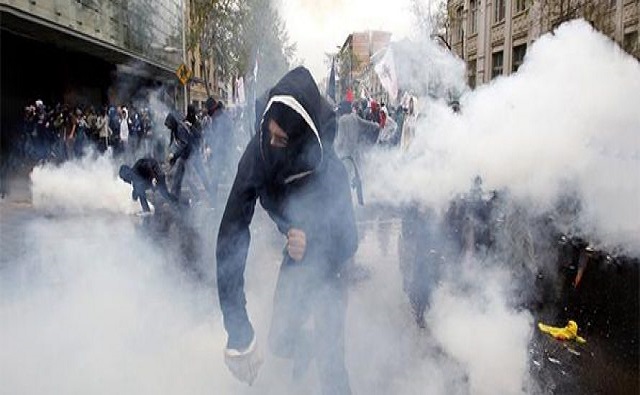
President Sebastián Piñera has declared that his country is “at war.” But if it is, it’s a war between the government and the citizens. While some government response is required to the violent acts of the protesters, that should be a police response, arresting the worst of the offenders and those who are inciting others to commit illegal acts. Protests, as our own government has learned, are not the reason to call out military forces armed and equipped to use deadly force.

What Happens When the Government Becomes Your Worst Enemy

We’ve seen that before in this country; at Kent State University in 1970. National Guard troops were called out in response to a protest. Although the National Guard does receive some training in how to respond to a riot, they are first and foremost soldiers, equipped and trained to kill, not to arrest people. In this case, the results were four dead college students and another nine who were injured.

The soldiers on the streets of Chile reminded many of the older citizens of the years of Chilean dictatorship, when such sights were common; a parallel that was lost on the students who started the protest. For the older citizens, that sight struck fear in their hearts.

The government has admitted to eight people being killed in the protests, but information leaking out of the country claims over 20 killed. There are also widespread reports of police and military brutality against the population, including against people who were not protesting, but merely in the wrong place at the wrong time.

Martial law was declared by the President, early on in the protests, allowing for the use of military forces and imposing ever more restrictive curfews on the people. Interestingly enough, whenever the protesters have gotten the upper hand, troops have retreated to wealthy areas of the cities, focusing on protecting the wealth centers. It seems clear from that action alone, that the leadership of the country is only interested in protecting their financial standing, not protecting the people.

Under martial law, police and military forces have beaten hundreds or perhaps even thousands of innocent people, often plucking them off the streets in civilian clothes, in an attempt to hide their identity. Civil rights are being trampled daily, as the government attempts to regain control.

Could that Happen Here?

Regardless of where you stand politically, Americans have grown afraid of politicians on the other side, especially as the political divide has grown. Each side assumes that the other is likely to declare martial law, on the thinnest of pretexts, imprisoning those who have declared themselves aligned with the other side. Yet that sort of thing has never happened in this country. For that matter, we haven’t seen people rounded up and put in any sort of detention camps since World War II.

Those on the left decry the “oligarchy” regularly, declaring that this country is actually run by them. But I’d like to propose a different viewpoint on that. That is, every government that has ever existed has been an oligarchy of one sort or another. Even monarchies are oligarchies, as the wealth is concentrated in the hands of the royalty.

Successful merchants could buy themselves titles under such a regime, gaining political respectability. But that’s not all they bought; they bought access to the throne, the seat of power. That’s what their titles and their money did for them, just like the oligarchy we have today.

Why is this important? Because in reality it has always been the oligarchy, the elite, who have been in control. I don’t care if you’re talking about the Rothchilds, the Bilderberg group, George Soros or our own political parties, they have kept the power to themselves. Much of the reason why they hate President Trump, is that he has defied their rule and has been working to do whatever he can to overthrow it.

What Happens When the Government Becomes Your Worst Enemy

As we’ve seen in the last few years, these power-brokers will do whatever they have to, in order to keep their power. Rumors have existed for years about how the Clintons have done away with anyone who could be a whistleblower on their nefarious actions. The same sort of rumors existed about Obama when he was in office. I’m sure if we searched around the world, we would find many more examples.

The accumulation of power and money is the central focus of these people’s lives. As such, they will do whatever it takes to retain that money and power. They don’t mind if we “little people” accumulate wealth or even some local power; but they aren’t sharing theirs with us. They will use whatever they have to, in order to keep control. Whatever they have to includes military forces.

These power brokers have control of large portions of our government, just like they do in other countries. As long as things go their way, they will allow us the illusion of our freedom. But if things don’t go their way, you can be sure they will take the necessary action to retain power.

What that Means for Us

One big difference between the United States and Chile is the Second Amendment. Even though there are those who are constantly chipping away, trying to take that right, the Second Amendment guarantees our right to keep and bear arms. There is no such equivalent in Chile.

That’s not to say that the Chilean people can’t own firearms. They can; but there are huge hurdles to overcome in order to get a permit to own one. Even bigger hurdles exist to having a permit to carry that gun outside your home. On top of that, private ownership of semi-automatic arms is prohibited.

Should martial law ever be declared in the United States, you can almost guarantee that it will be accompanied by widespread gun confiscation. This happened in New Orleans, in the wake of Hurricane Katrina. Probably the only thing that kept that from turning ugly and kept armed citizens from defending their right to keep and bear arms, was that there were so few of them still in the city; government forces had them outnumbered.

Many have declared that widespread gun confiscations would result in civil war. I tend to agree with that. While there are many gun owners who would give up their guns, albeit reluctantly, rather than fight government troops, there are enough of us who would stand up for our rights. How that war would end is anyone’s guess.

Recently, the new Democrat majority in Virginia’s state legislature passed a number of very restrictive gun control laws, without taking into account public opinion. They ended up being forced to retract those laws, when citizens got up in arms about it and law enforcement officers declared that they would not enforce those laws.

The same thing has happened in other parts of the country, as Democrat controlled state legislatures have tried over and over again to tamper with our Second Amendment rights. But in each and every case, while there have been some who have complied like good little sheeple, the majority refused.

This means that any protests against government overreach here in the United States have the potential of becoming much more violent than they do in other countries. While those of us on the right, who own most of the guns, are not the kind to take violent action, there are always a few who don’t see it that way. All it takes is one or two of them to start the ball rolling, and things could turn ugly, real quickly.

A second American Civil War would be even bloodier than the first. Not only are there more privately owned guns in the hands of citizens, than there are citizens, but the level of military technology has increased by several orders of magnitude. Hunters alone have our military grossly outnumbered. On the other side, the military has all the tanks, planes and artillery. As I said, it would be bloody.

This is probably why there are those in government service who are so bent on disarming the population. It also explains why the AR-15 is the main target of these people. You can’t win a war with pistols and even trying to win it without semi-automatic rifles would be difficult. Those who want to control us don’t want us to be able to fight back.

Throughout the last century, there have been numerous examples of what happens when the government disarms the civilian population. What we’re seeing in Chile today is nothing new; it has been done time and time again. Those who want to be despotic dictators (regardless of what political name they hide behind) know they must disarm the people first. It’s much easier to get sheep to submit, than it is to get sheep dogs too. The sheep dogs have teeth.

If anything, Chile serves as one more reminder as to why we need to defend our Second Amendment rights. Otherwise, it’s much too easy for those who would take away what remains of our liberty, the freedom to do so.

Economic collapse = societal collapse. It’s deliberate so that we can have “order out of chaos”, as in New World Order, also known as the tyranny of the ruling sociopaths.

Other than the obvious consequences, what might we expect from a partial economic collapse? A total collapse of the economy would throw the nation into utter chaos. But what if we endure an economic depression, or a severe and long-lasting downturn? I think that some of the effects are not so obvious.

1. The college and university system will collapse

As I explained in this previous post, the system of higher education is a house of cards. The cost of getting a college degree has risen sharply and steadily, while real income has remained relatively flat. The price rise is due to the easy availability of grants and loans for education. But with so many persons getting a college degree, its value in the marketplace has plummeted. Many college grads are out of work, or they are working in a job that does not require a degree. Eventually, this practice of paying more and more, for something that is worth less and less, will collapse the system. Colleges and universities will not have enough paying students, and professors will not agree to a drastic pay cut. Overhead expenses are far too high.

All that is needed is an economic collapse, or partial collapse, to topple this house of cards. Many universities and colleges will be forced by economics to shut down.

You might be living in one of America’s deathzones and not have a clue about it
What if that were you? What would YOU do?

In the next few minutes, I’m going to show you the U.S. Nuclear Target map, where you’ll find out if you’re living in one of America’s Deathzones.

This image has an empty alt attribute; its file name is untitled-1.png

2. Agricultural yields will plummet

The current U.S. agricultural system is based on the expectation of high yields. But high yields are obtained by high inputs — all the things that go into growing the crop, including lots of fertilizer, perhaps irrigation, herbicides, pesticides, labor, machinery. Then those high yields are sold and the money is then used to fund the inputs for the next crop cycle.

An economic collapse will mean that farmers will not be able to afford all the inputs needed for high yields. And when yields fall, the amount of money from that crop will be less. Then the next crop cycle will have even less money for inputs, resulting in even lower yields. And the process will continue — lower yields, less money, lower inputs — until many farmers are out of business and a food crisis results.

3. Violent crime will increase

When people lack money and food, they become desperate. And desperate people do desperate things. Theft and robbery will skyrocket, and people will be afraid in their homes, and afraid to go out in the community. Even a quick trip to the market will become risky. Sales of most goods will plummet, causing the economic crisis to worsen. Protests will turn violent. Home invasion robberies will become much more common. Many people will be killed or injured as a result of this increase in violent crimes.

4. Law enforcement will be overwhelmed

The law enforcement system in the U.S. is commercial. Officers are paid. We don’t keep a large excess of officers on the payroll, just in case crime sharply increases. So it is relatively easy for the system to be overwhelmed. And that means a call to 911 might not bring the police to your door in time, if at all. Those who have firearms for home defense will be much better off than those who rely solely on the police. But many households have no firearms. And that means that robberies will increase, and so will the economic damage and the number of injuries and deaths.

5. The healthcare system will be overwhelmed

The healthcare system is also commercial, and lacks a safety margin in the form of excess doctors and nurses. Hospitals operate at close to capacity. A sudden increase in persons who are sick or injured will overwhelm the system.

The aforementioned increase in violent crime will undoubtedly increase injuries. But it is less obvious that a disruption to the food production and distribution system will increase illnesses. Plenty of good healthy food is the first line of defense against illness. Malnourished persons are much more likely to get sick. So an extended disruption to the food supply will cause an increase in illnesses.

Experts predict that an EMP strike that wipes out electricity across the nation would ultimately lead to the demise of up to 90% of the population. However, this figure begs an important question: if we were able to live thousands of years without even the concept of electricity, why would we suddenly all die without it?

6. Travel anywhere will become dangerous

As a result of all the above described problems, travel will be dangerous. Want to make a quick trip to the supermarket? You risk having your house robbed, if it is left unoccupied. And you risk being attacked on your way back from the market. Robbers might wait outside the market and follow anyone who looks like they purchased a lot of food.

There will be protests in many places, and violence will often break out. People who are hungry and afraid do not make the best decisions. Then there is the cultural aspect of the situation. We live in a culture that tells us to expect the government to take care of us, and to protest whenever anything doesn’t go our way. Ironically, self-sufficiency is abhorrent to our narcissistic culture.

I expect that the roadways will be dangerous, as violent criminals will see travelers as easier targets than homes.

7. The death rate will jump higher

People will be malnourished because of the disruption in the food supply, so they will get sick more easily. Violent crimes and violent protests will result in many more injuries than usual. And yet healthcare will be much more difficult to access. There will be a shortage of hospital beds. It will be difficult to get a doctor’s appointment. There may be a shortage of prescription and OTC medications.

All of these factors will make life a riskier endeavor.

Now if you are a seasoned prepper, who has long considered the dangers inherent in an economic collapse, you may have anticipated some of the above consequences. But I hope I’ve added to your understanding of the possible problems that we may soon face.

Guns have been referred to as “the great equalizer,” and there’s no weapon which can come close to them in that regard.

A lot of the popularity of firearms is due to the fact that anyone can use them effectively, not only the strong and agile. The young, the old, men, women and child can take up firearms in defense of home and family and do so effectively.

But what do you do if you can’t use a gun – or if you don’t have a gun — to protect yourself?

This image has an empty alt attribute; its file name is untitled-copy-4-1.png

SURVIVAL FOOD/SURVIVAL STORES ADVICE: EATING PETS & BUGS? UGH!

There’s been a lot of talk about food shortages in the news recently.

Well, what a lot of people have forgotten is that talk of food running out hit the news at least a year ago… and then they were telling us we needed to start eating bugs!

Last year, there were a BUNCH of headlines where the “Powers That Are” are saying we’ll need to eat everything from the family dog… to a handful of crickets… to each other to survive if the food supply runs out!

Fact is, we’re ALREADY seeing parts of the world where human beings have been forced to eat Fluffy, Buttons, and even their local zoo animals so they don’t starve to death!

There are, right now, places in the world that are in various stages of collapse – and not only is this a stern warning sign that hard times are ahead, but it also gives you a glimpse into how people, governments, and “security” will react in a crisis.

Take Venezuela for example…

Venezuela has been “failing” as a state for some time now.

They’ve continued to run out of money and responded by simply “printing more”.

Sound familiar?

Problem is, you can only print so much money until inflation skyrockets (this can happen almost in an instant) and the money in your pocket and bank account becomes worthless.

We’ve warned US citizens of this for some time now that in the near future, our national debt, endless money printing, and borrowing from other countries will eventually crush our economy – and when it does, we’ll see the same things Venezuela has been seeing…

Your #1 Resource Will Dry Up

Venezuela Food Lines: Store Survival Food Now!

We’re hard-coded as human beings to do ANYTHING we need to do in order to stay alive.

You know that means – at its very core – food, water, and personal security, right?

Well, most people don’t realize that most cities and towns operate on a 3-day resupply cycle of food.

That means that during any disruption in our supply chain (from financial collapse, blackouts, disasters, etc.), it only takes 3 days to go from calm… to complete chaos.

Grocery store shelves will be cleared out in a matter of hours when people realize food is scarce.

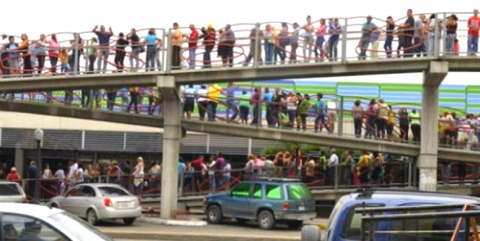
Endless “food lines” will pile up at markets and distribution points handing out smaller and smaller portions.

In Venezuela, May marked the month where the entire nation has declared it is starving… and people are no longer in the “wait-and-see” mode of hoping for relief.

Food at supermarkets went from insanely expensive… to scarce… to gone.

(Sound familiar?)

Chants of “We are hungry!” echoed through the streets of Venezuela and in front of barren supermarkets.

People have resorted to hunting dogs, cats, pigeons, and anything they can capture in order to put food on their family’s table.

Crime Becomes Inevitable

Venezuela Looting: Store Survival Food Now!

If your children were hungry and there were no resources to feed them, would you resort to stealing in order to keep them alive?

If you’re like and caring, protective parent (or grandparent), the answer becomes easy when you see that society has transformed into “every man for himself”.

In Venezuela, looting of grocery stores, pharmacies, shopping malls, and food delivery trucks has become common as food supplies have dried up into a state of emergency.

And while looting grocery stores has been “accepted” by the citizens, stealing from individuals has turned violent.

In one case, a man who was caught robbing fellow citizens was the victim of “mob justice” when passers-by beat him and set him on fire before police could arrive.

Demonstrations And Looting Are Common

Venezuela Protests - Store Survival Food Now!

Dependent on the government, desperate Venezuelans have grown panicked and angry over not being able to buy food.

In demonstrations across the country, citizens overwhelmed military and police – sometimes as high as 250 people for each National Guard officer.

They jumped gates… stormed supermarkets… raided government food dispensaries and attacked police that got in their way.

Rumors spread around the entire state about where to find products that couldn’t be found locally which caused massive migrations of “out of towners” to look for resources in nearby cities – further causing unrest and tensions.

Fellow citizens are turning on themselves and civil war looks inevitable as the government has failed its people and the mobs grow restless in waiting for a solution.

You must understand that during a collapse, there is no more “civilized society”… and the wolves will be circling the sheep, looking for victims.

As the “protector” of your family, you don’t want to be the “wolf” OR the “sheep”… but rather the “sheepdog” that can effectively watch over those you love and who are counting on you.

Fortunately, the #1 thing you can do is
ALSO the absolute EASIEST to plan for.

The bottom line reality is that, if you don’t have food to feed your family, you are guaranteed to suffer the same fate as the unprepared citizens of Venezuela.

But if you take care of this very simple survival factor now, then you’ll NEVER have to worry about having to steal for your family… begging for handouts… being attacked at the grocery store… or forced to eat dogs and cats.

You can start out small with the survival food of your choice and build from there – but I can’t stress enough that this is the very first thing you need to take care of to keep your family safe during a crisis or collapse.

(A lot of us have had to do this during the pandemic, with waiting lists for survival food months and months long.)

The scenes coming from Venezuela right now are very real… and should be a serious wake-up call to every American as the threat of our own financial collapse looms in the near future.

What Are YOU Storing For Survival Food?

Please Share Your Best Suggestions Below Now…

How To Deal With Neighbors And Friends That Come Begging For Food At Your Door In A Crisis-Some Good Advice In This Article As It Deals With Whats In The Mind Of Anyyoon Who Takes The Pionner Spirt And Preparation Seriously

The late afternoon light is shining through your window and the scene outside is quiet, just the way you like it. You are about a month into a serious collapse and thus far your preps have held up. Power has been out for 2 weeks; you don’t plan on ever having power again. You prepared for that.

As the sun sinks closer to the horizon you hear one of the most terrifying sounds of all: A knock on the door!

Your family finds their places and weapons, you leave from the backdoor and flank whoever might be on your porch. To your surprise it is your cousin! You haven’t seen him in years, but he is here. He looks rough and he has his disheveled family of three along with him.  He also doesn’t seem to have any food or supplies with him.

This is one of the prepper scenarios we all have thought about. However, it might not be as bad as you think!

People Are Power

So, what do you do when someone unexpected comes knocking? Now, that is an interesting word to use in conjunction with preppers. UNEXPECTED. The whole point of prepping is to consider the unexpected.

In a true SHTF situation people bring you power. Your community should be like a hive. Hardly worth the trouble of any small group that might wish to steal or worse. You must be able to sustain them or have them sustain themselves but there will be tremendous power in numbers. Big jobs become easier, you can make an area more secure with more people, and you have more brains to put towards a problem.

Of course, its not heaven. With people come people issues like fights, jealousy, and the like. However, good leadership and preparedness can give you the upper hand on things like that.

You must first make an honest list of “survival dependents” or people who will come to depend on you when everything goes to hell!

How to Deal with Neighbors and Friends Who Come Begging for Food at Your Door in a Crisis

Trust me, your list is bigger than you think.

Survival Dependents

While it is nice to imagine that the calamity will never cross your threshold, the reality is that many more people depend on you than you think. Chances are, even if people don’t know you’re a prepper, you are the type of person who has it together. You are likely the person people go to for answers.

No matter how strong your OPSEC protocols are if you are a good and solid person, than people will look to you in times of crisis. These might be people you love or just people you know.

Now is the time to sit down and create a real list. You must take off the blinders and truly consider all the people who will depend on you in an SHTF situation. It would be perfect if your list consisted of 4 people but when you break it down you have groups of people to consider.

  • Immediate Family
  • Extended Family
  • Friends
  • Co Workers
How to Deal with Neighbors and Friends Who Come Begging for Food at Your Door in a Crisis

Your group of survival dependents could include people from each of these categories. How they depend on you may vary but this list will help you understand that there are more people than just your immediate family who will turn to you in times of calamity.

Can You Support People?

Of course, the question that comes to mind after you create a list like this is: Do I have enough?

For most people, the answer is no. It can be over burdensome to assume that you can prep for all the people who might be on your list of survival dependents. When these people show up asking for food, though, you need to have something!

Unless you subscribe to the idea that you are going to turn everyone away who comes to your door. If that is your game plan than you better also prepare for some serious backlash. How many fathers with kids can you turn away before one of them says, “No, we are coming in.”

What happens next cannot be good, with lots of harmful outcomes.

This doesn’t mean you should be a pushover and let any old person into your home and feed them.

How to Deal with Neighbors and Friends Who Come Begging for Food at Your Door in a Crisis

Tip: When people approach you to ask for something, if they come to your door or see you outside, simply ask them for something first! Open the door and ask for food and medicine: “Oh, I hope you brought some food, we haven’t eaten in a week!”

Put Them to Work Immediately

From that list of survival dependents, you will likely choose people who you will bring into the fold. However, don’t let them in free of charge. The best way to handle someone who comes asking for help is to immediately give them some form of work to be done.

This is also a great gauge of the depth of that person. Those who are outraged by the work that needs to be done at “their new home” are people that you can easily weed out. Just make it truly clear up front that there is plenty to do and if they cannot do what is asked, they cannot stay.

By the way, there will be plenty to do! If you manage a household of four and all the sudden it jumps to ten you will have lots of extra work. It is not so much about room but about dishes, laundry, food production, security detail in the neighborhood, general cleaning.

In an off-grid situation, it might be about things like water procurement and sanitizing, renewable energy system maintenance, gardening, canning and everything in between.

There will be a serious list of chores to be done and the last thing you want is a house full of freeloaders laying around all day while you are red in the face.

How to Deal with Neighbors and Friends Who Come Begging for Food at Your Door in a Crisis

Using a basic Excel spreadsheet, you will be able to create chore lists TODAY for issues that might come tomorrow. Print a stack of them and save them. They can be filled out by hand when the time comes or if you know the system you could print them with the duties listed.

It’s high time we stop looking at neighbors and friends as threats in the downfall. Many people can see something resembling collapse just on the horizon. Its hard not to look around and wonder how the unprepared will react to a future of scarcity, uncertainty, with up close and personal violence.

If America is facing balkanization or civil war it will be particularly important that you have a secure neighborhood with plenty of able-bodied individuals. Many neighbors will leave for a safer environment and you must be aware of that. However, that might free up homes and living areas for more of your survival dependents.

Your survival dependents are not the burden you once thought. Believe me. While you know the flaws of the people around you, they have two ears, two eyes and a heart that wants to survive. If you can find it in you to lead these people they will provide you with a true survival group that will keep you and yours from being acted upon by anyone with a group larger and better trained than you and your spouse!

The Art of Blending in: 5 Tips from a Counterintelligence Special Agent

As some of you know, before I was a blogger, I spent many years as a Counterintelligence Agent, training and working with some of the best government agents and Special Forces personnel in the world. Most of that involved either conducting surveillance or counter-surveillance or activities where you had to know how blend in or find people trying to blend in.

Over the years, I saw some pretty common mistakes when it comes to doing things that give you away to someone who may be targeting you in situations that you may actually face someday.

This post won’t make you into a secret agent, but it may be the one thing that saves your life, whether you find yourself in a short-term natural disaster, are traveling through a foreign country with a high kidnapping rate, or even if some worst-case event happens and you find yourself living in a collapsed society like we’ve seen in several countries around the world.

1. Demeanor is your biggest ally and your biggest enemy

The absolute number one way I’ve gotten into places I wasn’t supposed to was by my demeanor. You learn early on in the military, or at least the Army, to “walk with a purpose.” That’s actually the biggest key to looking like you’re supposed to be somewhere and not standing out.

Luckily for security and surveillance personnel, most people get their infiltration and surveillance training from Hollywood – and they suck at it.

If you’re walking through an area and don’t want to be noticed, act like you’re supposed to be there. It helps to look like you’re in the middle of something important so they don’t automatically assume you’re just walking through.

If you’re not walking through and need to hang out for a while, you still need to try to not stand out. If all else fails, do what everyone else is doing. If people are mostly sitting in an area, you should be sitting. If they’re all studying, you should find something to read. You don’t want to be the odd man out.

If all else fails, there are a few tricks you can use.

If you’re a guy walking alone and want to stop in an area to get a good look, find the least-threatening person to sit down and strike up a conversation with as you carefully and naturally scan the grounds while you look like you’re recalling some old memory.

Find an old couple enjoying the view or sit down and watch a game of chess or dominoes. Just be aware that if the other side is familiar with the area, you won’t want to choose someone who they’ll remember like the crazy lady who shows up every day at 4:00 to feed the pigeons and by 4:01 has her own flock.

On the flip side, if you’re in an area where you may be at risk for someone targeting you for something like a kidnapping, unless they’re total noobs at it, they’re going to watch you for a while to get what’s called your “pattern of life.” They’ll watch where you go, when you go there, what routes you take, and what you do there and along the way. That way they can see where you’re most vulnerable as well as whether you’re an easy target.

This is where you’re the one looking for demeanor. Look for someone who doesn’t fit in. Look for the only guy in the park outside a college who isn’t studying or hitting on a co-ed. Look for the one guy sitting by himself trying to look deeply involved in something that he’s not actually doing. Yes, you’re actually looking for what you see in movies and TV here.

When people – even seasoned people – get stressed or really focused on their job, it takes a lot of mental energy. That energy is then put into watching the person instead of watching what they’re doing or how they’re acting. Maintaining body language that isn’t congruent with your intentions is hard work.

A great book to learn about body language is What Every Body Is Saying, written by an ex-FBI agent. The more you understand about body language, the more easily you’ll be able to identify things about people you wouldn’t have noticed before and the easier you’ll be able to not give away your tells.

Now don’t think for a moment that even trained government agents don’t make mistakes. Surveillance and counter-surveillance are definitely skill-based and even if you’ve had a lot of training, if you don’t actually get out there and do it every day, it’s really hard to get right.

One of the biggest problems I’ve seen is people getting tunnel vision with what they’re doing. I’ve seen them standing in the middle of a sidewalk, so transfixed on making sure they don’t lose their target that they don’t realize that they’re the only one not moving – and everyone is staring at them as they walk around them.

I’ve even seen one almost get arrested because he sat down on a bench to watch a guy coming his direction, not realizing that he was looking right through a playground at the approaching guy – through the monkey bars that were crawling with several elementary school girls. Obviously, if he didn’t take into account that it would be strange for a lone man in his thirties to walk up alone to a playground, sit down, and stare intently in the direction of little girls, he’s certainly not focused on his demeanor.

If you take the time to learn and pay attention to what you’re doing – and what everyone else is doing, you can get the upper-hand on even experienced people.

2. Dressing for OPSEC doesn’t mean a disguise

Here’s another one that gives a lot of people away – what you wear. A lot of people think that trying to not be noticed means wearing something like this. Don’t do that. Whether you’re trying to watch someone and not be noticed or trying to not be picked out of a crowd, the point isn’t to look different, it’s to not be noticed and remembered.

Your goal, whether you’re trying to walk through an area you might not supposed to be in, or you’re trying to not be the one picked out of the crowd to be their next victim, is not to look like someone else – it’s to not be noticed.

It’s also more than just not looking like you’re the one that has a big fat wad in their wallet or an expensive watch, you don’t want to be the one that catches their eye in a crowd so they see if you have a watch on in the first place.

Essentially, this is the same thing as your demeanor. In most cases, you’ll want to dress like others there. If everyone’s dressed in board shorts and t-shirts, you don’t want to be in a long-sleeved dress shirt and khakis. If you’re in the yuppie part of town, you don’t want to be dressed in a sweatsuit.

What you SHOULD shoot for, if the situation allows it, are certain clothes that will allow you to be more inconspicuous.

It may seem cliche but gray is a really good color to wear to not be noticed. Something like a gray hooded sweatshirt or jacket works usually because it’s usually common and can be worn over clothes that may be more obvious.

3. Don’t let your guard down at home

I spent a lot of years as a security advisor to different embassies and agencies around the world. That meant that I had to provide advice and reports of the TTPs (Tactics, Technics, and Procedures) of any threats, and any observed vulnerabilities, to embassy or government personnel living as I was – amongst the population.

One of the things I noticed was that once people got to their home, or hotel, or hut, they let their guard down. Now, granted, staying 100% vigilant at all moments isn’t possible, but there are certain things you can do to help keep your home from catching their notice or giving them info they could use to target you.

Just as with your demeanor and your dress, a key point is to not stand out.

If your neighbors park their car in the garage – you do too. If they have a clean yard – you do too.

Also, if you’re living in a foreign country, don’t have something like a Terrible Towel hanging in your window, or anything else that could give you away as a person not from around there. If anything, pick a local team or the host country’s flag.

Don’t forget some of the general security aspects at home either, that may allow someone to get an easier look to see if there’s something different about you.

Don’t let bushes grow next to your house that would allow someone to hide in them and peek in your windows and don’t forget that people can see in windows at night even when you can’t see out.

Don’t keep your garage door opener in your car if you ever park it outside – or any identifiable information about who you are and where you work. They may break in and grab those things or at least find a reason to target you further and ways to do just that.

4. Don’t give away your capabilities

If you somehow find yourself in a disaster scenario like Katrina or during one of many blackouts you’ll face in a third-world country, be careful if you dig out that loud generator. A quieter one like the Yamaha generator would be a much safer choice (and it’s a really good generator anyway but that’s for another post). If someone hears it going on at night, they’ll know your home is prepared for emergencies and will assume you have food and money as they sneak in and steal your generator after the lights go out.

Speaking of lights, if you’re going to use electricity at night in an area that doesn’t have it for some reason, you should black out your windows so the light doesn’t go out, and hang a blanket in the doorway so they can’t see it when you open the door. If an area’s been without power for a while, they’ll definitely see a bright like flash in the middle of the night.

Watch what you throw in the trash too. If someone’s going to target you for criminal activity or other, one of the things they’ll definitely do is “dumpster-dive” into your trash and see what they find. Do you have receipts for expensive merchandise? Do you have paperwork from your office that they shouldn’t see?

One of the ways I used to find people when I was a private investigator was to go through their trash or their home (in certain cases) and look for receipts. If I saw more than one receipt from a certain grocery store or Starbucks, I knew there was a decent chance they might show up again, because we’re all creatures of habit.

Also, if I saw a couple receipts that were from the same neighborhood across town but different days, I started looking for a person or connection in that area that they’d go to. You’d be surprised just what you can find about people just digging through their trash. Get a shredder and/or burn your papers.

5. If you look vulnerable, you look like a target

This one’s related to all the rest, and has been alluded to already, but it deserves to have its own section.

Whether you’re concerned about being the target of criminal activity or of some enemy force, you have to consider that sometimes you just won’t be able to blend in completely but you can still try not to stand out. There was certainly no way I blended in in the jungles of Africa, for example.

The obvious example is not wearing expensive jewelry or that nice watch I mentioned above, but it’s more than that. Certain things you do or wear can make you more inviting to an enemy that might have otherwise just passed you by.

Did you know that wearing that gray hooded sweater’s hood up can make you a target? Those hoods block your peripheral vision, and not only keep you from seeing behind and to the side – it LOOKS like you can’t see around you. Subconsciously you look more vulnerable even if they don’t realize it.

Same goes for headphones. When people are wearing headphones, they’re usually zoned out. People catch onto that and will assume (again, sometimes unconsciously) that you’re not paying attention – and are more vulnerable. When’s the last time you interrupted someone at a coffee shop or a park who was reading or typing while wearing headphones?

I work a LOT in coffee shops in my job, especially now with my new venture, and I can definitely tell you, I RARELY get interrupted if I’m wearing them. If you look lost in your own world, you look like you’re not paying attention to the world outside – because you probably aren’t.

Here’s one of the biggest things that will make you stand out as a target for those looking for a victim – TEXTING. Just as with headphones, people who are staring into their cell phones, texting away about their day are not paying attention to the world around them – especially if they’re walking. What makes it harder is that if you occasionally look up and around while you’re texting so you don’t look like a target – now you just popped up on their radar if you weren’t previously. People don’t normally do that.

Unless you absolutely have to, lay off the texting if you’re trying to blend in and keep yourself safe. The only real trick I know that works is to be walking with someone else who appears vigilant (but not overly-so) while you tap-tap-tap away on your phone.

Economic collapse = societal collapse. It’s deliberate so that we can have “order out of chaos”, as in New World Order, also known as the tyranny of the ruling sociopaths.

Other than the obvious consequences, what might we expect from a partial economic collapse? A total collapse of the economy would throw the nation into utter chaos. But what if we endure an economic depression, or a severe and long-lasting downturn? I think that some of the effects are not so obvious.

1. The college and university system will collapse

As I explained in this previous post, the system of higher education is a house of cards. The cost of getting a college degree has risen sharply and steadily, while real income has remained relatively flat. The price rise is due to the easy availability of grants and loans for education. But with so many persons getting a college degree, its value in the marketplace has plummeted. Many college grads are out of work, or they are working in a job that does not require a degree. Eventually, this practice of paying more and more, for something that is worth less and less, will collapse the system. Colleges and universities will not have enough paying students, and professors will not agree to a drastic pay cut. Overhead expenses are far too high.

All that is needed is an economic collapse, or partial collapse, to topple this house of cards. Many universities and colleges will be forced by economics to shut down.

2. Agricultural yields will plummet

The current U.S. agricultural system is based on the expectation of high yields. But high yields are obtained by high inputs — all the things that go into growing the crop, including lots of fertilizer, perhaps irrigation, herbicides, pesticides, labor, machinery. Then those high yields are sold and the money is then used to fund the inputs for the next crop cycle.

An economic collapse will mean that farmers will not be able to afford all the inputs needed for high yields. And when yields fall, the amount of money from that crop will be less. Then the next crop cycle will have even less money for inputs, resulting in even lower yields. And the process will continue — lower yields, less money, lower inputs — until many farmers are out of business and a food crisis results.

3. Violent crime will increase

When people lack money and food, they become desperate. And desperate people do desperate things. Theft and robbery will skyrocket, and people will be afraid in their homes, and afraid to go out in the community. Even a quick trip to the market will become risky. Sales of most goods will plummet, causing the economic crisis to worsen. Protests will turn violent. Home invasion robberies will become much more common. Many people will be killed or injured as a result of this increase in violent crimes.

4. Law enforcement will be overwhelmed

The law enforcement system in the U.S. is commercial. Officers are paid. We don’t keep a large excess of officers on the payroll, just in case crime sharply increases. So it is relatively easy for the system to be overwhelmed. And that means a call to 911 might not bring the police to your door in time, if at all. Those who have firearms for home defense will be much better off than those who rely solely on the police. But many households have no firearms. And that means that robberies will increase, and so will the economic damage and the number of injuries and deaths.

5. The healthcare system will be overwhelmed

The healthcare system is also commercial, and lacks a safety margin in the form of excess doctors and nurses. Hospitals operate at close to capacity. A sudden increase in persons who are sick or injured will overwhelm the system.

The aforementioned increase in violent crime will undoubtedly increase injuries. But it is less obvious that a disruption to the food production and distribution system will increase illnesses. Plenty of good healthy food is the first line of defense against illness. Malnourished persons are much more likely to get sick. So an extended disruption to the food supply will cause an increase in illnesses.

6. Travel anywhere will become dangerous

As a result of all the above described problems, travel will be dangerous. Want to make a quick trip to the supermarket? You risk having your house robbed, if it is left unoccupied. And you risk being attacked on your way back from the market. Robbers might wait outside the market and follow anyone who looks like they purchased a lot of food.

There will be protests in many places, and violence will often break out. People who are hungry and afraid do not make the best decisions. Then there is the cultural aspect of the situation. We live in a culture that tells us to expect the government to take care of us, and to protest whenever anything doesn’t go our way. Ironically, self-sufficiency is abhorrent to our narcissistic culture.

I expect that the roadways will be dangerous, as violent criminals will see travelers as easier targets than homes.

7. The death rate will jump higher

People will be malnourished because of the disruption in the food supply, so they will get sick more easily. Violent crimes and violent protests will result in many more injuries than usual. And yet healthcare will be much more difficult to access. There will be a shortage of hospital beds. It will be difficult to get a doctor’s appointment. There may be a shortage of prescription and OTC medications.

All of these factors will make life a riskier endeavor.

Now if you are a seasoned prepper, who has long considered the dangers inherent in an economic collapse, you may have anticipated some of the above consequences. But I hope I’ve added to your understanding of the possible problems that we may soon face.

Are You Ready for a Post-Antibiotic World? Preparing for a post-antibiotic world is one of the wisest things you can do to protect yourself and your loved ones.

Preparing for a post-antibiotic world is one of the wisest things you can do to protect yourself and your loved ones. Unfortunately, the window to do so has narrowed substantially. Some scientists and health experts believe the post-antibiotic era has already arrived.

When self-reliance minded folks feel concerned about the impact that a post-antibiotic world would have on their lives, two distinctly separate problems are being pondered:

  1. A long-term SHTF event that removes access to modern antibiotics.
  2. A world where overexposure to antibiotics and an increasing number of pathogens have caused historically successful drugs to have little or no impact on an illness or disease.

Both potential or evolving scenarios would be equally deadly.

Modern Antibiotics Failing

For at least a decade, scientists and doctors have warned governments around the world that an increasing number of resistant pathogens are pushing our world ever closer to a post-antibiotic era.

The overuse of traditionally effective antibiotics along with a lack of new development of drugs to combat new pathogens have left even the most advanced healthcare systems in developed countries struggling to defeat mounting and expanding antimicrobial resistance in patients, as a report by Modern Healthcare notes.

Colistin is one such drug that brings the dire state of antimicrobial and antibiotic resistance into clear view. Colistin was once the “go-to” drug of last resort to use when more conventional and less potent antibiotics failed to work. A type of gene recently found in salmonella bacteria has proven to be resistant to Colistin, leaving doctors with no treatment option for patients suffering from this specific variety of salmonella.

A report released by the United Nations last year indicated that without substantial action to combat antibiotic resistance along with the creation of new medicines, untreated disease will cause 10 million deaths around the globe in the next three decades. In excess of two million of those deaths are predicted to occur in First World nations like the United States.

A Centers for Disease Control and Prevention (CDC) report from seven years ago warned that a minimum of 2 million people are infected with antibiotic-resistant bacteria each year. A total of 23,000 of those patients die as a result of their exposure to the pathogen.

The number of antibiotic-resistant pathogens and people who can find no treatment for their illness has only increased since that CDC report was released.

Example of What Could Happen

If you still don’t understand how serious this problem is, imagine the following scenario: One day you’re driving to work when you get into a car accident. You don’t break any bones, but you get a deep cut on your arm.

After you’re rushed to the hospital, the wound is cleaned and bandaged, and you’re given antibiotics to prevent an infection. However, the antibiotics don’t work, and the infection keeps getting worse. Soon you’re fighting for your life, not because of the car accident itself, but because of a cut that got infected.

This scenario goes to show how we take modern antibiotics for granted. Doctors prescribe them all the time, and we just take them without ever considering that one day they might not work.

Access To Antibiotics

The other side of the post-antibiotic world concerns access to available and effective drugs. We do not have to wait for a long-term disaster to grow uneasy about being able to garner the medications we need for routine infections.

The Covid-19 pandemic of 2020 brought to light some substantially unsettling facts about antibiotic drug availability. Before the pandemic broke out in China, most Americans were blissfully unaware of the fact that the active components needed to make nearly all antibiotics also come from China.

Threats by the Chinese government to hold the antibiotics and antibiotic components hostage in cargo ships unless the United States bent to its will over pandemic blame and the temporary travel ban nearly sent us into a post-antibiotic world overnight.

What You Can Do To Prepare For A Post-Antibiotic World

Preppers have long considered the medical aspect of survival preparedness the most troublesome. Diligent preppers learned first aid skills and purchased a plethora of supplies for use when the SHTF and calling 911 becomes an act of futility.

The sale of fish medications online and the purchase of livestock medications – including penicillin – from agriculture supply stores like Tractor Supply and Rural King, were constantly worked into the monthly prepping budget.

Whether you think stockpiling and learning how to dose those types of medications for human consumption is wise or not, they – like all things – have a shelf life. While the shelf life of some tablets, capsules, and pills could be several years, vaccines and antibiotics like equine Penicillin have a far shorter shelf life and may require refrigeration.

In addition to purchasing whatever medications you feel safe using to keep yourself and your family healthy in a post-antibiotic world, there are some other sustainable steps you should be taking.

Learn how to grow, use, and preserve what Mother Nature has provided us with for centuries. Sometimes (in my personal experience, frequently) the old ways are simply best. You can grow your own “natural antibiotics” even if you don’t have a large garden.

Herbs take up little space to grow and can be moved indoors as needed. Miniature varieties of plants like the “Tree of Life” or Moringa tree can be grown indoors year-round or moved outdoors during the hot weather months.

Foraging for not just wild edibles but wild medicinals should also be a part of your monthly prepping routine. I was completely shocked when taking a foraging class taught by Richard Cleveland at Prepper Camp this year when eager adults in the class could identify far fewer common medicinal plants than my 4-year-old granddaughter … and did not know how to use them like little Auddie does.

While I applaud their efforts to learn this valuable and potentially life-saving information, it also saddened me that so many self-reliant folks still have not embraced the medicine that is right there at their fingertips until later in life.

In addition to learning how to grow and forage for your own natural antibiotics and medicines, I also highly recommend investing in a manual pill maker. It is a nominal investment and should cost less than $100 for the durable machine and empty gel capsules in adult, child, and livestock sizes.

Mixing together the herbs you grow or forage and preserve in proper weights so they are both handy and ready to use in an emergency will make you more prepared to survive in a post-antibiotic world.

Garnering the knowledge of how to make your own infusions, tinctures, and extracts should also be a part of the grow-your-own-pharmacy survival medicine project. When created and stored properly, these homemade natural healers should keep for a minimum of two years – but likely up to five.

Never use all of the dried herbs, flowers, and roots you have grown or foraged. They will retain their potency the longest in a sealed Mason jar or vacuum-sealed bag. Store these natural antibiotics and medication ingredients in small containers so they are not opened frequently to scoop more out, exposing the contents inside to air and moisture that will reduce their shelf life.

Always label and date the containers the gel capsules are placed into and create a document that details how each homemade antibiotic or medication is to be used. Possessing the life-saving medicine will do your loved ones no good if they cannot safely use it if you are gone.

Rookie Preppers: 8 Mistakes To Avoid- Believe me when I say that I have probably made every prepping mistake in the book. It’s time to use these mistakes as learning experiences for those who are just beginning their preparedness efforts.

As some of you know, I’ve been prepping for several years now.  Believe me when I say that I have probably made every prepping mistake in the book.  It’s time I admit to these mistakes and begin using them as a learning experience for those of you who are beginning their preparedness efforts.

8 Rookie Mistakes

Don’t Panic

Take a deep breath, sit down and make an emergency plan.  Decide what emergency you are preparing for and what supplies you will need.  Try and stay within a certain emergency time frame and work your way up to larger scale emergencies.  For example, begin planning for a 72-hour emergency and work your way up to a short term emergency and later, a larger scale or long-term emergency.

Take your time and properly plan how you are going to open up your budget so that you can attain these emergency items.  Cutting out the extraneous spending in your budget can free up a lot of extra cash.  The money saved can be used toward your future preparedness items.  Make the choice of using the newfound preparedness money or save it for a more expensive prep.  Either way, you will accumulate a little at a time and not break the budget.

Personal Experience – One mistake I remember (and am still paying for) was when my husband and I decided to get a short term food supply.  We hadn’t really researched what it takes to maintain your family’s health during a short term emergency so we impulsively went out and bought $200 in canned goods.  Needless to say that we are still living off of that canned good investment.  Looking back, we could have used that $200 in a more constructive manner

Don’t always believe the experts.

Listen to what the experts say, but make the decision that is best for your family and your needs.  Some expert’s advice is driven by what makes them the most money or what other experts are saying at the time.  Make a list of what items you are looking for and research those items (include reading the customer reviews).

Personal Experience – An expert was telling everyone that they should have a certain brand of hiking boots.  Well, I went out and bought them because “the expert” said I should.  Because I didn’t research the boots (and the specs about the boot), after purchasing it; I made the realization that they were way too heavy for me.  Luckily, I was able to return the boots and get my money back.  After I researched and read customer reviews, I went out and invested in a different pair of hiking boots that were perfect for what I needed.

Don’t buy cheap preps.

Trying to save money here and there is great, but when you are investing in survival gear, you want to make sure the investment is worth the money spent.  Begin looking at your purchase as an investment for your future.  You want that product to last and do it’s desired function with minimal hassel.  And you want to be able to depend on that product to see you through an emergency.   On another note, whatever items or tools you buy, make sure you use it.  If you invest money and buy an item that you do not know how to use, it’s useless.

Personal Experience – I wanted to save a few bucks and bought a basic sleeping bag that didn’t have any bells or whistles.  Later on down the line, I realized the sleeping bag was way too bulky, weighed too much for a bug out situation and had no capacity to really keep someone warm.  I ended up investing in an ultralight backpack that keeps me toasty when I need it the most and is feather light.  Although I made a mistake with the first sleeping bag, I am using it as a back up, so the investment was not a complete loss.  Other items I have found that are worth spending extra money on are good toothbrushes, survival tools, water filtration systems and survival knives.

Buy preps that are multipurpose.

You want to make the most out of your preparedness investment so do some extra research and find preparedness items that have multiple functions.

Personal Experience – I have found a lot of items that have multi uses, so listing  them would be an entire article in itself.  However, here are few suggestions that would help serve a multitude of functions.  Rope, for instance, is a great multi use prep.  It can be used for hanging or securing emergency shelters, used as a laundry line or for hauling.  Other multi-function items are a good knife, multi tool, and emergency foods, such as salt, baking soda, and vinegar.

Buy foods you and your family normally eat.

This is one of the biggest mistakes that preppers make.  You want to use the food that you store.  To get the most out of your food investment, develop good storage habits.  Further, it’s a good rule of thumb to purchase foods and items that will be used within their allotted time span, so check the expiration date!

Personal Experience – I came across some cans of seafood medley at my local grocery store and thought how great it would be to use it in an emergency situation.  I was so excited about this canned seafood because it was high in protein and vitamins, so I ended up buying 4 cans of this stuff.  Needless to say that after opening 1 of the cans up for a dinner… my family (and myself included) pushed our plates aside and decided to eat cereal instead.  Needless to say, the seafood medley was horrible.  I donated the remaining cans of the seafood medley to a food bank.

Eat what you store.

In an article I wrote about storing food, I stated, “Storing food is a continual process of using, rotating and reloading.   If a short term food supply is bought, the food must be used and more food purchased to resupply the storage shelf.  Thinking of the food supply as a small store where the foods in the front has the shortest expiration date and the ones in the back have the longest.  The food storage area should be checked every six months to make sure that appropriate food items are rotated. ”

Personal Experience – I can’t tell you how many items I have had to throw away unopened food because I didn’t use it within it’s expiration date.  Using and rotating your food supply takes some getting used to.  Many think that the stored food is for emergencies only.  And it is, but it should also be there for you when you need it.  It’s your own personal convenience store.  When you use an item, buy a new one at the store and replace it on your shelf.

Have back ups for your back ups.

This is a golden rule for preppers.  You never know when one of your preps will break or jam up on you.  Having extra items gives you peace of mind because you are not solely dependent on one item for survival.

Personal Experience – When we were researching water filtration systems, we ended up buying a katadyn water filter (A solid investment in my opinion).  However, we began thinking about the use and effectiveness of the filter after mulitiple uses.  We decided that solely depending on one item to give up potable water was not wise.  We not only bought extra filters for our katadyn, but also invested in micro-pur tablets (chlorine dioxide  tablets), and chlorine granuals to make sure that all areas were covered.

Get  your friends and family on board.

In an emergency situation, you will need help from others.  It would be unrealistic to think differently.  Talking with friends and family about being prepared is a great way to awaken the need for their personal preparedness efforts and help you find more “like minded” individuals.  Help guide them and give them advise on how to begin.

Personal Experience – We all have stories of people thinking we are “kooky” because we prepare for short or long term emergencies, and I am no different.  I have learned to take other’s opinion in stride, but I have talked with some family and friends who see the need to prepare and have started doing so.  My largest accomplishment thus far has been helping my sister become more prepared.  I have peace of mind knowing most of my immediate family is prepared – at least for a short term emergency.

There will be some friends and family members who are not going to be on board no matter how much you try and talk to them.  There will be some who will be on board and will listen to what you have to say.  Hopefully, after you share your experiences and first time mistakes, they will listen and learn from you.

What are some prepping mistakes you have made?

Nobody has said it yet, but the Coronavirus has turned into a TEOTWAWKI event: 10 Expenses You Need to Cut Now for the Upcoming Economic Depression

There have been rumors of the next financial collapse ever since the last one, in 2009. More and more financial gurus have gotten on board with that message, prophesying a gloomy for our country’s financial future. Considering the impact that the Great Recession had on the rest of the world, once it had hit here at home, we can be sure that when we fact this crisis, we won’t be facing it alone.

Considering how hard the COVID-19 pandemic has been on our economy, we’re likely to be very close to that crisis. I’m surprised that Wall Street has remained strong and inflation has remained low in the face of the trillions of dollars the government has been spending in providing financial relief to our citizens and businesses. Where can all that money possibly be coming from? How long can they continue to do that, without the whole house of cards coming down?

If there’s anything that will lead us to an economic crisis, it’s the national debt. That debt will eventually lead to high inflation, which in turn will end up leading to high unemployment. The two together equal an economic crisis, something that can takes years to overcome.

Any economic crisis impacts society in a number of ways, from shortages in the stores to increased crime rates. While the rich and powerful go on living their lives as normal, they are about the only ones who don’t. Thousands upon thousands of people end up losing their livelihoods, with many of them turning to crime out of pure desperation. They prey on their fellow man, because they feel they have no other choice.

So, the question for you and I, is how do we keep ourselves from being preyed upon? Part of that might be having the ability to defend ourselves; but what’s more important than our ability to shoot our way out of a problem, is our ability to avoid becoming a target in the first place. That means making sure that we’re not on anyone’s radar as a potential target. How do we do that?

Don’t Buy New Things

The real giveaway that someone is in good shape financially is what they’re spending. It doesn’t take a financial crash to see that. The difference during the crash, is that the only ones who will be buying new things will be people who are still in good shape financially. So buying anything new, but especially buying expensive things, will make you stand out as someone who has money.

With the economy being shaky, spending money isn’t a good idea anyway. Even jobs that are normally considered extremely stable and secure can be lost in rough financial times. Just look at all the nurses and other medical personnel who lost their jobs during COVID, because hospitals weren’t taking in anyone except for emergencies and patients with COVID.

This Includes Internet Purchases

How To Stay Off The Radar In The Upcoming Economic Crisis

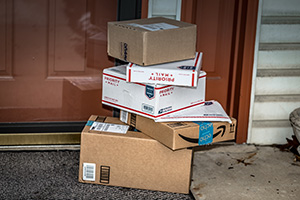
We’ve all become much more accustomed to buying things over the internet, thanks to the pandemic. But that’s even worse than buying things in the store, in the midst of any financial crisis. Having packages show up regularly on your doorstep is a sure sign that you’ve got money to spend.

Not only that, but there’s already a problem with people stealing packages off of doorsteps. You can be sure that those thefts will increase during a crisis, when people are desperate and looking for anything they can do to get a buck. A lone package, sitting on a front porch, is a tempting, low-risk target for someone who’s trying to figure out how to pay for the next meal.

Don’t Look Well Fed

The first thing to do is probably also the hardest; that’s to stop eating so well. A full 36.5 percent of US adults are obese, with another 32.5 percent being overweight, but not to the point of obesity. But you can be sure that there will be a lot of people losing weight in the midst of a financial collapse.

With people losing their jobs and rampant inflation making everything more expensive, people will have to cut back. When that happens, one sure sign of someone who is not suffering from the crash will be to not be losing weight.

Another option to use, if you’re just a little bit overweight, is to buy used clothing that’s too big for you. Wearing clothes that obviously don’t fit you will make it look like you’ve lost weight, even if you haven’t. Make sure it is used though, so that it looks like clothing you’ve been wearing a while.

Let Your House Look Junky

How To Stay Off The Radar In The Upcoming Economic Crisis

One of the things that thieves look for are homes that are well-kept. A nice looking home, with a well-groomed lawn, probably belongs to someone who has the money to take care of it.

On the other hand, a home that’s starting to look a little bit run down indicates that the owners are going through financial troubles, making it hard for them to pay for repairs.

Obviously you don’t want to damage your home in any way, but leaving some junk laying around (nothing useful or valuable) as well as letting the landscaping go a bit can do a lot to make a home look like it’s not being taken care of. If there are things which can be put off, like a new paint job, then put them off. Better yet, just prime the bad spots with some primer that doesn’t match the paint, making it look like you couldn’t afford to finish the job.

Hide Your Stuff

How To Stay Off The Radar In The Upcoming Economic Crisis

As part of making your home look less inviting, make sure that you hide anything of value.

Thieves look for expensive toys in the yard, whether those are children’s toys or adult toys. They also have no compulsion against looking through your windows to see what they can find.

So, either move that expensive television to a wall that can’t be seen through a window or keep the window shades drawn.

Stay at Home

Going out a lot leaves your home vulnerable to attack, as well as leaving you vulnerable to attack while you are out. This is seen in that during the time of the COVID-19 pandemic, crime rates have dropped by as much as 23%. But auto theft, as well as the theft of other high dollar portable items has been on the increase.

During the Argentinean financial collapse of 1999, crime was so bad on the streets, that people didn’t dare stop at stop signs and red lights, unless they had to for crossing traffic. That was a prime spot for criminals to hide, reaching through car windows to grab what they could or trying to pull the driver out of their car, so they could steal it.

Your best place to defend yourself and your family is at home. Not only is that familiar ground, but you’ve got a wall between you and anyone who might want to get to you. With a few precautions to harden the perimeter of your home, it will be the safest place you can be.

Sell Stuff You Aren’t Using

How To Stay Off The Radar In The Upcoming Economic Crisis

One good way to signal that you’re not doing all that well financially speaking is to sell things, especially things of intermediate value that you don’t need.

If you have an old electronic gaming console that you’re not using, sell it. Do the same with other “toys” such as boats, motorcycles, and snowmobiles.

The point here isn’t just to get rid of stuff, but to do so in an obvious way, allowing that to act as camouflage for you, making it seem that you have to sell that stuff. This is a bit of a reverse English way of staying under the radar, but it works. Criminals know what to look for when they’re casing a home and they’re not interested in hitting a place that’s not going to be worth their while.

9 Things That Might Still Work After The Grid Goes Down- We may all be sitting in the dark, but there will always be some things that still work.

We may all be sitting in the dark, but there will always be some things that still work.

Most stories about a power grid failure assume a post-apocalyptic scenario that leaves civilization in the dark for centuries. The story usually leads to people living in caves surrounded by an arsenal of weapons waiting for the Mad Max gangs.

But if you think about it, there is a wide range of scenarios that could result in a grid failure and a range of responses to getting through it. How long the grid remains down depends on the events leading up to it, but how someone responds has more to do with an assessment of what happened, what’s going on, and what should be done about it.

A Brief Recap of Why the Grid Could Go Down

Books have been written about how the grid could fail, but here are the most popular assumptions.

EMP (Electromagnetic Pulse)

An electromagnetic pulse can originate from nature as a result of an event in space originating from exploding stars or other phenomena that send waves of electromagnetic energy to Earth. It’s happened in the past in 1858, but there were fewer electronics and no grid, so few people noticed.

A nuclear detonation also emits an EMP and would have the same effect over a large area. The result of any EMP is the failure of electronics, particularly computers, and the assumption that it would ultimately lead to grid failure.

Solar Flares

Keep watching the skies. The sun has a cycle of activity that peaks every 11 years. During those peaks, massive solar flares often erupt from the sun’s surface sending radiation out into space. If it hits the Earth, lots of things happen.

It’s the particularly large solar flares that cause the problem, and we had a near-miss in 2014 that could have taken down electronics and the grid. It didn’t happen but it was close.

Terrorist Attack

A physical attack on power generation stations and substations could cause a cascade failure of the power grid. There were reports of an attack on a power station in 2013, but little has been said about it.

If history has any precedent, it’s that a terrorist attack can wreak havoc, and an attack on the grid would definitely fall in that category.

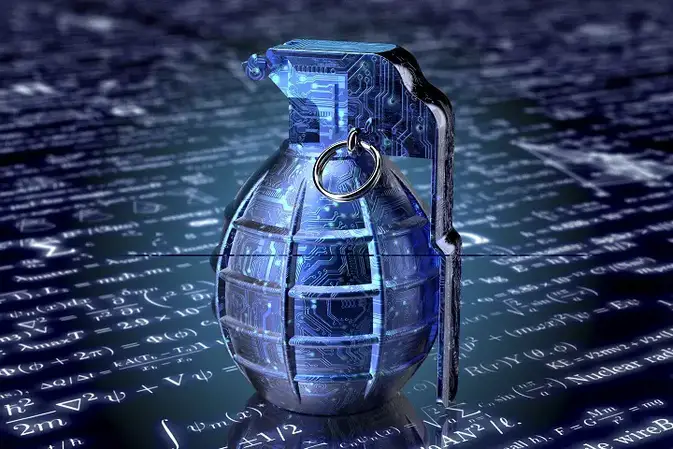
Cyberterrorism Grenade

Cyber Terrorism or Cyberwarfare

More and more, everything is becoming dependent on computers, software, and programming to function. The power grid is no different, and more and more reports of hacking into government and business computer systems continue to show up.

A dedicated cyber attack on the systems operating the power grid could cause it to fail on a large scale.

Failing Infrastructure

Many reports indicate that the infrastructure in the United States is falling apart. Many of them point at things like bridges, levies, and water systems, but a few point to the antiquated and poorly maintained power grid that we still rely on for one of our most critical commodities: electricity.

It’s always a surprise to watch a bridge collapse into a river, but deteriorating infrastructure usually has that result. If the power grid infrastructure ultimately fails, it could be just as sudden and surprising.

And oh yeah…

Other events from nuclear power plant explosions to alien invasions have shown up as the cause for a grid failure, but those events would either be highly localized or absurdly impossible to assess. Regardless, if the grid goes down, everything gets complicated. But some things could still work–from the surprising to the obvious.

Some of the possibilities on this list assume that you have some means of generating power from things like car batteries, generators, and solar panels. Even a small, portable solar panel is enough to recharge a computer or cell phone.

Disasters May Vary

A lot of what happens after a disaster is a question of location. Some places may not be as affected as others.  Some regions may be better prepared than others.  If there’s one lesson that we can all take from Y2K, it’s that what we expect is sometimes very different than what actually occurs.

With that in mind, here are some things that could still work to varying degrees if the grid goes down.

1. The Internet

Internet Around Globe

The origins of the Internet began with the U.S. Department of Defense through DARPA (the Defense Advanced Research Projects Agency). The design parameters were for an information exchange platform that would survive a global thermonuclear war. The RAND Corporation came up with the winning design using a HAM radio concept called “packet switching.”

The idea was to use the network or the spider “web” of phone lines across the country to automatically switch messages from one server to another across locations to allow a message to eventually “worm” its way through the web of wiring in spite of catastrophic damage and widespread failures of everything else.

It worked and was initially called ARPANET. It was originally run through servers at universities across the country and was the domain of graduate students and college professors for years until it slowly began to enter into the mainstream.

Today we know it as the Internet, and while it has become significantly more complex than its original design, there are fundamental aspects of the foundation concept that will still work in spite of thermonuclear war or–a grid failure.

Getting the Internet to Work after a Grid Failure

It may be incorrect to assume that plugging your computer and modem into a generator is going to get you back online through broadband cable after a grid failure, but it’s worth a try.

A more likely scenario is using the old and slow wired phone lines from the infancy of the Internet. You won’t be able to enjoy your favorite streaming videos, but fundamental text communication and even email will still transmit over standard phone lines.

This assumes you still have standard phone lines in your home and that you have the phone cables and a standard phone jack on your computer. The old phone lines are cheap, and a standard phone jack modem or connector can be easily hooked to many of today’s computers.

You’ll also need a connected and transmitting hard wire phone line. Many of us have walked away from hard wire phone lines in an age of cellular phone technology, but if you’re concerned about a grid failure, it may be worth the small monthly fee just to have the line working.

And yes, it will most likely work after a grid failure. If you ever experienced a temporary power outage in the distant past, you may have been surprised to find your phone still worked after the lights were out. That’s because standard phone lines don’t rely on the grid, although it’s fair to assume that the phone company is going to need some alternative way to generate power.

The big question is how much power the servers that power the Internet require to keep functioning and whether any plans are in place to keep them running. Regardless of the possibilities, it may surprise you to find the Internet may still be accessible over your old phone lines.

There are other ways as well, but you may also be able to use your cell phone to access the Internet.

2. Cell Phones (In Areas)

Cell Phone No Signal

Anytime we endure a local power outage, the first thing many of us reach for is our cell phone. The first call is usually to a local family member asking the question, “Is your power out too?”https://c87b7ebae1d1bbb96947a204114a37a1.safeframe.googlesyndication.com/safeframe/1-0-37/html/container.html

The next call is most likely to the local power utility to find out when the power will be back on. All of that works because the power outage is localized and there’s available power at other locations to keep the cell towers transmitting. But what if there’s a widespread grid failure?

Cell phones depend on the wireless transmission of radio waves. It takes some power (battery power) in any wireless device to receive radio transmissions, and it takes some power (grid or generator supplied) to send radio transmissions. It takes more power to send a radio wave any distance than it does to receive one.

The assumption is that wireless service providers have some ability to generate power without the grid. Hospitals have that capability to maintain power to their Intensive Care Units and surgical suites, and many wireless transmitters have the same backup capability with some even powered by solar. Legislation was drafted to require backup plans, but it was never passed.

In the case of receiving a wireless transmission, alternative power to recharge a battery from a solar recharger to plugging into a car’s cigarette lighter jack can do the trick. Here again, many of these sources assume some level of independent power generation, whether it’s a $30 solar phone recharger or industrial-strength generators at hospitals and wireless transmission stations.

If you really want to push the envelope, you can buy your own satellite receiver that connects you directly to communication satellites, although you may have to spend a little time with the instruction book.

3. Radio

Radio Amateur Transceiver

Radios are similar to cell phones in the sense that they also depend on the transmission and reception of radio signals. There are solar/hand-cranked radios that receive AM and FM in addition to other transmissions including:

  • NOAA Weather Alerts
  • National and State Emergency Alert Systems

HAM Radio

Amateur radio transmissions are the “go-to” communication platform of choice for disasters. Whether the communication is via Morse code or voice, HAM radio operators can send and receive using power derived from solar-powered batteries or generators and, they could be a primary communication resource in the event of a catastrophic grid failure.

If the Internet does in fact fail and cell phones simply don’t work, radios may be the last resort for electronic communication.

4. Natural Gas Appliances

This is another example of past experience many of us have had with power failures. The lights won’t turn on, but we’re able to light a gas range with a match and cook. That’s because the delivery of gas through gas lines is largely powered by the pressure of the gas.

Some argue that you can also manually light a furnace or water heater that’s gas-powered, but gas furnaces rely on forced-air powered by electric motors, although you might have a shot with a gas-fired water heater. Here’s how:

If you live in an area where your water pressure is delivered by a water tank you may have water, at least for a while. Water towers stand hundreds of feet in the air and use gravity to deliver water pressure to a municipal system.

They also rely on electric-powered pumps to refill the water tanks, but as long as there’s water in the tank, you may have water pressure and hot water from a manually lit pilot light on a gas hot water heater.

And the Obvious But worth Thinking About…

5. Books

Yes I know, of course books will still work. We don’t have to plug in a book to read it, but if the grid is down and the Internet is either inaccessible or limited because of slow, standard phone line transmission, we’ll be at the mercy of the books we have on hand.

The post-apocalyptic movie, The Book of Eli, is all about the importance of books. In fact, the end of the movie is about a library slowly collecting books for future generations. To put it bluntly, we’ve been spoiled by the Internet, and not only book stores but personal book collections have started to diminish. After the grid goes down is a bad time to go shopping for anything in stores or online, including books.

Another book could be written about which books to stockpile for a post-disaster lifestyle. It might be a good idea for an article, but until then, think about books you would need after a grid failure. We’ve become so dependent on Googling anything that it might come as a rude surprise when we realize our bookshelves have little or none of the information we may suddenly need.

6. Cash and Coins

It’s possible that you still may be able to use debit and credit cards. Or not. It also may be impossible to pull some fast cash out of the ATM, and it’ll be interesting to see if and how banks would reopen.

It’s also fair to assume that cash may suddenly be in short supply. We’re currently experiencing a coin shortage due to the pandemic, and who’s to say that cash wouldn’t suffer the same fate after a power outage?

How much cash you choose to keep on hand is up to you. And speaking of coins, forget about conventional quarters and half-dollars. 1-ounce silver coins from the U.S. mint or 1/10-ounce gold coins may become the currency of choice for a while. Old coinage with some silver content would also have value, but modern coins may not be worth the trouble given they only have face value.

7. Solar Panels

Solar Panel On Roof

It should come as no surprise that solar panels don’t need power to function and will even survive an EMP. At a minimum, buy some small solar pads or panels to recharge small items like cell phones, computers, batteries, flashlights, and other small tools and appliances that can plug into a solar panel’s USB port for a recharge. Some small panels can even recharge a car battery.

At the other end of the scale, rooftop solar panels can be used to recharge batteries that can be used to power various lights and appliances depending on the size of your solar setup. There are varying levels of tax deductions for most solar installations, and it may be worth at least investigating the idea of solar-powered solutions.

8. Hand Tools and Weapons

Another brilliant penetration of the realm of the obvious is the ability to use hand tools and weapons without electricity. But in the same way that some books may not be available after a grid failure, it’s a fair bet that critical hand tools for major tasks and weapons for self-defense will be in short supply.

Think about the electric tools you depend on and what hand tools you have as a backup. As far as weapons and ammo. That’s another one that’s up to you.

9. Cars

Abandoned Car At Night

It also seems obvious that a car would start after a grid failure, but if the failure was the result of an EMP, it’s possible a car’s small onboard computer systems might fail. The good news is that cars are surrounded by a steel body that acts as built-in Faraday cages. However, how effective that will be could depend on how far the car is from ground zero.

A Faraday cage is any metal box or container (even a metal garbage can) that prevents the electromagnetic waves from frying the electronics. Most cars would survive an EMP, and not only would they have working radios, they could recharge some electronics.

Finding gas at a gas station when the pumps don’t work due to the power failure is another question, but at least the car will run before the gas runs out.

It’s All a Matter of Degree

Disaster scenarios vary. A grid failure could be local or widespread. It could last for months or years. It will definitely have broad and wide-ranging impacts on society and everything else around us.

If the pandemic has taught us one thing it’s that the unexpected happens from continuing struggles to figure out home-schooling to wondering how long we should wait before seeing a doctor or dentist again.

The good news is that we’re slowly finding solutions. The bad news is whether we’ll have half the resources we would need to find solutions without the grid. Fortunately, some of those resources could still work. We just have to remember what they are.

Design a site like this with WordPress.com
Get started