The Three Major Threats to The Nation’s Power Grid: Could We Really Face a Nationwide Blackout?

Aside from the occasional blackout, most Americans cannot comprehend the possibility of a total failure of the nation’s power grid. However, the possibility of such a massive catastrophe is actually more real than most of us are comfortable with thinking about.

There are three major threats to the nation’s power grid, but before we look at them, we have to realize that the country actually has three power grids. Texas has its own grid and then there is one east and one west of the Rocky Mountains.

Threat #1: EMP / Terror

The worst possible devastation that any enemy could cause to the United States would be through a single nuclear warhead, whose blast will kill nobody directly. This is an EMP (electro-magnetic pulse) attack.

Detonated high above the earth (at least 20 miles), the nuclear explosion generates electro-magnetic energy that “rides the waves” of the earth’s own magnetic field down to the ground. Just about everything that runs on electricity from horizon to horizon is damaged, with electrical lines being totally fried.

The interesting thing about this phenomenon is that it was first observed in an airburst in the South Pacific, where it did damage to streetlights in Hawaii even though it was 1300 km away. The nature of the earth’s magnetic field is such that it would have been far worse over North America, where the magnetic field is perfect for creating more damage.

The fear is that terrorists could get their hands on a Scud missile and put a nuclear bomb in it and detonate it over the U.S. to throw us back into the 19th century without electricity. However, weaponizing a nuclear bomb small enough to fit on a missile is very difficult.

Also, a missile that most terrorists could get their hands on, like a Scud, does not have the range to reach mid America, though it could certainly cause a regional power outage if it was launched from a ship offshore.

Threat #2: Hackers

The nation’s power grid is constantly probed by hackers, with most recent reports being that the perpetrators were Chinese. Since everything is controlled by computer, the fear is that a virus or a hacker could shut things down or cause a lot of damage.

This scenario is especially frightening given what happened to the Iranian nuclear plant, which was totally shut down due to damage from the Stuxnet virus, even though the plant was totally unconnected from the Internet. Evidently, agents were able to infect laptops in the area with the virus, which waited until it was able to get into the plant via a laptop and then activate.

Threat #3: CME – Coronal Mass Ejection

Solar storms from the sun happen on a predictable cycle and 2013 will see a lot of energy shot at the earth from Coronal Mass Ejections. “The Carrington Event” was one such storm that sent so much electro-magnetic energy to the earth 150 years ago that some telegraph poles started on fire.

Whether the threat is one of the three mentioned above or just aging infrastructure and some very bad winter storms that knock out power lines, we should all be aware that the electricity we take for granted might not always be there. And even if it is, the ability to count on it may be compromised.

The End Of The World As We Knew It Has Already Happened! (It’s no secret that the world has been going through intense events lately, from natural disasters to pandemics and political turmoil.)

Doomsday films are a prevalent form of media, but what’s the one similarity between them? The ones who survive are the ones who stock up on the goods, and they’re the ones who people think are crazy until the apocalypse starts.

The reality is that we don’t know when the world is going to end, but that doesn’t mean we can’t start preparing for it. Whether or not you think the world is ending, it doesn’t hurt to prepare for the worst.

When Should You Start?

You should start as soon as possible. People die daily from car crashes, fires, drug overdoses, etc. The point is that you never know when your final days are up, so it’s vital that you start prepping now, in case tomorrow is the end.

You also need to have the means to start. If you’re living in an apartment without access to a bunker, you need to get started on making things a reality for you.

Most Important Things You Need to Have

Here’s a list of the most important things you need when prepping for the end of the world.

Water

While the water might seem an obvious choice, you’d be surprised how many people underestimate the amount of water needed. Be sure to have at least 550 gallons of water to last you from 6 months to a year.

Food

Pack various non-perishables like dry pasta, rice, and beans. Canned foods are also a good choice. Be sure you’re picking foods that will last longer and provide the necessary nutrients for your body.

Medical Equipment

Of course, you want a first aid kit with band-aids and alcohol wipes, but be sure to include other medical supplies you might need during an apocalypse.

Tactical Survival Equipment

Some great examples are a rope, flashlight, and knife. Be sure to back equipment that you can potentially use if you need to go out and scavenge for extra supplies.

Heat/Power Supply

It’s best to get a few generators, but look up some alternative options if a generator is out of the question. Candles, Alcohol, DIY heaters, and others could be the difference between survival and death.

Clothing and Blankets

Keeping warm is very important when living in a bunker. Having something between you and the ground helps to prevent the heat from being sucked out of your body.

Entertainment Options

You might think entertainment options aren’t an important thing. You can’t bring your video games, but dedicating some space for board games and card games can help you keep your sanity while you’re in your bunker,

How Do You Prioritize Your Investments?

Start by figuring out the best way to store items. Is your bunker big enough to hold a 550-gallon water tank, or can you only store individual water gallons?

How many shelves can you put up to keep food? Once you’ve figured out the floor plan, you can start budgeting to buy things.

Find places that will sell things in bulk for cheaper. Focus on one thing at a time. The last thing you want is to have stocked up all the water and have two days’ worth of food. Be well-rounded in prepping.

Things You Shouldn’t Buy

Here’s a list of things you shouldn’t buy when prepping for the end of the world.

  • Non-nutritious Foods

Don’t go buying freeze-dried ice cream. Although it lasts for a while, it doesn’t provide enough nutrients to warrant taking up space in the bunker.

  • Anything that uses electricity

Don’t bring things that need to be plugged into an outlet. The odds are that they won’t work in this scenario, and you’ll be taking up space for nothing.

  • Febreze

Don’t bring anything that you can spray. It takes up oxygen and can be a dangerous fire hazard in a small space.

  • Disposable utensils

You don’t want to buy paper plates or cups, and you want to be able to wash your dishes to avoid creating lots of garbage.

Where Should You Pick the Location for Prepping?

Since we don’t know how the world will end, we should think of the most well-rounded location. A bomb shelter built at least 20 feet or more underground would be an ideal location to start storing items for the worst-case scenario.

While 20 feet won’t protect you in a nuclear bomb hits it directly, you would have to build your bunker at least 200 feet or deeper for a shot of surviving.

Final Thoughts on Prepping for the End of the World

Even if you think the end of the world is not coming soon, it’s still a good idea for prepping for the worst-case scenario. If you’re thinking about starting, it’s better to start now rather than later. You never know when your last day is.

If you’re looking for an ideal place for prepping, it’s good to have a well-rounded location that you can use for any situation, such as a bunker built at least 20 feet underground. A few items to think about packing would be

  • Water
  • Food
  • Medical Supplies
  • Survival Equipment
  • Heat/Power Supply

Some things you should not be packing are things like non-nutritional foods and anything that uses electricity. You want to ensure that you don’t have water and no food, so be sure not to focus on one item instead of packing multiple things simultaneously.

If you have any dissatisfaction with my content, you can tell me here and I will fix the problem, because I care about every reader and even more so about your opinion!

Is a Global Recession Imminent? (Recent world crises and the resultant weakening of the global economy has left many fearing the worst.)

Recent world crises and the resultant weakening of the global economy has left many fearing the worst. There is talk of a global recession, or worse yet, a complete collapse of the economy.

While it is impossible to say whether such a severe economic downturn is upon us, understanding how to survive a potential economic collapse (whether now or in the future) could save you and your family when the times get tough. 

WHAT IS AN ECONOMIC COLLAPSE?

An economic collapse is defined as a severe breakdown of the economy at a national, regional, or territorial level. It is a broad term used to describe bad economic conditions that are not part of the ordinary business cycle of expansion and contraction.

An economic collapse usually signals the start of a significant economic contraction, recession, or depression, which can last months or even many years.

WHAT CAUSES AN ECONOMIC COLLAPSE?

There are various events and circumstances that can trigger an economic collapse, which makes it difficult to attribute it to a single cause. An economic collapse can happen suddenly as a result of an unexpected crisis such as the onset of a war, natural disaster, political unrest, and various other events.

It can also be the culmination of a series of events or ongoing circumstances which signal a weakening and fragility of the economy. 

WHAT ARE THE RESULTS OF AN ECONOMIC COLLAPSE?

The results of an economic collapse are equally difficult to predict, as the ripple effects of a severe economic downturn are widespread and impossible to accurately track. Some general and obvious results of an economic collapse are:

  • A rise in job loss and unemployment. 
  • Loss of value of investment markets which results in the average investor losing significant value in their portfolio.
  • Slowing of production, and therefore less new innovation, fewer startups, and so forth. 
  • A potential hyperinflationary environment in extreme cases where the cost of basic items increases dramatically.
  • An increase in poverty which can also lead to crime, civil unrest, and various other social issues.
  • Widespread business failures leading to shutting down of companies and laying off of staff. 

HOW TO PREPARE FOR AN ECONOMIC COLLAPSE

Preparation is key in order to successfully survive an economic collapse. It is important to not become too complacent when the good times are rolling, as you never know when the situation may change for the worse.

Follow these practical guidelines to ensure you are well prepared :

1. KEEP AN EMERGENCY FUND

Having liquid cash safely deposited in a savings account with your bank can be a lifesaver in times of economic crisis. First of it all, it will retain its value while market linked assets such as equities deteriorate.

Secondly, it will provide you with the best liquidity so that you can quickly access your money during a time of extreme need. It is recommended to keep at least 3 – 6 months’ worth of expenses in an emergency fund.  

2. BECOME DEBT FREE

The additional pressure of carrying debt if there is an economic collapse can put you in an extremely difficult situation. You should start working towards becoming debt free today.

This will reduce your monthly expenditure and will keep you from landing up in a precarious position should you lose your job in the future. Begin by paying off your highest interest debt such as credit cards and other short-term loans, and then move onto lower interest debts such as house mortgages. 

3. CREATE ADDITIONAL INCOME SOURCES

The risk of losing your primary job is elevated during an economic recession or collapse. You can mitigate the negative consequences of this by creating additional sources of income now before the bad times are afoot.

We live in an age of boundless opportunities to make money on the side remotely. You can start your own web business or do freelance consulting work.

Even if you have a great job, it is well worth diversifying your income sources and establishing other ways to sustain yourself. Even a few hundred dollars a month can make a big difference in a time of need. 

4. REDUCE UNNECESSARY SPENDING

Most people tend to spend recklessly when times are good and then suddenly try to adjust when there is a downturn or they lose their job. This is a big mistake for two reasons: 

  • Firstly, if you make overspending a habit in your regular life, it becomes extremely difficult to adjust your spending habits when you need to do so. If you practice living with less even during the good times, it will be much easier during a financial squeeze. 
  • Secondly, wasting unnecessary money on a regular basis means you have less to put into savings each month. We spoke about the importance of having an emergency fund, and living off less now can help you keep that fund growing for when the rainy day comes.  

5. MAINTAIN A DIVERSIFIED INVESTMENT PORTFOLIO

Entire markets and industries can deteriorate during an economic collapse, while others might be more protected. Maintaining a diversified investment portfolio will ensure that you are not overexposed to one specific asset class, sector of the economy, or graphical region.

While your overall asset value might still decline significantly, you will be more protected from the risk of complete financial ruin if you keep your eggs in different baskets. 

6. STOCKPILE FOOD AND OTHER SUPPLIES

During severe economic collapses, like the one experienced by Venezuela in current times, or the Great Depression of the 1930s, even things like basic food and other supplies can be in shortage.

Even if supplies are available, a hyperinflationary environment can make basic necessities completely unaffordable. It is always a good idea to keep a stockpile of food and other essential supplies (e.g., medicines, toiletries, paper supplies, tools, etc.) that can last you more than a year in tough times. This may also protect you from other crises such as natural disasters, war, etc. 

One step further is to learn to grow your own food. If you have a small garden in which you could plant a few crops, start learning how to prepare the soil and grow some basic fruit and vegetables. Not only will it make you less reliant on a potentially failing economic system, but will be an extremely rewarding process too. 

7. LEARN BASIC SKILLS

Basic DIY skills are invaluable during an economic crisis. Instead of paying someone to repair your car or fix your house, you can do it yourself for free. You could even earn some additional income by providing these services to others. Examples of basic skills that can save you money and bring great fulfilment during difficult times include things like:

  • Baking bread and making other foot items from scratch (e.g., pickles, jams, fermented vegetables, yoghurt, etc.)
  • Growing your own vegetables and herbs
  • Sewing
  • First aid and caring for a sick child
  • Mechanic work such as fixing cars, motorbikes, bicycles, etc.
  • Building and repairing household items such as furniture and shelves
  • Basic electrical and plumbing work
economic slump in usa

8. ESTABLISH STRONG CONNECTIONS

One of your most valuable resources are the people who are close to you. When times are difficult, it is important to work together with close friends and family to overcome the challenges.

You will have a much better chance of making it through compared to trying to tough it out alone. Start building strong relationships with those who are close to you, like neighbours, friends, and family. Having the mutual understanding that you can depend on each other in difficult times is a great comfort. 

You can also practice the habit of mutual exchange (i.e., bartering), where you offer your skills in exchange for something that the other can give. This can help you circumvent the traditional economy and help you move more towards the “sharing economy”. This also reminds us of the importance of learning as many basic skills as possible, so that you may help others in need and receive their support in kind. 

HOW TO SURVIVE DURING AN ECONOMIC COLLAPSE

Hopefully you will be well prepared to deal with an economic collapse when it comes having followed the above steps. However, it is impossible to perfectly predict how a collapse in the economy will play out, and you will need to deal with the situation that is presented to you at the time. Here are a few additional steps you may need to take when you are actually faced with an economic collapse:

1. DISCUSS THE SITUATION WITH YOUR HOUSEHOLD 

The very first thing you should do is sit down with the members of your household and discuss the situation with them. Go over your finances together and work together to come up with a plan of how you will navigate these difficult times together.

It is important that you are all on the same page, but also to know that everyone has their own approach and attitude to dealing with money. How you resolve these differences and work together will have a big impact on your ability to deal with the challenging times, and strengthen your relationships in the process. 

2. FURTHER REDUCE EXPENSES AS NEEDED

In preparation for a recession, you would have practiced living off less. When you are faced with an actual economic collapse, you may have to further adjust your spending habits to be able to cover your monthly expenses. In most cases, it is quite possible to maintain a good quality of life while cutting out unnecessary expenditures. Start by cutting out spending on all the things which are not necessary for you to live on, and finding ways to reduce the costs of the things you do need. Some ways that you may be able to reduce your spending include:

  • Cut out discretionary spending (i.e., stop buying things you can do without) like luxury items, new clothes that you don’t need, new gadgets, etc.) 
  • Reduce transportation costs by carpooling, using public transport, walking or cycling, etc.
  • Reduce housing costs by moving to a cheaper area, subletting out part of your house, or even moving in with family until your financial situation improves. 
  • Reduce food costs by cooking at home instead of going out to eat. Also refrain from buying too many luxury food items that you don’t really need and instead buy simple, healthy food. 

3. GET MUTUAL SUPPORT FROM FRIENDS AND FAMILY

We spoke about the importance of building strong relationships when preparing for an economic collapse. Well, here is the time to lean on the solid bonds you have created by not being afraid to ask for support. You should also help and share your skills and resources with others who are in need. 

4. PROTECT YOUR HOME AND FAMILY

Extreme economic collapses and recessions can lead to social degradation such as more violent crime, petty theft, scams, and so on. This has been clearly demonstrated in Venezuela and is one of the reasons why so many citizens have fled the country. You may need to take action to safeguard your home and protect your family from criminals and other dangers during a severe recession. 

barter for goods

5. KEEP EARNING

If at all possible, make sure to keep the money flowing in. If you have a job, go the extra mile to prove that you are a valuable employee. You should be seen as the last person to be laid off in your employer’s eyes.

In the meantime, keep networking and working on generating alternative income streams so that you are not left stranded without any income if your employer does need to shut down. 

6. DON’T STOP ENJOYING LIFE

Finally, and most importantly, don’t allow yourself to be ruled by fear and sadness. There is no reason to stop enjoying and appreciating life just because you are faced with economic difficulties.

Be grateful for the things you do still have and keep having fun in the ways you can with those you hold dear. You should try to see the situation as a challenge on your creativity and flexibility, and encourage friends and family to come up with inventive ways to have fun without spending money all the time. 

CONCLUSION

Of all the disasters which can face a society, an economic collapse is one of the most challenging to deal with. Due to its nebulous nature and widespread impacts, it is very difficult to escape its effects. Being adequately prepared to deal with a sever economic downturn before it arises, and knowing how to respond when you are faced with it, is vital in order to make it through intact.

You will probably have to accept that you will be impacted one way or another, but the severity can be greatly reduced with the right approach. Most important of all is to continue living with joy and hope in the midst of the difficult times, and not get sucked into needless fear and anxiety. 

Underground House Floor Plan – The Hippie Experiment (WITH ILLUSTRATIONS)

If you happened across a home built from an underground house floor plan you could be forgiven for thinking the owners might be Hobbits because the only things visible might be a door or window set into a foliage covered hill. This type of home is actually a series of small, interconnecting domes made from cement and partially or completely submerged into the earth.

Such unconventional house floor plans are actually a step in the right direction for those persons thinking outside the box in terms of energy conservation and environmental benefits. Living underground in such earth-sheltered housing has its merits and takes a very conservative view in energy usage.

When considering an underground house floor plan, look for the following applications:

1. The house floor plan should blur the distinction between indoors and outdoors. The purpose is to exist in close harmony with nature.

2. The windows should be honeycomb style to harness solar energy.

3. Since the windows for this type of floor plan don’t open, an intake vent system with filters should be installed to draw fresh air from outside. The filters help keep out unwanted pests.

4. Air should be fanned from a solar collector through the home duct work into a rock store beneath the main living space. The store system maintains an efficient heat-exchange which works with the insulating soil to maintain a comfortable temperature year round. A good system would require no additional heating or cooling.

The dome shaped rooms give rise to maximum floor space and minimum wall area. Floor areas do not to conform to traditional housing expectations and and the living spaces are defined with curved walls with no sharp corners. Natural sunlight can be channeled into the house via the use of a skylight lined with natural reflective materials

Underground house floor plans got their start in the 1970s from an Austrian architect named Eisenhofer. Sadly, most dismissed his energy efficient and unconventional house plans as nothing more than a hippie experiment. It has only been within the past few years that interest in earth-sheltered housing is attracting some interest. As people become more environmentally conscious, the popularity of underground house floor plans as an energy efficient alternative can only increase.

If you have any dissatisfaction with my content, you can tell me here and I will fix the problem, because I care about every reader and even more so about your opinion!

Kill Shots Destroy The Human Immune System- Pfizer And Moderna Flu/covid Jabs Are Bioweapons, Not Vaccines.

Citing medical and scientific experts in September 2021, a study published in Australia said fast-tracked to market flu/covid jabs failed to “pass the patentable, legal or clinical definition of a vaccine in that they do nothing to prevent infection.” 

They’re gene modifying delivery systems.

“Calling them vaccine(s) is misleading and deceiving in the extreme.”

Drugs being injected into the bodies of unsuspecting hundreds of millions of unwitting people are “(t)he most dangerous (ones) ever unleashed on the human population in the history of medicine.”

It’s unknown precisely what ingredients they contain.

Information about them is suppressed.

When taken as directed, “they generate a synthetic spike protein which is a toxin…” 

“(I)n one of the lipid nanoparticles is grapheme oxide, a substance known to be poisonous to humans.” 

Kill shots “destroy (the human) immune system.”

Results of so-called safety tests conducted concealed how they destroy health.

“(R)eal world data show that these drugs are” unsafe and don’t protect as falsely claimed. 

“Safety and efficacy were never concern(s)” in their development.

“(N)umber(s) of deaths and serious side effects are staggering.”

Historically when deaths from a new drug reached a few dozen or less, it was no longer sold for obvious safety concerns.

By some estimates, millions already perished from kill shots worldwide.

According to published CDC and European Medicines Agency data through late June, over 7 million jabbed individuals were harmed by mass-jabbing for flu/covid.

Anyone who thinks that these jabs are safe and effective is “living an illusion.”

Former Pfizer executive strategist, Karen Kingston turned whistleblower, a woman with over 20 years of experience as a pharmaceutical/medical device analyst explained the following:

Pfizer and Moderna flu/covid jabs are bioweapons, not vaccines.

They contain hazardous to health “PEGylated lipid nanoparticles” and work as follows:

“1. a cholesterol lipid enables  ingredients to be transported

by the blood.

2. the fossil lipid adheres to the cell membrane to make it permeable.

3. an ionizable lipid provides a positive ionic charge so the mRNA can enter the cell.

4. a PEGylated lipid.”

“mRNA is very unstable.”

“It needs a ‘biosphere’ to protect it until it can enter the cell.”

“This is provided by the lipid nanoparticles and graphene oxide.”

These ingredients harm health.

Graphene oxide and the spike protein are especially toxic.

They risk irreparable harm to all bodily organs.

The nanoparticle-based delivery system is unapproved.

Use of polyethylene glycol (PEG) is hazardous to health.

In 2017, Moderna abandoned mRNA technology and lipid nanoparticles because tests caused large numbers of adverse effects.

Yet the same gene modifying ingredients and nanoparticle delivery system are used by Moderna and Pfizer in their kill shots.

David Martin, PhD, agrees with the above analysis.

Flu/covid jabs are bioweapons, not vaccines, he stressed, adding:

Mass-jabbing may kill around 700 million people, up to 100 million in the US — over the next half dozen years.

US elderly are especially targeted for elimination to greatly reduce Social Security, Medicare and Medicaid costs, he believes.

Years of planning preceded the rollout of kill shots and all else flu/covid related — with maximum harm to maximum numbers of unwanted people in mind worldwide.

Everyone administered flu/covid jabs unwittingly carry “the seeds of their own demise,” Martin stressed.

Mandated kill shots for healthcare providers in parts of the country assure the demise of countless numbers of doctors and nurses.

So fewer medical professionals will be around to treat sick and dying patients throughout much of the US, other western societies and elsewhere.

What’s going on with no end of it in prospect is the most diabolical plot against human health ever before conceived throughout history.

Protecting and preserving what’s too precious to lose requires avoidance of kill shots altogether.

The elderly are especially vulnerable because their immune systems are likely weakened.

Most elderly are also taking one, or more likely, a combination of drugs for other health issues.

The more taken, the greater the risk of adverse events.

Combining them with kill shots can hasten death.

In the West, prescription drugs are the 3rd leading cause of annual deaths after heart disease and cancer.

According to stem cell biologist Bruce Lipton, Ph.D:

“Pharmaceutical drugs kill about 300,000 people a year” in the US.

“Yet (there’s) a ‘War on Drugs’ which kills less than 30,000 people a year.”

“(W)e have a ‘War’ because 30,000 people die…but 300,000, that’s just (dirty) business as usual.”

If you have any dissatisfaction with my content, you can tell me here and I will fix the problem, because I care about every reader and even more so about your opinion!

Out of Stock- Food Shortages And Food Riots Is Coming! (2022 saw a rapid increase in food prices and shortages of food supplies around the world)

According to Wikipedia: 2022 saw a rapid increase in food prices and shortages of food supplies around the world. The worsening crises in distinct parts of the world were caused by compounding geopolitical and economic crisis. The crises followed food security and economic crises during the COVID-19 pandemic.

Following the 2022 Russian invasion of Ukraine, the Food and Agriculture Organization, as well as other observers of the food commodities markets, warned of a collapse in food supply and price increases. Much of the concern is related to supply shortages of key commodity crops, such as wheat, maize, and oil seeds, which could cause price increases. The invasion also led to fuel and associated fertilizer price increases, causing further food shortfalls and price increases.

If you want to know the best way to prepare for the economic collapse that is coming our way, then you need look no further than your pantry. History shows that when there is a currency crisis or a total economic collapse, then the price of food skyrockets.

While we are likely to experience food shortages and food riots with the economic collapse, by no means does that mean that the food in our country will suddenly disappear. There will still be plenty of food for everyone, but it will be scarce due to panic buying, hyperinflation and supply chain issues.

The fact is that the grocery stores rely on daily deliveries to keep the shelves stocked, and if there is a panic, the shelves can empty out in a matter of hours. The distribution centers can then resupply the stores, but every major city has only a three-day supply of food.

When inflation skyrockets and banks close and suppliers begin to worry about getting paid for their shipments if stores go bankrupt, then they slow down or stop their deliveries until things calm down. Unfortunately, that means fewer deliveries to stores just as panic buying has emptied them out.

The crisis actually feeds on itself and makes the food shortages a self-fulfilling prophecy. As soon as the stores are at the point where they are waiting for the trucks to make deliveries so they have something to sell, the sale prices stop and the regular prices climb.

These “food shortages” are eerily like the famines in Third World countries that have people starving while food from relief agencies is rotting on the docks after being unloaded from the ships. The corrupt governments won’t allow the food to be distributed in certain areas, as that is where the “rebels” are in their civil wars, so starvation ensues.

Not that we will have a civil war here in the United States, but the principle is the same. Plenty of food, but just not being distributed. Only here, the problem will be one of economics instead of civil war.

So if we understand what is coming and how it will all shake out, what do we do to prepare for an economic collapse and food shortages?

The first thing is to approach your food storage plan with a sense of urgency. Each and every week when you do your grocery shopping, double up on all personal items and non-perishable goods. Do the same with frozen foods until your freezer can hold no more.

If you do this each and every week, then 8 weeks from now, you will have an extra two months’ of food stored up. The advantage is that you will have done it slowly, and not gotten overwhelmed with it all at once and given up. You will have steadily built an insurance policy that will cost you absolutely nothing, as you will eventually eat all the food you purchased.

After you have, at a minimum, a two month supply of food, then you can turn your attention to stockpiling staples like wheat, oats, rice, beans and other long-term food storage items. These can be incorporated into your weekly menu one day each week so that you become familiar with how to cook from scratch using these food storage items.

Long-term food storage items like these are very inexpensive, can be obtained in #10 cans that are packed to have a 20 year shelf life, and are easily stockpiled to extend your “food insurance” to 12 months or more.

If you have any dissatisfaction with my content, you can tell me here and I will fix the problem, because I care about every reader and even more so about your opinion!

How to Overcome the Recession – The 4 Top Ways to Save Money and Make Money During the Recession

Believe it or not, there is an upside to all of the current recession confusion.  The opportunities have never been more exciting for people to venture out of their current jobs and reclaim authority and control over their personal finances to secure financial freedom and independence.  But if you are currently concerned with how you can save money in this economy there are some great options for you to consider immediately.

Here are the Top 4 Ways to Save Money and Make Money During the Recession:

1) Stay Informed

If you want to know how to overcome the recession, you will need to keep alert as to what is happening in the financial industry.  A recession can disrupt things very quickly, causing old industries to collapse (like the housing, automobile and travel industries), new industries to be born (like the alternative energy market) and existing industries to suddenly do even better than ever (like the Online Marketing Industry).   The information you acquire could save you a significant amount of money as well as lead you to new money-making opportunities.  Make it a part of your daily routine to read a few current events articles each day and a few books each year.  Being prepared for financial opportunities may be the best defensive strategy you can have. 

2) Create a Budget and Reduce Debt

If you do not already have a budget, then now is the time to create one.  Use your budget to determine and reduce your unnecessary expenses.   Pay down your debt and build a savings account of three to six months of your living expenses.  Get out of consumer debt as fast as you can.  Your mortgage payment is likely to be your largest monthly bill.  You can reduce your mortgage with one of many options including downsizing, doubling up, renting, refinancing or even foreclosing.

3) Cut Food Costs

Reduce your food costs, by eating out less and buying more food from the grocery store.  Plant a small fresh salad and vegetable garden this summer to increase your health and save some money.  Food costs are going up for many reasons:  Ethanol, population growth, rising cost of oil (falling dollar), increase in natural disasters, etc.  A small garden investment could result in a large savings.

4) Create Another Income Stream

To do this you may consider taking a second job for a month or two or selling unneeded household items on ebay, but these options are not likely to bring in a significant enough income to really help you out.  What if you really want to be proactive and do something that won’t just be a partial fix?  Well, one of the most profitable ways to supplement and increase your income especially in our current economy may be with the Internet.  Many online businesses have low-start up cost, are convenient and you can work at home on your own schedule and still have the time to spend with your families and do the things you love.  Times like these are absolutely ideal for making the decision to start your own online business and take control of your financial future.  There is so much freedom and relief in not having to count on a paycheck as your only means of providing for your family during times of financial and economic strain.

While the recession is certainly nothing to celebrate, it may give many enterprising people the opportunity and freedom to examine other methods of earning money.  For those people, it may prove to be a blessing in disguise and the beginning of a bright and prosperous future!

If you have any dissatisfaction with my content, you can tell me here and I will fix the problem, because I care about every reader and even more so about your opinion!

The World Trade Center on 9/11- Is it really too late for the American people to awaken to what really happened on 9/11, and to do something about it?

The absolute certainty that powerful nano-thermite (weapons-grade thermite) explosives were used in the controlled demolition of World Trade Center (WTC) Towers I and II, and WTC Building 7, makes me wonder why tens-of-millions of intelligent American citizens haven’t already maddeningly marched on Washington, D.C, threateningly demanding the truth about 9/11 from the federal government. After significant amounts of nano-thermite residue were found, by investigative physicists, contained in the dust, rubble, and debris of the three collapsed WTC Buildings, those professionals who were genuinely concerned about correctly placing blame for the debacle were given little notice as their conclusions were maligned by the media.

In the wake of that utterly repugnant 571 page book of lies, “The Report of the 9/11 Commission,” all Americans should be indignantly shouting to high-heaven about the deceit that went into publishing that ridiculous fabrication of what supposedly happened on that awful day in September 2001. That tome, published at an expense of nearly 20 million dollars of federal tax money, was very similar to the utterly inane 26-volume “Warren Commission Report” on the assassination of President John F. Kennedy, wherein a pitifully lame excuse for a federal investigation ensued for a very short time to falsely conclude that JFK was killed by a lone gunman, Lee Harvey Oswald, with the use of a “magic” bullet.” The explanation for that “magic” bullet totally defied truth and common sense when it, the bullet, was explained sophistically in 3 volumes of that 26-volume “Warren Commission Report” with the use of incomprehensible fuzzy nuclear physics math. And that was in the face of over a dozen pedestrian witnesses to the assassination on November 22, 1963 reporting that they heard gun-shots coming from places other than where Oswald had supposedly been shooting. After New Orleans District Attorney Jim Garrison had proved beyond a reasonable doubt, in a 1968 New Orleans trial against conspiracy defendant Clay Shaw, that a federal conspiracy was the basis of the assassination of JFK, Garrison was viciously vilified and demeaned by the federal government and the mainstream media for over five years. Then, later, in a subsequent independent congressional investigation of the JFK assassination, from 1976-79, Congress declared, in 1979, that a federal conspiracy (where two or more people are involved in the planning and perpetration of a crime) had, indeed, been responsible for the killing of President Kennedy. But that’s as far as the congressional investigation had gone, just to declare that a federal conspiracy had occurred. For some ludicrous reason Congress had decided not to pursue the assignment of blame, to punish the perpetrators. I wonder why? A terrible conspiracy had been formulated by the. U.S. military, the CIA, and the FBI to kill an American president in order to ensure that that President did not stop the war in Vietnam, which he surely sure would have done in 1964. And 9/11 was orchestrated to propel the American republic into invasions of Afghanistan and Iraq for sinister political purposes, and to diminish the alienable liberties and freedoms afforded to all Americans by the Bill of Rights.

The incontrovertible evidence witnessed by millions of adult Americans on national television and the Internet on 9/11, the free-fall collapse of the WTC Towers 1 and 2, and WTC Building 7, clearly proved, in the face of ridiculous federal denials, that a complex federal conspiracy was the basis for the murders of over 3,000 innocent human beings on 9/11. But it was very different from the Kennedy conspiracy, and the subsequent killing of Lee Harvey Oswald by Jack Ruby on national television. You see, the free-fall collapse of the WTC buildings was, in and of itself, solid forensic evidence, as it was scientifically impossible for such to happen without the use of powerful explosives. Millions of people were also television witnesses to the fact that Ruby killed Oswald, but most of them incorrectly thought, as it had been planned, that the assassination of JFK was not connected in any way to the Oswald murder. Most of them thought that a distraught and outraged American, Ruby, had killed Oswald for personal reasons.

The most compelling fact about 9/11, to show that it was a federal conspiracy, was the long involved clandestine process it took to prepare the WTC Towers and Building 7 for controlled demolition. This planting of explosives must of happened over a period of many months, while people, like you and me, were entering and leaving the buildings, not suspecting a thing. When you watch all three of the huge buildings collapse at free-fall speed, it’s quite obvious to the watcher that the buildings had to be very carefully prepared for controlled demolition, as all commercially imploded buildings are prepared to ensure that the controlled demolitions goes as planned. When the scientific basis for controlled demolition is clearly understood, the reasonable person has to take a step back and admit that, not only were the WTC Buildings deliberately imploded, but that the CIA, NSA, FBI, and Pentagon (the military) were the only agents of the federal government capable of covertly preparing the buildings for controlled implosion. It couldn’t have been done by foreign agents. In the most logical sense, the facts reveal that the CIA had an operations office on the 25th Floor of WTC Building 7 and that immediately prior to the collapse of Building 7, federal agents and technicians were seen evacuating the building, some running for their lives and heard by pedestrians to say that the entire building was “coming down.” If the Latin legal doctrine, res ipsa loquitor, (the thing speaks for itself) does not apply in this instance to establish that “only” the federal government could have been responsible for the collapse of the buildings, there is nothing else that could possibly explain why those three buildings collapsed at free-fall speed in a fashion identical to controlled demolition.

For a 47-story skyscraper, such as WTC Building 7, to collapse into its tracks at free-fall speed, every column, girder, and support engineered to maintain the structural integrity of such a building must, and I emphasize, must collapse at exactly the same moment. If, say, only one floor of a 47-story building doesn’t collapse in same manner as the other 46 floors, the building will not collapse at free-fall speed, and the entire implosion process will be impeded. Building 7 had only two of its floors affected by fire damage. That left 45 floors of the building totally undamaged, without any defects. So, how could Building 7 have collapsed at free-fall-speed in a manner identical to controlled demolition? It was scientifically impossible unless the building had been prepared for successful implosion with the use of nano-thermite explosive. And if you will notice, numerous floors of the twin towers were also totally unaffected by the crashes of the jet aircraft. Watch the videos of the crashes that are available on the Internet. In order for the Twin Towers to have collapsed as they did, in a manner identical to controlled demolition, every column supporting those two buildings had to give-way at the same time. Now, unless the girders and the steel reinforced columns of the Twin towers, which were engineered and built to resist collapse in the wake of crashes by large jet airliners, were coated with nano-thermite explosive, there was no way that the Towers could have collapsed the way they did, at free-fall speed.

The millions of witnesses who saw them collapse might have initially considered that the kerosene jet fuel fires were the reason (which was what the federal government had actually wanted them to perceive). Nonetheless, perhaps after serious reflection, a great deal of those intelligent people who saw what happened had said to themselves that such was impossible without a lot of planning, and without the use of powerful explosives. This is probably why the material evidence of loud secondary explosions, emanating from the three buildings and heard by NYC firefighters, police officers, and pedestrians, were excluded from the 9/11 investigation and the spurious “Report of the 9/11 Commission.” Yet, whoever had been involved in planning the conspiracy had ultimately failed to take into account the absurd scientific impossibility of the free-fall collapses, especially that of Building 7. Of course, they had counted on the fact that a nation, with such a large and diverse electorate as the United States, would not be able to come together effectively accuse the federal government of such a barbaric and heinous act without a great deal of dissent. This is because a large percent of an electorate, any electorate, don’t even want to entertain, even, the possibility of their federal government killing thousands of people in order to implement a foreign policy agenda. The millions of reasonable people who had finally realized that the WTC Buildings had been deliberately imploded had probably shaken their heads incredulously and thought to themselves, “What does it matter? Who will be able to prove it?” Of course, when the Nazis came to power in Germany in 1933, the subsequent Reichstag Building fire, covertly engineered and implemented by the Nazis through conspiracy, and successfully blamed on the communists by the Nazis, was probably considered in the same way by rank-and-file Germans as those millions of reasonable Americans who had realized that the U.S. government had been responsible for 9/11.

Most adult American citizens have been conditioned, during their lives, to remain privately encased in their own little worlds when it comes to expressing their opinions to each other about most everything. Even in small towns and communities where everyone supposedly knows everyone, neighbors, most people who have lived together with their houses side-by-side for decades, don’t really know their neighbors. Neighbors see each other behind closed windows and curtains get up in the mornings, leave for work, or remain at home; and they see each other, during the day, go outside to get in their cars to run errands, and they see each other return home in the evenings to go into their houses, to remain there until the next morning. It becomes an accepted routine not to get to know each other, in order to discuss important things about work, the government, the economy. If they speak to each other, it’s only an expected passing salutation that really has no meaning. A person, Joe, could have lost his job, declared bankruptcy, or had a death in the family, and Harry, two doors down, passes him on the sidewalk and says, “How’s it going?” Joe has a downcast look, but replies, “Okay, I guess,” as Harry expects him to respond. Harry has been living by Joe for seven years, but Harry has never been in Joe’s home, and Joe has never been in Harry’s home, nor have they spoken to each other for more than fifteen-seconds in passing. Unfortunately, less than 20 percent of the people in small towns, and large cities, know the people who live across, or down the road, from them well enough to carry on discussions with them about important matters.

So how do you think that most people responded to what they saw on television and the Internet on 9/11? When they saw the WTC Towers, and Building 7, collapse at free-fall speed, and suddenly realized that it just wasn’t possible under the conditions that apparently existed, did they rush out of their homes to talk to their neighbors about the probability of some sort of federal conspiracy, shouting, “That was scientifically impossible?” No, the majority of them remained encased in their private little worlds, keeping their thoughts to themselves. Furthermore, were discussion groups about 9/11 proposed by alarmed community watch associations? No! How many of the 485 U.S. congressmen, and congresswomen, and U.S. senators, saw the WTC Buildings collapse on television and the Internet? How many of them immediately proposed the formation of state and local discussion groups, and town councils to openly discuss what they had seen? None of them did anything! Another consideration that might enter into the equation is that rank-and-file American citizens don’t want to be regarded as unpatriotic when the, apparently, “honorable” federal government has declared its version of the facts as true and authoritative. This is another reason why Americans, who might have doubted the federal explanation for the collapse of the WTC buildings, didn’t say anything.

Richard Gage, an architect and current director of the organization known as “Architects and Engineers for 9/11 truth” saw what occurred at the World Trade Center, on 9/11, and had immediately realized that such was scientifically impossible, without controlled demolition. He had immediately contacted his network of professional associates, where cogent discussion ensued about had actually happened at the World Trade Center on 9/11, and at the Pentagon. Then, when the National Institute for Standards and Technology (NIST) had published their report on the collapse of WTC Building 7, Richard Gage, and over 500 other distinguished architects, engineers, and physicists, confronted NIST with the facts showing that their report was federal hogwash and scientific hoax. Currently AE911Truth.org has over a thousand impeccable architects, engineers, and physical scientists petitioning the federal government, the perpetrator of 9/11, and the 50 state governors and legislatures for a re-investigation of 9/11, and for much more than what had ensued during the congressional re-investigation of the JFK assassination, from 1976-79, wherein Congress declared that a federal conspiracy had been responsible for the murder of John F. Kennedy, but did nothing about it. To hope for the fox (the federal government) to openly admit that he murdered the chickens (the 3,000+ victims of 9/11) is actually hoping for the impossible, for the feds to tell the absolute truth. For the state governments to come together to organize and fund a 9/11 re-investigation is much more feasibly probable. But with the political, military, and covert intelligence power that the federal Executive branch wields within the states, it’s very possible that the feds would try to derail such a vital re-investigation to save their own butts. That tyrannical power is what the Framers, James Madison, Thomas Jefferson, and Benjamin Franklin, had hoped would be completely diminished through the checks and balances installed into the federal rulebook, the U.S. Constitution. But when the U.S. Constitution has been systematically altered and compromised over the past 113 years to conform with the social, economic, and political agendas of wealthy pragmatic demagogues, who want ever-increasing power over the lives of the American people, most of the people have been conditioned, generation-by-generation as sheep, to follow the Judas goat into dictatorship. Is it really too late for the American people to awaken to what really happened on 9/11, and to do something about it? I hope not.

If you have any dissatisfaction with my content, you can tell me here and I will fix the problem, because I care about every reader and even more so about your opinion!

Never Run Out of Altitude, Airspeed, and Ideas at the Same Time: Lessons From the Vietnam POWs

Bosses can’t control many things at work. In fact, they probably can’t control most things, but they can control their own reactions to unfortunate events, and they can help their direct reports feel authority over their reactions to unpleasant and unexpected changes. When hard times rear their ugly heads, the boss has to be a kind of hero, the rescuer who looks after others and helps them keep from losing their perspective and their coping resources. Becoming aware of the value of humor can increase our understanding of the powerful role mirth and laughter can play in helping us bounce back from hardships, and in turn, help others cope with adversity. In other words, humor can give us a bit of control in situations when we would otherwise feel as though we had no power over our destiny.

The Vietnam POWs:

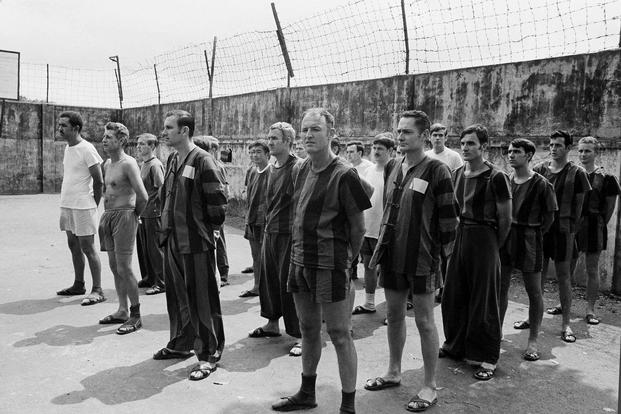
Why do some people conquer adversity, and others are immobilized by it? The Vietnam POWs offer some answers. In 1973, 566 Vietnam POWs were repatriated to the United States. Evidence from prior captivity situations indicated a high incidence of Post-Traumatic Stress Disorder. Fifty to eighty-two percent of the WWII POWs who were studied, particularly those who were imprisoned in the Pacific Theatre, have had a diagnosis of PTSD. Forty-seven to ninety percent of the Korean POWs who were studied have received a diagnosis of PTSD. Because of these staggering numbers, in 1976, the Navy started to study 138 repatriated Vietnam POW. In 1996, they reached surprising conclusions. In their 20-year follow-up, they found that only about 4% of the Vietnam prisoners of war had received a diagnosis of PTSD.

This is astonishing when comparing the Vietnam group to the other captivity situations, but it is also shocking in light of the implications of these numbers.

To give a frame of reference for understanding this, at any given time in a metropolitan area, about 1-4% of the population is walking around with PTSD because of violent crime, natural disasters, or other kinds of trauma. In other words, this group of people, who was imprisoned at least 5 years and as long as for seven or eight years, who was tortured, isolated, and beaten, had no higher incidence of PTSD than the average people in the average city in America. How can that be?

The study participants indicated that there were four main forces in the POWs’ lives that helped them remain resilient: a belief in God, patriotism, a dedication to something bigger than they were, and a sense of humor. These men personified the importance of never losing altitude, airspeed, and ideas at the same time, and humor played a huge role in their ability to keep all three.

Even though their captivity indicated that they had all run out of altitude, airspeed, and ideas at the same time in a realistic sense, in a metaphorical or psychological sense, they were able to sustain all three. Great bosses are people who don’t run out of altitude, airspeed, and ideas at the same time; they are people who can stay resilient in difficult times and help their direct reports do the same.

Altitude:

People want power and authority over their futures. When we perceive that our actions will make an outcome likely, we feel optimistic and secure. When we don’t, we feel insecure. We feel like victims. Sometimes people stay in a victim’s frame of mind after a loss or disappointment. They doubt their capacity to make their lives happen according to their own aspirations, so they wait to be rescued or blessed by good fortune. They start to feel undermined and overwhelmed; and they can become totally immobilized.

But the VPOWs weren’t victims. They were certainly victimized by their captors, but they never saw themselves as victims, no matter what was done to them. They weren’t victims because they took control of the few things they could control. They were told when and what and if they could eat; they were told if and when they could shower, sleep, and use the toilet. They had no say about parts of their lives that people normally take for granted. But they did have control over one thing, and that was their humor perspective, a way of looking at things that allowed them to keep their “altitude.”

In a physical sense, altitude is the elevation of an object above a certain level, usually the earth. Therefore, “altitude” as it applies to leadership, is a global perspective, a realization that there is a bigger picture and no one person is the center of the universe. When bosses indicate that they have altitude, they usually exhibit these behaviors:

· Vision, an ability to see the future and to anticipate consequences.

· Critical thinking–the capability to go into uncharted territory. Managers have the ability to do the right thing well; leaders have the ability to figure out what the right thing is.

· The ability to prioritize, to do first things first and to separate important from unimportant uses of time.

· The motivation to look beyond the obvious.

· The skills to paint credible pictures of possibilities.

· An eagerness to create competitive strategies.

Admiral Stockdale was one of the senior leaders of the POWs. He had the Code of Conduct to rely on to help him keep his global perspective, but no prisoners had experienced what these men were suffering. So, he issued orders for them to resist but not to risk permanent physical or psychological harm. He thought he’d be court marshaled. Instead, he will live in military history as a hero who was responsible for saving the lives of many and ensuring the resilience of hundreds of others.

“Leadership” does not always come from the leader, however. One of the stories that lives in the POW histories and clearly illustrates the importance of keeping altitude involved a lieutenant who had been shot down in an F-4 Phantom. He was tortured to force him to give the maximum airspeed of the F-4. He told them the top speed of the F-4 was 500 knots, a number that is much lower than the actual maximum speed. The captors said they knew he was lying because a major had just told them that the speed was closer to Mach 2. Thinking quickly, and trying to avoid torture for himself and the major, he said, “Well, that guys is a major. I’m only a lieutenant. They don’t let lieutenants fly as fast as they let majors fly.”

By keeping his wits about him, this young lieutenant was able to anticipate the consequences of his answer and to venture into uncharted territory, something that training had not prepared him for. He wasn’t trying to be funny, but stories of his quick wit soon spread throughout the POW community and validated their awareness that through humor, they could claim some control over what was happening. Aviators understand altitude in a real and a metaphorical sense, and bosses can learn to too.
During times of adversity, there is much we can’t control, but our global perspective, our altitude, is one thing we can take charge of.

Airspeed:

Airspeed is velocity, the force that make us go forward. Relationships are one of the main sources of fuel that helps successful bosses accelerate their productivity and that of others. The boss who avoids running out of airspeed tends to have these traits:

· A knack for building relationships

· A strong motivation to follow through

· A willingness and availability to listen

· A genuine interest in people

· The capacity to convey respect for people and their ideas

· The confidence to tell people what they need to know, not just what they want to hear.

Communication is the primary tool that helps us form relationships and develop closeness in our personal and professional lives. For the VPOWs, however, communication was difficult and sometimes nearly impossible. Yet, it became a priority.

In 1965, a man named Bob Shumaker realized that the POWs were going to need a communication system. Bob Shumaker had gone 133 days without face-to-face contact with another American. For over four months, Bob Shumaker was in solitary confinement, but he knew there was another American in the complex, because he had seen him: Hayden Lockhart. All of the POWs emptied their waste buckets in the same latrine area. Through the cracks in his walls, Bob Shumaker had seen another American there, and he knew he needed to make contact with this other American. But he wasn’t sure how he wanted to do this. Finally, he decided that he would write a note on toilet paper.

Bob Shumaker decided to write a three word note on a scrap of toilet paper and hide it behind a piece of cement in the latrine. He had to be very careful about what he wrote on this piece of toilet paper-it couldn’t be very much and it had to be the exact words that he needed to say. On this scrap of toilet paper Bob Shumaker wrote three words, three words that in essence said, “scratch your area where your mother specifically told you not to scratch in public.”

His thinking was two-fold. First of all, he wanted to write something that an American would know only another American would write so that the person receiving the three word note would not suspect duplicity. Second, he wanted to devise a signal that would not arouse suspicion in the captors.

He wrote the note on the scrap of toilet paper, and day after day, he stood peeking through the cracks in his room, and day after day, Hayden Lockhart came out of the latrine and made no signal. Finally, one day, Hayden Lockhart came out and made a huge display of scratching the region in question and facing every part of the compound. The communication system was born. However, even though they had created a way of communication, they realized its limitations and knew they would have to have other ways of communicating.

Shortly after this, Bob Shumaker was given some roommates. One of them, Smitty Harris, remembered the “tap code” that he had learned from a survival school that he had attended. Because they could tap almost all of the time, the Tap Code became the most sophisticated communication system that they had. Originally, this was devised to be a communication system for getting policy throughout the POW camp, but it quickly became a way for staying connected to one another, keeping morale up, and for sharing jokes. The Tap Code is a 25-letter alphabet that uses the “C” and “K” interchangeably. It was an arduous task to tap a message one letter at a time, but they quickly became proficient at the code and spent hours each day committed to staying in touch with each other.

The captors soon realized there was a communication system, so they tortured Stockdale to give up the system and the players in the system. They tortured him one day almost to his breaking point with the promise that if he did not tell them what they wanted to know the next day, they would do it to him again. Knowing that he was close to capitulating, Stockdale went back to his cell that night, broke a window, took a shard of glass, and cut his wrists. He had been willing to die to protect the communication system. The next morning, the captors found him in a pool of his own blood, unconscious, and they never tortured him again. Stockdale knew that he was protecting something vital when he attempted to end his life for the sake of a communication system that the POWs would need to stay resilient and hardy.

Relationships, communication, closeness, and humor, all of these are fuel for us, airspeed that keeps us going through adversity and helps us help others too. The Vietnam POWs literally risked their lives to stay connected to each other, but how often do we walk past the desk of a co-worker, too busy to even risk losing a minute of our day to stay connected? A global perspective helps us realize that we aren’t the center of the universe and that our problems pale in comparison to those of some others, and communicating with those that we care about helps us keep this perspective. Altitude and airspeed are two critical elements for success, but there’s one more: Ideas

Ideas:

Creative problem solving is probably one of the most essential talents a leader can possess. Bosses who can look at diverse information and see relationships, who can reason abstractly and make logical connections, and who can think of the future as open and malleable bring an invaluable asset to their organizations: ideas. When leaders have ideas, they can solve the unfamiliar problems they encounter and make decisions that are in the best interest of their direct reports and the organization because of these skills:

· An openness to brainstorming and creativity

· The motivation and enthusiasm to challenge existing processes

· A knack for inviting input from a variety of perspectives

· A willingness to experiment with novel approaches and champion innovation

The POWs found themselves in an drastically altered world, one that they had never encountered before and, in spite of some training, one for which they were ill prepared. But like great leaders throughout history, they had the ability to engage in creative problem solving. They had ideas.
One of the classic stories of the POWs that illustrates this willingness to experiment with novel approaches involved Jerry Venanzi and his motorcycle, a story that quickly became a legend in the POW community. One day, Jerry Venanzi was outside when he noticed some of the other POWs were staked out and being treated miserably. He did not have any control over how he could help his fellow POWs, except he thought he might be able to make them laugh, so he decided to try that.

Putting his brilliant idea into action, he created an imaginary motorcycle, which he got on and rode around the compound. His fellow POWs started to laugh. Being somewhat of a ham, Jerry Venanzi realized that this idea was indeed funny, so he’d stage a spill, feign an injury, and limp. He’d hobble over and show somebody how he’d gotten a burn or some other kind of injury from the motorcycle. His act was so convincing that some of the POWs started to tap to one another, “Has Venanzi lost it?”

One of the things that the POWs found most humorous, however, was that the commander of the compound finally called Jerry Venanzi in and told him that he had to get rid of the motorcycle. As the commander pointed out, it wasn’t fair. All the POWs couldn’t have motorcycles so; Jerry Venanzi shouldn’t be able to have a motorcycle either. So, he reluctantly got rid of his imaginary motorcycle.

However, since he was disappointed about the loss of the motorcycle and since he was in solitary confinement, Jerry Venanzi decided to create an imaginary companion, a monkey that he called Barney Google. The stories of Barney Google went like wildfire through the community because Barney became the voice of the POWs. Jerry Venanzi would take his imaginary monkey into what was called an interrogation, and, as he was being asked questions, he would turn to the imaginary monkey and say “NO! I’m not going to tell them that! Because, if I tell them that, they’ll beat the hell outta me! You’re just going to have to shut up.” The interrogator would then say, “What did he say?” Who was in charge of this interrogation? Jerry Venanzi would seize this opportunity to say, “He’s sick of the food. It’s lousy food and he’s tired of it. We don’t have enough blankets, we’re freezing to death,” Whatever their complaint was, Barney said it on their behalf.

During one interrogation, the camp commander offered Barney tea, which Jerry Venanzi declined on behalf of Barney, pointing out that Barney didn’t like tea. This ruse continued for quite a some time, all the while fueling the POWs’ feelings of having some degree of control, if only to their reactions and their openness to finding way to be connected to one another.
Finally, one day, the captors once again called Jerry Venanzi in and said that he would have to get rid of the dirty animal because he was getting some roommates. They were certain the roommates wouldn’t like the dirty animal. Of course Venanzi disagreed, but he finally capitulated and let Barney go on to another life outside the walls of the Hanoi Hilton, but Venanzi’s idea lived on ideas are certainly critical for leaders, but leadership is not only about position, experience, knowledge, and education. It’s also about the willingness to experiment with ideas to help solve problems that no one has encountered before. Certainly Jerry Venanzi was a person who assumed this leadership function. Doug Hegdahl was another, but he was barely old enough to be considered a man.
Doug Hegdahl was a 19-year old seaman who, in violation of policy, went out on a ship during a thunderstorm and was washed overboard. A Viet-Cong fishing boat picked him up and took him to the Hanoi Hilton. However, he wasn’t like the other prisoners that were there. He was the only non-aviator, and he was only a teenager. He quickly realized that he could trick the captors into thinking he was dim-witted or stupid because he couldn’t have answered any of the questions they asked him, even if he wanted to. He did not know about flying; he did not know about targets; he did not know the answers to any of their questions. Since his captors were confused about this very different kind of prisoner, Hegdahl had an idea.

To create more confusion for the guards, he started sucking on a pen and getting ink all over himself. When they asked him to write a propaganda statement, he would ask them how to spell a word, such as “American.” Hegdahl’s ruse had immediate and enormous implications. The captors underestimated him and made the tactical error of putting him a cell of one of the POW leaders, Dick Stratton.

Dick Stratton groomed Doug Hegdahl, and Stockdale, the acting senior leader, ordered Hegdahl to take the early release the Vietnamese had offered this seemingly simple-minded child. As the only person who was authorized to accept early release, Hegdahl returned home with 200 names, went to the Paris Peace talks, and told about the mistreatment of the POWs. In the archives of military history, a 19-year old Navy Seaman is one of the most heroic figures. This 19 year old teenager never ran out of ideas, but neither did he run out of altitude or airspeed. Through his involvement in a well-defined system, he was able to remain resilient and healthy and to ensure the safe return of many of his fellow POWs.

Conclusion:

The need for control served as a framework for the VPOWs who created and maintained a system of strong interpersonal relationships and group affiliation that helped them survive over seven years in captivity and thrive during the years since repatriation. Humor was one of the elements of this system. The VPOWs taught each other how to use humor as a weapon for fighting back and as a tool for building cohesion.

To prevent a disjunction of the self and to find meaning in a situation void of meaning, the VPOWs relied on resources many of them did not know they had. Their internal sense of mirth and humor, their reliance on one another, and their group interactions all combined to create a system for survival. Their humor perspective provided the framework for discovering how to cope with their captivity, and their commitment to one another other gives an important perspective about what coping is made of. The role humor can play in bouncing back from adversity, especially when we are linked to others who will help us laugh, seems critical.

Because they were cemented in a strong social structure, they had a buffer against fragmentation of self or of the system. The VPOW accounts indicate these men formed a system that defined and encouraged humor among the group’s members. These men relied on humor not in spite of the crisis but because of it. The VPOWs’ system was a powerful civilizing force that discouraged any antisocial slip into a kind of jungle mentality. Control is central to individuals’ health, their personal benefits, and in the case of the Vietnam POWs, their actual survival.

If you have any dissatisfaction with my content, you can tell me here and I will fix the problem, because I care about every reader and even more so about your opinion!

Neighborhood Defense- You need to establish more then a one on one defense in order to survival the hordes of evil doers that will be around when the balloon goes up!

It doesn’t matter where you call home you need to establish more then a one on one defense in order to survival the hordes of evil doers that will be around when the balloon goes up. Naturally, we should be up on how to defend our own areas but a well organized neighborhood could make life a bit lease stressful during times of crisis. I personally would feel better if my family were in a community where if I am out on patrol others will be watching out for them. Plans such as these would be much better then dragging them with me into the wilderness to survey the situation. Last year I had pondered the possibility of establishing an emergency retreat in a gated resort location. This idea appeared very appealing to me until I actually went to visit the location and discovered that the danger during an emergency could likely be from within.

In a quickly deteriorating scenario your best chances for survival will be with a community of like minded people rather than as an individual. It has been said that even Rambo from movie fame has to sleep. It is simply impossible for one person to hunt, guard, scrounge and build shelters at the same time and unfortunately all these tasks will need to be accomplished. I personally feel that the community neighborhood will allow the group to see the best means of defense in any type of major crisis. I would suggest that you get out and talk to your neighbors and discuss this concept with them. Don’t wait until things start to happen as that’s when its too late. People will be suspicious of others when the balloon goes up.

Get together with your neighbors and teach them how to organize for disasters. Show them how to put food away in food storage in the event of an emergency and what supplies they should have available.

There are several ways of looking at this issue. First you may wish to keep the group small and include only three or four families in it. Naturally, operational security would be an important issue regardless of which way you decide to go. Problems will be massive such as how to draw like minded people together into a working community without permitting the crazies from knowing all your secrets? It may sound difficult but it really isn’t. You can accomplish this task by the use of “Cell” recruitments. Suppose that you have four friends which you feel can be completely trusted and are interested in networking. They in turn will recruit three or four additional people. If these recruits are couples then that will give you at least two dozen people in your group. That number is small enough for some people and easy enough to provide supplies and food for while providing for an increased labor force as well.

Another alternative approach you could take is to look at teams of perhaps four and create five separate teams. Think of it in the sense of you will actually have more eyes to see what is going on and more weapons for a better defense which ultimately equates to more security. You would need to establish a dedicated inner core of team leaders. Make certain to utilize all the available skills as they would benefit the team as a whole. Ensure that all ideas or plans are never left to be decided by a solo individual but rather discussed within the group’s leadership itself.

Maintaining your group small may be acceptable however remember that a larger membership of people would be superior from a defensive standpoint. More people simply mean more of everything including food, clothing and yes weapons.

If you have any dissatisfaction with my content, you can tell me here and I will fix the problem, because I care about every reader and even more so about your opinion!
Design a site like this with WordPress.com
Get started